Trupeer Blog
Shrnout
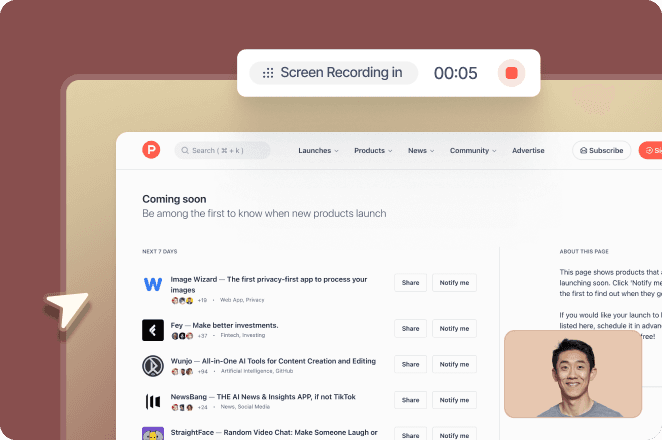
In the complex world of human resources, creating and maintaining up-to-date policy documents is a persistent challenge. Policies must be accurate, relevant, and easily accessible to employees. But traditional documentation methods can be time-consuming and error-prone. Imagine a tool that could automate this process by generating policy documents directly from recordings. That's where HR documentation automation comes into play. By converting video or audio recordings of policy discussions into written documents, HR departments can save considerable time and reduce errors.
Consider this: a company with 500 employees could spend over 200 hours annually on manual policy documentation. With AI-driven solutions, this time can be cut by 50% or more.
AI video editing can transform how HR teams handle policy documentation, making the process faster and more reliable.
This approach is particularly beneficial for large organizations and those with complex regulatory requirements. The potential for efficiency gains is enormous, and the implications for compliance and consistency are significant. As HR departments continue to seek ways to improve their operations, using AI to automate policy documentation from recordings is not just a technological trend, but a strategic necessity.
Why does HR documentation automation matter?
HR documentation is the backbone of effective business operations, ensuring that policies are clearly communicated, consistently applied, and easily accessible. Yet, the traditional approach of manually creating and updating documents is fraught with inefficiencies. It's not just about cutting down on time spent typing or formatting documents. The real issue lies in the potential for human error and the lack of consistency across documents. This inconsistency can lead to misunderstandings or even legal challenges if policies are not applied uniformly.
In the context of dynamic workplaces, the demands on HR departments are evolving rapidly. They must adapt to new regulations, manage diverse workforces, and maintain positive employee relations. Automating the process of generating policy documents from recordings can address these challenges head-on. By employing tools that capture and transcribe policy discussions, HR teams can ensure that all stakeholders have access to the most current and accurate information. This kind of automation also supports training videos use case, which enhances learning and development programs by providing structured, consistent content that can be easily referenced by employees.
What are the benefits of HR documentation automation?
Embracing HR documentation automation not only simplifies internal processes but also enhances overall business efficiency. Here are some key benefits:
Increased Efficiency. By automating the conversion of recordings into documents, HR teams can save up to 50% of the time typically spent on manual documentation. This allows HR professionals to focus on strategic initiatives rather than administrative tasks.
Consistency and Accuracy. Automated systems reduce the risk of human error, ensuring that all documents are consistent and accurate. This consistency is crucial for maintaining compliance and avoiding legal issues.
Accessibility and Collaboration. With documents generated from recordings, employees can easily access and collaborate on policy documents. This is particularly beneficial when using an video prospecting, which enables easy sharing and editing.
Cost Savings. Reducing the time and resources required for manual documentation translates into significant cost savings. Companies can redirect these savings towards other critical HR initiatives.
Scalability. As organizations grow, the demand for efficient HR processes increases. Automated documentation systems can scale with the organization, handling increased volumes of data without compromising on quality or accuracy.
Improved Compliance. Automated systems ensure that all policy documents are up-to-date and in line with current regulations. This reduces the risk of non-compliance and the associated penalties, enhancing overall organizational governance.
Teams ship this workflow end-to-end using Trupeer's AI video platform, which turns raw recordings into polished output without an editor.
Which Trupeer features help you automate HR documentation?
Trupeer offers a suite of features designed to simplify the process of generating policy documents from recordings. These tools not only enhance efficiency but also ensure accuracy and accessibility.
Automatic SOP generation from any recording
Trupeer's automatic SOP generation feature is a big shift for HR departments. By converting recordings into standard operating procedures, it enables teams to quickly create detailed, edit-ready documents. This feature works smoothly with both video and audio inputs, ensuring that all aspects of a discussion are captured and documented accurately. With Trupeer's AI documentation platform, HR professionals can save hours each week that were previously spent on manual transcription and formatting tasks.
AI screen recording with auto-zoom and click detection
Trupeer's AI screen recording capability is perfect for capturing detailed policy discussions. The auto-zoom and click detection features ensure that important points are highlighted and easy to follow, making it an effective tool for generating clear, concise policy documents. This feature allows HR teams to record meetings or training sessions without the need for extensive setup or post-production editing.
AI voiceover in 65+ natural voices
For organizations with a diverse workforce, Trupeer's AI voiceover offers a valuable solution. With over 65+ natural voices and adjustable pace and tone, this feature allows HR teams to create policy documents that are accessible to all employees. The voiceover can be integrated directly into the recordings, providing a smooth experience for users. This feature is especially useful for training programs, where clear and engaging audio is essential for effective learning.
Multi-format export: MP4, HTML, PDF, SCORM
Trupeer's multi-format export capability provides flexibility in how policy documents are shared and stored. Whether you need a video file, a web-friendly HTML document, or a printable PDF, Trupeer has you covered. The SCORM format is particularly useful for organizations that use learning management systems, allowing for easy integration and tracking of policy training materials. This feature supports a wide range of use cases and ensures that documents are accessible to all stakeholders.
AI-searchable knowledge base with timestamp deep-links
Trupeer's AI-searchable knowledge base is a powerful tool for managing and accessing policy documents. By indexing recordings with timestamp-level deep links, it allows users to quickly find and reference specific sections of a policy discussion. This feature enhances collaboration and ensures that all employees have access to the most current and relevant information. It's an essential component of any modern HR documentation strategy.
How do you automate HR documentation step by step with Trupeer?
Step 1: Capture the Meeting
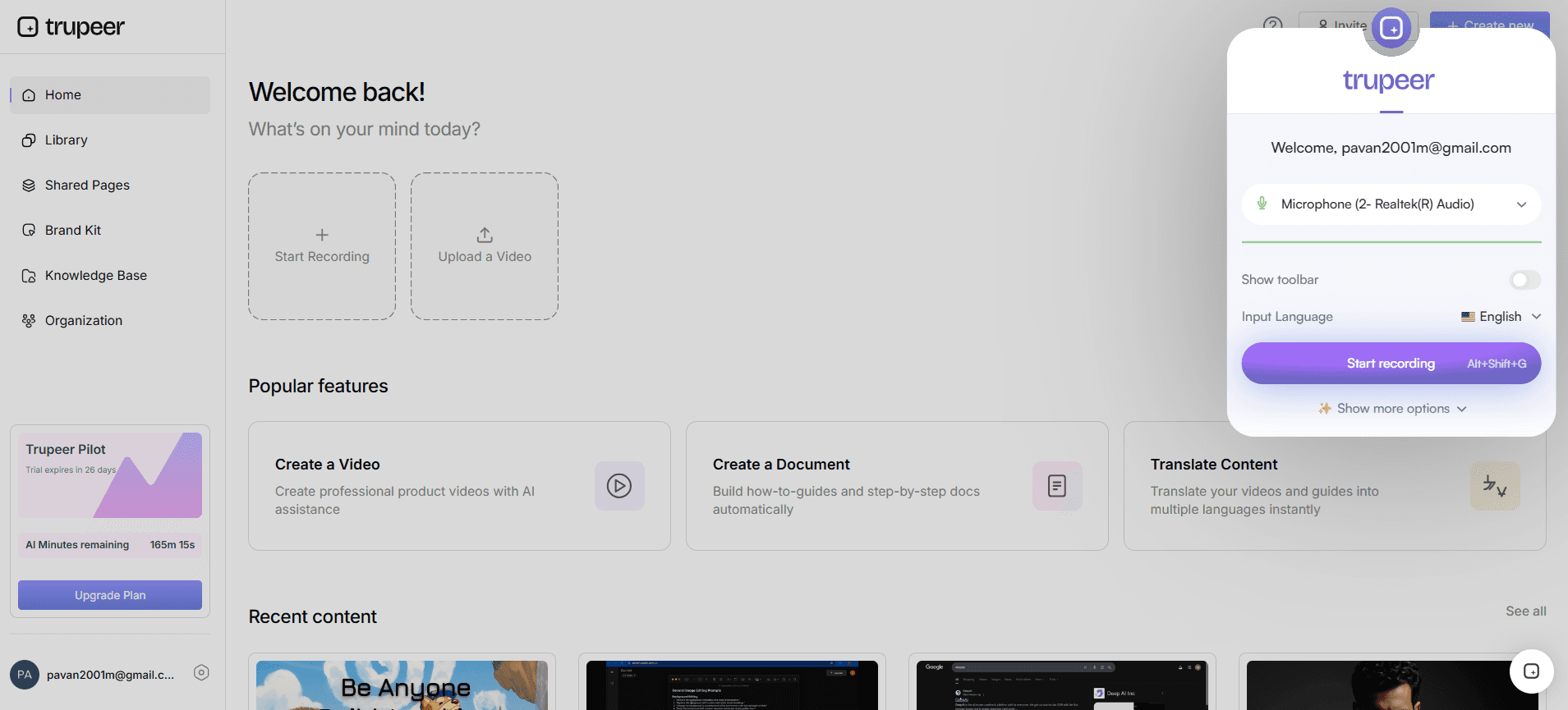
Start by recording your HR policy meeting using Trupeer's browser-based recorder. This tool requires no installation and is accessible directly from your web browser. Simply click the "Start Recording" button to begin capturing the meeting. Trupeer's AI screen recording with auto-zoom and click detection will ensure that all crucial details are highlighted. This feature is particularly useful for meetings with multiple participants, as it automatically focuses on active speakers and relevant on-screen content. The recording process is smooth, allowing you to capture lengthy sessions without interruptions.
Step 2: Edit and Enhance the Recording
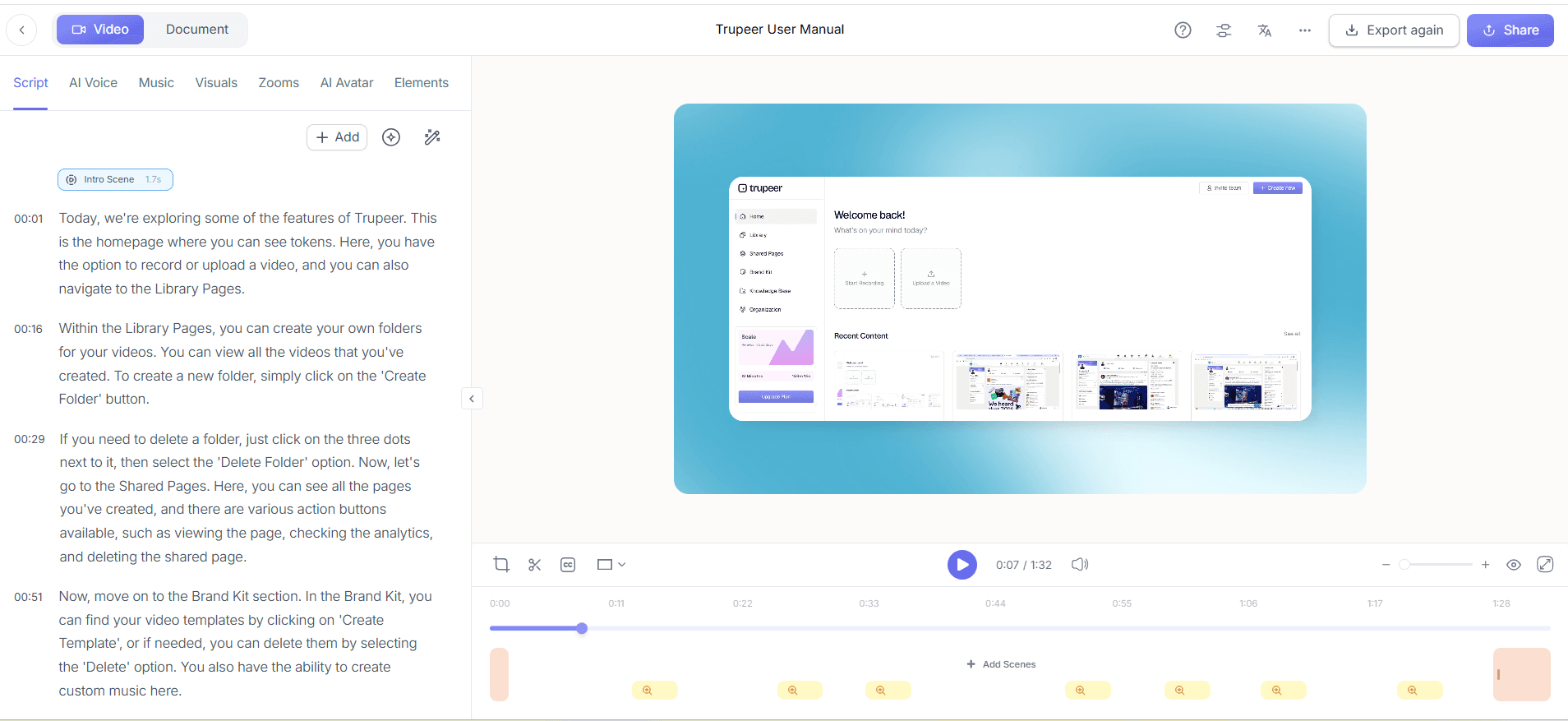
Once the meeting is recorded, you can enhance it using Trupeer's automatic filler-word removal tool. This capability eliminates unnecessary "um" and "ah" sounds, along with long pauses, making the audio more professional. Next, apply AI voiceover in one of 65+ natural voices if needed, adjusting the pace and tone for clarity. This is especially useful for creating training materials from the recording. The auto video editor tool takes care of these enhancements in a matter of minutes, ensuring the final output is polished and ready for documentation.
Step 3: Generate SOPs Automatically
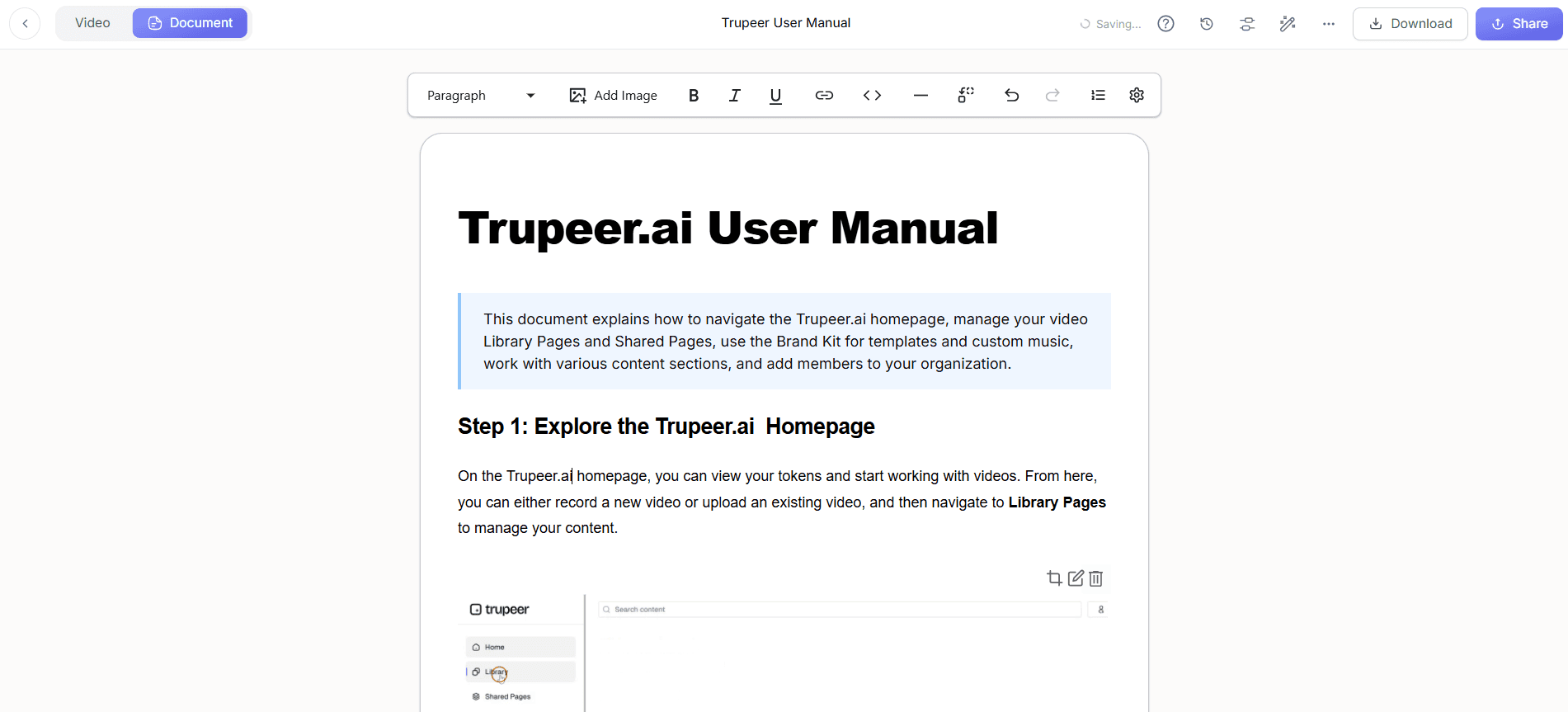
With the enhanced recording ready, use Trupeer's automatic SOP generation feature. Navigate to the documentation section and select "Generate SOP" from the recording. Trupeer will convert the content into an edit-ready document, capturing all key points discussed. This process typically takes just a few minutes, depending on the length of the recording. The resulting SOP is comprehensive, including time-stamped sections, making it easy to reference specific parts of the meeting later. This step is crucial for ensuring that your documentation is both accurate and detailed.
Step 4: Localize the Document
If your organization operates in multiple regions, localization is key. Use Trupeer's AI translation feature to translate the SOP into any of 40+ supported languages. Simply select the target languages, and Trupeer will provide a translated version with lip-sync capabilities. This ensures that non-English speaking employees receive the same high-quality content, enhancing inclusivity and understanding across your workforce. The translation process is quick, allowing you to distribute localized documents within hours of the meeting.
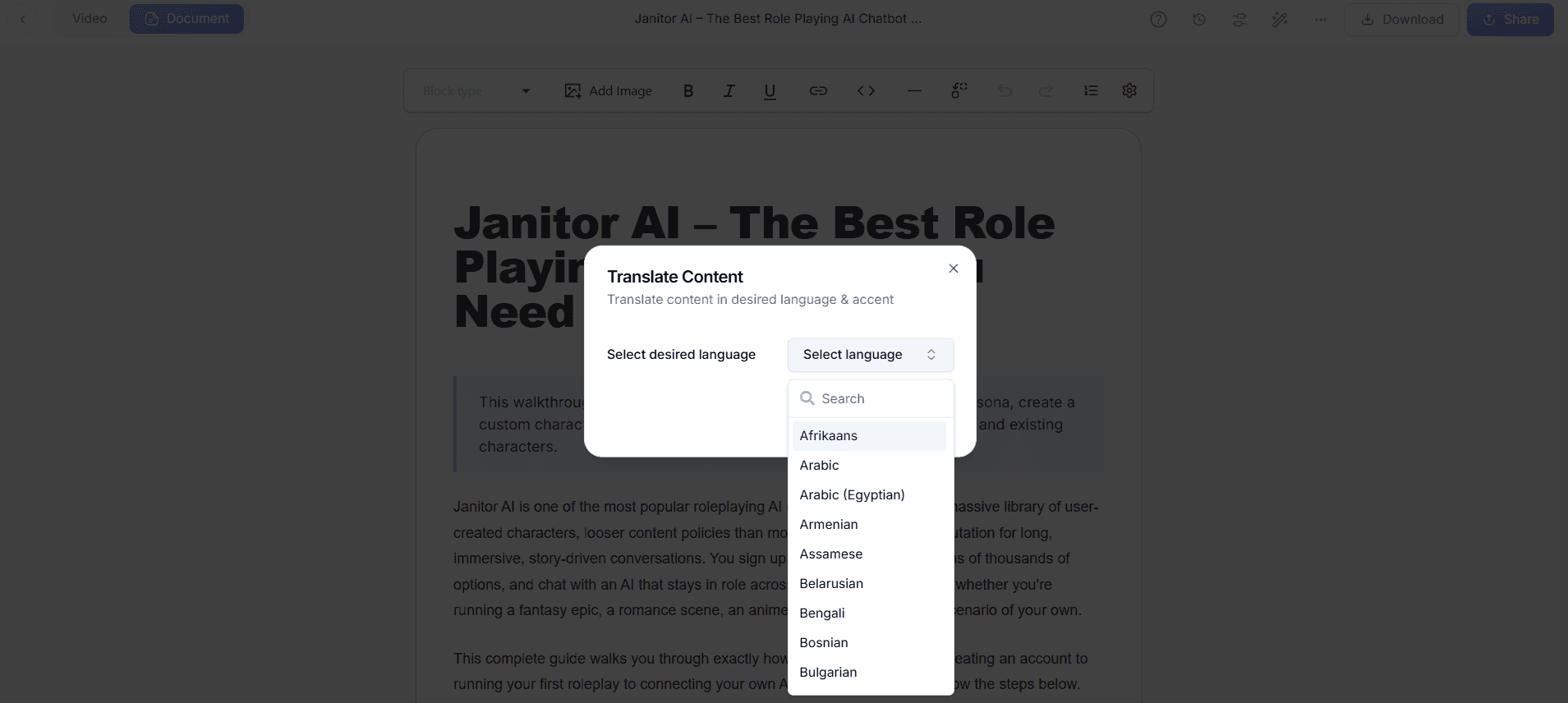
Step 5: Export and Distribute
After finalizing the document, export it in the format that best suits your needs. Trupeer supports multiple formats such as MP4, HTML, PDF, and SCORM. Choose HTML for web-based access, PDF for printable versions, or SCORM for integration with learning management systems. This flexibility ensures that the documentation is accessible to all employees, regardless of their preferred format. The export process is straightforward, and you can have the documents ready for distribution within minutes. Teams weighing tools often start with a Loom alternatives comparison before standardizing on a workflow.
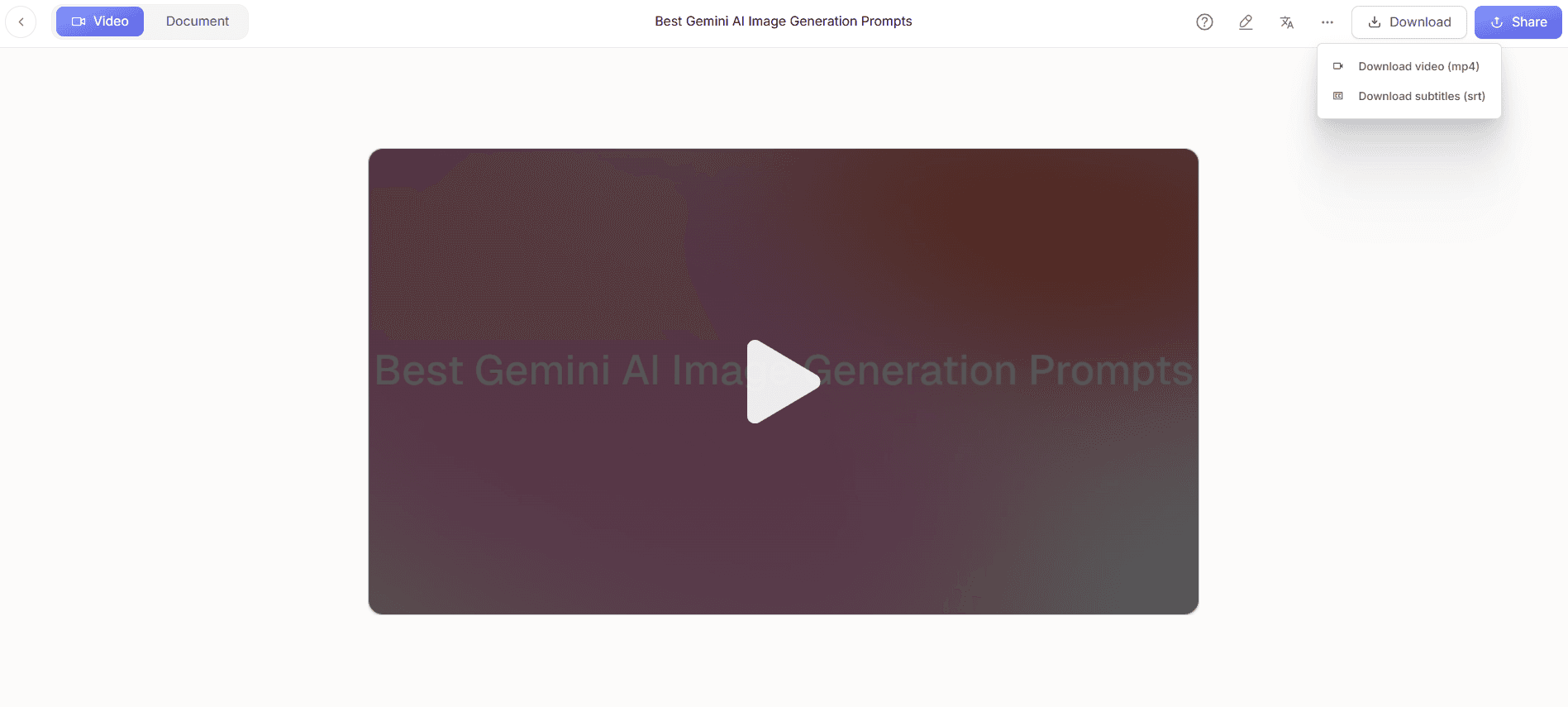
Step 6: Share and Collaborate
Finally, use Trupeer's AI-searchable knowledge base to share the SOP with your team. By uploading the document to the knowledge base, you make it easily searchable, allowing employees to find specific information quickly using timestamp deep-links. This feature also supports collaborative review and approval workflows, ensuring that all stakeholders can provide input and finalize the document efficiently. The entire process enhances transparency and ensures that everyone is on the same page regarding policy updates.
What tips help you automate HR documentation?
Automating HR documentation effectively requires a strategic approach. Here are some tips to maximize efficiency and accuracy in your documentation process.
Standardize Recording Practices. Ensure all meetings are recorded using the same settings to maintain consistency. This helps in producing uniform documents every time.
use Brand Kits. Use brand kits and branded templates to maintain a consistent visual style across all documents, reinforcing your brand identity.
Schedule Regular Updates. Set a schedule for reviewing and updating policy documents to ensure they remain current and relevant. This is crucial for compliance.
use AI Translation. Translate documents into multiple languages to cater to a diverse workforce, improving accessibility and understanding.
Engage Stakeholders Early. Involve key stakeholders early in the documentation process to capture all critical inputs and reduce revisions later.
Monitor Engagement Analytics. Use viewer engagement analytics to understand how employees interact with documents and identify areas for improvement.
Explore Alternatives. ai/competitors/scribe-vs-trupeer">Scribe alternative comparison to find the best tools for automating documentation.
Frequently asked questions
How can Trupeer improve HR documentation efficiency?
Trupeer simplifies the HR documentation process by automating the conversion of recordings into detailed policy documents, significantly reducing the time required for manual tasks. Its features like automatic SOP generation and AI voiceover enhance document accuracy and quality. By capturing meetings with AI screen recording and editing them using auto video editor, HR teams save hours each week. These capabilities ensure that documents are consistent, accurate, and easily accessible, improving overall efficiency in HR operations.
What formats can I export HR documents to with Trupeer?
Trupeer supports multiple export formats for HR documents, including MP4, HTML, PDF, and SCORM. This flexibility allows you to choose the format that best fits your distribution needs. For web-based access, HTML is ideal, while PDF is suitable for print. SCORM integration is beneficial for organizations using learning management systems. These varied formats ensure that your documents are accessible to all employees, regardless of their preferred method of consumption.
Can Trupeer translate policy documents into multiple languages?
Yes, Trupeer offers AI translation into over 40 languages, making it easy to localize policy documents for a diverse workforce. This feature includes lip-sync capabilities, ensuring that translated documents maintain the same level of quality and engagement as the original. By using Trupeer's video localization tool, organizations can enhance inclusivity and ensure that all employees understand the policies, regardless of their native language.
Is it possible to collaborate on documents within Trupeer?
Trupeer facilitates collaboration through its AI-searchable knowledge base and collaborative review workflows. Once documents are uploaded, team members can access, review, and provide feedback using timestamp deep-links. This collaborative environment ensures that all stakeholders can contribute to the document's accuracy and effectiveness. The platform's shared pages and client-facing portals further enhance collaboration by making documents easily accessible to external partners when necessary.
Why should HR departments consider automating documentation?
Automating documentation helps HR departments simplify operations, reduce errors, and save time. It ensures consistency and accuracy across policy documents, which is crucial for maintaining compliance and avoiding legal issues. Automation also allows HR teams to focus on strategic tasks rather than administrative duties. By adopting automation, departments can improve their overall efficiency and enhance employee experience with accurate, up-to-date information readily available. This shift not only benefits HR professionals but also supports the organization's broader goals.
Where does workflow documentation break in fast-growing SaaS teams?
It breaks at the seams between teams and during rapid change, where nobody owns the handoff. With Trupeer's process documentation template, one recording becomes a documented guide you can refresh in a single click.
Související blogy