Trupeer Blog

PDF vs HTML Documentation: Which Format Works Best for Enterprise Software

PDF vs HTML Documentation: Which Format Works Best for Enterprise Software

目录

使用 AI 创建令人惊艳的产品视频和文档

Get Started for Free

Imagine you're leading an enterprise software implementation across multiple departments, each with its own processes and documentation needs. The choice between PDF and HTML documentation becomes critical. PDF offers a consistent, offline-ready format, perfect for static guidelines. HTML, on the other hand, provides dynamic, web-based documentation that can evolve and integrate with other tools. Both formats have distinct advantages and challenges, especially when you consider scaling across an entire organization.

According to a recent survey, 67% of enterprises use both formats to address different documentation needs.

Choosing the right format can impact everything from user adoption to ongoing maintenance efforts. For businesses that rely heavily on documentation for regulatory compliance or extensive onboarding processes, the stakes are high. Understanding which format suits your specific needs can simplify operations, improve user experience, and ultimately drive success. Teams weighing tools often start with a Loom alternatives comparison before standardizing on a workflow.


Why does choosing the right documentation format matter?

The choice between PDF and HTML documentation isn't just about format preferences. It's a critical decision that affects how information is accessed, consumed, and maintained within an organization. PDFs offer a static, unchanging format that's ideal for official documents where consistency and offline access are crucial. This format is especially useful in highly regulated industries where documents need to be preserved as they were originally issued. HTML, however, allows for dynamic content that can be updated in real-time, offering users the most current information without the need to download new versions. This is particularly beneficial in fast-evolving fields like software development where updates are frequent.

Stakeholders across the enterprise need to consider how documentation supports their specific operations workflow. For instance, IT departments might prefer HTML for its ease of integration with other digital tools and systems. Meanwhile, legal and compliance teams may lean towards PDFs for their unalterable nature. also, the format you choose can impact productivity. HTML's searchability and interactivity can reduce the time employees spend looking for information, while PDFs' portable format ensures access even in environments without internet connectivity. Each format serves different operational needs, and understanding these can lead to more efficient workflows and better user engagement.

What are the benefits of choosing the right documentation format?

Selecting the appropriate documentation format can offer several tangible benefits to your enterprise. Each format serves distinct needs and can optimize various aspects of your business operations.

  • Enhanced Accessibility. HTML documentation allows for easy updates and accessibility from any device, promoting smooth access to the latest information.

  • Improved Compliance. PDFs provide a consistent, non-editable format that is essential for maintaining compliance across regulated industries.

  • Reduced Onboarding Time. A best onboarding software approach with HTML can simplify new employee training by providing interactive and easily navigable content.

  • Cost Efficiency. using an AI video platform to complement HTML documentation can lower costs associated with printing and distributing physical documents.

  • Scalability. HTML's dynamic nature makes it easier to scale documentation efforts as your organization grows, accommodating new processes and tools without extensive rework.

  • Environmental Impact. Choosing digital HTML documentation over printed PDFs reduces paper waste, supporting corporate sustainability initiatives.

Which Trupeer features help you choose the right documentation format?

Trupeer offers a range of features designed to help you effectively manage your documentation needs, whether you choose PDF, HTML, or a combination of both. These features enhance the creation, maintenance, and distribution of documentation across your enterprise.

Automatic SOP generation from any recording

This feature is essential for creating standard operating procedures (SOPs) directly from video recordings. It allows you to capture critical processes in real-time and convert them into editable documents. This capability is particularly useful when you need to quickly generate documentation that reflects the latest operational practices. With Trupeer, you can ensure that your SOPs are always up-to-date, providing your team with accurate and actionable information. This auto-generated documentation can be exported in multiple formats, including PDF and HTML, catering to different departmental needs.

Auto-updating documentation tied to the underlying recording

Trupeer's auto-updating feature ensures that your documentation reflects the most current information. As your processes evolve, so does your documentation, without the need for manual updates. This is particularly advantageous for dynamic environments where procedures frequently change. By linking documentation directly to recordings, Trupeer minimizes the risk of outdated information, enhancing both accuracy and reliability. This feature supports AI-searchable knowledge base efforts, making it easier for employees to find the information they need quickly.

Multi-format export: MP4, HTML, PDF, SCORM

The ability to export documentation in multiple formats offers flexibility and accessibility across various platforms. Whether your team needs content in PDF for offline use or in HTML for interactive online access, Trupeer has you covered. This functionality is crucial for organizations that need to cater to diverse documentation requirements across departments. By offering enterprise documentation software, Trupeer ensures that your documentation can be easily shared and accessed, regardless of the format.

AI-searchable knowledge base with timestamp deep-links

Trupeer's AI-searchable knowledge base enhances the accessibility and usability of your documentation. By indexing every recording with timestamp-level deep links, users can jump directly to the information they need. This feature reduces the time spent searching for specific content and improves overall productivity. It's particularly beneficial in large organizations where documentation can be extensive and complex. The video knowledge base feature ensures that users have quick access to the most relevant information, enhancing their ability to perform tasks efficiently.

Custom-domain hosting with SSO

Hosting your documentation on a custom domain with single sign-on (SSO) integration simplifies access and enhances security. This feature allows organizations to maintain control over their content while providing users with a smooth login experience. Custom-domain hosting is particularly useful for enterprises that require a branded documentation portal. By integrating with your existing IT infrastructure, Trupeer helps ensure that your documentation is both secure and easily accessible, supporting your organization's overall digital strategy.

How do you choose between PDF and HTML documentation step by step with Trupeer?

Step 1: Capture the Process

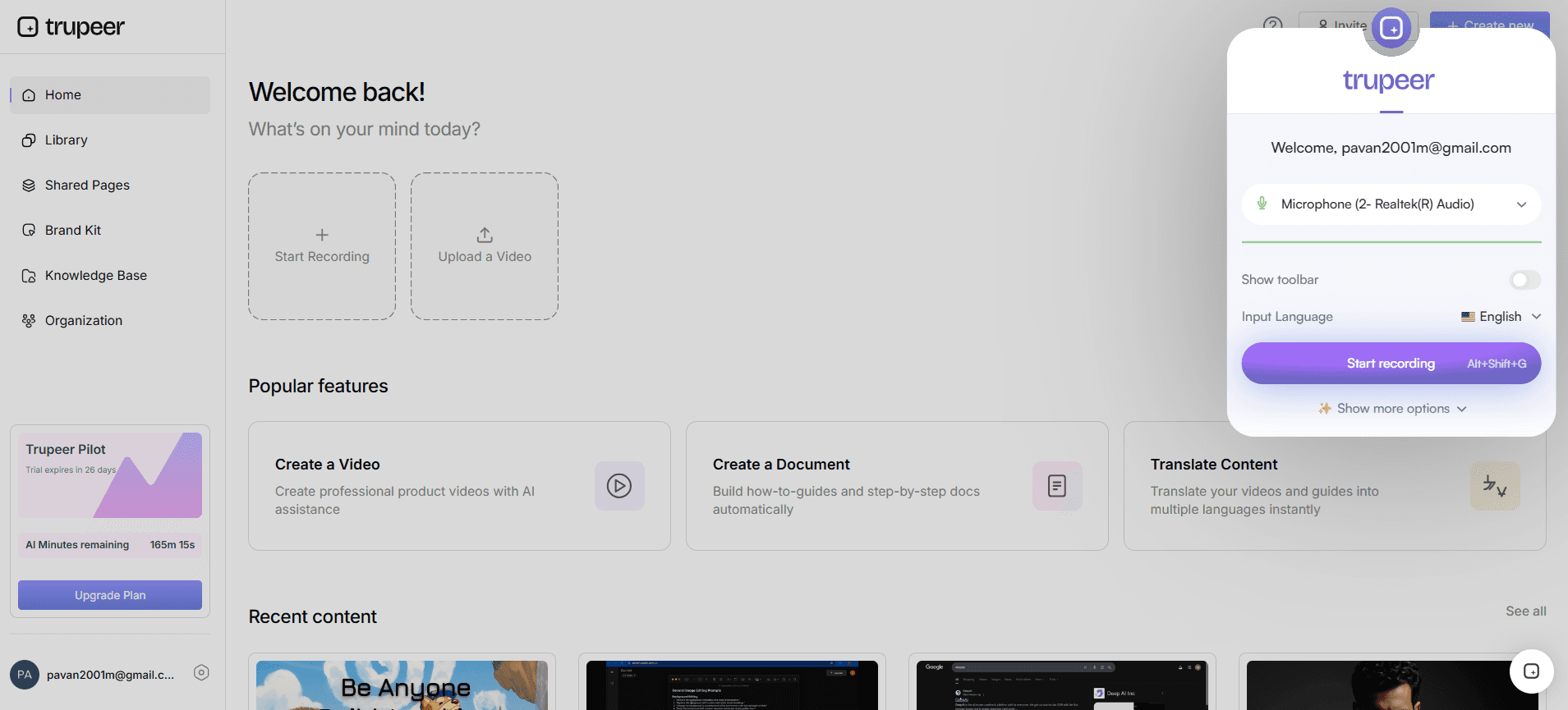
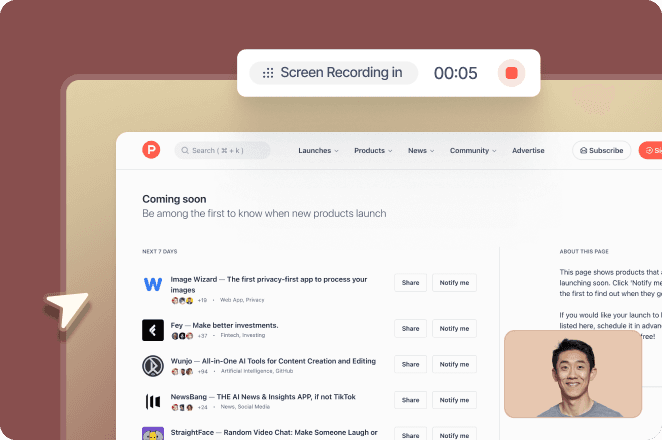
Begin by using Trupeer's AI screen recording with auto-zoom and click detection to capture the process you want to document. This feature automatically highlights key actions and clicks, making it easy to create a clear visual record. You start by selecting the screen recording option in the Trupeer dashboard, which is accessible from both the browser-based recorder and desktop app. The recording captures every detail, ensuring you don't miss critical steps. Once finished, the recording is stored in your Trupeer library, ready for the next phase of documentation creation.

Capture the Process

Step 2: Generate Initial Documentation

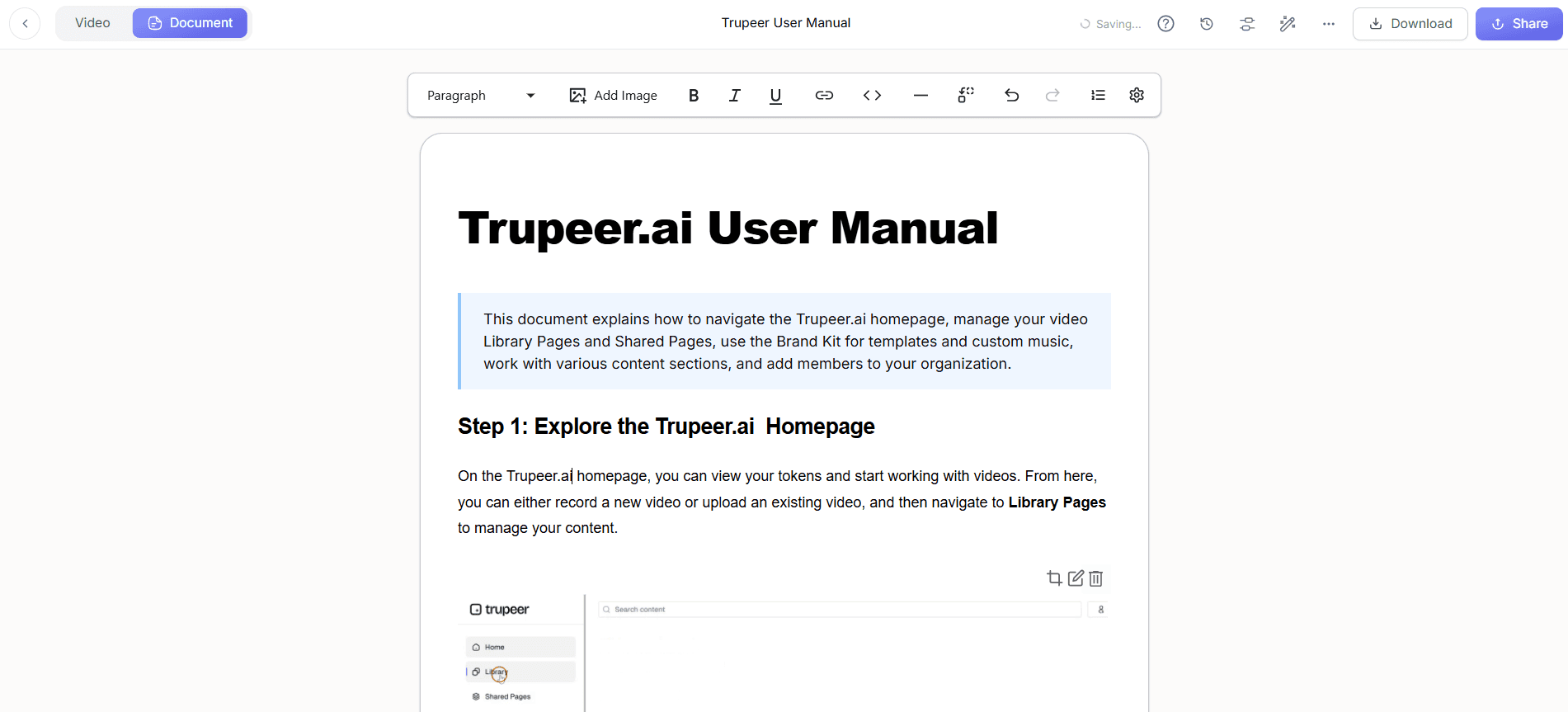
With the recording complete, use Trupeer's automatic SOP generation feature to convert the video into text-based documentation. This feature analyzes the recording and creates an edit-ready document that includes all the steps captured. Navigate to the recording in your library and select "Generate SOP." Trupeer's AI processes the video, extracting key information and formatting it into a comprehensive document. This step typically takes a few minutes, depending on the recording length. The result is a draft SOP that you can refine and edit as needed.

Generate Initial Documentation

Step 3: Edit and Enhance

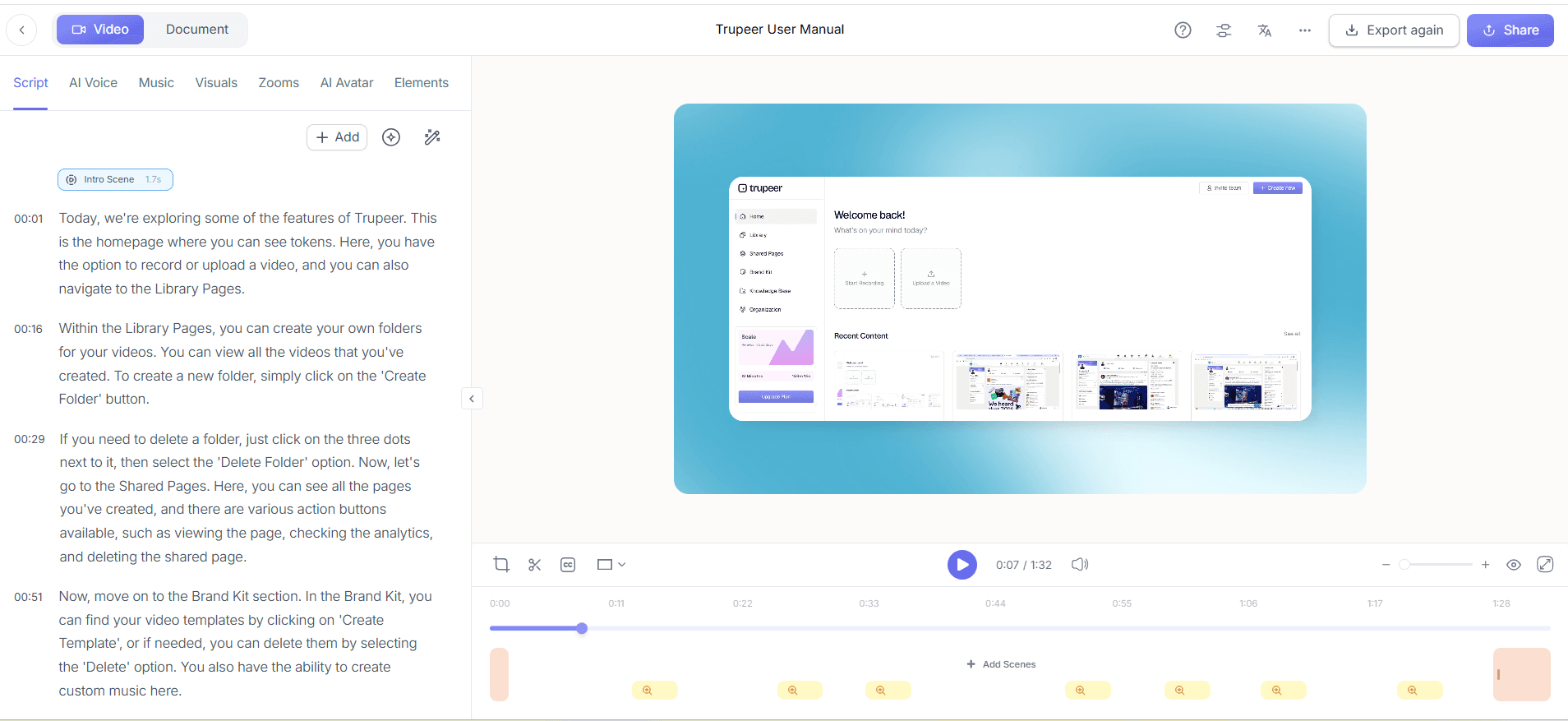
Next, refine the generated documentation by using Trupeer's automatic filler-word removal and AI voiceover features. Access the editing tools and remove unnecessary filler words from the text, ensuring clarity and conciseness. If the documentation includes video, consider adding an AI voiceover for a more engaging experience. Choose from over 65+ natural voices, adjusting pace and tone to match your audience's preferences. This step ensures that your documentation is polished and professional, ready for distribution.

Edit and Enhance

Step 4: Choose Export Format

Decide whether to export your documentation as a PDF or HTML. In the Trupeer platform, select "Export" and choose your preferred format. PDFs are ideal for static, uneditable documents, providing consistency for compliance purposes. HTML exports offer dynamic, web-accessible content that can be updated in real-time. Consider the needs of your target audience and the context in which they'll use the documentation. Exporting takes just a few moments, after which your document is ready for the next step. For a deeper look, our guide on best documentation software covers the adjacent playbook.

Choose Export Format

Step 5: Distribute the Documentation

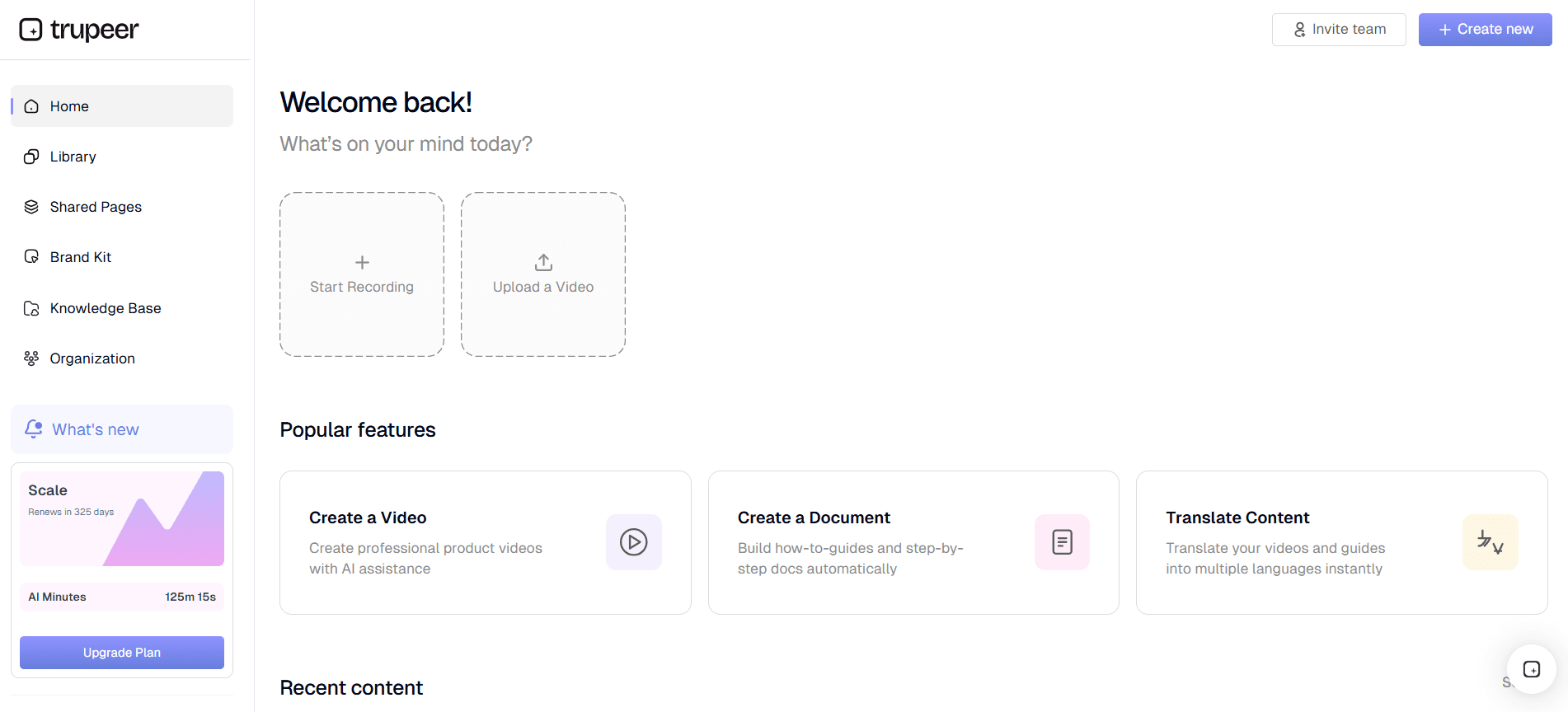
Once exported, distribute the documentation using Trupeer's shared pages or client-facing portals. For PDF documents, you might choose to distribute via email or internal document management systems. HTML documents can be hosted on Trupeer's custom-domain hosting with SSO, providing secure access within your organization's ecosystem. Ensure that all relevant stakeholders have access, and

Distribute the Documentation

Step 6: Monitor Engagement

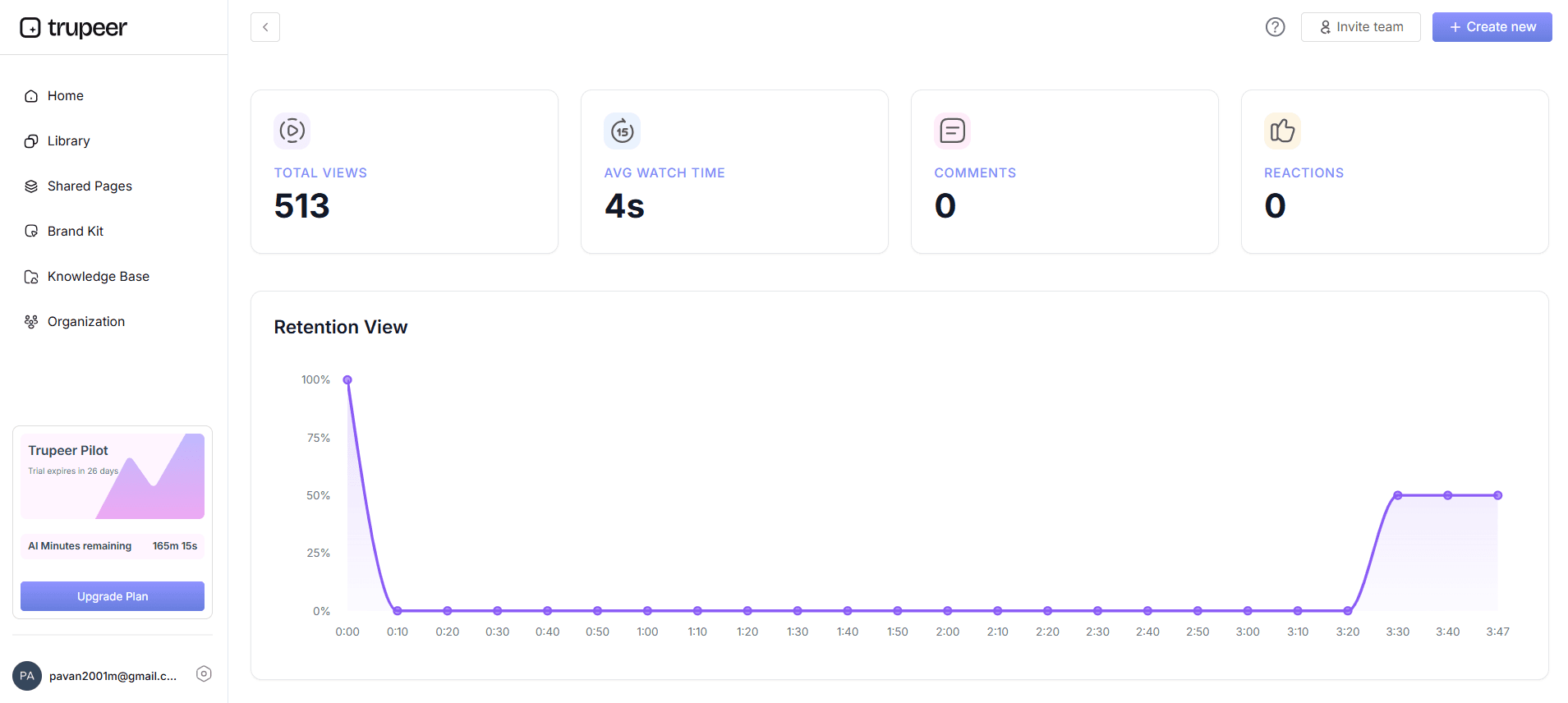
Finally, use Trupeer's viewer engagement analytics to track how your documentation is being used. Access the analytics dashboard to review metrics such as views, drop-off rates, and heatmaps. This data provides valuable insights into how well your documentation meets user needs and where improvements might be necessary. Regularly reviewing these metrics ensures your documentation remains effective and relevant, adapting to changing user requirements. This step closes the loop, allowing you to refine and optimize your documentation strategy continually.

Monitor Engagement

What tips help you choose between PDF and HTML documentation?

Choosing the right documentation format is crucial for meeting your enterprise's needs. Here are some practical tips to guide your decision-making process, ensuring you select the best option for your organization.

  • Assess Your Audience. Determine whether your audience prefers static documents like PDFs or interactive HTML content. Consider their technical proficiency and access needs.

  • Evaluate Update Frequency. If your documentation requires frequent updates, HTML might be preferable due to its dynamic nature and ease of modification.

  • Consider Compliance Needs. For legally binding documents, PDFs are often more suitable due to their unalterable format and consistency.

  • Analyze Accessibility Requirements. HTML's web-based format can be more accessible across devices, but PDFs offer offline access, which is crucial in areas with limited internet connectivity.

  • use a Scribe alternative comparison. Compare tools like Trupeer to understand which platforms offer the best features for your documentation needs.

  • Incorporate Visual Content. Enhance your documentation with videos or interactive elements, especially if using HTML, to increase engagement and comprehension.

  • use system documentation software. Use specialized tools to manage and maintain documentation efficiently, ensuring consistency across formats.

Frequently asked questions

How do PDF and HTML documentation differ in terms of security?

PDF documentation typically offers better security features such as password protection and encryption, making it ideal for sensitive information. HTML documentation, while more flexible, relies on web server security measures and may be more vulnerable to unauthorized access if not managed properly. Enterprises needing stringent security often prefer PDFs for their ability to restrict editing and protect content integrity. However, HTML's advantage in accessibility and ease of updates can outweigh these concerns if solid web security protocols are in place.

What are the best practices for maintaining HTML documentation?

Maintaining HTML documentation involves regular updates and audits to ensure content accuracy and relevance. Use version control systems to track changes and facilitate collaboration among team members. Implementing a content management system (CMS) helps simplify updates and manage user permissions. also, ensure that your HTML documentation is mobile-friendly and accessible, as this broadens its reach and usability. Regularly gathering user feedback can also guide improvements and identify areas for enhancement.

Can Trupeer assist with translating documentation into multiple languages?

Yes, Trupeer can facilitate the translation of documentation through its AI translation capabilities, supporting over 40 languages. This feature is particularly useful for enterprises operating in diverse linguistic regions. By using Trupeer's video localization tool, you can ensure that your documentation is accessible to non-English speaking audiences. The platform offers AI dubbing and lip-sync capabilities, making it easier to create multilingual video content that complements your text-based documentation.

Why should enterprises PDFs offer consistency and are ideal for official documents requiring offline access. HTML provides dynamic, easily updated content, suitable for rapidly changing environments. By employing both, organizations can ensure broad accessibility and maintain compliance while adapting to various departmental requirements. This dual approach enhances flexibility and user engagement, supporting diverse operational goals.


Does HTML documentation support multimedia integration?

Yes, HTML documentation supports multimedia integration, allowing you to embed videos, images, and interactive elements directly into the content. This capability enhances user engagement and helps convey complex information more effectively. Unlike PDF, which is limited to static content, HTML's multimedia support provides a richer user experience, making it an excellent choice for training materials and interactive guides. This feature is particularly beneficial for tech-savvy audiences who prefer engaging, visually-driven content.

需要视频剪辑师、翻译和编剧吗?

免费试用 Trupeer

预约演示

需要视频剪辑师、翻译和编剧吗?

免费试用 Trupeer

预约演示

需要视频剪辑师、翻译和编剧吗?

免费试用 Trupeer

预约演示