Trupeer Blog
In the world of engineering, precision and accuracy aren't just ideals, they're necessities. Imagine an engineering team working on a multi-million-dollar project where every document version matters. A single misstep in document handling or an overlooked revision can lead to costly errors, project delays, and even safety hazards. Engineering teams often deal with hundreds of documents, each undergoing multiple revisions. Without a solid system to track these changes, chaos ensues. According to a study,
70% of engineering errors are due to poor document control
. This staggering figure highlights the importance of implementing an automated document control system that can handle the intricacies of revision tracking. This is especially relevant for teams using a client onboarding automation platform, as smooth documentation is crucial for successful onboarding. The need for a system that handles document control efficiently is evident, but understanding what to automate and what to leave to human oversight is key to maintaining both control and creativity in engineering projects.
Why does document control automation matter?
Document control automation is crucial for engineering teams. With the complexity and volume of documentation involved in engineering projects, manual processes simply can’t keep up. Human error in document handling can lead to inaccuracies that jeopardize the entire project. For engineering teams, this could mean failing to comply with industry regulations, facing legal liabilities, or incurring significant financial losses. Automating document control reduces the risk of these costly mistakes by ensuring that every revision is tracked accurately and efficiently.
Also, in an operations workflow, the speed of accessing the correct version of a document can make or break deadlines. Engineers often collaborate across departments and even across different global locations. Without automation, keeping everyone on the same page is nearly impossible. Automated document control systems offer real-time updates and accessibility, ensuring that every team member has the latest information. This not only facilitates smoother collaboration but also enhances the decision-making process by providing accurate and up-to-date data.
What are the benefits of document control automation?
Automating document control offers several significant benefits for engineering teams. It simplifies processes, minimizes errors, and enhances collaboration across various departments. Here are some key advantages:
Error Reduction. Automating revision tracking minimizes human errors by providing an accurate audit trail of changes. This leads to a 50% reduction in document-related mistakes.
Time Efficiency. Automation reduces the time spent on manual checks and document handling by 30%, allowing engineers to focus on core tasks.
Improved Collaboration. With automated systems, teams have real-time access to the latest document versions, promoting smooth collaboration and reducing project delays. A single client onboarding automation benefits from such simplified processes.
Regulatory Compliance. Automated systems ensure that all document revisions meet industry standards and compliance requirements, reducing the risk of legal issues.
Cost Savings. By preventing errors and simplifying workflows, automation can lead to cost savings of up to 25% in project management.
Enhanced Security. Automated document control tools often come with advanced security features, ensuring that sensitive information is protected from unauthorized access. This can be significantly enhanced using an AI video platform for secure document sharing.
Which Trupeer features help you automate document control?
Trupeer offers several capabilities that support the automation of document control and revision tracking in engineering projects. These features are designed to enhance accuracy, efficiency, and collaboration across teams.
Automatic SOP generation from any recording
Trupeer simplifies the creation of Standard Operating Procedures (SOPs) by automatically generating them from any video recording. This feature ensures that every step of a process is documented accurately and can be easily updated as needed. Engineers can quickly produce SOPs without the need for extensive manual input, saving time and reducing errors. This capability is a big shift for teams that frequently update their processes and need a reliable way to document changes consistently. By using Trupeer's AI documentation platform, engineering teams can maintain clarity and precision in their procedures.
Auto-updating documentation tied to the underlying recording
With Trupeer, documentation stays current because it automatically updates in response to changes in the associated video recordings. This feature eliminates the need for manual revisions and ensures that all team members have access to the latest information. It’s particularly useful for engineering teams that rely heavily on video content for training and procedural guidance. The auto-updating mechanism ensures that documents remain accurate and relevant, thus supporting dynamic project environments. This integration with Trupeer's AI-searchable knowledge base allows for efficient information retrieval.
AI screen recording with auto-zoom and click detection
Trupeer’s AI screen recording capability enhances document control by automatically focusing on key points within a recording. The auto-zoom and click detection features ensure that critical actions and details are highlighted, reducing the chances of missing important information. This is particularly beneficial for engineering teams that need to capture detailed processes or instructions. By highlighting significant interactions, this tool makes it easier for engineers to review and understand complex procedures. also, linking this feature with a document automation software tool can simplify the entire documentation process.
AI avatars / talking-head video
Trupeer provides AI avatars that can be used to create engaging and informative video content. These avatars serve as virtual presenters, making it easier to explain complex engineering concepts or procedures. The talking-head videos can be customized to fit the brand and style of the engineering team, ensuring consistent communication. This feature is particularly useful for training sessions and presentations, where visual engagement can significantly enhance understanding and retention.
Viewer engagement analytics, drop-off, and heatmaps
Understanding how your team interacts with the documentation is crucial for continuous improvement. Trupeer offers detailed viewer engagement analytics, including drop-off rates and heatmaps. These insights help engineering teams identify which parts of the documentation need more clarity or engagement. By analyzing these metrics, teams can refine their documentation strategies, ensuring that information is conveyed effectively. This feedback loop is essential for maintaining high standards in document control and revision tracking.
How do you automate revision tracking step by step with Trupeer?
Step 1: Capture the initial process
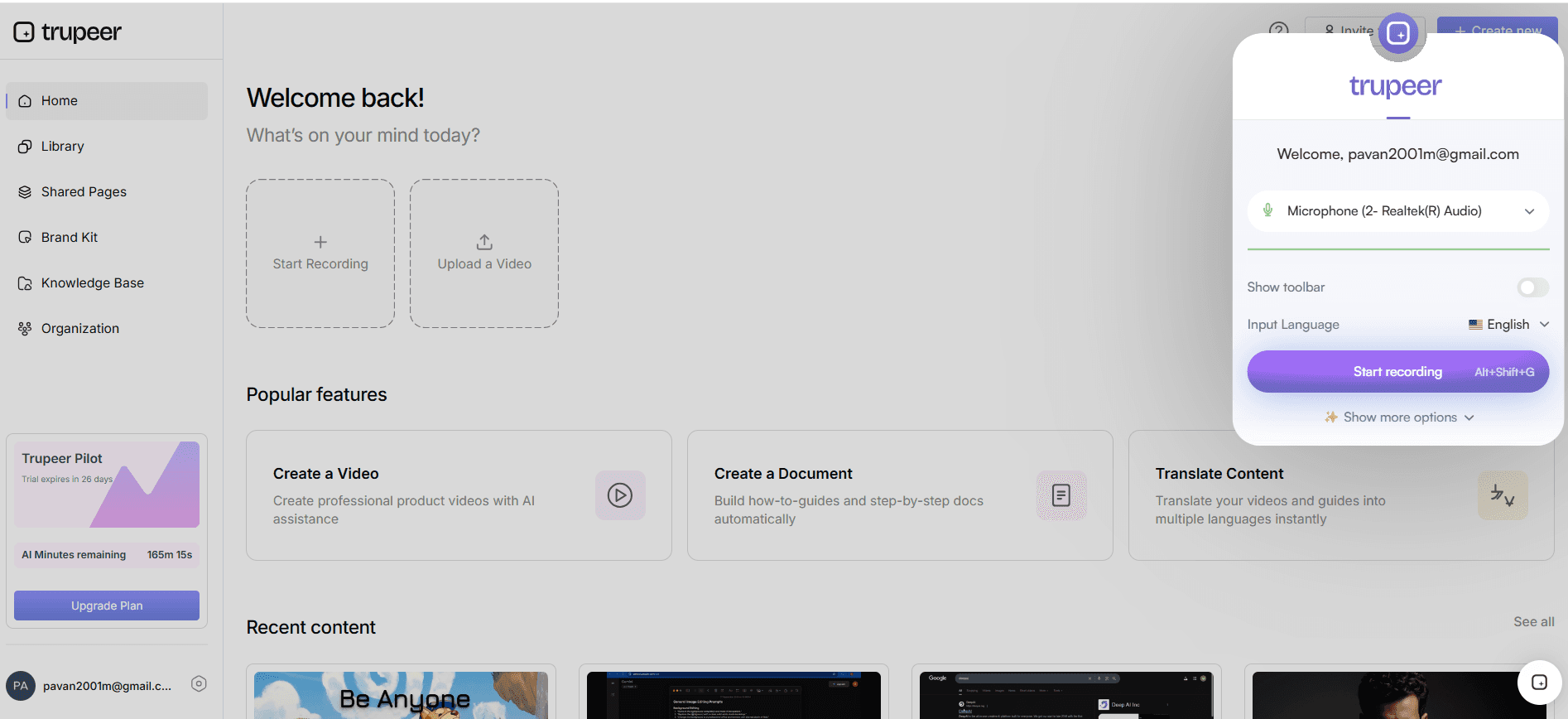
Start by using Trupeer’s AI screen recording with auto-zoom and click detection. Navigate to the Trupeer dashboard and launch the screen recording tool. This feature captures your screen activity, zooming in on key actions and detecting clicks automatically. This ensures that essential steps are highlighted without manual adjustments. You can capture the entire process in one smooth recording. In approximately 15 minutes, you’ll have a detailed video ready, showcasing every critical action. This eliminates the need for note-taking and provides a clear visual reference for future revisions.

Step 2: Generate an SOP from the recording
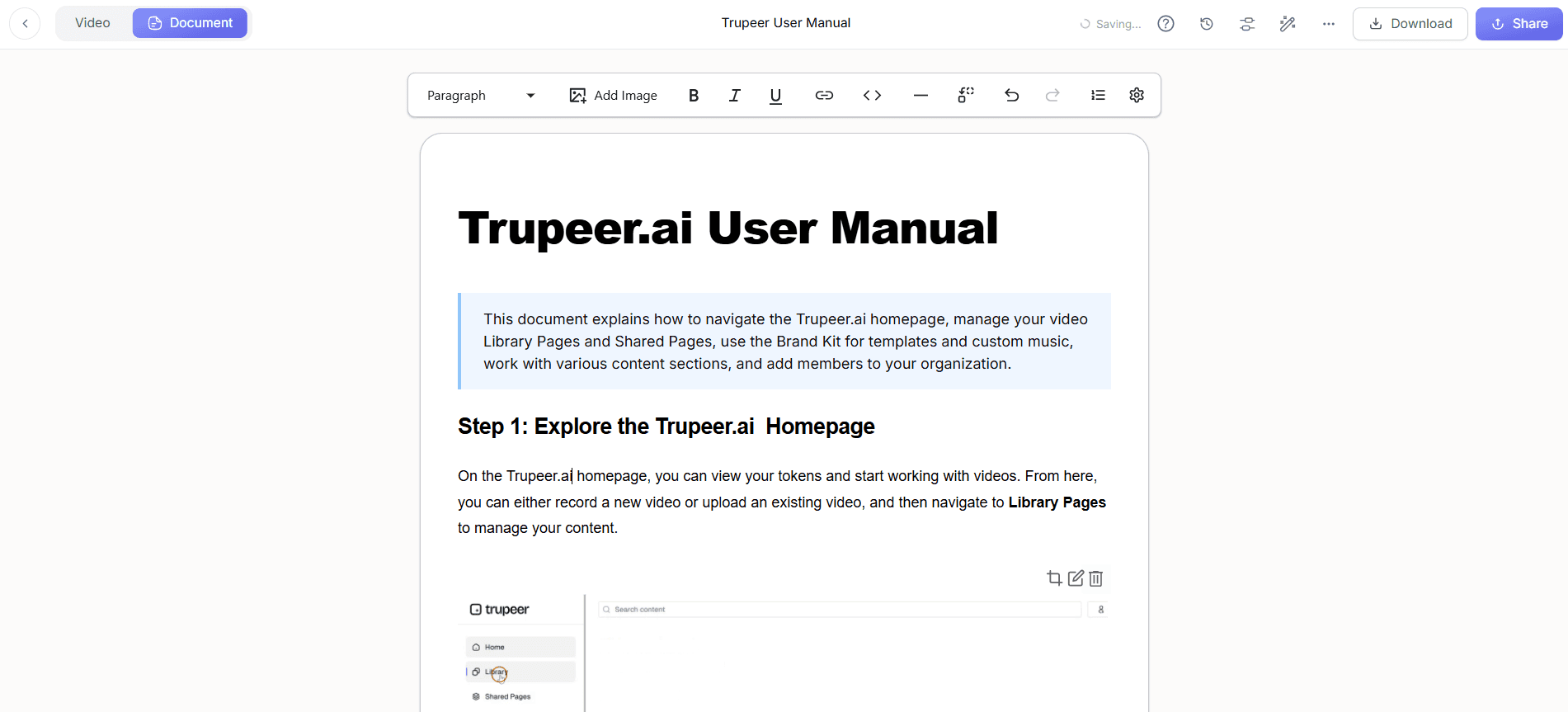
Once the recording is complete, use Trupeer’s automatic SOP generation feature. Click on the ‘Generate SOP’ option in the dashboard. Trupeer will convert your recording into a structured SOP, outlining each step with detailed descriptions. This process takes about 10 minutes and results in an editable document that you can export in various formats like PDF or HTML. This ensures that the SOP remains consistent with the recorded process and can be easily updated as necessary.

Step 3: Update documentation automatically
With the SOP generated, enable Trupeer’s auto-updating documentation feature. Link your SOP to the underlying recording by selecting the ‘Auto-update’ option. This ensures that any changes made to the video are automatically reflected in the documentation. It saves time and maintains accuracy, as you’ll no longer need to manually revise the documents whenever there’s a change in the process. This feature is particularly useful for dynamic projects where procedures frequently change.

Step 4: Add AI avatars for enhanced explanation
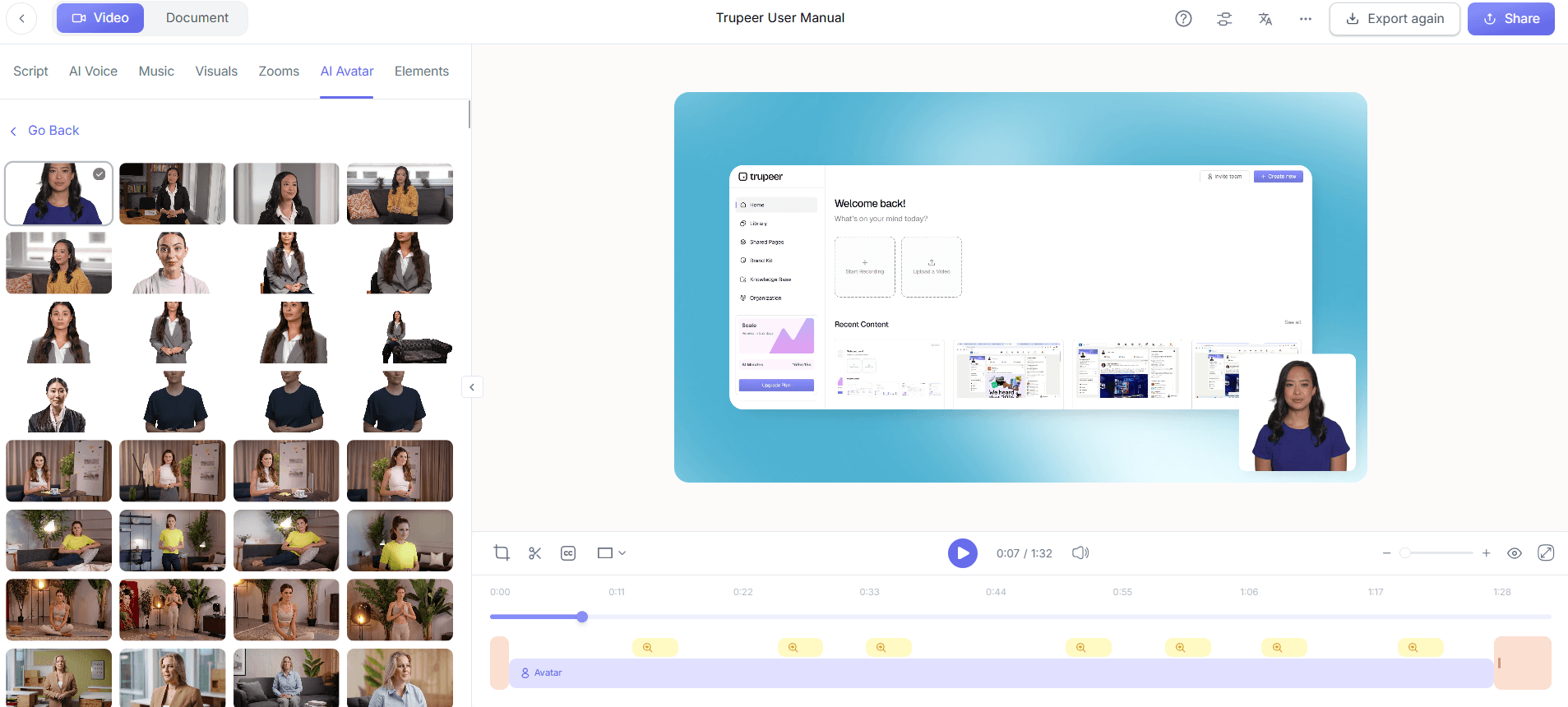
To make the documentation more engaging, incorporate Trupeer’s AI avatars. Choose an avatar from the stock library or customize one to fit your brand. Add the avatar to your video recordings by selecting the ‘Add Avatar’ option. This feature brings your documentation to life, providing a virtual presenter that can explain complex procedures. It’s an effective way to enhance understanding, especially in training scenarios where visual aids can significantly improve retention.

Step 5: Analyze viewer engagement
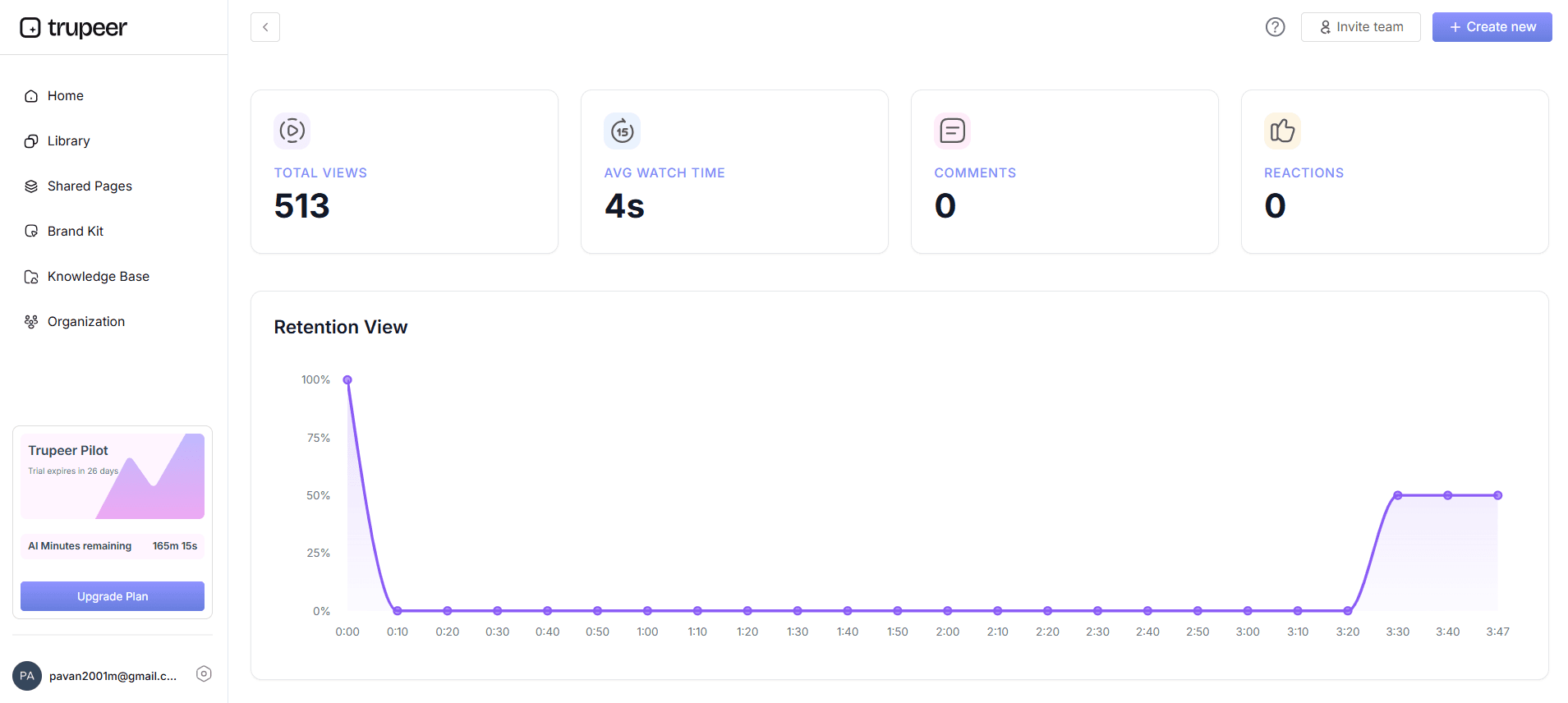
Use Trupeer’s viewer engagement analytics to assess how your team interacts with the documentation. Navigate to the ‘Analytics’ section in the Trupeer dashboard. Here, you’ll find detailed insights into viewer behavior, including drop-off rates and heatmaps. This data helps identify which sections of the documentation are most engaging and which might need more clarity. By understanding these metrics, you can refine your documentation strategies to better meet the needs of your team. Teams weighing tools often start with a Loom alternatives comparison before standardizing on a workflow.

Step 6: Share and distribute the documents
Finally, distribute the finalized documents using Trupeer’s custom-domain hosting and shared pages features. Upload your documents to the Trupeer platform and select the ‘Share’ option. You can choose to host the documents on a custom domain or create client-facing portals. This ensures that your engineering team and stakeholders have easy access to the latest documents. With the secure sharing options, you can control who views the documents, ensuring that sensitive information remains protected.

What tips help you automate revision tracking?
Effective document control requires more than just tools; it needs strategic implementation. Here are some tips to maximize the efficiency of your automated revision tracking using Trupeer.
Standardize your processes. Develop a consistent format for all documents and videos to ensure uniformity and reduce confusion. This can be achieved by using a Scribe alternative comparison to refine your approach.
use AI for content creation. use Trupeer’s AI capabilities for creating and updating content, which saves time and reduces manual effort.
Regularly review analytics. Check the engagement analytics to understand how your documentation is used. This allows you to identify and address areas that need improvement.
Ensure security and compliance. Use Trupeer’s secure sharing options to protect sensitive information and ensure compliance with industry standards.
Maintain clear communication. Keep all stakeholders informed about changes and updates in documentation to avoid miscommunication and errors.
Train your team. Conduct regular training sessions to familiarize your team with the tools and processes. This can be done using a document generation workflow automation software.
Automate routine tasks. Use automation wherever possible to handle repetitive tasks, freeing up your team to focus on more strategic work.
Frequently asked questions
How does Trupeer handle version control for documents?
Trupeer manages version control by automatically updating documentation linked to the original recordings. Whenever changes are made to a video, the connected documents are updated automatically, ensuring that all versions remain current. This feature eliminates the need for manual updates and reduces the risk of errors. By maintaining a single source of truth, Trupeer ensures that all team members have access to the most recent information, facilitating better collaboration and decision-making.
What makes Trupeer's AI screen recording unique?
Trupeer’s AI screen recording stands out due to its auto-zoom and click detection capabilities. This feature captures screen activity with a focus on critical actions, automatically zooming in on key interactions. It ensures that the most important parts of a process are emphasized without manual intervention. This intelligent recording capability not only saves time but also enhances clarity and understanding, making it an invaluable tool for documenting complex engineering processes.
Is it possible to integrate Trupeer with other tools?
Yes, Trupeer offers extensive integration options with other tools, enhancing its functionality and adaptability. It can be integrated with popular platforms for smooth workflow automation and collaboration. This interoperability ensures that Trupeer fits into your existing tech stack without disrupting established processes. By using these integrations, engineering teams can enhance their document control capabilities and improve overall productivity.
Can Trupeer improve document security?
Trupeer significantly enhances document security through its advanced sharing and hosting options. By offering custom-domain hosting and client-facing portals, it allows for controlled access to sensitive documents. Users can set permissions and access levels to ensure that only authorized personnel can view or edit documents. This solid security framework is crucial for protecting proprietary information and maintaining compliance with industry regulations.
Does Trupeer support multiple languages for documentation?
Yes, Trupeer supports multiple languages through its AI translation capabilities. With the ability to translate content into over 40 languages, it ensures that documentation is accessible to a global audience. This feature is essential for multinational engineering teams that require clear communication across language barriers. The AI video translation capabilities also include lip-sync and dubbing for non-English audiences, making it a comprehensive solution for international collaboration.