Trupeer Blog
Обобщение
Imagine working in a bustling government office where information is constantly flowing between departments, yet the systems in place make accessing that knowledge cumbersome. This is a reality for many civil service teams that rely on outdated methods for knowledge sharing. In this dynamic environment, having a solid knowledge base isn't just beneficial; it's essential. One might wonder how effective a video-first strategy can be at best knowledge base examples for the public sector. Consider this: a survey found that organizations using video content see a 41% uptick in employee engagement. This isn't just about making data accessible, it's about transforming how civil service teams operate. By implementing a video-focused knowledge base, you're not only easing the flow of information but also ensuring it reaches the right people, efficiently. Civil service teams often span languages and tenure levels, so a scalable strategy is crucial. Video content can bridge these gaps by providing clear, consistent, and engaging information that text alone might fail to convey.
Why does a video-first knowledge base strategy matter for civil service teams?
Civil service teams face unique challenges compared to the private sector, particularly in terms of information dissemination and retention. In a typical government office, there are multiple departments, each with its own procedures and protocols. Yet, these departments often need to work together smoothly. Without a comprehensive knowledge base, this can lead to inefficiencies, miscommunication, and delayed decision-making. The stakes are particularly high because these inefficiencies can directly affect public services. A knowledge base that incorporates video content helps break down these barriers by providing a centralized platform where all team members can access the same information in an easily digestible format.
Also, civil service teams often deal with a high turnover rate due to retirements and departmental shifts. This results in a constant need for training newcomers and ensuring they are up to speed with existing processes. Traditional training methods can be time-consuming and inconsistent. A video-first knowledge base addresses these issues by offering a consistent, reusable training resource that can be accessed anytime. Videos can be easily updated to reflect changes in procedures, ensuring that the latest information is always available. This is particularly critical in the public sector where policies and procedures frequently change. By providing training videos use case, you ensure that knowledge transfer is smooth, reducing the learning curve for new employees.
What are the benefits of a video-focused knowledge base for civil service?
Integrating video content into your knowledge base offers several advantages that directly address the challenges faced by civil service teams.
Enhanced Engagement. Videos are more engaging than text, keeping civil servants attentive and improving information retention. This leads to more informed decision-making.
simplified Training. Reusable video content expedites training and onboarding, reducing time spent on new employee orientation by up to 60%.
Consistent Information. A single AI video platform ensures consistency in the information disseminated across departments, reducing the chances of miscommunication.
Time Efficiency. Employees spend less time searching for information, with videos providing quick, on-demand answers, so improving productivity.
Language Inclusivity. Videos can be dubbed and translated, making them accessible to a multilingual workforce, which is crucial in diverse civil service environments.
Cost-Effective Updates. Videos can be easily updated as policies change, ensuring that everyone is working with the latest information without significant additional costs.
Teams weighing tools often start with a Loom alternatives comparison before standardizing on a workflow.
Which Trupeer features help you implement a video-first knowledge base strategy?
Trupeer offers a suite of features that make implementing a video-first knowledge base strategy efficient and effective for civil service teams.
AI screen recording with auto-zoom and click detection
This feature captures on-screen activities with precision, automatically focusing on relevant areas and detecting clicks. For civil service teams, this means creating clear and concise instructional videos is straightforward. Auto-zoom ensures that viewers can see the necessary details without manual editing, saving time and effort. This is particularly beneficial in scenarios where intricate software or procedural details need to be communicated clearly to staff across various departments. Trupeer also ships a online knowledge base software teams customers that handles this step without extra setup.
Silent screen recording with automatic AI narration
Trupeer's silent screen recording allows you to capture processes without background noise, while AI-generated narration adds a professional touch. This is ideal for creating training materials where the focus is on the content rather than the environment. Narration can be customized in tone and pace, ensuring it aligns with the civil service's communication style. This automatic narration makes it easy to create polished videos that are ready for distribution without additional voiceover work.
Automatic filler-word removal
When creating educational content, clarity is key. Trupeer's automatic filler-word removal eliminates unnecessary "um" and "ah" from recordings, producing clean and concise videos. This feature is crucial when information needs to be clear and direct, as in instructional or policy explanation videos. It enhances the professionalism of the content and ensures that viewers can focus on the important information without distractions.
AI voiceover in 65+ natural voices, adjustable pace and tone
This feature allows civil service teams to tailor their video content to diverse audiences. With over 65+ natural voices available, you can select the one that best suits your audience's needs, whether you need a formal tone for policy directives or a conversational tone for internal training. This versatility ensures that all team members receive information in a manner that resonates with them, enhancing understanding and retention.
AI-searchable knowledge base with timestamp deep-links
Trupeer's AI-searchable knowledge base is a big shift for civil service teams. Every video is indexed with timestamp-level deep links, making it easy to find specific information quickly. This feature is vital for large teams with varied information needs. For example, if a staff member needs to revisit a specific policy section, they can quickly locate the precise moment in the video where it's discussed, enhancing efficiency and reducing search time.
How do you implement a video-first knowledge base strategy step by step with Trupeer?
Step 1: Initiate Screen Recording
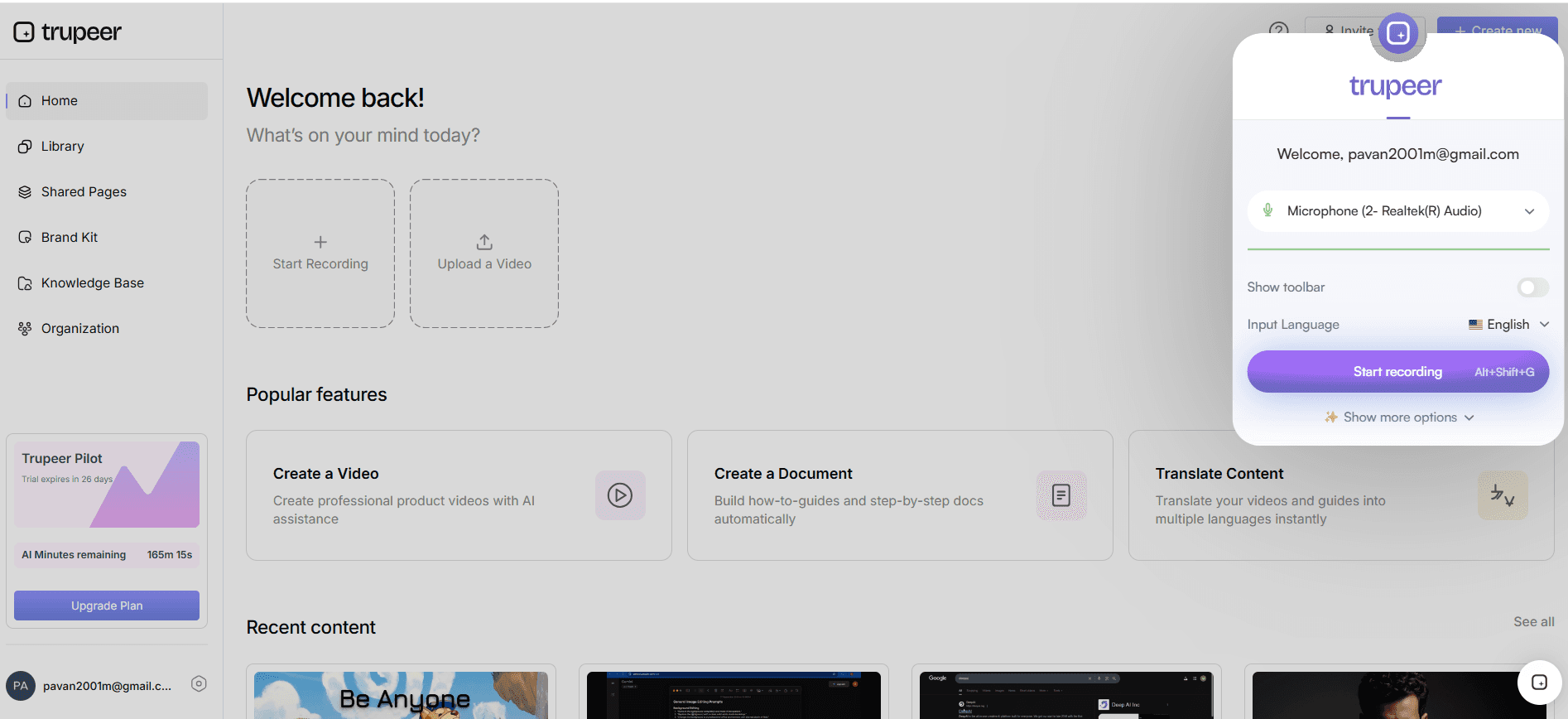
Begin by using Trupeer's browser-based recorder for a smooth recording experience without the need for installation. Click the "Record" button to start capturing your screen. Trupeer's AI capabilities automatically detect and zoom in on important actions, ensuring clarity. This feature is especially useful when demonstrating complex procedures for civil service tasks. The recording is saved directly to the cloud, making it instantly accessible for editing. With no software installation required, this step reduces setup time, allowing you to focus on content creation. Remember, the auto-zoom feature ensures that viewers won't miss any critical details.
Step 2: Edit the Recording
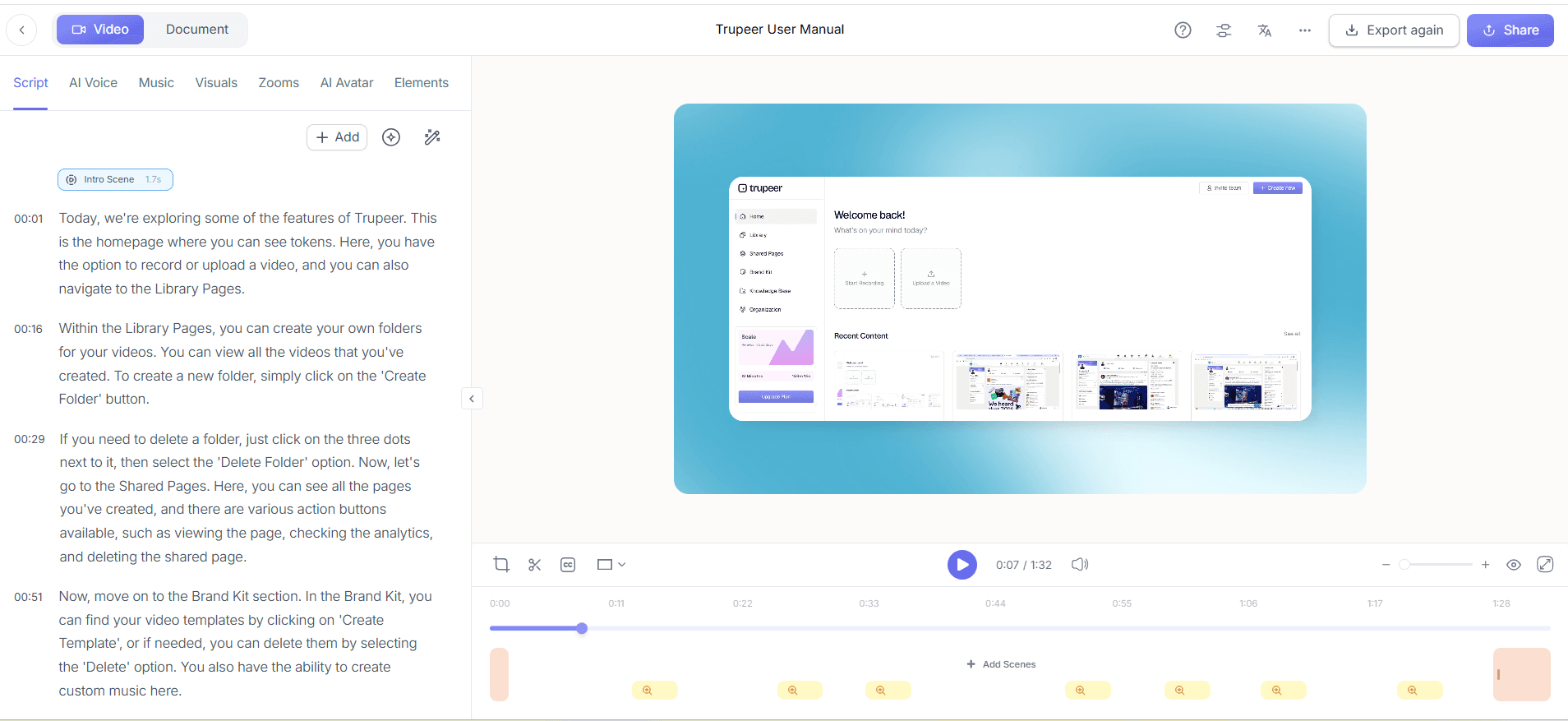
Once your recording is complete, use Trupeer's automatic filler-word removal to refine the content. This feature eliminates unnecessary pauses and filler words, creating a polished video ready for distribution. Access the editing tools directly from your dashboard. You can also add AI-generated voiceovers by selecting from over 65+ natural voices. Adjust the pace and tone to match the formal or informal style required for your audience. This step is crucial for maintaining professionalism and clarity in your videos, especially when conveying detailed policies or procedures. For a deeper look, our guide on knowledge base one covers the adjacent playbook.
Step 3: Generate Automatic SOPs
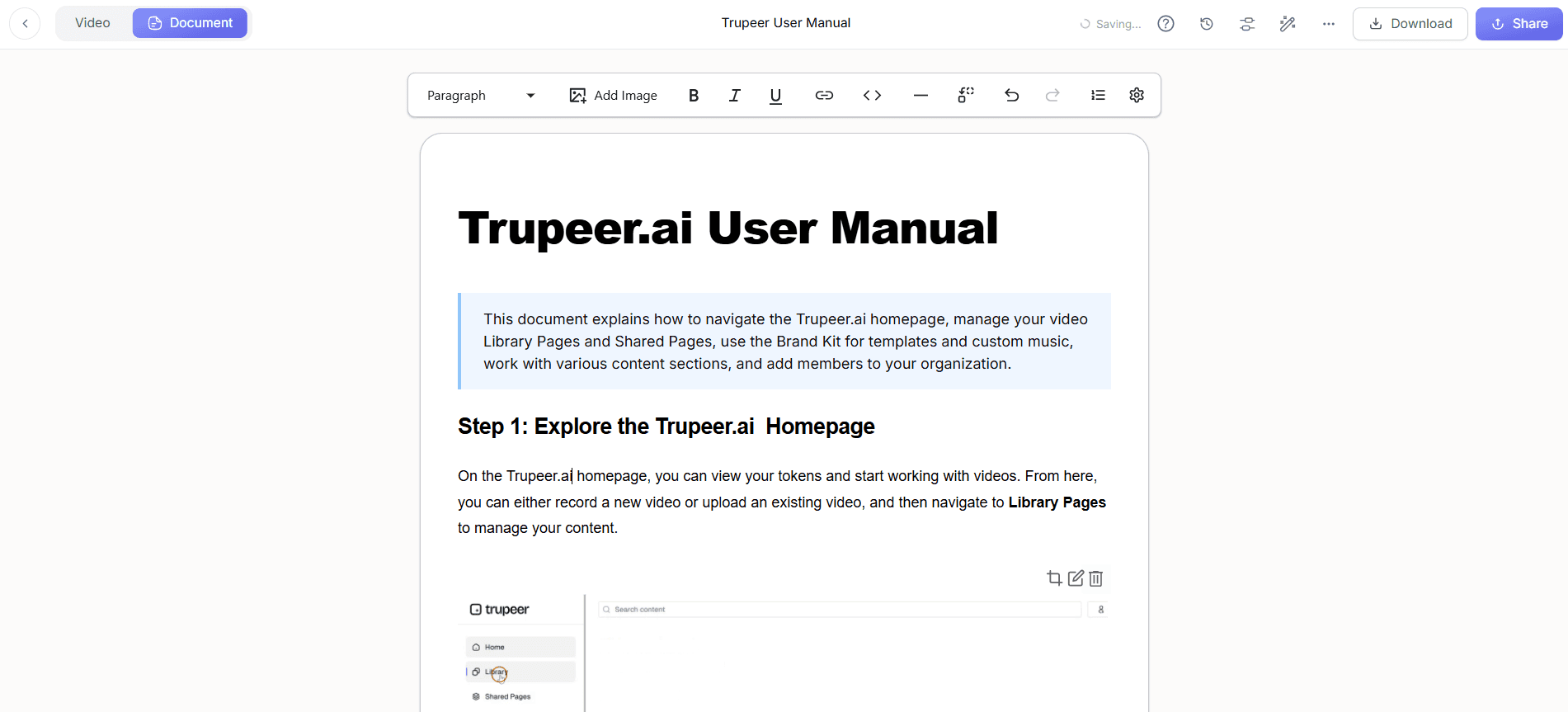
After editing, use Trupeer's automatic SOP generation feature to create documentation from your recording. This capability transforms your video into an easy-to-follow standard operating procedure. Click the "Generate SOP" button, and Trupeer will provide an editable document that can be exported in various formats such as PDF or HTML. This is invaluable for civil service teams needing to maintain up-to-date documentation. Quick updates can be made directly in Trupeer, ensuring the SOPs stay current with evolving practices and policies.
Step 4: Localize Your Content
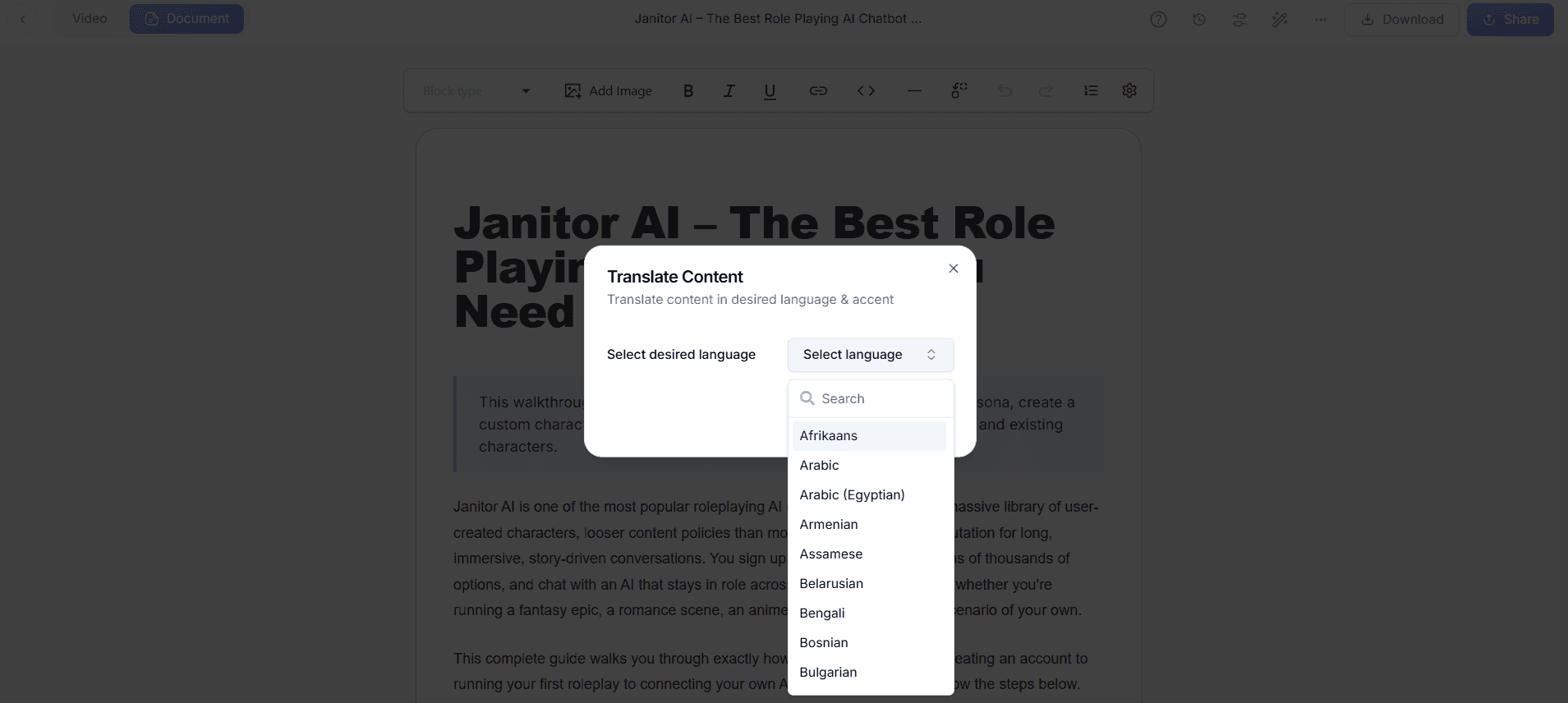
For teams working in multilingual environments, Trupeer's AI translation and dubbing features are essential. Select "Translate" in the video settings to convert your content into over 40 languages. The AI ensures accurate lip-sync, making the video accessible to a broader audience. This step is critical for reaching all team members, regardless of language proficiency. It allows civil service teams to unify communication efforts across diverse linguistic groups, promoting inclusivity and understanding.
Step 5: Create a Searchable Knowledge Base
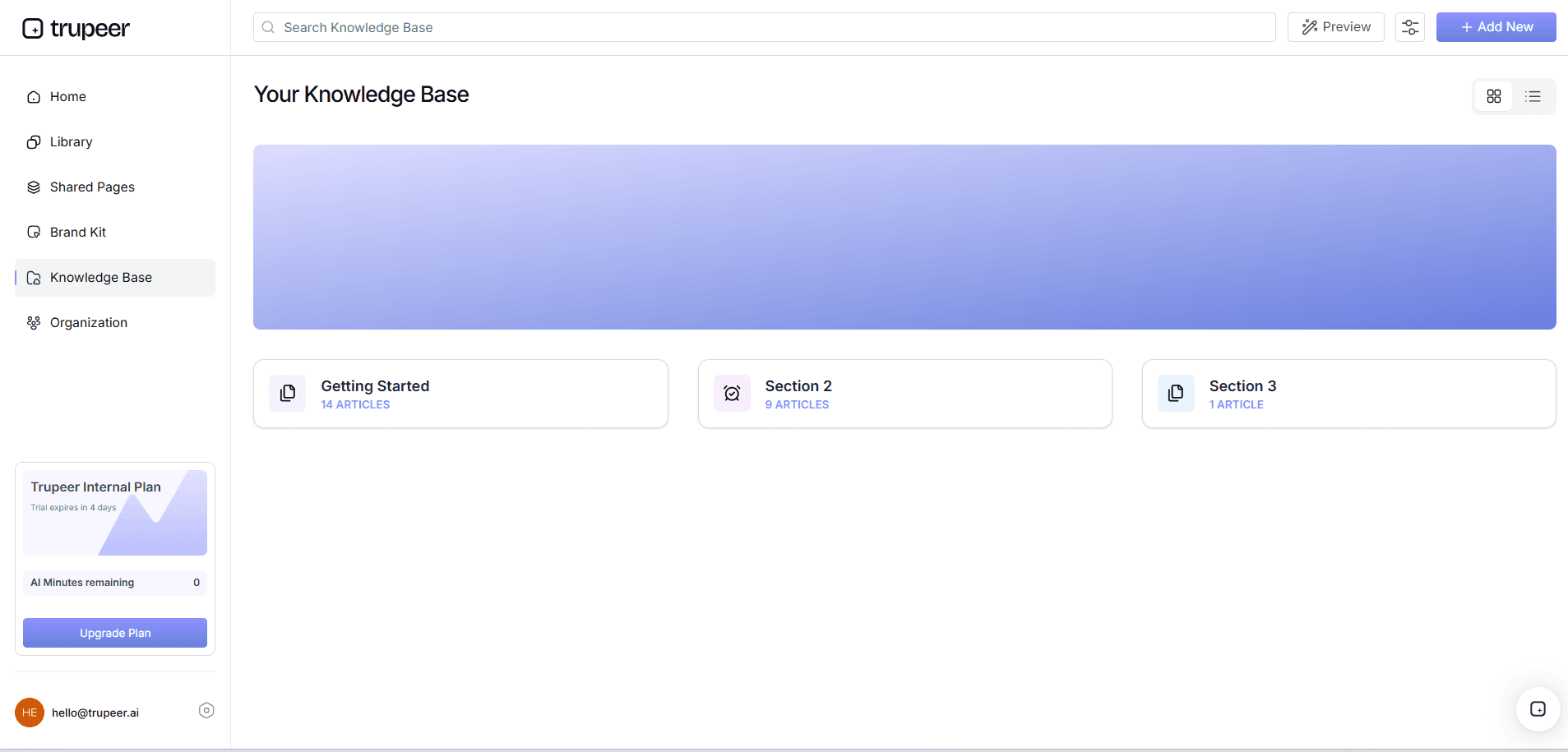
Integrate your videos into Trupeer's AI-searchable knowledge base. Upload the videos and use timestamp deep-links to make specific sections easily accessible. This setup allows staff to quickly find relevant information without watching entire videos. It's especially helpful for civil service teams needing quick access to particular policy details or procedural steps. The searchable knowledge base ensures that your video content is as efficient and accessible as possible, simplifying information retrieval in busy office settings.
Step 6: Distribute and Analyze
Finally, distribute your video content through shared pages or client-facing portals. Trupeer's collaborative review and approval workflows ensure that all videos meet department standards before release. Use the viewer engagement analytics to assess how well your materials are performing. Heatmaps and drop-off rates provide insights into which sections engage viewers the most, allowing for continuous improvement. This step ensures that your knowledge base remains effective and user-friendly, adapting to the needs and feedback of your civil service team.
What tips help you implement a video-first knowledge base strategy?
Implementing a video-first knowledge base strategy requires careful planning and execution. These tips will help you optimize the process and ensure success.
Plan Your Content. Outline key topics and procedures to cover in your videos, ensuring comprehensive coverage of essential information.
Engage with Visuals. Use visuals like charts and diagrams to complement your video content, enhancing understanding and retention.
Standardize Formats. Maintain a consistent format and style across all videos to reinforce brand identity and provide a uniform viewing experience.
Use a Knowledge Base Generator. use a knowledge base generator to simplify video integration and maintain organized content.
Review Regularly. Periodically review and update your video content to ensure it remains accurate and relevant to current policies and procedures.
Train Your Team. Provide training on using the video knowledge base to ensure all staff can access and benefit from the resources effectively.
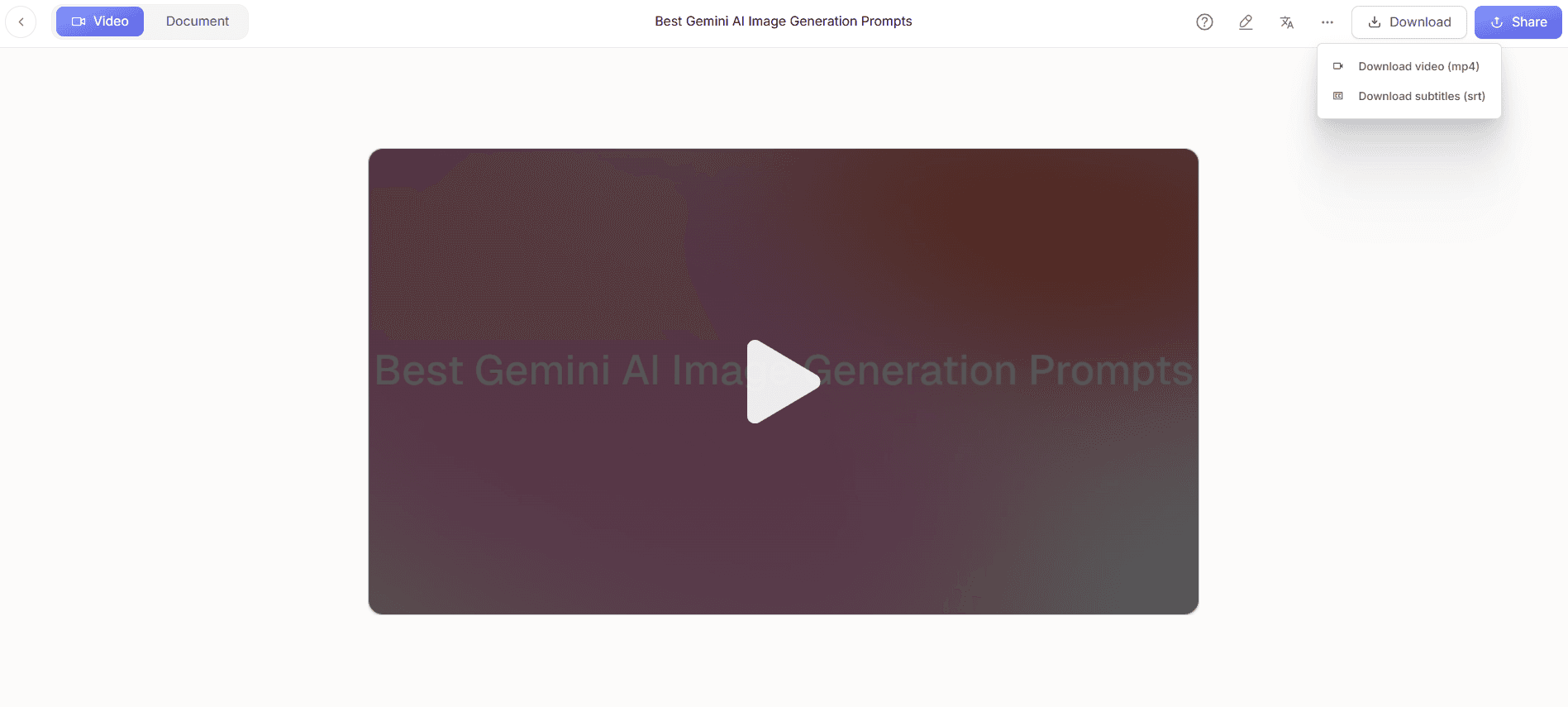
Promote Accessibility. Ensure your videos are accessible to all users, with options for subtitles and translations as needed.
When SOPs come into the same conversation, a Scribe alternatives comparison helps clarify the scope.
Frequently asked questions
How can a video-first knowledge base improve civil service efficiency?
A video-first knowledge base enhances efficiency by providing quick access to information, which reduces time spent searching for answers. Videos offer clear, concise instructions that are easier to follow than text, leading to faster comprehension and application of necessary tasks. For civil service teams, this means more simplified operations and less downtime caused by miscommunication or misunderstanding. By integrating videos, employees can efficiently access the knowledge they need, improving overall productivity and service delivery.
What makes Trupeer suitable for civil service knowledge bases?
Trupeer is ideal for civil service knowledge bases due to its comprehensive features tailored to large teams with diverse needs. Its AI capabilities, like automatic SOP generation and AI translation, ensure that content is both accurate and accessible. also, the searchable knowledge base with deep-links makes it easy for staff to find specific information quickly. These features help civil service teams maintain up-to-date, organized, and accessible information, crucial for effective public service delivery.
Why is video content more effective than text for training?
Video content is generally more engaging than text, which leads to better retention rates and understanding. With the ability to show processes visually, videos can demonstrate complex procedures more clearly than written instructions. This is particularly beneficial in training scenarios where seeing a task performed is more informative than reading about it. For civil service teams, videos offer a dynamic and interactive way to learn, ensuring that employees are well-prepared to execute their duties effectively.
Can Trupeer's AI features accommodate language diversity in civil service teams?
Yes, Trupeer's AI features are designed to accommodate language diversity. Its AI translation and dubbing capabilities allow videos to be translated into over 40 languages, with accurate lip-sync, making them suitable for multilingual teams. This ensures that all employees, regardless of their primary language, can access and understand the information, promoting inclusivity and effective communication. For more on how this works, explore the AI video translation options available.
Does using a video-first approach require significant resources?
Initially, adopting a video-first approach may require resources to set up and train staff. However, it often proves cost-effective in the long run. Videos can be reused and updated easily, reducing the need for repetitive training sessions. The automation features of Trupeer, like AI-generated voiceovers and filler-word removal, simplify production, minimizing ongoing costs. This investment in video content ultimately saves time and resources by making information more accessible and training more efficient.