Trupeer Blog
Voice Cloning Accuracy: How AI Voices Compare to Professional Voiceover
Imagine you're responsible for producing a series of training videos for your company. The deadline is tight, the budget is limited, and the content needs to be localized into multiple languages. Hiring a professional voiceover artist for each language could be costly and time-consuming. Enter AI voice cloning, a technology promising to mimic human speech with precision. But how accurate are these AI-generated voices compared to professional voiceovers? According to a recent blog on Trupeer.ai, AI voices have reached an impressive 90% accuracy rate in mimicking human speech patterns.
Yet, the stakes remain high. Training materials must convey information clearly and effectively. A slight deviation in tone or pronunciation can alter the message entirely. For instance, an AI voice with a 90% accuracy rate might still miss the subtle emotional cues a human voiceover artist inherently delivers. This difference can affect how your audience perceives and engages with the content. Therefore, understanding the capabilities and limitations of AI voice cloning is crucial for decision-makers in industries like e-learning, marketing, and content creation.
For those managing content at scale, the choice between AI and professional voiceovers is not just about cost but about quality, consistency, and adaptability. With AI voices becoming more sophisticated, it's essential to determine where they fit best within your content strategy. Are there scenarios where AI can match or even surpass human performance? This discussion aims to clarify these questions for those handling the challenges and opportunities of AI-driven voice solutions.
Why does voice clone accuracy matter?
The accuracy of voice cloning matters significantly in the business landscape, impacting how effectively companies can communicate with their audiences. For marketing teams, an inaccurate AI voice can lead to misunderstandings, potentially harming brand perception. In training and development, clarity and engagement are paramount. An AI voice that lacks the emotional depth of human delivery might not hold the learner's attention, reducing the effectiveness of training modules. The repercussions of these inaccuracies can be costly, both financially and reputationally.
Also, the growing demand for personalized content means that businesses must adapt quickly to different dialects and languages. Accurate voice cloning allows for quicker localization, enabling companies to reach global markets without the logistical challenges of hiring multiple voiceover artists. This adaptability is crucial for maintaining a competitive edge. As AI continues to integrate into our daily operations, understanding its limitations and strengths ensures that it complements rather than compromises your business objectives. Teams weighing tools often start with a Loom alternatives comparison before standardizing on a workflow.
Also, voice cloning accuracy affects the integrity of your brand's message. A high-quality voice clone maintains the intended tone, ensuring consistency across various platforms and media. This consistency is vital for building trust and loyalty among your audience. In contrast, inaccuracies can lead to mixed messages, confusing your audience and diluting your brand identity. Therefore, businesses must carefully evaluate how and when to implement AI voice solutions, weighing the benefits of speed and cost against the potential impact on brand perception.
What are the benefits of accurate voice cloning?
Accurate voice cloning offers several tangible benefits for businesses across industries, enabling them to simplify operations and enhance communication.
Cost efficiency. AI voice cloning reduces the need for multiple voiceover artists, cutting costs significantly. This efficiency is particularly beneficial for companies producing content at scale.
Speed of production. AI-generated voices can be produced faster than human recordings, accelerating content creation timelines. This is crucial for businesses needing to respond quickly to market demands.
Consistency in messaging. With AI, you can ensure a uniform voice across all content, maintaining brand consistency and enhancing customer recognition.
Localization and scalability. AI voice cloning supports multiple languages, facilitating easier entry into international markets without the extensive resources traditionally required.
Adaptability. AI voices can be fine-tuned to match different tones and styles, offering flexibility that human voices may not provide in certain contexts.
Access to large voice libraries. AI platforms often come with extensive libraries of voices, giving businesses a wide selection to choose from without additional costs or time investments.
Which Trupeer features help you achieve voice cloning accuracy?
Trupeer offers several advanced features that enhance voice cloning accuracy, making it a valuable tool for businesses looking to integrate AI voice solutions into their operations.
AI voiceover in 65+ natural voices, adjustable pace and tone
Trupeer's AI voiceover capabilities allow you to choose from over 65+ natural voices, enabling you to find the perfect match for your content. The platform provides options to adjust both pace and tone, ensuring that the AI-generated voice aligns with the specific needs of your project. This flexibility is crucial for maintaining the authenticity and engagement of your content, whether it's for marketing materials or internal training videos.
AI voice cloning from a short sample
With Trupeer, you can create accurate voice clones from brief audio samples. This feature is especially beneficial for projects that require the voice of a specific individual, such as a brand ambassador or company spokesperson. By cloning a voice from a short recording, you maintain continuity across your content, reinforcing your brand's identity and message. The precision of Trupeer's voice cloning technology ensures that the nuances of the original voice are preserved, enhancing the overall quality of your audio assets.
Silent screen recording with automatic AI narration
Trupeer's silent screen recording feature, combined with automatic AI narration, offers a smooth way to produce narrated content without the need for live voiceover sessions. This capability is ideal for creating tutorials and explainer videos where time and resources are limited. The AI-generated narration integrates smoothly with the recorded visuals, delivering a professional and polished final product. By eliminating background noise and other distractions, this feature enhances the clarity and effectiveness of your communication.
AI translation into 40+ languages with lip-sync
Trupeer's AI translation feature supports over 40 languages, complete with lip-sync capabilities. This allows businesses to localize their content efficiently, reaching global audiences without sacrificing quality. The integration of accurate translations with synchronized lip movements ensures a natural viewing experience, vital for maintaining viewer engagement and trust. By using auto-generated documentation, businesses can simplify their workflow and reduce the time spent on manual translations.
AI-searchable knowledge base
Trupeer's AI-searchable knowledge base indexes every recording with timestamp-level deep links, making it easy to find and reference specific content. This feature is particularly useful for organizations that produce a large volume of audio and video content, as it enables efficient content management and retrieval. By providing a structured and accessible repository of information, Trupeer enhances your ability to use your audio assets effectively, ensuring that your voice cloning efforts are both efficient and impactful.
How do you achieve voice cloning accuracy step by step with Trupeer?
Step 1: Capture a High-Quality Voice Sample
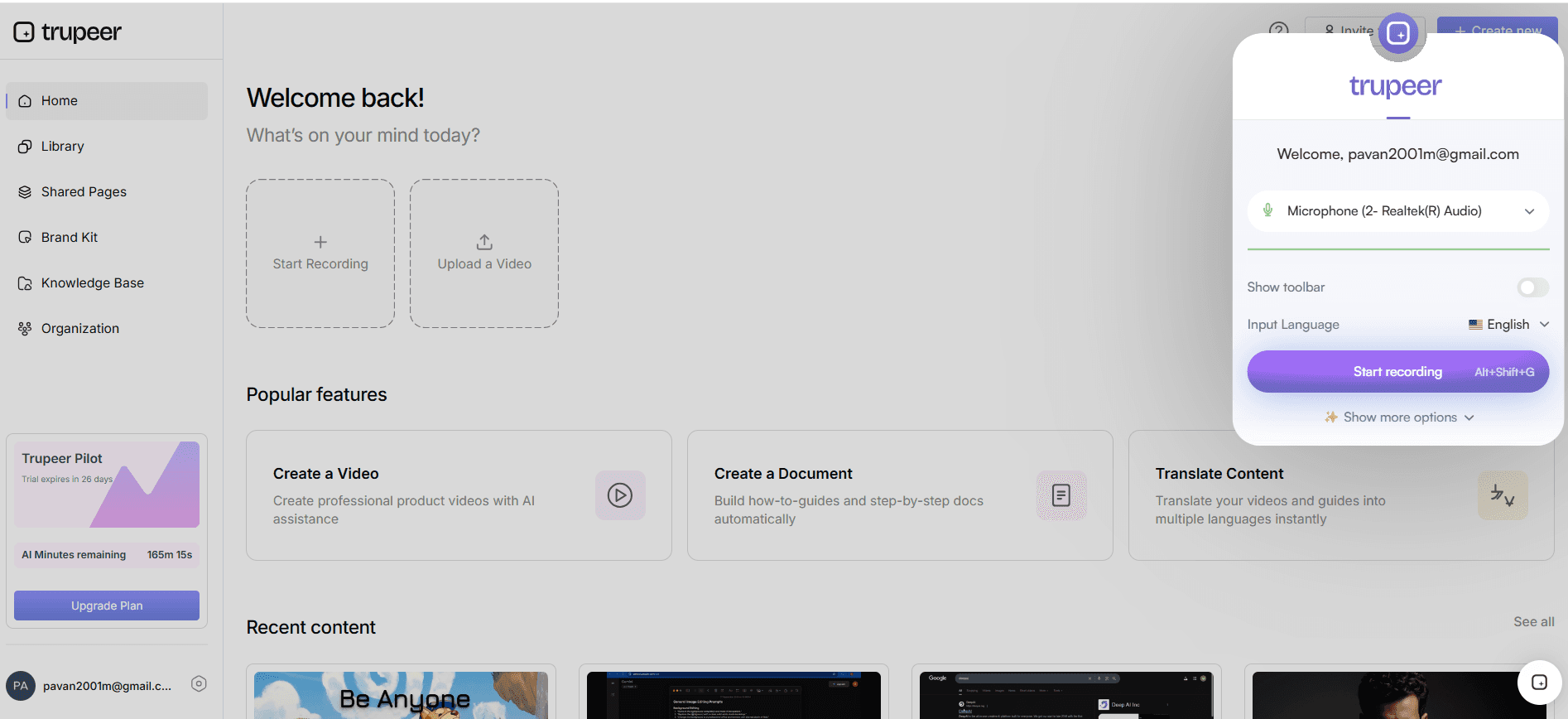
Begin by recording a high-quality voice sample using Trupeer's browser-based recorder. Ensure the environment is quiet and free from background noise to capture the speaker's voice accurately. The recording should be at least one minute long to provide enough data for effective voice cloning. Trupeer's AI screen recording with auto-zoom and click detection ensures that your sample is clear, focusing on capturing only the necessary audio without distractions. This step is crucial, as the accuracy of the voice clone heavily relies on the quality of the initial recording.
Step 2: Upload and Process the Voice Sample
Once you've recorded the sample, upload it to Trupeer's platform. Navigate to the AI voice cloning section and select the option to create a new voice model. Trupeer processes the sample using advanced algorithms to analyze the unique vocal characteristics. This process typically takes a few minutes, depending on the length and quality of the sample. During this time, Trupeer identifies key attributes such as pitch, tone, and speech patterns, which are essential for creating an accurate voice clone.
Step 3: Customize Voice Parameters
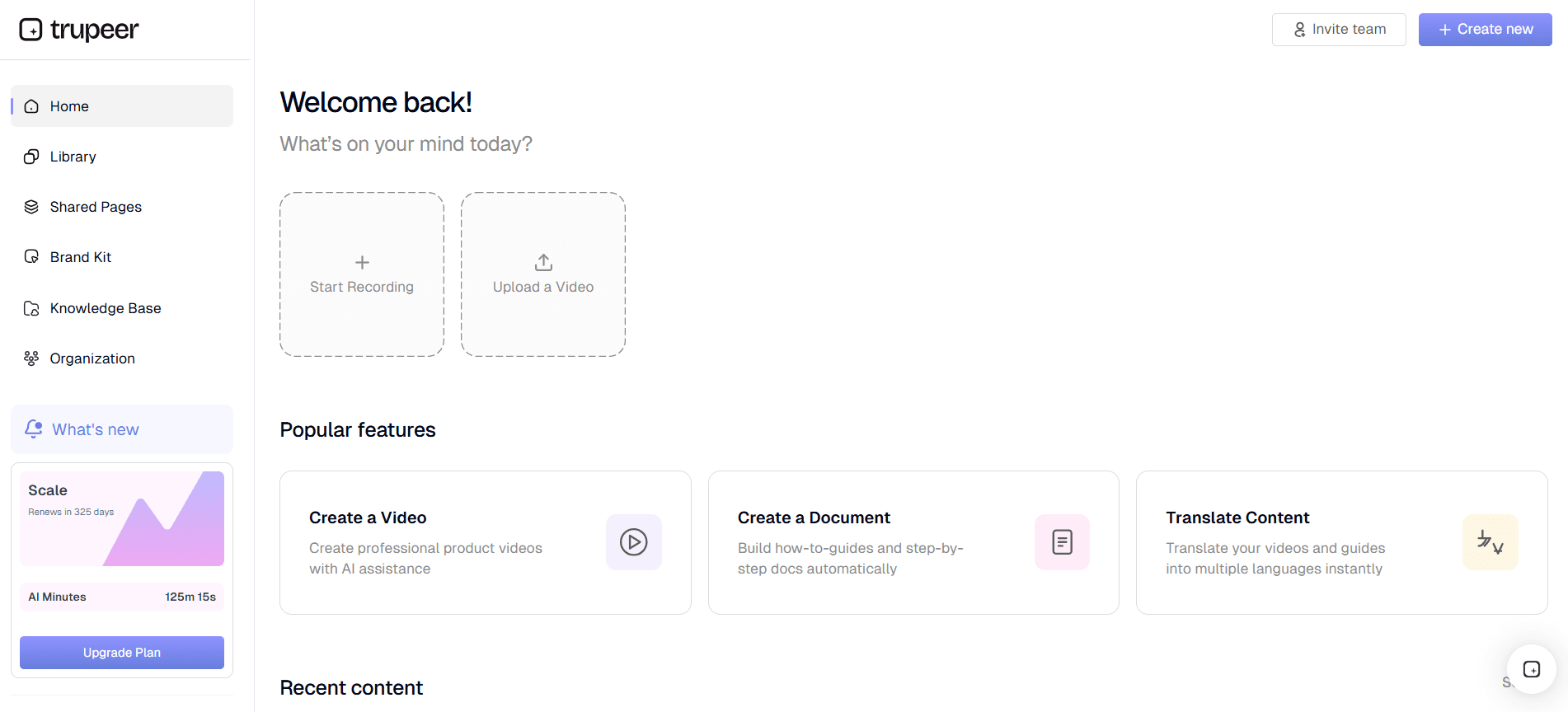
After processing the sample, you can customize the voice parameters to match your desired output. Trupeer allows you to adjust the pace and tone of the AI voice to suit different needs. For instance, you might want a slower pace for training materials or a more upbeat tone for marketing content. Experiment with these settings to achieve the most authentic-sounding voice. Trupeer's interface provides real-time feedback, so you can hear how changes affect the voice instantly. Trupeer also ships a convert voice to ai video in minutes that handles this step without extra setup.
Step 4: Integrate the Voice into Your Content
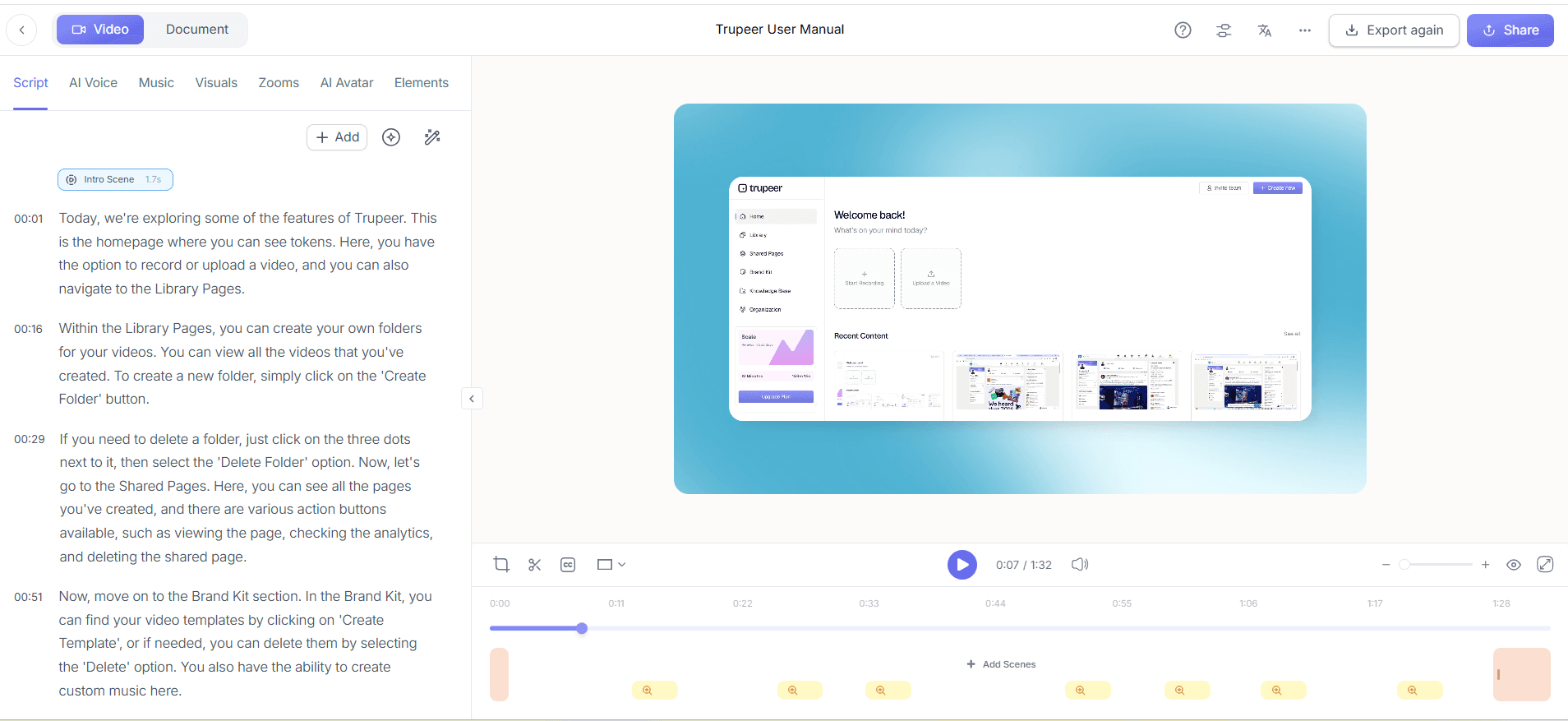
With the voice model ready, integrate it into your content using Trupeer's silent screen recording with automatic AI narration feature. Select the video or presentation you wish to enhance and apply the AI-generated voice. Trupeer synchronizes the audio with the visual elements, ensuring a smooth blend. This step is particularly effective for tutorials and presentations where the visual focus is as crucial as the audio delivery. The AI narration maintains clarity and engagement, vital for effective communication.
Step 5: Review and Refine
Once the AI voice is integrated, review the final product. Trupeer allows for easy adjustments, so listen to the output and refine the parameters if necessary. Pay attention to any mispronunciations or unnatural pacing, and tweak the settings to correct these issues. This iterative process may take a few revisions but ensures that the final content meets your quality standards. Trupeer’s collaborative review and approval workflows facilitate feedback from team members, simplifying the refinement process.
Step 6: Distribute and Monitor Engagement
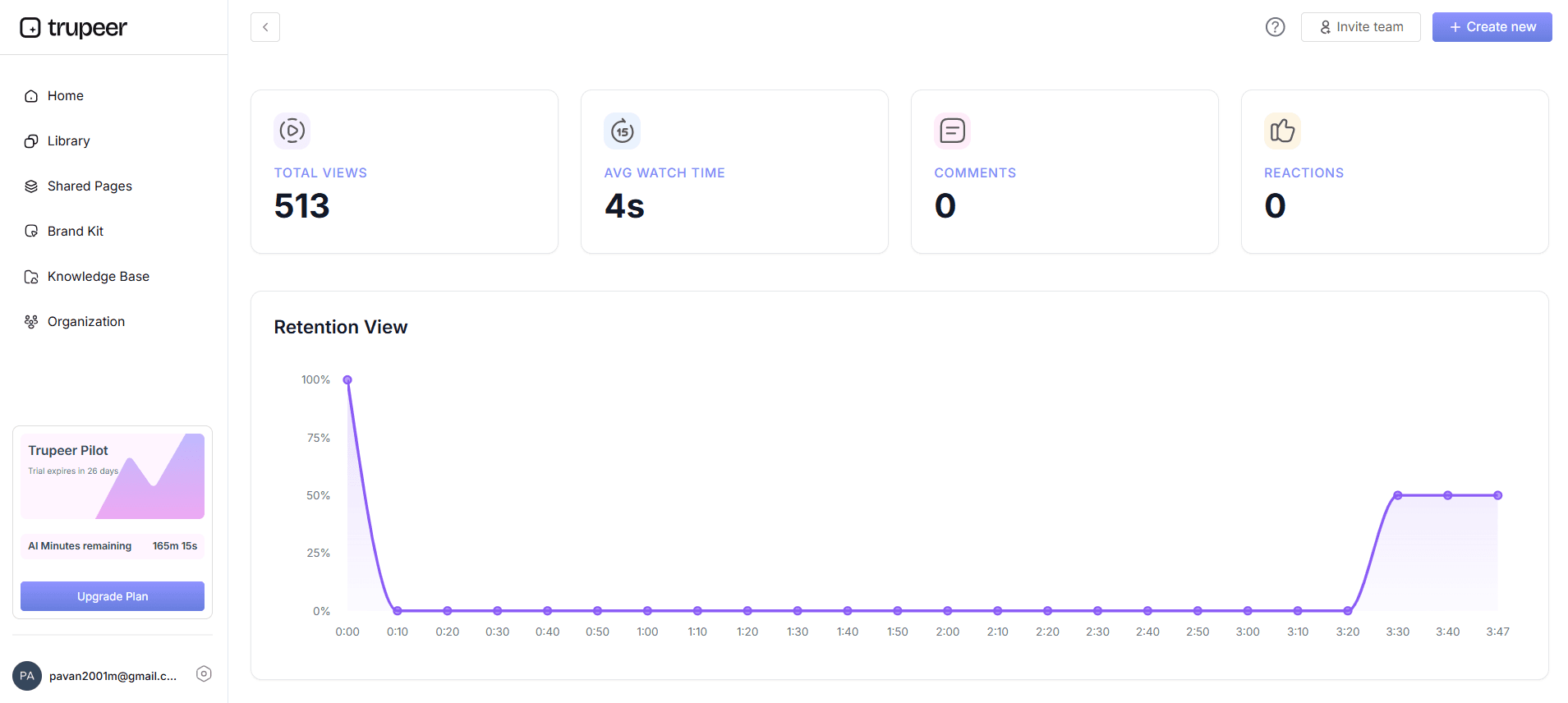
After finalizing your content, use Trupeer's distribution features to share it with your audience. Host the video on a custom-domain portal or embed it as an in-app guidance widget. Trupeer provides detailed viewer engagement analytics, allowing you to monitor how the audience interacts with the content. Analyze metrics such as drop-off points and heatmaps to understand engagement levels. This data helps assess the effectiveness of the AI voice and guides future improvements in your voice cloning strategy. This same approach shows up in the ai adoption use case, where teams apply it at scale.
What tips help you achieve voice cloning accuracy?
Achieving high voice cloning accuracy requires attention to detail and strategic use of technology. Here are some tips to help you refine your approach and enhance the quality of AI-generated voices.
Optimize Recording Environment. Ensure the recording environment is quiet and free from background noise for clearer voice samples.
Use Quality Equipment. Invest in a good microphone to capture high-fidelity audio, enhancing the AI's ability to clone voices accurately.
Refine the Cloned Voice. Adjust pace and tone settings to match the intended emotional delivery of your content.
Test Different Voices. Experiment with Trupeer's extensive voice library to find the best match for your project.
Conduct Audience Testing. Get feedback from a small audience to ensure the AI voice resonates well before wide distribution.
Regularly Update Models. Update your voice models with new samples to maintain accuracy over time.
use AI Tools. Use a Scribe alternative comparison to find tools that best complement your voice cloning efforts.
Frequently asked questions
How accurate are AI voice clones compared to human voiceovers?
AI voice clones have become significantly more accurate, reaching up to 90% accuracy in mimicking human speech patterns. However, they may still lack the subtle emotional nuances and context-driven expressions that a human voiceover artist provides. The difference often lies in the delivery of complex emotions and tonal variations that are naturally embedded in human speech. While AI can handle straightforward content well, scenarios requiring emotional depth might still benefit from a professional touch.
What is the typical cost difference between AI voice cloning and professional voiceover?
AI voice cloning can be substantially more cost-effective than hiring professional voiceover artists. The initial setup cost for AI voice cloning tools might range from a few hundred to a couple of thousand dollars, depending on the complexity and features. In contrast, professional voiceovers can cost hundreds of dollars per hour of finished audio. This makes AI a more economical choice for projects requiring multiple versions or frequent updates, where costs can quickly accumulate with human talent.
Can AI voice cloning handle multiple languages effectively?
Yes, AI voice cloning can handle multiple languages effectively, with Trupeer supporting over 40 languages. This capability is particularly useful for businesses with global audiences. The platform's AI translation and lip-sync features ensure that the voice matches the language's natural flow and rhythm, maintaining clarity and engagement across different linguistic contexts. However, while AI is efficient, it may occasionally struggle with idiomatic expressions or cultural nuances, which need careful review and adjustment.
Does using AI voice cloning impact the quality of video content?
Using AI voice cloning can enhance the quality of video content by ensuring consistency and efficiency. Trupeer's video localization tool integrates AI voices smoothly, maintaining high production standards. However, the impact on quality depends on the initial setup and customization. If the voice is poorly matched or inadequately tuned, it might detract from the video's overall professionalism. Therefore, careful selection and adjustment of AI voices are essential to complement the video content effectively.
What are the potential challenges of implementing AI voice cloning?
Implementing AI voice cloning presents several challenges, including the need for high-quality input samples and the potential for technical issues during integration. Ensuring that the AI-generated voice aligns with brand and message consistency is crucial, requiring regular updates and refinements. also, while AI can handle straightforward narratives, complex emotional content might still require human intervention for best delivery. Understanding these limitations and preparing to address them can help mitigate potential hurdles in using AI voice cloning effectively.