Trupeer Blog
How to Train Your AI Knowledge Base on Company-Specific Terminology
Imagine you're part of a fast-growing tech company. You're introducing new products and updating old ones at a rapid pace. Your team relies heavily on an AI knowledge base for internal communications and customer interactions. But there's a problem. Off-the-shelf AI knowledge bases often fail to grasp the nuances of your company-specific terminology. This can lead to misinterpretations, resulting in customer frustration and inefficiencies. In fact, a study found that companies using generic AI models faced up to 30% more miscommunication issues compared to those who trained their AI on specialized vocabularies.
Addressing this challenge means customizing your AI knowledge base to effectively understand and process your unique terminologies. This isn't just a technical task; it's a strategic move. If your AI doesn't understand your product names, process terms, or industry jargon, it can't provide accurate information. This affects everything from customer support to internal training. For insights into effective implementations, consider reviewing some best knowledge base examples to see how companies have successfully tailored their AI knowledge bases.
Why does training your AI knowledge base matter?
Training your AI knowledge base on company-specific terminology is crucial for maintaining effective communication across your organization. When your AI understands your language, it can provide accurate and relevant information both internally and externally. This is particularly important in industries where terminology evolves quickly or where proprietary terms are frequently used. Without this training, the knowledge base might deliver irrelevant or incorrect data, leading to confusion and inefficiencies.
Consider the impact on customer success workflows. When your AI knowledge base fails to recognize company-specific terms, customer service representatives may provide incorrect solutions, frustrating customers and potentially harming your brand's reputation. Internally, team members could misinterpret information, slowing down project timelines and increasing the risk of errors. Training your AI to understand and use your company's language can significantly reduce these risks.
Also, as companies scale, the volume of unique terminology grows. For growing businesses, continuously updating the AI knowledge base to include new product names, features, or industry-specific jargon is essential. This ensures that everyone, from new hires to seasoned employees, has access to the most current and accurate information. The ability to swiftly adapt to these changes directly influences operational efficiency and customer satisfaction.
What are the benefits of training your AI knowledge base on company-specific terminology?
Training your AI knowledge base in company-specific terminology offers multiple advantages that enhance both internal operations and customer interactions.
Enhanced Accuracy. Customizing your AI with your company's specific terms reduces errors by ensuring that information retrieval is precise and contextually relevant.
Improved Customer Support. A well-trained AI can help provide faster and more accurate responses, enhancing the customer experience and increasing satisfaction rates.
Smoother Internal Communication. By standardizing terminology across teams, you minimize misunderstandings and simplify project management, boosting efficiency.
Increased Employee Productivity. With accurate information readily available, employees spend less time searching for answers and more time focusing on their core tasks.
Consistent Brand Messaging. A tailored AI knowledge base ensures that all communications, whether internal or external, align with your brand's voice and messaging strategy.
Reduced Onboarding Time. New employees can quickly get up to speed with the company-specific language, thanks to a well-trained knowledge base one, shortening the learning curve.
When SOPs come into the same conversation, a Scribe alternatives comparison helps clarify the scope.
Which Trupeer features help you train your AI knowledge base on company-specific terminology?
Trupeer offers several features tailored to help you customize your AI knowledge base effectively. These features focus on capturing, enhancing, and distributing company-specific knowledge to ensure clarity and accuracy.
AI Screen Recording with Auto-Zoom and Click Detection
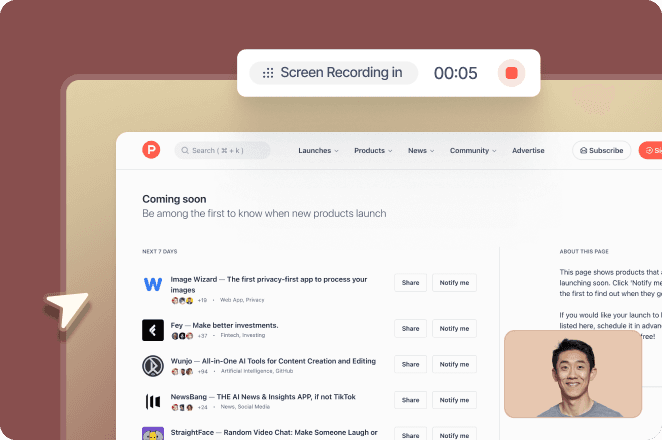
Trupeer's AI screen recording allows you to capture detailed walkthroughs of processes and systems. The auto-zoom and click detection features highlight specific areas of the screen, making it easier to demonstrate the use of company-specific terminology in real-time scenarios. This capability is particularly useful for creating training materials where understanding the exact steps and terms is crucial. By capturing these nuances, your AI knowledge base can learn and replicate the specific terminology used in your company’s processes.
AI Voiceover in 65+ Natural Voices
With Trupeer's voiceover feature, you can create audio explanations that incorporate your company's terminology. Choose from over 65+ natural voices to match your brand’s tone. This is ideal for training videos or customer-facing content where consistency in terminology is critical. The adjustable pace and tone ensure that complex terms are delivered clearly and understandably, enhancing the AI’s ability to recognize and learn them. This feature supports a broad array of languages, allowing for global team integration.
Automatic SOP Generation from Any Recording
The automatic SOP generation feature allows you to convert recordings into standardized operating procedures. This ensures that every documented process includes the correct company-specific terminology. The generated SOPs are edit-ready and exportable, making it easy to update and distribute them as your terminology evolves. By using the AI documentation platform, you can maintain a consistent use of language across all procedural documents.
AI-Searchable Knowledge Base with Timestamp Deep-Links
Trupeer's AI-searchable knowledge base indexes every recording with timestamp-level deep links. This means users can locate specific moments in a video where particular terminology is used. It's an efficient way to ensure that employees can quickly find examples of how certain terms are applied in context, which is invaluable for both training and reference purposes. The searchable feature enhances the AI’s learning capability by allowing it to associate terms with specific actions or results.
Multi-Format Export: MP4, HTML, PDF, SCORM
Trupeer's multi-format export options allow you to distribute customized content in the format that best suits your needs. Whether you need a video, a document, or an e-learning module, this feature ensures that your training materials can be accessed by different teams. Each format retains the integrity of your company-specific terminology. The flexibility to choose the format aids in accommodating various learning styles and technological preferences within your organization. The knowledge base generator tool further supports this by allowing smooth integration across platforms.
How do you train your AI knowledge base on company-specific terminology step by step with Trupeer?
Step 1: Capture Your Screen
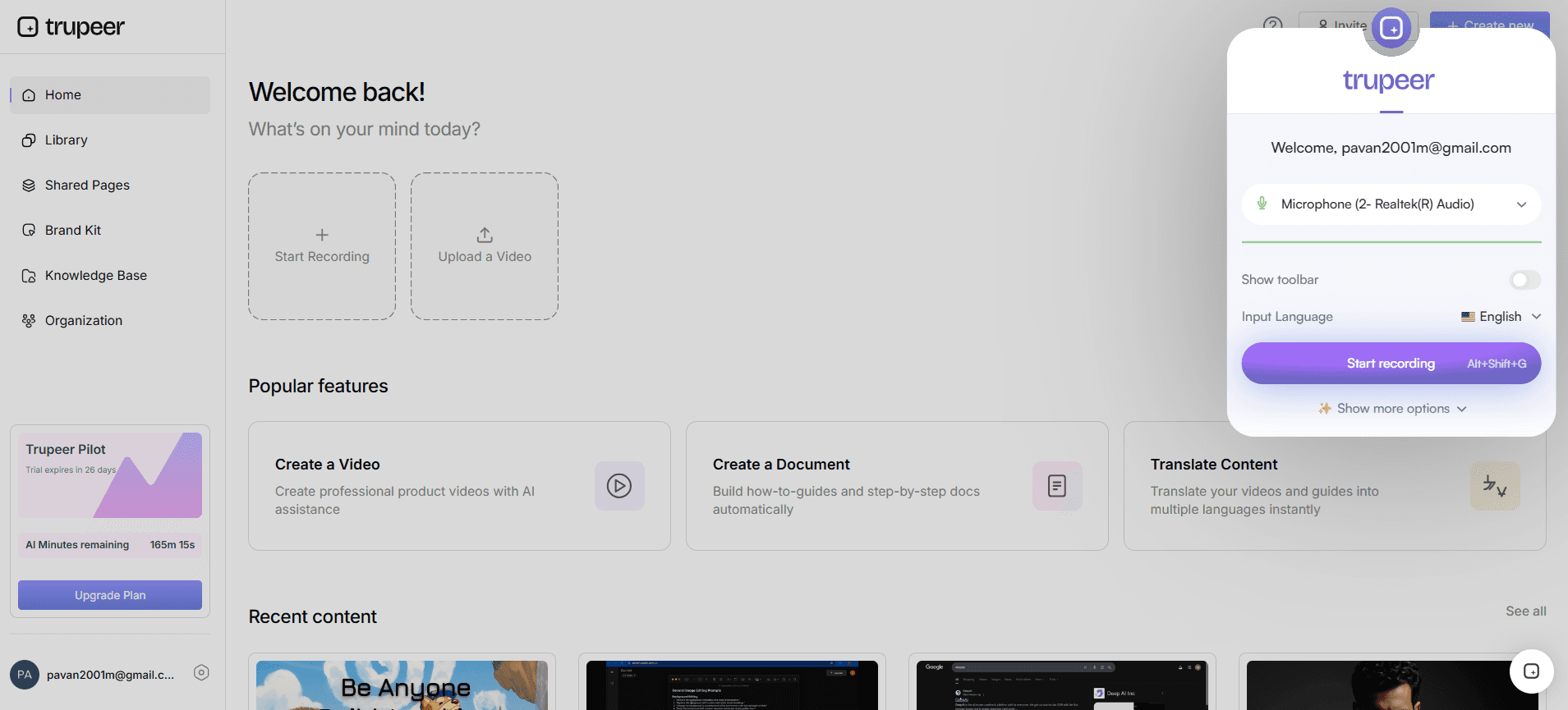
Begin by using Trupeer's AI screen recording with auto-zoom and click detection. This feature is critical in capturing precise on-screen actions and focusing on details that matter, like highlighting clicks and zooming into critical data points. To start, click on the record button in the Trupeer browser-based recorder. The auto-zoom feature ensures that viewers see exactly what they need to understand specific terminology in context. The click detection highlights interactions within your software, making it clear where and why certain actions are taken. Typically, a thorough recording session could take anywhere from 10 to 30 minutes, depending on the complexity of the process being documented.
Step 2: Add AI Voiceover
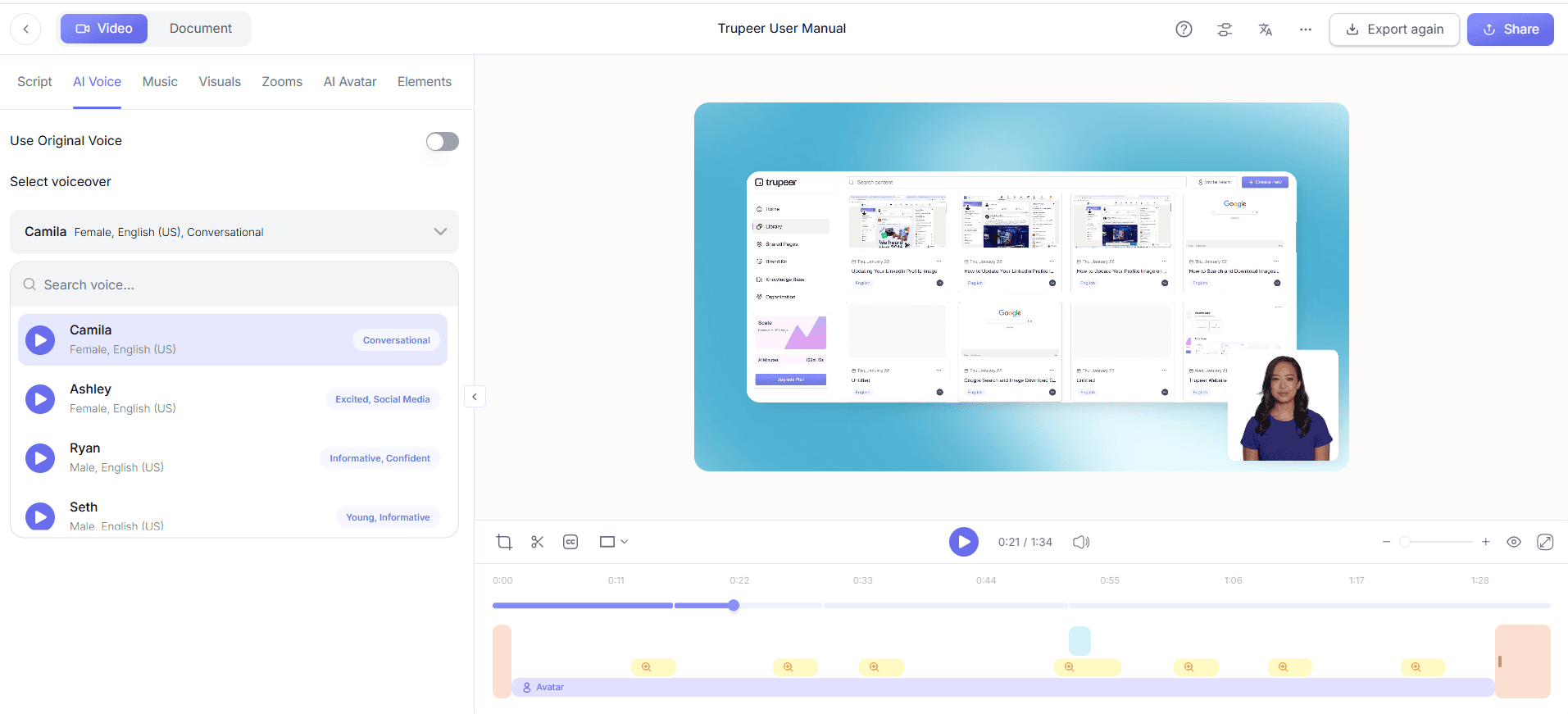
After recording, enhance your video with Trupeer's AI voiceover feature. Choose from over 65+ natural voices, adjusting pace and tone to suit your audience. This step is crucial for ensuring that any specific terminology is pronounced correctly and consistently. Click on the "Add Voiceover" option, select a voice, and input your script. Trupeer automatically syncs the voiceover with the video timeline, minimizing manual adjustments. This process can take 5 to 10 minutes depending on the length of your video. The AI voiceover adds an auditory layer that reinforces the visual cues, making the terminology even clearer for users.
Step 3: Generate SOPs Automatically
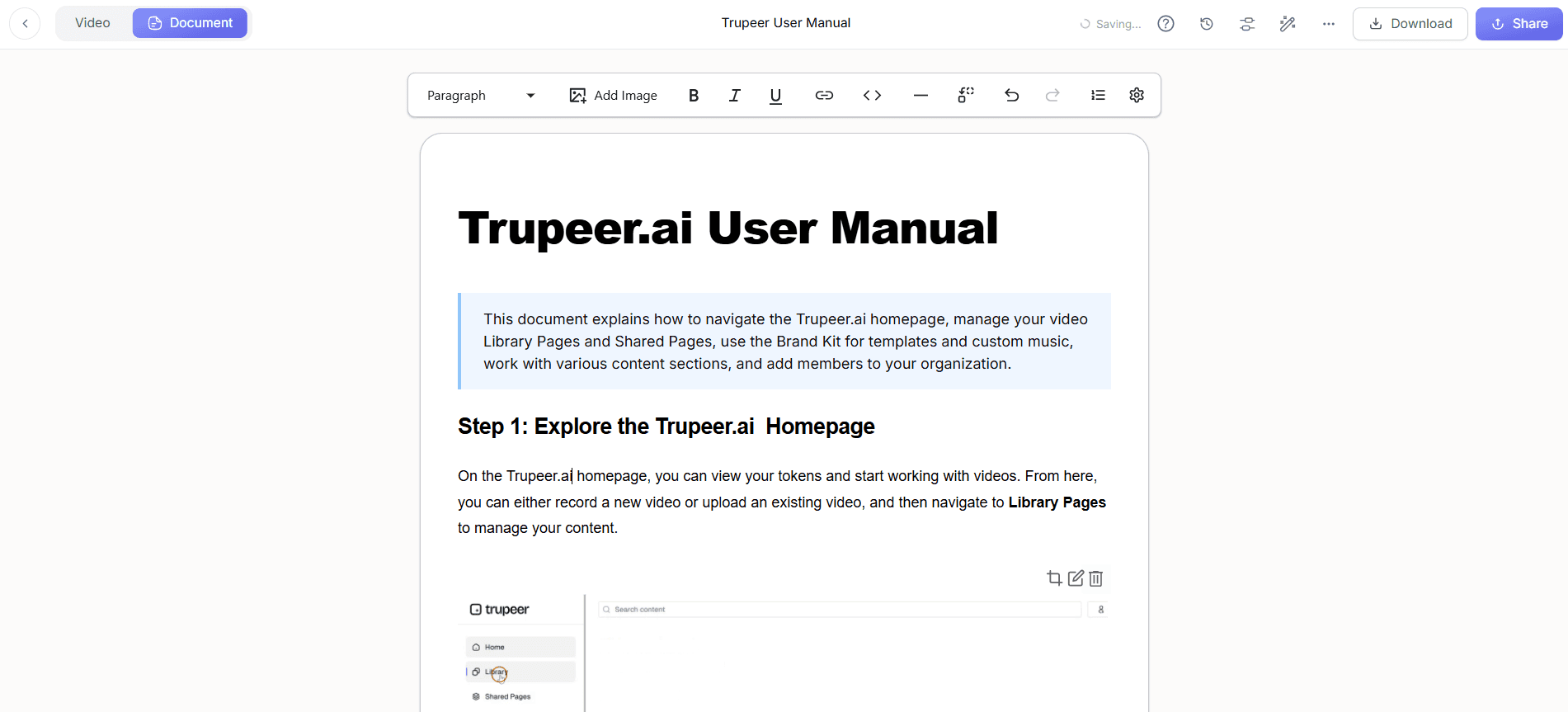
Use Trupeer's automatic SOP generation capability to convert your recorded content into standardized operating procedures. Select the "Generate SOP" option post-recording. This feature extracts key actions and terminology, creating a draft SOP that you can further refine. The initial draft is usually ready in under 5 minutes, providing a quick turnaround. The SOP is fully editable, allowing for customization to include any additional company-specific terminology or procedural nuances. This step ensures that your processes are documented consistently, with all relevant terminologies accurately represented. Teams ship this workflow end-to-end using Trupeer's AI video platform, which turns raw recordings into polished output without an editor.
Step 4: Index with AI-Searchable Knowledge Base
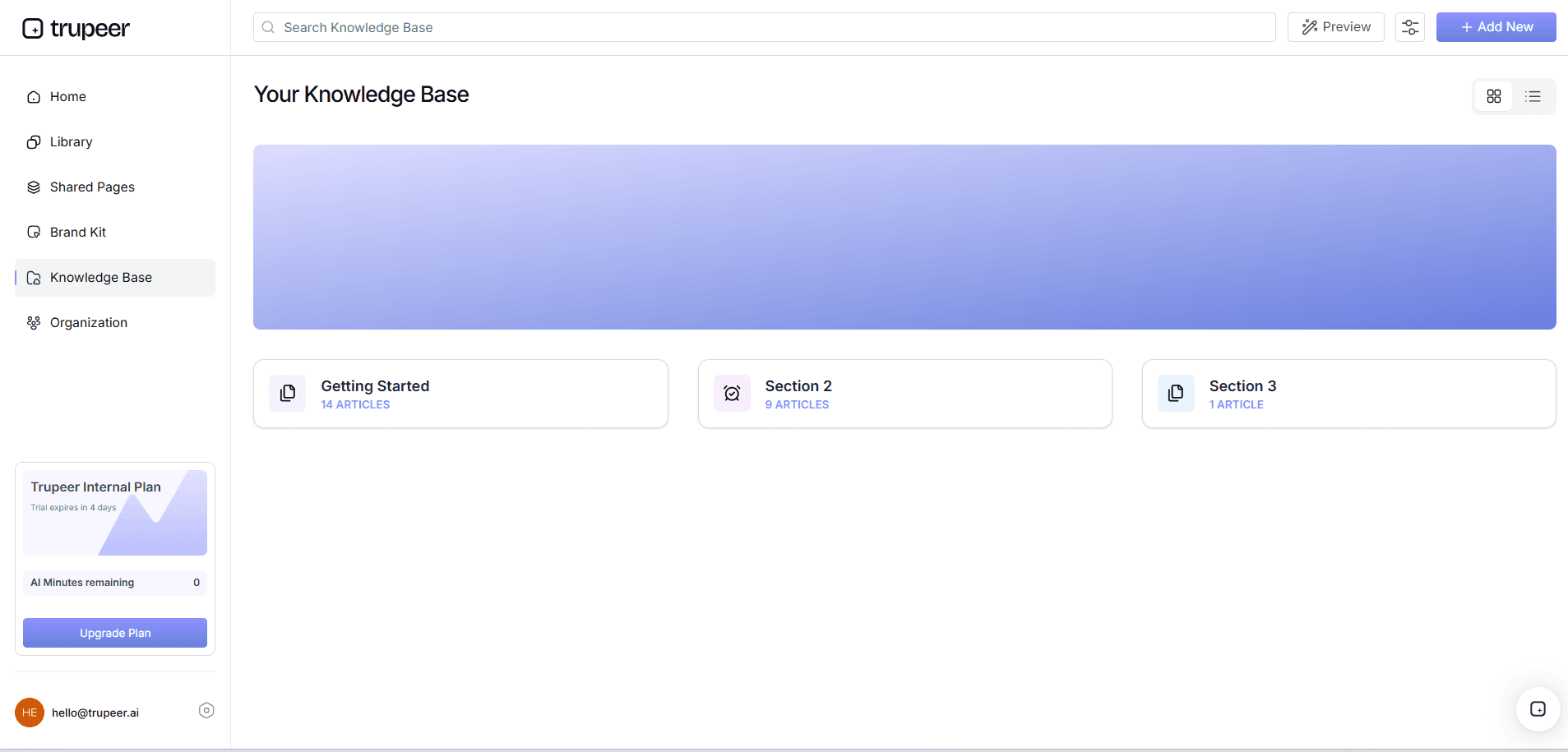
Integrate your recordings into Trupeer's AI-searchable knowledge base for easy retrieval. Use the "Upload to Knowledge Base" button to add your video with timestamp-level deep links. This feature ensures that specific terms and their use cases are easy to find. Each recording is indexed within minutes, and users can search by keyword to locate exact moments in the video. This step is crucial for reinforcing the understanding of terminology context, as it allows users to revisit specific content as needed. The deep-linking feature is particularly useful for complex terms that might require repeated clarification. Teams weighing tools often start with a Loom alternatives comparison before standardizing on a workflow.
Step 5: Export in Multiple Formats
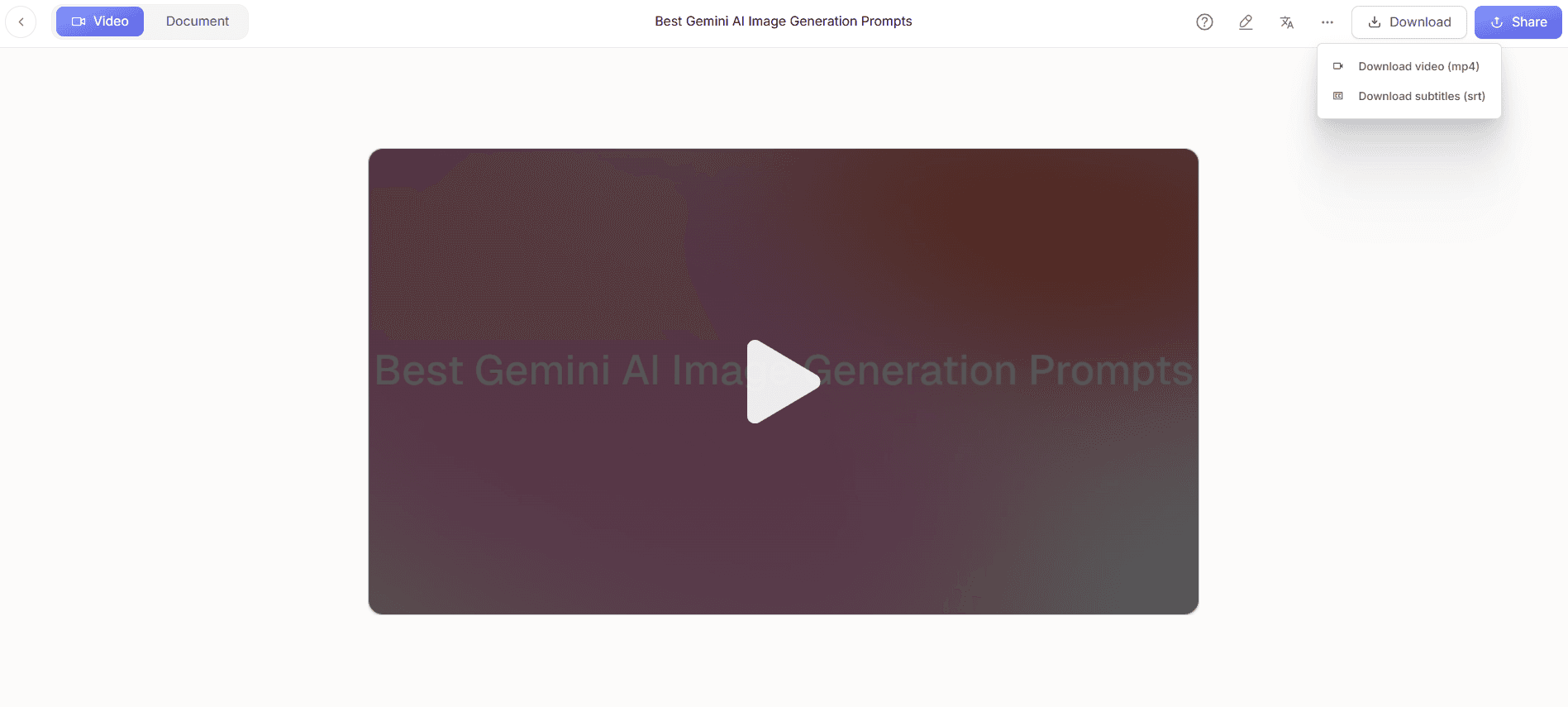
Once your content is ready, export it in the format that best suits your audience. Trupeer offers options like MP4, HTML, PDF, and SCORM. Click on "Export" and choose your desired format. Each format retains the integrity of your recorded content and terminology, ensuring consistent knowledge dissemination. Exporting takes just a few minutes and allows for distribution across various platforms, accommodating different user preferences. Whether your team needs a video tutorial or a detailed document, Trupeer ensures that the format aligns with their learning style, making the terminology accessible to all.
Step 6: Distribute and Train
Finally, distribute your customized resources via Trupeer's shared pages or client-facing portals. Use the "Share" feature to send links directly to your team or clients. These shared pages support SSO, ensuring secure and simplified access. This step is about making sure that everyone who needs to understand your company's terminology can do so easily. By providing direct access to tailored content, you ensure that your team and clients are always aligned with the correct terminology. This distribution process can be completed in minutes, making it an efficient way to update and train your knowledge base users continuously.
What tips help you train your AI knowledge base on company-specific terminology?
Successfully training your AI knowledge base on company-specific terminology requires strategic planning and execution. Here are some practical tips to help you optimize this process and ensure your AI is well-equipped to handle your unique language needs.
Regularly Update Your Content. Keep your recordings and SOPs current to reflect any changes in terminology or processes. This ensures your AI knowledge base remains relevant.
Engage Subject Matter Experts. Involve team members who are familiar with specific terminology to review and validate the content before finalizing.
Standardize Terminology Use. Create a glossary of terms and ensure consistent use across all materials. This avoids confusion and helps the AI learn more effectively.
use AI Voice Cloning. Use Trupeer's AI voice cloning to maintain a consistent voice across all audio content, reinforcing the correct pronunciation of terms.
Monitor User Feedback. Collect feedback from users to identify areas where the AI knowledge base might need improvement or additional training on terminology.
Integrate with Other Systems. Use tools like internal knowledge base wiki software to enhance information accessibility and integration across platforms.
use Custom Avatars. Create engaging content with AI create your own custom avatar video to visually demonstrate terminology in context.
Frequently asked questions
How can I ensure my AI knowledge base stays up-to-date with terminology changes?
To keep your AI knowledge base current, regularly update your content, including recordings and SOPs, to reflect any new or changed terminology. Engage with subject matter experts to review and validate these updates. also, use a video localization tool to adapt content for different regions if needed. This proactive approach ensures that the AI consistently delivers accurate and relevant information to users.
What is the best way to capture company-specific terminology in training materials?
The most effective way is to use Trupeer's AI screen recording with auto-zoom and click detection. This feature highlights critical interactions and ensures that terminology is clearly demonstrated. Complement this with AI voiceover to enhance understanding through auditory reinforcement. These tools together create comprehensive training materials that clearly illustrate the use and context of specific terms, making learning more effective for users.
Why is an AI-searchable knowledge base important for training on specific terminology?
An AI-searchable knowledge base allows users to quickly find specific instances where terminology is used, thanks to timestamp deep-links. This feature enhances learning by providing direct access to relevant content, reducing the time spent searching for information. It supports continuous learning and ensures that users can revisit content as needed to reinforce their understanding of complex or frequently updated terms.
Can Trupeer's AI voice cloning be used to maintain consistent terminology pronunciation?
Yes, Trupeer's AI voice cloning can be used to ensure consistent pronunciation of terminology across all audio content. By cloning a specific voice, you maintain uniformity in how terms are spoken, which helps in reinforcing the correct pronunciation and understanding for users. This consistency is crucial for both internal training and customer-facing materials, ensuring clarity and professionalism.
Does using custom avatars enhance the understanding of company-specific terminology?
Yes, custom avatars can significantly enhance understanding by providing a visual context for terminology. They can act as guides in tutorials, demonstrating how terms are applied in real scenarios. By using AI create your own custom avatar video, you can create engaging and relatable content that helps users better grasp and remember specific terminology.