Trupeer Blog
Samenvatten
According to e-learning studies, Ernst & Young reduced training time by 52%, while IBM saved $400 million and Cisco cut training costs by 40–60% by shifting to digital and video-based training.
In a digital-first world where communication is increasingly visual, Screen Studio quickly gained popularity for offering an intuitive way to create simple screen recordings. It is fast, lightweight, and ideal for solo creators or small teams looking to demo workflows or provide tutorials.
But as team collaboration, branding, and automation needs grow more complex, so does the demand for ScreenStudio alternatives that offer better scalability, professional-grade polish, and AI-driven enhancements.
In this article, we will explore the key reasons why teams are seeking ScreenStudio Alternatives, identify the essential features modern video teams need, and compare the best professional video creation tools available in 2026. Whether you are building product demos, SOPs, or training modules - we will help you find the right fit.
Let us dive in.
Quick Answer: The Best Screen Studio Alternatives in 2026
These are also some of the best screen recorders available in 2026, depending on what you need:
Trupeer AI - best for turning screen recordings into polished, narrated product videos plus written guides.
Cap - best open source Screen Studio alternative, on Mac and Windows.
OBS Studio - best completely free screen recorder on Windows, Mac and Linux.
Descript - best for editing recordings by editing text.
ScreenPal - best budget recorder with an editor.
Loom - best for quick async recordings.
Snagit - best for screenshots and short clips.
What Screen Studio Does Well (and Where It Stops)
Screen Studio is a macOS screen recorder that adds automatic zoom, smooth cursor motion and padded backgrounds while you record, so even a raw recording looks professionally produced. It is a favourite for product launch clips and landing-page demos.
People look for alternatives for a few reasons: it is Mac only with no Windows version, it has no AI voiceover or script editing, it produces video only with no written guides, it has limited team features, and many want a free or open source option.
Screen Studio Pricing in 2026
Monthly – $20/month
Yearly – $9/month billed annually
Requires a recent version of macOS; no Windows or Linux version
How We Picked These Screen Studio Alternatives
Output quality: how polished a recording looks without manual editing.
Platform: Windows, Mac, Linux or browser.
Price: free, open source, one-time or subscription.
Editing and AI: voiceover, script editing, captions and guides.
Team use: sharing, branding and collaboration.
A note on bias: Trupeer AI is our product and we have listed it first. We note where each tool, including Trupeer, is not the right choice. Pricing was checked on each vendor’s public pricing page in September 2026, so confirm before you buy.
Screen Studio Alternatives at a Glance (2026 Pricing)
Tool | Best for | Platform | Free plan | Paid from | Open source |
|---|---|---|---|---|---|
Screen Studio (for reference) | Polished Mac recordings | macOS only | No | $9/mo (yearly) | No |
Trupeer AI | Product videos + written guides | Web, Chrome | 10 days (1,000 AI credits) | $40/mo (yearly) | No |
Descript | Text-based editing | Windows, Mac | 60 min/mo | $16/mo (yearly) | No |
Loom | Quick async recordings | Web, desktop, mobile | 25 videos, 5-min cap | $18/user/mo | No |
OBS Studio | Free recording | Windows, Mac, Linux | Free forever | Free | Yes |
Cap | Open source Screen Studio swap | Mac, Windows | Personal use | $29 one-time | Yes |
ScreenPal | Budget recorder and editor | Windows, Mac, Chromebook | 15-min recordings | ~$4/mo (yearly) | No |
Apowersoft | Simple Windows recording | Windows, Mac | Limited | Subscription or lifetime | No |
Vidyard | Sales video | Web, extension | 5 videos/mo | Custom | No |
DaVinci Resolve | Professional editing | Windows, Mac, Linux | Free version | $295 one-time (Studio) | No |
Snagit | Screenshots and short clips | Windows, Mac | 15-day trial | $39/yr | No |
Zight | Quick visual sharing | Mac, Windows, Chrome | Yes | $9.95/user/mo (yearly) | No |
The 11 Best Screen Studio Alternatives in 2026
Here is our list of the best ScreenStudio alternatives, compared one by one with pricing, pros and cons.
1. ScreenStudio vs Trupeer AI: Best for Polished Product Videos Plus Written Guides
Trupeer AI is a powerful AI-based platform designed to help teams record video from screen walkthroughs and instantly turn them into polished documentation and video content. Unlike traditional editors that require scripting, editing, and manual formatting, Trupeer manages it all using advanced AI.
Here is how it works: You record a screen walkthrough, and Trupeer converts it into a complete document with step-by-step screenshots, voiceovers, captions, and even AI avatars. It is perfect for businesses that need scalable training materials, SOPs, or onboarding videos.
Trupeer is also built for collaboration - allowing teams to manage projects, localize content on Scale and Enterprise plans, and ensure every asset adheres to brand standards with brand kits. Version history and approval workflows are included on Enterprise.
Whether you are documenting a product for internal training or publishing a customer-facing tutorial, Trupeer lets you do it faster and better.

Key Features of Trupeer AI
AI Script Generation: Automatically generates narration from your screen recording.
Voiceovers & Avatars: Add AI voiceovers and on-screen avatars without hiring talent.
Export Flexibility: Download content in PDF, MP4, Word, or Markdown formats.
Multi-language Translation: Localize content from a library of 100+ languages (Scale and Enterprise).
Smart Screenshots: Auto-generates annotated screenshots for step-by-step guides.
Collaboration Tools: Add comments and work in shared spaces, with reviewer and approval workflows on Enterprise.
Security Compliance: SOC 2 Type II, ISO 27001 and GDPR, with SSO and SCIM on Enterprise.
Pros of Trupeer AI
1. Massive Time Savings through AI Automation: Trupeer automates the most time-consuming aspects of content creation, such as scriptwriting, voiceovers, and formatting. This allows teams to produce high-quality documentation and videos in a fraction of the time. Most users report saving up to 70–80% of their typical production effort.
2. Dual Output: Video and Written Documentation: With Trupeer, every screen recording can be turned into both a polished video and a step-by-step written document. This dual-format output ensures accessibility and consistency across different learner preferences. It is particularly effective for training, onboarding, and customer education.
3. Built for Collaboration and Team Workflows: Trupeer offers features like shared folders, role-based access, comment threads, and approval workflows. These tools help large or distributed teams manage content efficiently without relying on multiple platforms. Everything stays aligned in one place, reducing silos and duplication.
4. Enterprise-Ready with Localization Support: Designed for scale, Trupeer is SOC2 and GDPR-compliant with built-in audit controls. It also supports automated translation into 30+ languages, enabling companies to localize content globally. This makes it ideal for multinational teams and regulated industries.
5. Easy to Use for Non-Technical Users: Trupeer's clean interface and AI-powered workflows eliminate the need for advanced editing skills. Anyone on your team can go from screen recording to professional content in just a few clicks. This makes it accessible for trainers, CX leads, and even subject matter experts.
Trupeer AI Pricing
Free – 10 days, with 1,000 AI credits a month and recordings up to 5 minutes
Pro – $40/month billed yearly, or $49 monthly (2,000 AI credits, 10-minute recordings, one seat)
Scale – $199/month billed yearly, or $249 monthly (10,000 AI credits, 15-minute recordings, three seats, translation and brand kit)
Enterprise – custom (3-hour recordings, 100+ languages in bulk, SSO)
Where it isn’t the answer: If you only want a beautiful, silent Mac clip for a landing page or social post, Screen Studio itself is simpler. Trupeer records through a Chrome extension or uploaded video rather than a native Mac app, AI credits are metered on every plan, and recordings are capped at 5 to 15 minutes below Enterprise.
G2 rating: 4.8/5
One customer said, “Trupeer has transformed the way I create product videos. Its AI-driven features, such as automated script generation, realistic voiceovers, and intelligent zoom effects, make the process seamless and efficient. The ability to produce professional-quality videos without prior editing experience is a game-changer. Additionally, the platform's support for multiple languages has been invaluable for reaching a global audience.”

Trupeer vs Screen Studio: Feature Comparison
Feature | Trupeer | Screen Studio |
AI Script + Voiceover | Yes | No |
Export Formats | MP4, PDF, Word, Markdown | MP4 only |
Collaboration Tools | Yes | No |
Screenshot Documentation | Auto-step builder | Manual |
Multi-language Translation | 100+ languages (Scale and Enterprise) | Not Available |
Security Compliance | SOC 2 Type II, ISO 27001, GDPR | No |
Ideal For | Enterprise, teams, trainers | Solo creators, basic demos |
Bottom line: The pick when your recordings need to become polished, narrated product videos and written guides. Try it free on one real recording.
2. ScreenStudio vs Descript: Best for Editing Video by Editing Text
Descript is a unique video and podcast editing tool that treats audio and video as editable text. It’s revolutionized how teams think about editing by letting you cut, move, and update video footage simply by editing a transcript.
Descript’s screen recorder works alongside its overdub AI voice generator, which lets you synthesize your voice (or one you upload) to fix errors without re-recording. It also allows for multi-user collaboration, making it ideal for marketing, education, or media teams who work in sprints.
Whether you're producing tutorials, walkthroughs, or podcast-style explainers, Descript combines flexibility with automation - making it one of the most intuitive Screen Studio alternatives for modern teams.

Key Features of Descript
Text-Based Editing: Edit videos as if you are editing a Word doc — cut by deleting words.
Overdub Voice AI: Replace or add dialogue with AI voice synthesis.
Multitrack Timeline: Supports layered audio/video editing for precision.
Filler Word Removal: Clean up “um,” “uh,” and dead space with one click.
Publishing + Caption Tools: Export with transcript, captions, and links.
Pros of Descript
1. Intuitive for Non-Editors: Descript’s text-based interface makes editing feel like word processing, removing the learning curve typically associated with video tools. This makes it accessible for marketers, educators, and non-technical team members to create content collaboratively.
2. Excellent for Voiceovers and Narrated Videos: The Overdub feature allows you to create or modify voiceovers using AI-generated speech that sounds remarkably human. This eliminates the need for re-recording and saves considerable time when making last-minute script edits.
3. Built for Team Collaboration and Workflow Speed: With real-time multi-user editing and cloud-based project access, Descript supports fast-paced content sprints across remote teams. It's particularly useful for distributed marketing or podcast production teams managing shared editorial timelines.
Cons of Descript
1. Limited Visual and Motion Design Tools: Descript lacks granular control over animations, transitions, and visual layering, making it unsuitable for complex design-driven content. Users often export to other platforms like Premiere or After Effects for finishing touches.
2. Occasional Performance Issues with Large Files: When editing long or media-rich projects, users report lag, crashes, or slow export speeds. This can be disruptive for teams working under tight deadlines or handling large podcast backlogs.
3. Subscription-Only for Full Features: Essential features like Overdub, filler word removal, and high-resolution export are gated behind paid tiers. For budget-conscious users, this limits its utility compared to free or one-time license tools.
Descript Pricing
Free – 60 minutes of media a month
Hobbyist – $16/month billed annually, or $24 monthly
Creator – $24/month billed annually, or $35 monthly
Business – $50/month billed annually, or $65 monthly
G2 rating: 4.6/5
One customer said, “Very deceptive pricing model, charging you twice.”

Bottom line: The editor to choose if you want to keep editing, just by text. Compare in detail: Descript alternatives.
3. ScreenStudio vs Loom: Best for Quick Async Recordings
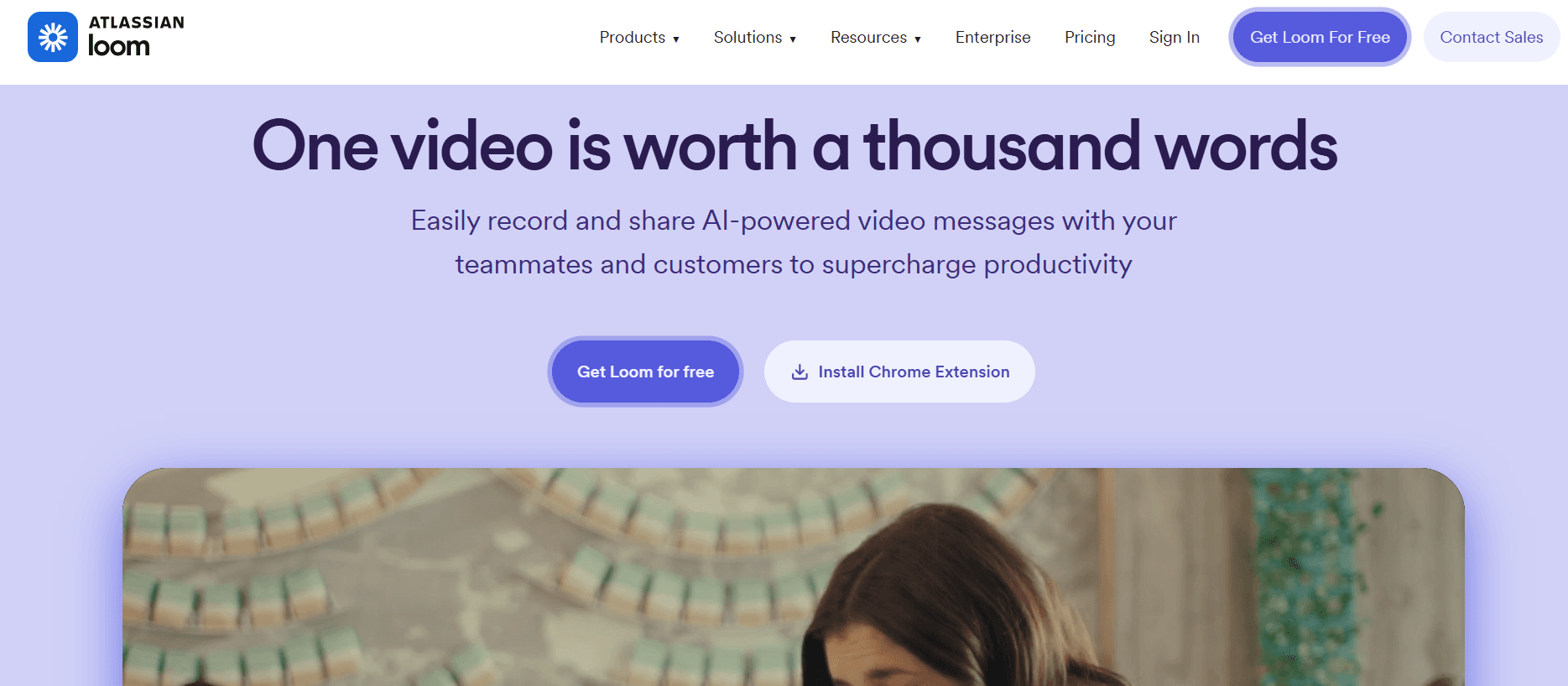
Loom has become synonymous with asynchronous video communication. Known for its ease of use, Loom enables fast screen + webcam recordings with one click. It’s ideal for internal updates, customer walkthroughs, async training, and even performance reviews.
Unlike heavier editors, Loom emphasizes speed, simplicity, and shareability, allowing teams to produce and send content in seconds. Loom’s enterprise plan supports 4K video, advanced analytics, and SCIM/SSO integrations for security. With millions of users, it’s a go-to Screen Studio alternative for rapid communication.
Key Features of Loom
One-Click Capture: Instantly record your screen, camera, or both.
Viewer Insights: Track who has viewed the video, for how long, and what they clicked.
Auto Captions & Comments: Auto-generated transcripts and timestamped reactions.
Team Workspace: Organize videos into shared folders and channels.
Security & Admin Controls: SSO, SOC2, SCIM provisioning.
Pros of Loom
1. Incredibly intuitive and fast for everyday users: Loom is built for speed and ease of use, requiring no training to start recording and sharing. Its simple interface enables team members across roles to communicate visually without the overhead of traditional video editing tools.
2. Ideal for asynchronous communication at scale: Loom allows remote teams to share updates, feedback, and demos without needing live calls, reducing meeting fatigue. Its instant shareability and link-based distribution make it perfect for fast-moving workflows.
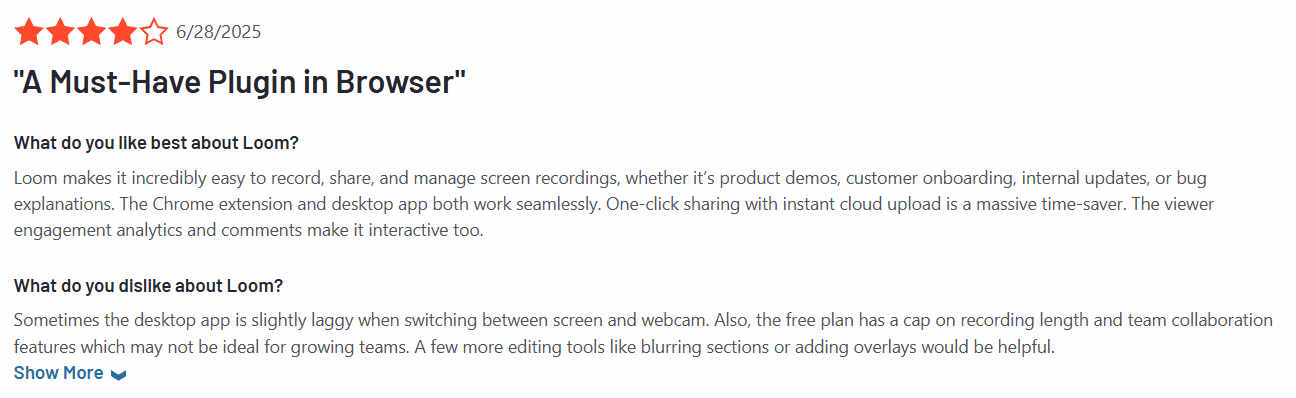
3. Freemium model makes it widely accessible: Loom’s free plan supports essential screen and webcam recording features, making it appealing to startups and educators. Users can upgrade as their needs evolve, which supports gradual adoption across organizations.
Cons of Loom
1. Very limited editing and post-production capabilities: Unlike professional video tools, Loom lacks timeline editing, transitions, and branding flexibility. This makes it unsuitable for high-quality training content or external-facing media.
2. Restrictions on recording length and quality in free tier: Free users are limited to five-minute videos and 720p resolution, which can be a major constraint for longer tutorials or product walkthroughs. Upgrading to access 4K or unlimited recordings requires a paid plan.
3. Occasional reliability and playback issues in corporate environments: Some users report playback problems, especially when Loom videos are shared across restrictive enterprise networks or accessed via firewalled systems. Upload failures and lag during peak times can also disrupt workflows.
Loom Pricing
Starter – free (25 videos, 5-minute recordings)
Business – $18/user/month
Business + AI – $24/user/month
Enterprise – custom
G2 rating: 4.7/5
One customer said, “Instead of saving you time, it wastes it. I am constantly troubleshooting bugs or sending videos to clients and other customer support teams with persistent error messages that are impossible to solve. I have spent two years dealing with this trash software and it's time to move on.”
Bottom line: Fastest for quick internal recordings, not for polished demos. Compare in detail: Loom alternatives.
4. ScreenStudio vs OBS Studio: Best Free Recorder for Windows, Mac and Linux
OBS Studio (Open Broadcaster Software) is a free, open-source platform beloved by streamers and power users. While not designed for traditional business documentation, its recording flexibility makes it powerful for tech-savvy users. It allows real-time screen capture, live streaming, and complex scene transitions.
With OBS, you can record high-resolution content from multiple sources - including overlays, microphones, webcams, and browser windows. You can also integrate plugins for virtual cameras, custom hotkeys, and green screen effects. OBS is perfect if you want full control over the recording process and are willing to handle editing externally.

Key Features of OBS Studio
Multi-Source Capture: Combine windows, tabs, overlays, webcams, and mics.
Scene Transitions: Create broadcast-style transitions and layouts.
Plugin Support: Extend functionality with free open-source plugins.
High-Quality Recording: Up to 4K+ with bitrate control and audio mixing.
Cross-Platform: Available on Windows, macOS, and Linux.
Pros of OBS Studio
1. Completely free and open-source with extensive customization: OBS Studio is 100% free to use and supports a vast plugin ecosystem, enabling users to extend functionality based on their specific needs. Its open-source model ensures constant updates and deep community support across platforms.
2. Ideal for advanced users needing multi-source control and broadcast-quality output: Users can layer multiple video, audio, and visual sources for real-time streaming or recording, making it highly effective for webinars, product demos, or multi-camera setups. This flexibility makes OBS a go-to solution for streamers, educators, and tech-savvy teams.
3. Highly active community with frequent releases and plugin innovations: New features, bug fixes, and community-built enhancements are released regularly, keeping the platform modern and responsive. Extensive documentation and forums help users troubleshoot and optimize complex workflows
Cons of OBS Studio
1. Steep learning curve for non-technical users or beginners: Initial setup requires familiarity with encoding, bitrate adjustments, and scene management, which can overwhelm users who just need simple screen recording.
2. No built-in video editing or post-production capabilities: Users must rely on external editors like DaVinci Resolve or Adobe Premiere Pro to polish their recordings, which adds complexity and time.
3. User interface is dense and lacks intuitive onboarding: Despite its power, OBS Studio's UI feels technical and utilitarian, making it less accessible for business users focused on speed and ease of use.
OBS Studio Pricing
Free and open source, permanently
G2 rating: 4.6/5
One customer said, “I am not sure if my version was just corrupted but sometimes certain things like text would just randomly disappear from the broadcast window, even if no button was pushed. If it was an elaborate scene, it would take rebuilding that entire scene and placing the elements back into the scene from scratch and while broadcasting live that was a major pain.”

Bottom line: The best completely free option on any platform, if you can handle the setup.
5. ScreenStudio vs Cap: Best Open Source Screen Studio Alternative
Cap is an open source screen recorder for Mac and Windows that covers much of what people like about Screen Studio: clean recordings, a built-in editor and instant share links. You can use the hosted version or self-host it, and the code is on GitHub.
Key Features of Cap
Instant mode with a shareable link the moment you stop recording
Studio mode with separate screen and webcam tracks and a built-in editor
4K, 60fps export
Self-hosting, custom S3 storage and custom domains
Native apps for macOS and Windows
Pros of Cap
1. Open source and self-hostable, so you control where recordings live.
2. Works on Windows as well as Mac, unlike Screen Studio.
3. A one-time desktop licence is available for people who dislike subscriptions.
Cons of Cap
1. The free tier is for personal use only; commercial use needs a paid plan.
2. Its automatic polish is less refined than Screen Studio’s cursor and zoom effects.
3. No AI voiceover, branding across a team, or written guides.
Cap Pricing
Free – personal use
Desktop licence – $29 one-time
Pro – $8.16/user/month billed annually, or $12 monthly
Self-hosted – free, plus your infrastructure costs
G2 rating: No G2 reviews available
Bottom line: The best open source ScreenStudio alternative, and a strong Screen Studio alternative for Windows.
6. ScreenStudio vs ScreenPal (formerly Screencast-O-Matic): Best Budget Recorder and Editor
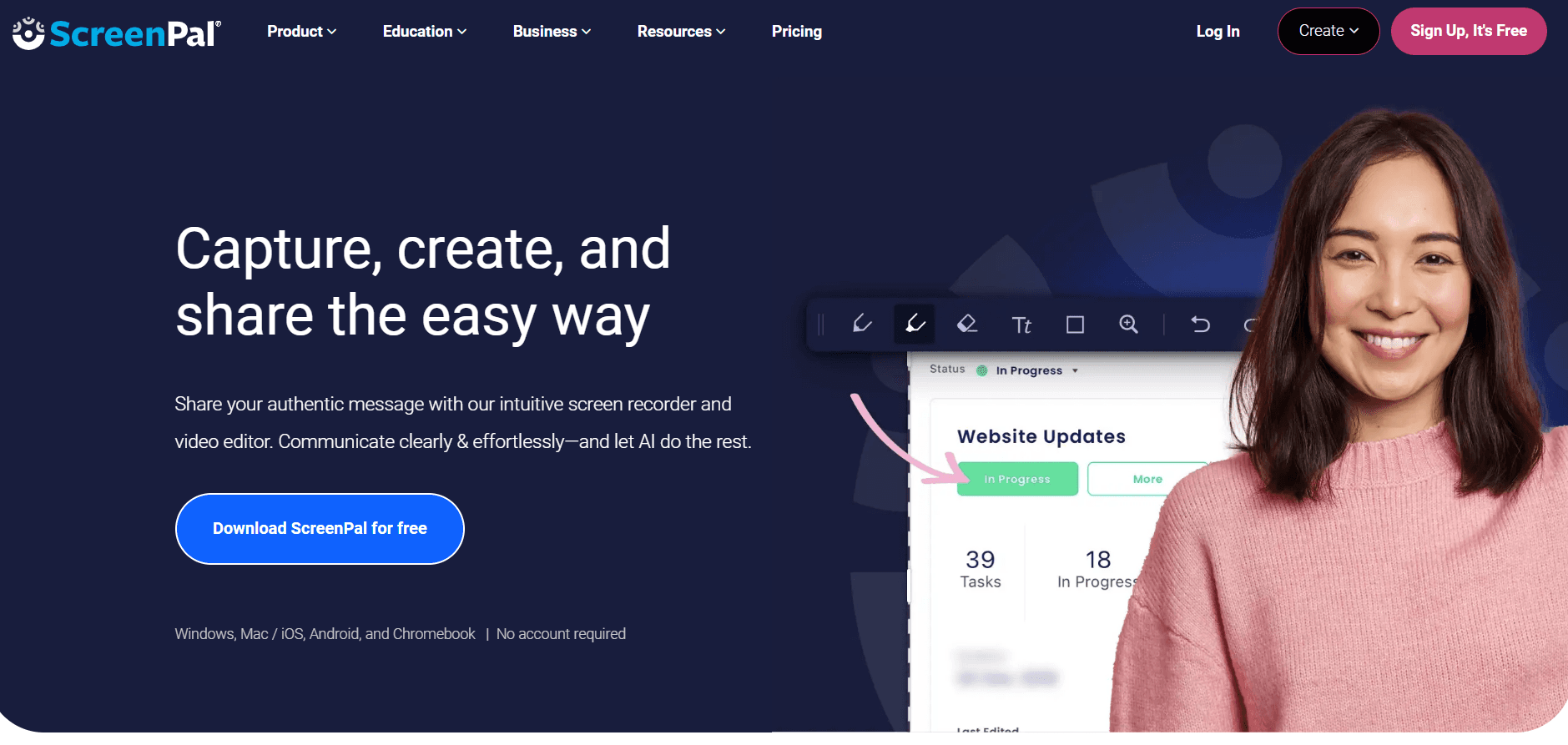
ScreenPal is a well-rounded screen recording and editing tool tailored for educators, trainers, and small business teams. It offers an intuitive UI for recording screen, webcam, and audio - plus interactive quizzes, captions, and light editing tools.
With ScreenPal, you can publish your videos directly to YouTube, Google Drive, or the built-in hosting solution. It is affordable and browser-based, with additional apps for Windows, Mac, Android, and iOS. A popular choice for teachers and instructional designers.
Key Features of ScreenPal
Webcam + Screen Recording: Record both in sync with audio narration.
Video Hosting + Privacy Controls: Share videos securely via password-protected links.
Lightweight Editor: Trim, cut, zoom, blur, and overlay text.
Interactive Quizzes: Add quiz questions directly to video timelines.
Closed Caption Support: Manually or auto-generate subtitles.
Pros of ScreenPal
1. Affordable and Beginner-Friendly: ScreenPal is an accessible tool for individuals and small teams, offering an intuitive interface that requires minimal training. Its low-cost pricing and cross-platform availability make it a favorite among educators and instructional designers.
2. Tailored for Educational Use: The platform includes built-in features like interactive quizzes, captions, and secure sharing, which are especially useful for academic or internal training environments. These capabilities support learner engagement without requiring advanced video editing expertise.
3. Compatible Across Devices and Browsers: ScreenPal works seamlessly across Windows, Mac, Android, iOS, and browser environments. This flexibility enables users to create and share content from virtually any device with internet access.
Cons of ScreenPal
1. Lacks Branding and Template Customization: Users are limited in how much they can customize the visual appearance of videos, especially regarding branding elements like logos, intros, and color schemes. This makes it less suitable for teams producing customer-facing or highly branded content.
2. Basic Editing Capabilities: While sufficient for trimming and annotations, the platform offers very limited motion graphics, transitions, and timeline control. It falls short for users seeking dynamic visuals or more polished production value.
3. No Automation or AI-Driven Features: ScreenPal does not include AI tools for voiceovers, script generation, or language translation. As a result, documentation and video workflows remain entirely manual, which can slow down content creation for larger teams.
ScreenPal Pricing
Free – recordings up to 15 minutes
Deluxe – from about $4/month billed annually
Max – about $10/month billed annually, with AI tools and quizzes
Team Business – $8/user/month billed annually (3-seat minimum)
G2 rating: 4.4/5
One customer said, “The app keeps crashing.”

Bottom line: The cheapest paid recorder with a real editor. Compare in detail: ScreenPal alternatives.
7. ScreenStudio vs Apowersoft Screen Recorder Pro: Best Simple Windows Recorder
Apowersoft Screen Recorder Pro is a reliable, Windows-first tool designed for capturing on-screen activity with minimal setup. It offers flexible recording modes - full screen, custom regions, webcam overlays - and supports real-time annotations, making it ideal for explainer videos, webinars, and software tutorials.
While the editing capabilities are basic compared to platforms like Camtasia, it stands out for its built-in scheduler, voice recording sync, and direct uploading to cloud services like Dropbox and FTP. It is a practical choice for small businesses and educators who need affordable video recording with light edits.

Key Features of Apowersoft
Flexible Recording Modes: Capture specific windows, regions, or the full screen with or without audio.
Real-Time Annotation Tools: Add arrows, text, shapes, and highlights while recording.
Task Scheduler: Automatically begin and end recordings at preset times.
Multiple Export Formats: Supports MP4, AVI, WMV, FLV, and more.
Built-in Uploader: Direct export to FTP, Dropbox, or YouTube.
Pros of Apowersoft
1. One-time License Pricing (No Subscription Lock-In): Apowersoft offers a cost-effective solution with a one-time license, making it attractive for users who want to avoid recurring costs. This is especially beneficial for educators and small teams working with tight budgets.
2. Simple UI with Real-Time Annotation Support: Its intuitive interface allows users to annotate in real-time with arrows, text, and shapes, enhancing clarity during recordings. This feature is ideal for creating walkthroughs, explainer content, or live tutorial sessions.
3. Good for Educational Tutorials and Walkthroughs: The software’s support for scheduled recording, voice sync, and quick exports suits it well for instructional use. It’s often used in academic environments and small businesses to create basic but effective training content.
Cons of Apowersoft
1. Not Suitable for High-End Video Production: While functional for simple tasks, Apowersoft lacks the advanced editing tools, transitions, and layered timelines required for cinematic or brand-grade video creation. It’s not designed for polished content that demands post-production.
2. Outdated Interface and Lack of Modern Design: The user interface feels dated compared to newer alternatives, with limited customization and responsiveness. This may hinder workflow speed or appeal for more design-conscious users.
3. No Team Collaboration or Automation Features: Apowersoft is built for solo users and offers no shared workspaces, cloud sync, or AI-driven automation. For teams needing version control or scalable workflows, this becomes a critical limitation.
Apowersoft Pricing
Available as a subscription or a one-time lifetime licence, which appeals to users who want to avoid ongoing fees
Bottom line: A simple Windows recorder for basic captures, not for polished product videos.
8. ScreenStudio vs Vidyard: Best for Sales Videos
Vidyard is a business-focused video platform tailored for sales, marketing, and customer communication. It allows teams to record videos, personalize outreach, and embed calls-to-action all while tracking video analytics. With integrations into CRMs like HubSpot and Salesforce, it is a powerful asset for GTM (go-to-market) teams.
Where Vidyard excels is in using video as a conversion tool. You can create quick webcam intros, demo walkthroughs, or prospecting messages - and see how recipients interact. It also offers enterprise-grade hosting, domain customization, and SSO/SCIM for security.

Key Features of Vidyard
Sales Video Personalization: Add the viewer’s name/company to boost engagement.
Lead Capture & CTAs: Embed forms, buttons, and redirects into videos.
CRM Integrations: Sync view data into Salesforce, HubSpot, and Marketo.
Team Workspaces: Organize video libraries across departments.
Branded Video Player: Match videos to your domain and style guide.
Pros of Vidyard
1. Tailored for Business and Revenue Teams: Vidyard is built specifically for marketing, sales, and customer success workflows, making it ideal for revenue-generating use cases. Its integration with CRMs allows teams to personalize video outreach, track engagement, and close deals more effectively.
2. Deep Video Analytics and Conversion Tools: The platform offers detailed viewer insights, heatmaps, and conversion tracking, helping teams optimize their messaging. Embedded CTAs and lead forms turn passive views into actionable data, improving ROI on video communication.
3. Enterprise-Ready with Branding and SSO Support: Vidyard allows full customization of the video player to align with brand standards and supports enterprise-grade features like SSO, SCIM, and team-based permission control. This makes it a strong choice for larger organizations with compliance and scalability needs.
Cons of Vidyard
1. Not Suitable for Instructional or SOP Content: Vidyard is optimized for short-form sales and marketing videos, not structured documentation or training workflows. It lacks tools like screen step breakdowns, AI narration, or PDF exports common in tutorial-focused platforms.
2. Limited Editing Capabilities for Visual Customization: Users are restricted to basic trimming and thumbnail adjustments, with no timeline-based or layered editing. For teams needing motion graphics, transitions, or advanced storytelling elements, additional tools are required.
3. Premium Features Locked Behind Higher Tiers: Many of Vidyard’s most valuable features — such as analytics depth, team management, and high-quality video export — are available only in expensive enterprise plans. This can make it cost-prohibitive for startups or small teams.
Vidyard Pricing
Free – five videos a month
Teams and Enterprise – custom pricing
G2 rating: 4.5/5
One customer said, “The customer support is extremely disappointing. Whenever we encountered issues or needed help, the response was slow and unhelpful, making it difficult to rely on the platform. This lack of communication from support turned us off.”

Bottom line: Choose it for sales outreach video. Compare in detail: Vidyard alternatives.
9. ScreenStudio vs DaVinci Resolve: Best Free Professional Editor
DaVinci Resolve by Blackmagic Design is a professional-grade video editing, color correction, VFX, and audio mixing tool used by post-production houses and filmmakers. Though not a traditional screen recording solution, it is invaluable for editing recorded content to cinematic standards.
Its modular interface includes dedicated pages for editing, visual effects, color grading, and audio mastering. The free version offers more than most paid tools, while the Studio edition adds 8K processing, noise reduction, and AI editing assistants.

Key Features of DaVinci Resolve
Color Grading Engine: Gold standard for broadcast and film color correction.
Fusion Tab: Create motion graphics, animated UI flows, and titles.
AI-Powered Tools: Auto framing, object removal, and smart cuts.
Fairlight Audio Studio: Professional-grade multitrack audio mixing.
Cross-Platform: Available for Windows, Mac, and Linux.
Pros of DaVinci Resolve
1. Unmatched Visual and Audio Quality: DaVinci Resolve offers Hollywood-grade color grading, VFX, and audio tools, making it a top choice for cinematic and commercial post-production. Its advanced timeline and finishing capabilities rival high-end suites used by professional editors worldwide.
2. Ideal for High-Impact, Post-Production Projects: Resolve is perfect for refining recorded content into visually stunning deliverables with layered effects, motion graphics, and multi-track audio. It supports everything from 4K+ workflows to HDR mastering with full GPU acceleration.
3. Exceptionally Feature-Rich Free Version: The free version includes nearly all the tools professionals need, from multi-cam editing to AI-based scene detection. It’s widely regarded as the most powerful no-cost video editor available today.
Cons of DaVinci Resolve
1. Not Built for Step-by-Step Documentation or Screen Captures: DaVinci Resolve lacks screen recording or SOP-style annotation features, making it unsuitable for structured educational or process-based content. It focuses on visual storytelling rather than guided walkthroughs or instructional design.
2. Very Steep Learning Curve for Beginners: Its modular UI and professional-grade toolset require time and expertise to master, often intimidating new users. Without prior experience in editing or color workflows, even basic tasks can feel overwhelming.
3. Demands High-Performance Hardware to Run Smoothly: To take full advantage of its features, users need a powerful system with substantial GPU, RAM, and SSD capacity. On lower-end machines, lag, crashes, and long render times are common.
DaVinci Resolve Pricing
DaVinci Resolve – free
DaVinci Resolve Studio – $295 one-time purchase
G2 rating: 4.7/5
One customer said, “It has a very steep learning curve and is not beginner-friendly at all- won’t recommend for a newbie.”

Bottom line: Unmatched power for free, but far more than most screen recordings need.
10. ScreenStudio vs Snagit: Best for Screenshots and Short Clips
Snagit, developed by TechSmith (the same creators of Camtasia), is a top-tier screen capture and screen recording tool. It offers a seamless workflow for capturing screenshots, recording quick videos, editing, and sharing - all within a single, intuitive interface. Snagit excels in creating annotated visuals, step-by-step guides, and short tutorial clips. Its robust editing suite lets users add callouts, highlights, blur sensitive info, and even extract text with OCR. While it is not a full-fledged video editor, it hits a sweet spot for teams needing quick, branded visual documentation with minimal video editing skill required.

Key Features of Snagit
Advanced Capture Options: Record full screen, window, or a selected region with step recording.
Image and Video Editing: Trim video, annotate with arrows, text, stamps, and blur.
OCR Text Grab: Convert on-screen text into editable content.
Template-based Quick Access: Save and reuse favorite combinations of annotations and styles.
Seamless Sharing: Export to MP4, GIF, PNG, and JPEG or send directly to email, clipboard, Slack, Teams, or Camtasia
Pros of Snagit
1. Easy to Learn and Use: Snagit’s user-friendly interface allows anyone to create professional visuals with minimal training, making it ideal for teams with limited editing experience. Its learning curve is extremely short, which accelerates adoption across departments like support, training, and documentation.
2. Powerful Visual Annotation Tools: The tool offers powerful annotation capabilities, including arrows, callouts, blur effects, and OCR-based text extraction, all within a lightweight editor. These features make it perfect for step-by-step guides, bug reporting visuals, and product feedback loops.
3. Fast Content Turnaround: Snagit supports quick content turnaround, enabling users to capture, edit, and share branded screenshots and short videos in minutes. It’s particularly effective for creating internal SOPs, visual FAQs, and client walkthroughs without requiring a full video editor.
Cons of Snagit
1. Limited Video Editing Capabilities: Snagit lacks advanced video editing features such as multi-track timelines, transitions, or animations, limiting its utility for long-format tutorials or polished external-facing videos. Teams needing rich visual storytelling will need to use additional software.
2. Not Scalable for Large Teams: Its per-user licensing model doesn’t scale well for larger organizations or collaborative workflows, as it lacks features like shared libraries, cloud sync, or role-based permissions. This makes deployment across enterprises less seamless than cloud-first alternatives.
3. No AI or Localization Support: Snagit does not support multi-language localization, automated voiceovers, or AI-driven content creation, which limits its role in global content strategies. It’s best suited for visual documentation rather than scalable multimedia production.
Snagit Pricing
Snagit Individual – $39/year
Snagit Business – $48/user/year
Free trial – 15 days
G2 rating: 4.7/5
One customer said, “The Scrolling Function doesn't work despite uninstalling and reinstalling countless times.”

Bottom line: Great for screenshots and short clips; pair it with an editor for longer videos.
11. ScreenStudio vs Zight (formerly CloudApp): Best for Quick Visual Sharing
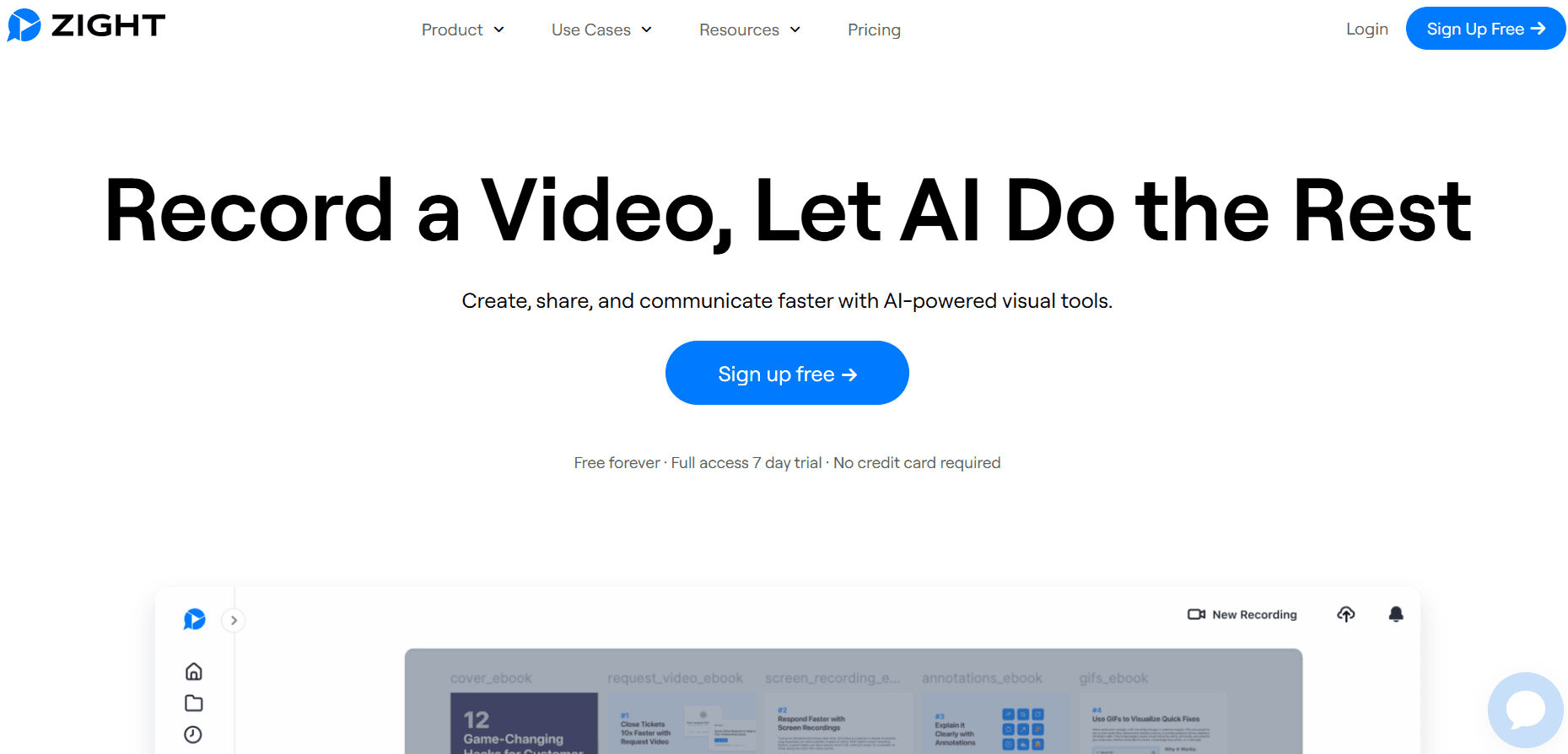
Zight, formerly CloudApp, is a modern, freemium-native screen capture and recording tool tailored for fast, contextual communication. It enables users to capture screenshots, GIFs, short video segments, and annotate - all within a lightweight browser or desktop app. With seamless integrations to Slack, Jira, GitHub, and more, Zight embeds visual context directly into developer and support workflows. Although its recording feature is limited to short clips, it’s perfect for quick feedback, bug reporting, or team communication where clarity trumps production polish.
Key Features of Zight
Screenshot + GIF/Video Recording: Capture screen or window with live annotation.
Annotation Tools: Add text, shapes, arrows, blur, and numbered steps.
Quick Sharing: Upload to the cloud and get copyable links instantly.
Integrations: Works well with Slack, Trello, GitHub, and other tools.
Secure Organization: Folders, team sharing settings, and embed codes.
Pros of Zight
Lightning-fast for sharing visual context in workflows.
Excellent task-based annotation and GIF creation.
Simple UI that promotes widespread team adoption.
Cons of Zight
Free plan limits clip length (e.g., 60–90 seconds).
Lacks full timeline editing or multi-format export.
No AI automation or multi-language support.
Zight Pricing
Share – free
Create – $9.95/user/month billed annually
Collaborate – $12/user/month billed annually
Scale – custom, with SSO and HIPAA
G2 rating: 4.6/5
One customer said, “This app is VERY buggy and unreliable. Each update makes it less and less stable.”

Bottom line: Fast for visual feedback, not a replacement for polished Screen Studio clips.
Final Feature Comparison Table
Here’s how Trupeer stacks up against the leading Screen Studio alternatives:
Feature / Tool | Trupeer | Screen Studio | Descript | Loom | OBS Studio | Snagit | Zight |
AI Script Generation | Yes | No | Yes | No | No | No | No |
AI Voiceover/Avatar | Yes | No | Yes | No | No | No | No |
Step-by-Step Documentation | Yes | No | No | No | No | Partial | Partial |
Multi-format Export | PDF/MP4/DOCX | MP4 only | MP4/Audio | MP4/GIF | All | PNG/MP4 | GIF/MP4 |
Team Collaboration | Yes | No | Yes | Yes | No | Limited | Basic |
Multi-language Support | Yes | No | Partial | No | No | No | No |
Screen Capture Flexibility | Yes | Basic | Yes | Yes | Extensive | Yes | Yes |
Editing Capabilities | Basic AI Edits | Basic Cuts | Strong | Limited | None | Light | Minimal |
Best Use Case | SOPs, training, onboarding | Demos | Podcasts, narration | Async updates | Streaming, advanced capture | Visual support docs | Quick GIFs, bug reporting |
Best Free Screen Studio Alternatives
Looking for a free Screen Studio alternative, a free alternative to Screen Studio that does not add a watermark, or Screen Studio alternatives free of subscription fees? These are the best options:
OBS Studio: completely free and open source on Windows, Mac and Linux, with no watermark or time limit.
Cap: free for personal use, open source, with a built-in editor.
DaVinci Resolve: a free professional editor to polish recordings from any recorder.
ScreenPal: free plan with recordings up to 15 minutes.
Loom and Zight: free plans for quick recordings and sharing.
Trupeer AI: a 10-day free plan to test AI voiceover, zooms and guide generation.
Best Open Source Screen Studio Alternatives
If you want a Screen Studio open source alternative (people also search for a ScreenStudio open source alternative on GitHub), two tools stand out. Cap is the closest match: a modern recorder with a built-in editor and share links, available on GitHub and self-hostable, which makes it the Screen Studio alternative GitHub users most often recommend. OBS Studio is the most powerful open source recorder, but it has no editor or sharing layer and takes time to set up. Neither adds Screen Studio’s signature automatic zoom and cursor smoothing to the same level of polish, so expect some manual editing.
Screen Studio Alternatives for Windows and Mac
Screen Studio alternatives for Windows: Screen Studio does not run on Windows, so a Screen Studio Windows alternative is a common search. The best Windows options are Cap and OBS Studio for recording, Descript and DaVinci Resolve for editing, ScreenPal and Apowersoft for simple recording and editing, and Snagit for screenshots and clips. Browser-based tools like Trupeer AI, Loom and Vidyard work on any Windows PC.
Screen Studio alternative for Mac: Cap is the closest Mac alternative, OBS Studio is the best free one, and Descript, Snagit, Zight and ScreenPal all have Mac apps. Trupeer AI runs in Chrome on Mac.
Is Trupeer AI the Right Screen Studio Alternative for You?
While every tool in this list offers value depending on your use case, Trupeer is built for teams and businesses who need more than a screen recorder.
Here is why it is your best bet:
It does both documentation and video - turning screen recordings into written SOPs, AI-narrated videos, and PDFs in minutes.
It scales with your team, from a single Pro seat to three seats on Scale and custom seats, roles and version history on Enterprise.
It is automation-first, eliminating the repetitive work of scripting, voiceovers, translations, and formatting.
It is enterprise-ready, with SOC 2 Type II and ISO 27001, 100+ languages, SSO and branding controls.
Trupeer AI is a good fit if:
Your recordings are product demos, tutorials or training that need narration, not just good-looking motion.
You want to fix mistakes by editing the script instead of re-recording.
You need a written step-by-step guide from the same recording, or translated versions.
Your team uses Windows and Mac, not only Mac.
Trupeer AI is not the right fit if:
You only need short, silent, beautifully animated Mac clips. Screen Studio does that best.
You want a completely free, unlimited recorder. OBS Studio or Cap fits better.
You need professional colour grading and effects. DaVinci Resolve is built for that.
Where Screen Studio is ideal for quick solo demos, Trupeer is the evolution - combining AI, documentation, collaboration, and polished delivery into one seamless platform.
If you are serious about training, onboarding, or support content - Trupeer is built for you.
Which Screen Studio Alternative Should You Choose?
Trupeer AI for narrated product videos plus written guides.
Cap for an open source Screen Studio alternative on Mac or Windows.
OBS Studio for free, unlimited recording on any platform.
Descript for text-based editing.
ScreenPal for a budget recorder and editor.
Loom for quick async messages.
Snagit for screenshots and short clips.
DaVinci Resolve for professional editing.
Vidyard for sales video.
Zight for quick visual feedback.
Apowersoft for simple Windows recording.
Stay on Screen Studio if your whole team is on Mac and your main output is short, polished product clips that do not need narration or documentation.
Frequently Asked Questions About Screen Studio Alternatives
1. What are the best Screen Studio alternatives in 2026?
Top alternatives include Trupeer, Cap, OBS Studio, Descript, Loom, ScreenPal, Snagit, and Zight. Each serves different use cases - Cap and OBS Studio are the strongest free and open source options, while Trupeer stands out for combining AI automation, documentation, and multi-format export in one tool.
2. Why do teams switch from Screen Studio to alternatives?
Teams often outgrow Screen Studio due to its lack of AI automation, collaboration tools, and limited export formats. Alternatives like Trupeer solve these by adding AI narration, documentation workflows, and real-time editing for teams.
3. Can Trupeer replace Screen Studio for enterprise teams?
Yes. Trupeer Enterprise adds version history, reviewer and approval workflows, roles and permissions, SSO and SCIM, and recordings up to 3 hours, making it a fit for training, enablement, and documentation teams. Screen Studio has no team or enterprise features.
4. Are there free alternatives to Screen Studio?
Yes. OBS Studio is completely free and open source, Cap is free for personal use and open source, DaVinci Resolve has a powerful free version, ScreenPal and Zight have free plans, Loom has a free Starter plan, and Snagit offers a 15-day trial. Paid plans unlock higher limits, collaboration, and integrations.
5. What makes Trupeer better than tools like Loom or Descript?
While Loom is ideal for async video and Descript excels at audio/narrative editing, Trupeer is built specifically for AI-powered documentation + video in one flow - ideal for SOPs, tutorials, multilingual onboarding, and fast content scale.
6. Does Trupeer support multilingual documentation?
Yes. Trupeer automatically translates scripts and captions from a library of 100+ languages on its Scale and Enterprise plans, helping global teams maintain consistent documentation and reach wider audiences effortlessly.
7. What are the best user manual creation tools, and how does Trupeer compare?
Tango, Scribe, and Guidde all capture step-by-step guides, differing on video, editing, and enterprise features. Trupeer produces both an AI video and a documented guide from one recording, and our Scribe vs Trupeer comparison shows how it stacks up.
8. What is the best open source alternative to Screen Studio?
Cap is the best open source Screen Studio alternative. It is available on GitHub, runs on Mac and Windows, includes an editor and share links, and can be self-hosted. OBS Studio is the other major open source option.
9. Is there a Screen Studio alternative for Windows?
Yes. Screen Studio is Mac only, so the most popular Screen Studio alternative Windows users choose is Cap, followed by OBS Studio, Descript, ScreenPal or Snagit. Trupeer AI, Loom and Vidyard work in the browser on Windows.
10. How much does Screen Studio cost?
Screen Studio costs $20 a month, or $9 a month billed yearly. It requires a recent version of macOS.
11. Screen Studio vs OBS: which should you use?
Screen Studio makes recordings look polished automatically but is paid and Mac only. OBS Studio is free, open source and cross-platform, but has no automatic zooms, editor or sharing. Choose OBS for free, flexible capture and Screen Studio for effortless polish on Mac.
12. What is a good CamStudio alternative?
CamStudio is an older free Windows recorder. Modern alternatives include OBS Studio and Cap for free recording, and ScreenPal for a low-cost recorder with an editor.
13. Who are Screen Studio’s main competitors?
The main Screen Studio competitors are Cap, OBS Studio, Descript, Loom, ScreenPal and Snagit for recording, and Trupeer AI for AI-narrated product videos and guides.
Gerelateerde blogs