Trupeer Blog
Resumir
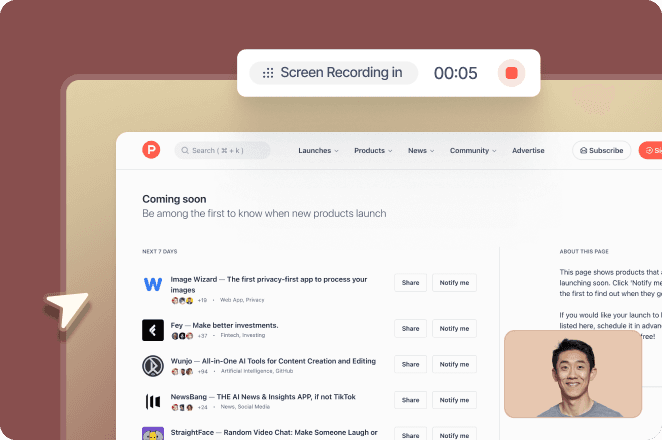
Descubre las mejores herramientas de vídeo para mejorar tu proceso de incorporación de clientes en 2026
Lectura de 30 min · 31 de marzo de 2026.
Resumen del comprador
La incorporación de clientes puede hacer o romper tus relaciones con ellos. Hasta un 86% de los clientes desea mantenerse leal a las empresas que invierten en contenido de onboarding. Sin embargo, muchas compañías aún dependen de grabaciones de pantalla desactualizadas que no incluyen locuciones, branding ni analíticas. Esta guía explora las mejores herramientas de vídeo para la incorporación de clientes, centrándose en sus puntos fuertes y débiles. Es perfecta para líderes empresariales, responsables de éxito del cliente y cualquier persona implicada en diseñar experiencias de onboarding que quiera mejorar sus procesos y herramientas.
El 86% de los clientes afirma que se mantendría leal a una empresa que invirtiera en contenido de onboarding.
Fuente: Wyzowl State of Video 2024
Mejores herramientas de vídeo para onboarding de clientes: comparación cara a cara
Función | Trupeer | Loom | Synthesia | Vidyard | Wistia | Camtasia | Descript | Screencast-O-Matic |
|---|---|---|---|---|---|---|---|---|
Grabación de pantalla | Sí | Sí | No | Sí | Sí | Sí | Sí | Sí |
Locución con IA | Sí | No | Sí | No | No | No | Sí | No |
Avatar con IA | Sí | No | Sí | No | No | No | No | No |
Branding personalizado | Sí | Limitado | Sí | Sí | Sí | Limitado | Sí | Sí |
Elementos interactivos | Sí | No | No | Sí | Sí | No | Sí | No |
Alojamiento de vídeo | Sí | Sí | No | Sí | Sí | No | No | Sí |
Analíticas | Sí | Sí | Limitado | Sí | Sí | Limitado | Sí | Limitado |
Subtítulos automáticos | Sí | Sí | Sí | Limitado | No | Limitado | Sí | No |
Multi-idioma | Sí | Limitado | Sí | Limitado | No | No | Sí | No |
Plan gratuito | Sí | Sí | No | Limitado | No | No | Limitado | Sí |
Trupeer
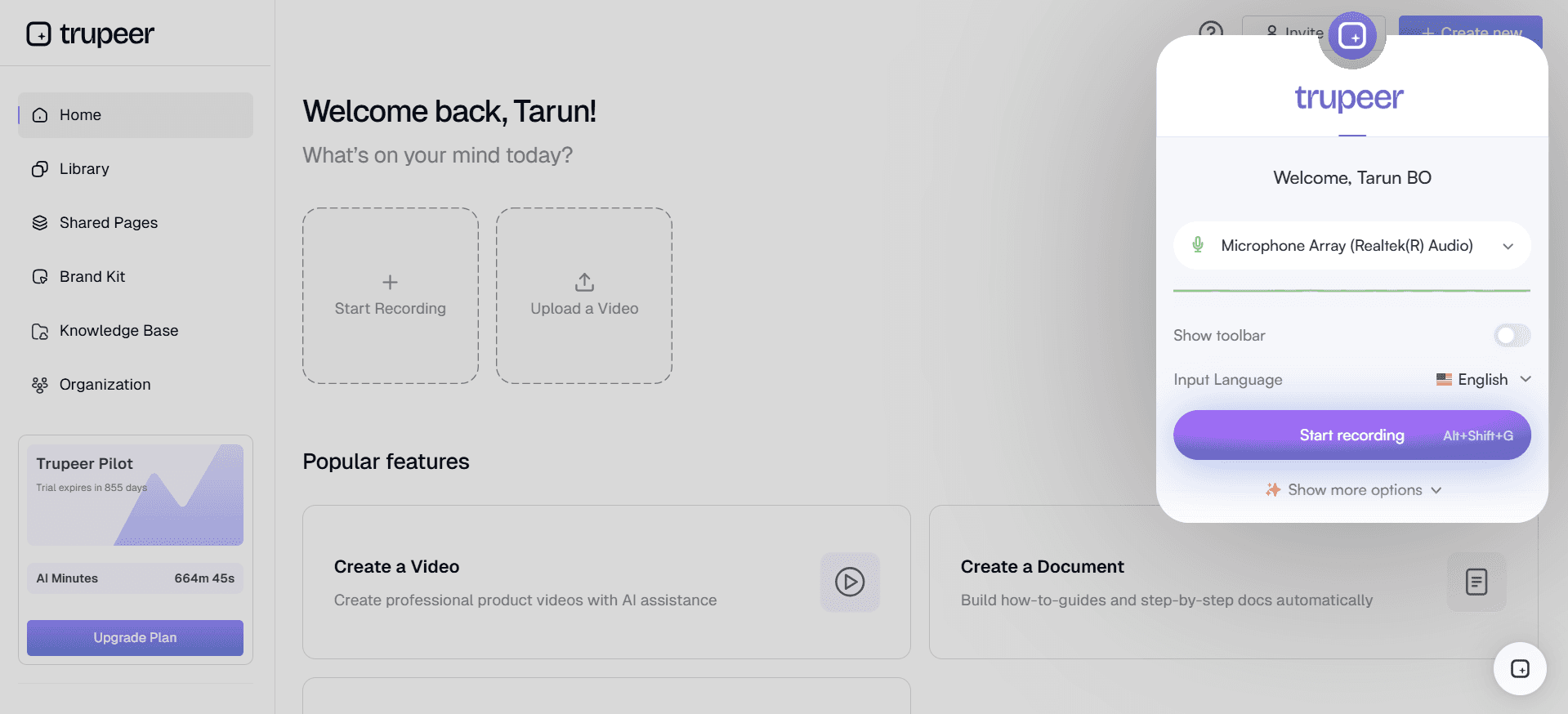
Trupeer está diseñado para empresas que necesitan soluciones de incorporación completas. Combina capacidades de IA con branding personalizado para crear contenido de onboarding atractivo. Sus puntos fuertes están en su capacidad para integrarse con múltiples plataformas y ofrecer analíticas en profundidad. Trupeer es ideal para compañías que buscan una herramienta que ofrezca un equilibrio entre automatización y personalización.
Funciones clave
Grabación de pantalla con IA
Opciones de branding personalizado
Elementos de vídeo interactivos
Analíticas de audiencia en profundidad
Soporte multi-idioma
Subtítulos generados automáticamente
Integraciones sin complicaciones
Alojamiento de vídeo escalable
"Trupeer ha transformado nuestro proceso de onboarding con su interfaz intuitiva y sus analíticas sólidas."
Pros
Contras
Excelentes capacidades de integración con otras herramientas.
No hay plan gratuito disponible.
Ofrece analíticas detalladas de la audiencia.
Curva de aprendizaje para usuarios nuevos.
Admite varios idiomas para llegar a un público global.
El precio premium puede no convenir a pequeñas empresas.
Precios
No hay plan gratuito disponible; los precios comienzan en 49 $ al mes para el paquete básico.
Loom
Loom es una opción popular para grabar y compartir pantalla de forma rápida y sencilla. Es ideal para equipos que necesitan comunicar procesos o actualizaciones internamente. Aunque Loom destaca por su facilidad de uso y la creación rápida de vídeos, le faltan algunas funciones avanzadas como locuciones con IA o avatares.
Funciones clave
Grabación y compartición de vídeo instantáneas
Interfaz de usuario sencilla
Herramientas de edición básicas
Notificaciones de participación de la audiencia
Almacenamiento en la nube para vídeos
Funciones de colaboración del equipo
Grabación de pantalla y webcam
Integración con Slack y otras herramientas
Pros
Contras
Muy fácil de usar con una configuración mínima.
Carece de capacidades de edición avanzadas.
Las opciones de compartición rápida lo hacen ideal para entornos dinámicos.
No incluye funciones de IA como locuciones o avatares.
Hay plan gratuito disponible, ideal para equipos pequeños.
Opciones de personalización limitadas para el branding.
Precios
Hay plan gratuito disponible; los planes de pago comienzan en 8 $ por usuario al mes.
Synthesia
Synthesia se especializa en contenido de vídeo generado con IA mediante avatares y locuciones. Es especialmente útil para empresas que quieren crear vídeos con aspecto profesional con el mínimo esfuerzo. Sin embargo, puede no ser la mejor opción si necesitas analíticas detalladas o funciones de alojamiento.
Funciones clave
Avatares generados con IA
Capacidades de texto a voz
Plantillas de vídeo personalizables
Salida de vídeo en alta definición
Soporte multi-idioma
Proceso de creación de vídeo rápido
Compartición de vídeo segura
Integraciones de API para automatización
Pros
Contras
Crea vídeos profesionales rápidamente con tecnología de IA.
Funciones de analítica limitadas.
Admite varios idiomas para audiencias globales.
No incluye alojamiento de vídeo integrado.
Avatares y locuciones altamente personalizables.
Puede resultar caro para pequeñas empresas o startups.
Precios
No hay plan gratuito; los planes comienzan en 30 $ por vídeo.
Vidyard
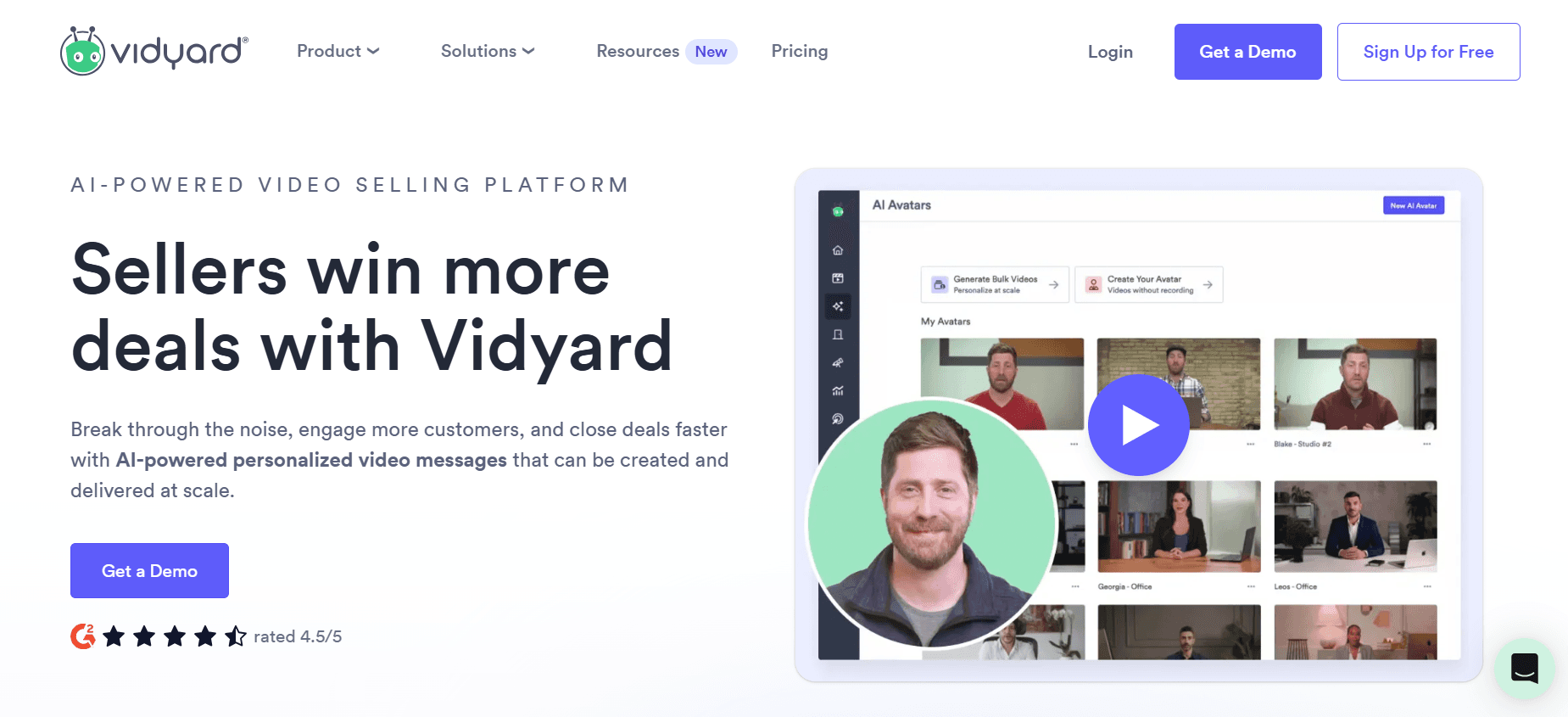
Vidyard está diseñado para empresas que necesitan analíticas sólidas y opciones de personalización. Es una opción favorita entre equipos de marketing por su capacidad para integrarse con sistemas CRM y ofrecer información detallada sobre la audiencia. Aunque Vidyard destaca en analíticas, puede no ser la opción más rentable para equipos más pequeños.
Funciones clave
Analíticas detalladas de la audiencia
Opciones de branding personalizado
Elementos de vídeo interactivos
Integraciones con CRM
Funciones de vídeo por correo
Herramientas de generación de leads
Alojamiento de vídeo seguro
Reproductor de vídeo personalizable
Pros
Contras
Ofrece analíticas extensas para información de marketing.
Precio más alto en comparación con otras herramientas.
Excelentes integraciones con CRM y herramientas de marketing.
Opciones de plan gratuito limitadas.
Funciones de branding altamente personalizables.
Curva de aprendizaje pronunciada para usuarios nuevos.
Precios
Plan gratuito limitado; los planes de pago comienzan en 19 $ por usuario al mes.
Wistia
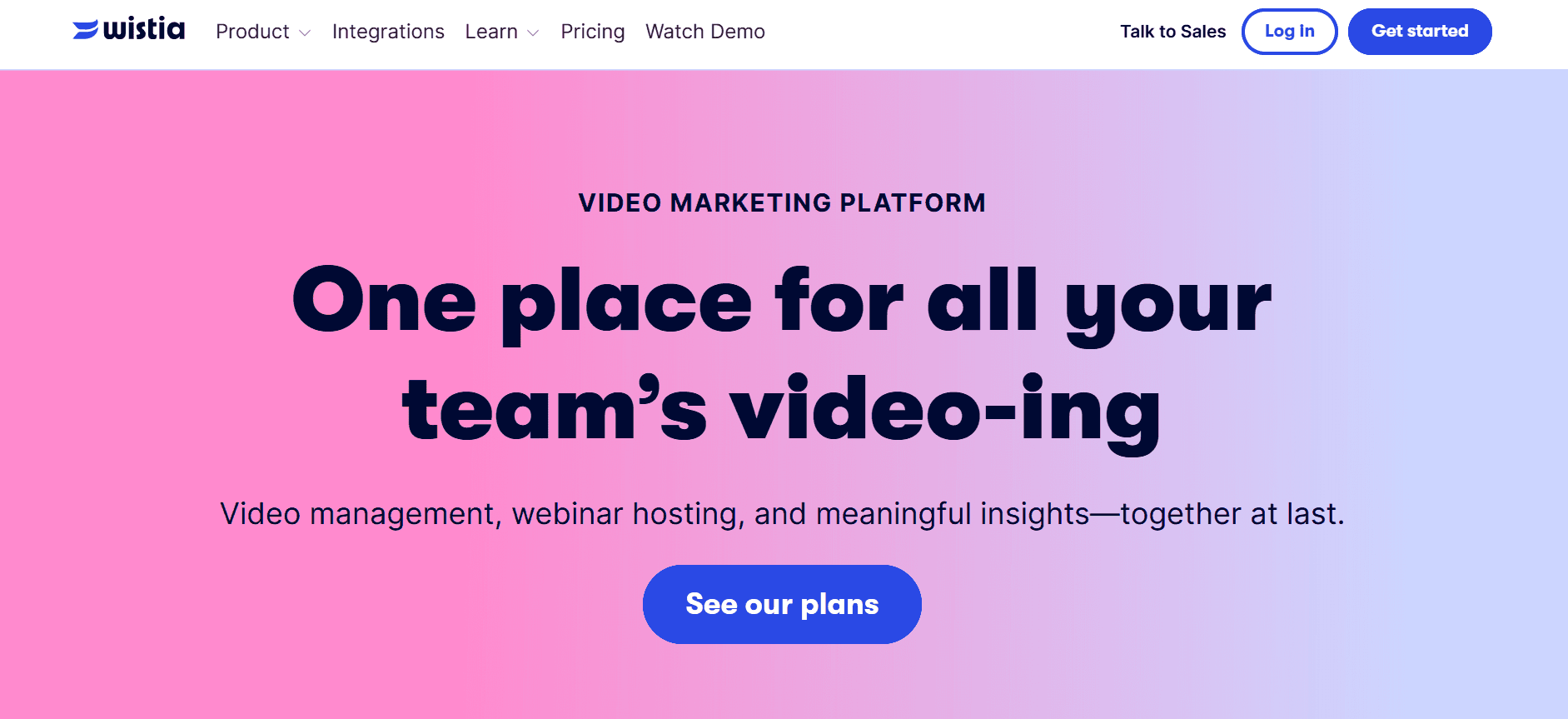
Wistia destaca por sus funciones orientadas al marketing, como la personalización de marca y las herramientas de participación de la audiencia. Es ideal para empresas que quieren incorporar el marketing de vídeo en su estrategia de onboarding. Sin embargo, no ofrece capacidades de IA, lo que podría ser un inconveniente para algunos.
Funciones clave
Personalización de marca
Analíticas avanzadas de vídeo
Herramientas de generación de leads
Funciones de vídeo interactivo
Optimización SEO
Alojamiento de vídeo seguro
Mapas de calor de vídeo
Reproductor de vídeo personalizable
Pros
Contras
Excelente para marketing de vídeo e integración de marca.
No incluye funciones de IA como avatares o locuciones.
Ofrece analíticas detalladas de participación de la audiencia.
No hay plan gratuito disponible.
Reproductor de vídeo y branding altamente personalizables.
El coste más alto puede ser un impedimento para equipos pequeños.
Precios
No hay plan gratuito; los precios comienzan en 99 $ al mes.
Camtasia
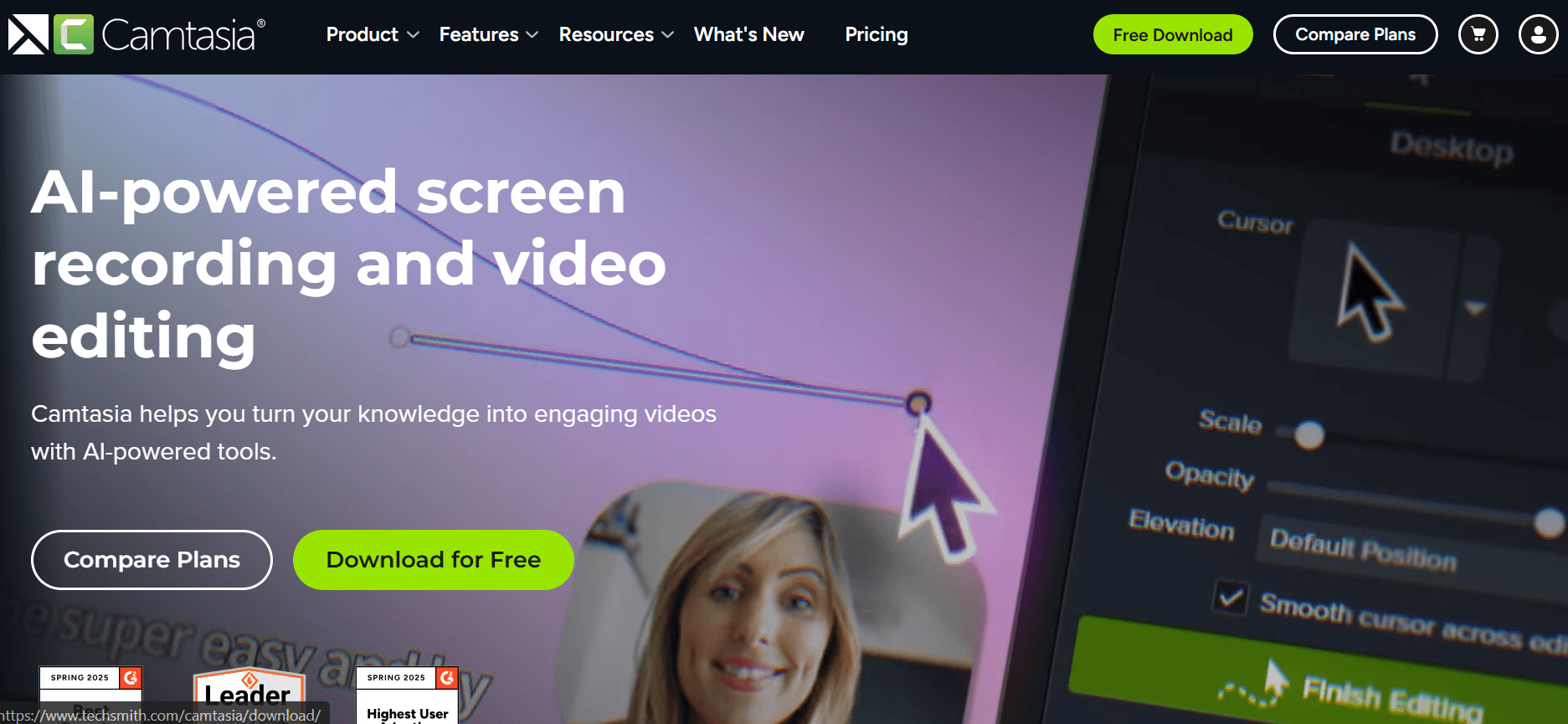
Camtasia es una herramienta de edición de vídeo completa, ideal para crear tutoriales detallados y vídeos instructivos. Es especialmente adecuada para educadores y formadores que necesitan capacidades de edición detalladas. Sin embargo, su complejidad puede resultar abrumadora para usuarios que buscan soluciones de vídeo rápidas y sencillas.
Funciones clave
Grabación de pantalla y edición de vídeo
Línea de tiempo multi-pista
Biblioteca de recursos libres de derechos
Elementos de cuestionario interactivo
Anotaciones y llamadas
Plantillas de vídeo personalizables
Compatibilidad con atajos de teclado
Integración con sistemas de gestión del aprendizaje (LMS)
Pros
Contras
Ofrece funciones de edición de vídeo extensas.
Curva de aprendizaje pronunciada para principiantes.
Genial para producción de vídeo detallada y profesional.
No incluye funciones de IA como avatares o locuciones.
Incluye elementos interactivos como cuestionarios.
No hay plan gratuito disponible.
Precios
No hay plan gratuito; precio de compra único de 299 $ por usuario.
Descript
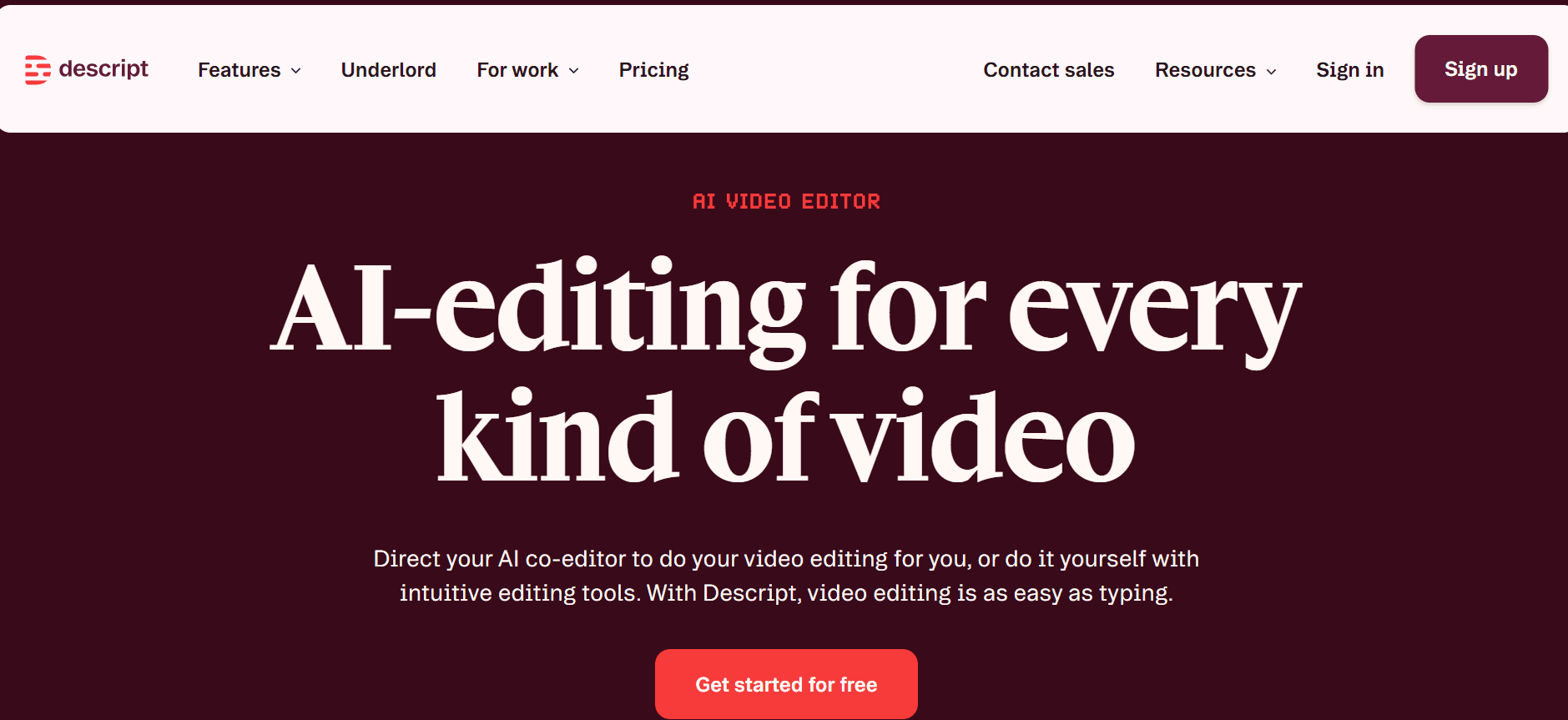
Descript es una herramienta versátil para editar audio y vídeo, lo que la hace ideal para podcasters y creadores de contenido que necesitan tiempos de entrega rápidos. Es única por sus capacidades de transcripción y su soporte multi-idioma, aunque carece de algunas funciones avanzadas de vídeo.
Funciones clave
Transcripción de audio y vídeo
Overdub y clonación de voz
Soporte multi-idioma
Grabación de pantalla
Funciones de edición colaborativa
Herramientas de edición de vídeo sencillas
Integración con plataformas de podcast
Edición de voz con IA
Pros
Contras
Excelente para transcripción y edición de audio.
Funciones de edición de vídeo avanzadas limitadas.
Admite varios idiomas, beneficioso para equipos globales.
No hay una solución dedicada de alojamiento de vídeo.
Las herramientas de edición colaborativa mejoran el flujo de trabajo del equipo.
Coste más alto para funciones avanzadas.
Precios
Plan gratuito limitado; los planes de pago comienzan en 12 $ por usuario al mes.
Screencast-O-Matic
Screencast-O-Matic es una herramienta accesible para grabar pantalla y realizar ediciones de vídeo básicas, a menudo utilizada por educadores y formadores. Ofrece una interfaz sencilla a bajo coste, pero sus funciones son limitadas en comparación con soluciones más completas.
Funciones clave
Grabación de pantalla y webcam
Herramientas de edición de vídeo básicas
Subtitulación y narración
Biblioteca de música de archivo
Compartición y alojamiento de vídeo
Integración con plataformas de aprendizaje
Almacenamiento en la nube para vídeos
Configuración de grabación personalizable
Pros
Contras
Muy asequible, lo que lo hace accesible para todos los usuarios.
Carece de funciones de edición avanzadas y de IA.
La interfaz sencilla es fácil de usar para principiantes.
Opciones de personalización limitadas para el branding.
Incluye opciones básicas de alojamiento y compartición.
El plan gratuito tiene limitaciones importantes.
Precios
Hay plan gratuito disponible; los planes de pago comienzan en 1,65 $ por usuario al mes.
Retos de vídeo para la incorporación de clientes: con qué luchan los equipos
1. Los vídeos se sienten poco profesionales sin una configuración de grabación adecuada
Muchos equipos no tienen acceso a equipos de grabación de alta calidad, lo que da lugar a vídeos que parecen amateur.
La calidad de audio deficiente por micrófonos inadecuados puede distraer a los espectadores y reducir la participación.
Las configuraciones de iluminación deficientes hacen que los vídeos se vean poco atractivos, afectando la percepción general de la audiencia.
Los formatos y resoluciones de vídeo inconsistentes pueden provocar problemas de compatibilidad entre dispositivos.
2. El proceso de producción es lento (días por vídeo)
Los procesos de edición manual consumen mucho tiempo y retrasan los calendarios de publicación de vídeo.
La coordinación entre varios miembros del equipo a menudo genera cuellos de botella y malentendidos.
Las revisiones y los ciclos de feedback aumentan el tiempo total de producción.
Las herramientas complejas requieren habilidades especializadas, lo que ralentiza aún más la producción.
3. El contenido se vuelve obsoleto rápidamente después de las actualizaciones del producto
Las actualizaciones frecuentes del producto exigen revisiones continuas del contenido para mantenerse relevante.
El contenido de vídeo estático requiere volver a grabar en lugar de hacer actualizaciones simples, lo que incrementa la carga de trabajo.
La falta de un sistema centralizado de gestión de contenido significa que a menudo se pasan por alto las actualizaciones.
Los vídeos desactualizados pueden confundir a los usuarios nuevos y afectar su experiencia de incorporación.
4. Falta de personalización entre diferentes segmentos de clientes
Los vídeos genéricos no logran abordar las necesidades específicas de segmentos diversos de clientes.
Recursos limitados para crear múltiples versiones de vídeo adaptadas a diferentes audiencias.
Dificultades para recopilar y analizar datos de clientes que permitan crear contenido personalizado.
El contenido estático carece de interactividad, lo que reduce la participación de grupos de usuarios concretos.
5. Datos limitados sobre la participación de la audiencia y la pérdida
Sin analíticas detalladas, los equipos no pueden medir la eficacia de sus vídeos.
La falta de información sobre los puntos donde la audiencia abandona dificulta mejorar el contenido.
No poder hacer seguimiento del comportamiento de los espectadores a través de varios vídeos limita la planificación estratégica.
La recopilación de feedback suele ser manual y esporádica, lo que da lugar a datos incompletos.
Reto | Proceso tradicional | Impacto en el negocio | Coste de tiempo |
|---|---|---|---|
Calidad de vídeo poco profesional | Grabación manual con herramientas básicas | Imagen de marca deficiente y menor participación | 2-3 días por vídeo |
Proceso de producción lento | Edición manual y aprobaciones | Incorporación retrasada y descontento del cliente | 3-5 días por vídeo |
Contenido obsoleto | Volver a grabar vídeos completos | Información desactualizada y confusión del usuario | 1-2 semanas para actualizaciones |
Falta de personalización | Creación de contenido genérico | Menor participación y tasas de abandono más altas | Variable, según la segmentación |
Datos limitados de participación | Recopilación manual de feedback | Imposibilidad de optimizar el contenido de forma efectiva | Continuo, indefinido |
Funciones imprescindibles en herramientas de vídeo para onboarding de clientes
Grabación de pantalla con IA y locución
Esta función permite a los equipos crear vídeos pulidos sin equipos caros. Las locuciones con IA garantizan claridad y profesionalidad, mientras que la grabación de pantalla captura las acciones sin interrupciones. Herramientas como Trupeer destacan aquí, ofreciendo una integración impecable para crear contenido dinámico y atractivo con el mínimo esfuerzo.
Al automatizar el proceso de locución, los equipos pueden ahorrar tiempo y garantizar la consistencia entre diferentes segmentos de vídeo. Esta automatización es especialmente útil para proyectos de onboarding a gran escala que requieren actualizaciones y ajustes frecuentes sin un esfuerzo manual extenso.
Branding personalizado (logo, colores, CTAs)
La coherencia de marca es crucial para mantener una imagen profesional. Las opciones de branding personalizado permiten a las empresas integrar logotipos, colores de marca y botones de llamada a la acción, reforzando la identidad de marca durante todo el proceso de onboarding. Vidyard y Wistia ofrecen funciones de branding amplias que ayudan a las compañías a mantener una identidad visual coherente.
Estas herramientas proporcionan plantillas y ajustes de personalización que permiten a los equipos adaptar el aspecto de sus vídeos para alinearlo con las directrices de la marca, mejorando el reconocimiento y la confianza entre los usuarios nuevos.
Subtítulos y traducciones generados automáticamente
Con audiencias globales, ofrecer contenido en varios idiomas ya no es opcional. Los subtítulos y traducciones generados automáticamente garantizan accesibilidad e inclusión. Descript y Synthesia lideran el camino con un soporte multi-idioma sólido, lo que facilita que las empresas lleguen a audiencias diversas.
Este tipo de funciones no solo amplía el alcance de los materiales de onboarding, sino que también mejora la comprensión de quienes no son hablantes nativos, asegurando que la información importante se comunique de forma efectiva a todos los espectadores.
Analíticas de participación con seguimiento de abandono
Entender cómo interactúan los espectadores con tu contenido es esencial para optimizar las estrategias de vídeo. Las herramientas que ofrecen analíticas detalladas, incluidos los puntos donde la audiencia abandona, ayudan a los equipos a refinar su contenido para maximizar la participación. Vidyard ofrece herramientas analíticas excepcionales que permiten un análisis en profundidad del comportamiento de los espectadores.
Este enfoque basado en datos ayuda a las organizaciones a identificar qué partes de sus vídeos son las más atractivas y cuáles necesitan mejorar, dando lugar a experiencias de onboarding más efectivas.
Actualizaciones de contenido fáciles sin volver a grabar
Las actualizaciones frecuentes de productos o servicios no deberían implicar una revisión completa de los vídeos. Las herramientas que permiten actualizar el contenido fácilmente sin volver a grabar ahorran tiempo y recursos. Trupeer y Camtasia ofrecen opciones de edición flexibles que facilitan actualizaciones rápidas, manteniendo el contenido fresco y relevante.
Esta flexibilidad garantiza que los materiales de onboarding sigan siendo precisos y estén al día, proporcionando a los usuarios nuevos la información más reciente sin necesidad de un tiempo de producción y unos costes extensos.
Incorporar estas funciones imprescindibles en tu estrategia de vídeo para onboarding puede mejorar de forma notable la eficacia de tus esfuerzos de onboarding, asegurando una transición fluida para los usuarios nuevos y contribuyendo a la retención de clientes a largo plazo.
Cómo elegir herramientas de vídeo para onboarding de clientes según tu caso de uso
Vídeos de bienvenida del producto y configuración de la primera sesión
Estos vídeos buscan presentar tu producto a los usuarios nuevos, guiándolos a través de la configuración inicial y las funciones clave. Una experiencia de onboarding fluida puede mejorar significativamente la satisfacción del usuario y la retención. Elegir la herramienta adecuada es crucial para ofrecer contenido de bienvenida de alta calidad.
Retos clave
Necesidad de una producción de alta calidad para causar una buena primera impresión.
Garantizar que el contenido sea atractivo e informativo.
Mantener el vídeo conciso pero completo.
Soluciones necesarias
Herramientas con funciones de branding personalizado como Vidyard o Trupeer.
Opciones para elementos interactivos que atraigan a los espectadores.
Capacidades de producción rápida para actualizar los vídeos con facilidad.
Herramienta
Branding
Interactividad
Velocidad de producción
Trupeer
Sí
Sí
Rápido
Vidyard
Sí
Sí
Moderada
Loom
Limitado
No
Rápido
Recorridos de funciones para clientes de autoservicio
Los recorridos de funciones son esenciales para guiar a los usuarios a través de funcionalidades complejas. Están pensados para usuarios que prefieren opciones de autoservicio, reduciendo la necesidad de intervención directa del soporte. El objetivo es demostrar de forma clara las capacidades y los beneficios del producto.
Retos clave
Las funciones complejas pueden abrumar a los usuarios sin una guía clara.
Necesidad de soporte multi-idioma para audiencias globales.
Garantizar que el contenido sea fácil de consultar y esté relacionado con sus necesidades.
Soluciones necesarias
Herramientas con subtítulos generados automáticamente como Descript o Synthesia.
Capacidades de grabación de pantalla para recorridos detallados.
Soporte multi-idioma para llegar a una audiencia más amplia.
Herramienta
Subtítulos
Grabación de pantalla
Multi-idioma
Synthesia
Sí
No
Sí
Descript
Sí
Sí
Sí
Camtasia
Limitado
Sí
No
Serie de vídeos de educación del cliente
Las series de vídeo educativas están diseñadas para ofrecer información profunda sobre el uso del producto, las mejores prácticas y las funciones avanzadas. Son especialmente beneficiosas para usuarios a largo plazo que buscan maximizar el uso de tus productos.
Retos clave
Mantener el contenido atractivo a lo largo de varios vídeos.
Garantizar la coherencia en todos los episodios en cuanto a calidad y branding.
Gestionar el feedback y las revisiones de forma eficiente.
Soluciones necesarias
Herramientas con analíticas sólidas como Wistia o Vidyard.
Opciones de branding personalizado para mantener la coherencia.
Funciones de colaboración para la aportación del equipo y las revisiones.
Herramienta
Analíticas
Branding
Colaboración
Wistia
Sí
Sí
No
Vidyard
Sí
Sí
Sí
Loom
Limitado
Limitado
Sí
Secuencias de vídeo por correo para onboarding
Incrustar vídeos en correos de onboarding puede mejorar la participación de los usuarios y ofrecer una guía paso a paso. Este método es eficaz para llegar a los usuarios donde a menudo pasan la mayor parte de su tiempo: en sus bandejas de entrada.
Retos clave
Garantizar que los vídeos sean compatibles con móviles y se carguen rápido.
Crear contenido conciso que se ajuste a las limitaciones del correo.
Hacer seguimiento de la interacción del usuario y la participación con el vídeo.
Soluciones necesarias
Herramientas con un alojamiento sólido y optimización para móviles como Vidyard o Wistia.
Herramientas de producción rápida de vídeo para actualizaciones puntuales.
Analíticas detalladas de participación para medir el éxito.
Herramienta
Optimización para móviles
Alojamiento
Analíticas
Vidyard
Sí
Sí
Sí
Wistia
Sí
Sí
Sí
Screencast-O-Matic
Limitado
Sí
Limitado
Buenas prácticas para crear vídeos de onboarding eficaces
Antes de la producción
Define objetivos claros para cada segmento de vídeo para asegurar la alineación con los objetivos del negocio.
Identifica segmentos de audiencia objetivo y adapta el contenido para satisfacer sus necesidades y expectativas específicas.
Redacta un guion detallado para mantener el enfoque y garantizar una cobertura completa de los temas clave.
Reúne un equipo multidisciplinar para aportar perspectivas diversas y experiencia.
Selecciona las herramientas adecuadas según tus requisitos de vídeo y las limitaciones de presupuesto.
Durante la producción
Garantiza una captura de audio y vídeo de alta calidad con el equipo y los ajustes adecuados.
Incorpora elementos de branding de forma coherente a lo largo del vídeo para reforzar tu identidad de marca.
Utiliza elementos interactivos como cuestionarios o encuestas para involucrar activamente a los espectadores.
Supervisa el ritmo del vídeo para mantener el interés de la audiencia y evitar la sobrecarga de información.
Solicita feedback en directo de los responsables para realizar ajustes necesarios en tiempo real.
Después de la producción
Realiza una revisión y pruebas exhaustivas para identificar y corregir cualquier problema antes del lanzamiento.
Analiza los datos de participación de la audiencia para evaluar el impacto del vídeo e identificar áreas de mejora.
Recopila feedback de los usuarios para comprender su experiencia y realizar mejoras iterativas.
Actualiza el contenido del vídeo de forma regular para reflejar cualquier cambio en las funciones del producto o en el branding de la empresa.
Promociona el vídeo en varios canales para maximizar su alcance y eficacia.
Preguntas frecuentes
¿Cuál es el beneficio principal de usar herramientas de vídeo para la incorporación de clientes?
Las herramientas de vídeo mejoran la experiencia de onboarding al proporcionar una guía visual y auditiva, haciendo que la información compleja sea más fácil de entender. También permiten una entrega coherente de la información y pueden aumentar la participación y la retención de los usuarios.
¿Cómo elijo la herramienta de vídeo adecuada para mi empresa?
Ten en cuenta tus casos de uso específicos, tu presupuesto y las funciones necesarias. Evalúa las herramientas según su capacidad para integrarse con sistemas existentes, su facilidad de uso y el nivel de soporte y formación que ofrecen.
¿Estas herramientas pueden integrarse con mi CRM y plataformas de marketing existentes?
Muchas herramientas de vídeo como Vidyard y Trupeer ofrecen integraciones sin complicaciones con plataformas populares de CRM y marketing, lo que te permite agilizar el flujo de datos y mejorar las interacciones con los clientes.
¿Es posible actualizar el contenido de vídeo sin volver a grabar?
Sí, herramientas como Trupeer y Camtasia ofrecen opciones de edición flexibles que te permiten actualizar el contenido fácilmente sin necesidad de volver a grabar, ahorrando tiempo y recursos.
¿Hay opciones gratuitas disponibles para pequeñas empresas?
Algunas herramientas como Loom y Screencast-O-Matic ofrecen planes gratuitos con funciones limitadas, que pueden ser adecuados para pequeñas empresas o equipos con necesidades básicas. Sin embargo, los planes de pago suelen ofrecer funciones y soporte más completos.
¿Qué factores influyen en el precio de las herramientas de vídeo?
El precio suele estar influido por el rango de funciones ofrecidas, el nivel de soporte proporcionado, el número de usuarios y las capacidades de integración. Ten en cuenta qué funciones son más críticas para tu organización al evaluar el coste.
¿Cuánto tiempo se tarda en implementar una nueva herramienta de vídeo?
El tiempo de implementación varía según la complejidad de la herramienta y tu infraestructura existente. Las herramientas básicas pueden configurarse en unas horas, mientras que las soluciones más avanzadas con integraciones extensas pueden tardar más.
¿Qué opciones de soporte hay disponibles durante la implementación?
La mayoría de los proveedores de herramientas de vídeo ofrecen una variedad de opciones de soporte, incluida documentación en línea, seminarios web y equipos de atención al cliente para ayudar con la configuración y la resolución de problemas durante la fase de implementación.
Cierre
Elegir las herramientas de vídeo adecuadas para la incorporación de clientes puede transformar la forma en que te relacionas con los usuarios nuevos, mejorando la satisfacción y la retención. Al abordar los retos habituales y aprovechar las funciones imprescindibles, puedes crear una experiencia de onboarding fluida que se alinee con los objetivos de tu negocio.
Explora Trupeer para descubrir cómo sus funciones avanzadas pueden mejorar tu proceso de incorporación de clientes. Visita Trupeer para saber más sobre cómo puede adaptarse a tus necesidades específicas y ayudar a tu organización a alcanzar sus objetivos de onboarding.