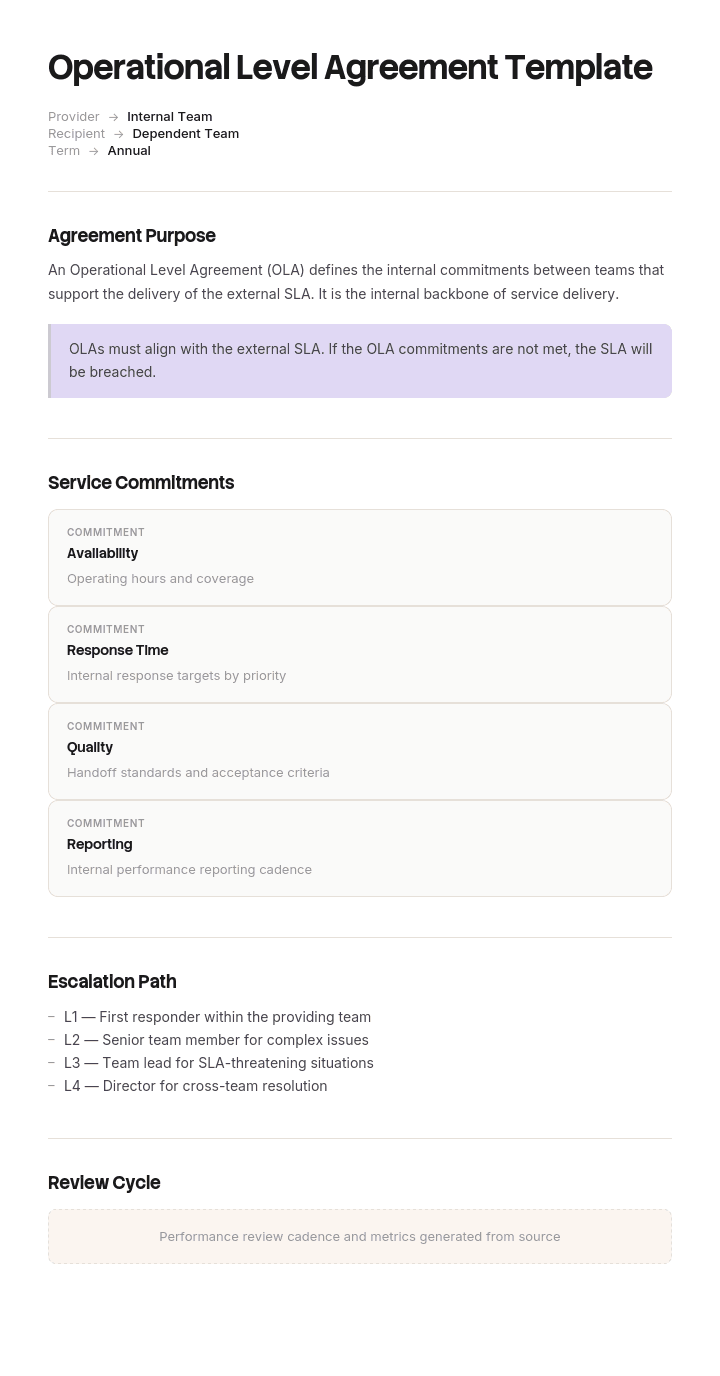
Verwenden Sie diese Vorlage
SLAs machen Kunden Versprechen - OLAs stellen sicher, dass Ihre internen Teams sie einhalten können. Mit Trupeer können Sie beim Schreiben von OLAs Stunden sparen, indem Sie mit einer kostenlosen Vorlage für eine Operational-Level-Vereinbarung beginnen, sie mit Ihren Markenrichtlinien anpassen und die OLA in ein Video-Tutorial verwandeln, das jedes interne Team auf gemeinsame Servicestandards ausrichtet.
Diese Vorlage für eine Operational-Level-Vereinbarung bietet einen strukturierten Rahmen, um abgedeckte Services, Verantwortlichkeiten interner Teams, Reaktionszeiten, Eskalationsverfahren, Abhängigkeiten und Überprüfungszyklen festzuhalten - nützlich für IT-Betrieb, MSPs, Shared Services und jedes interne Team, das externe SLAs unterstützt. Kombinieren Sie sie mit unserem AI-SOP-Generator für zugehörige Verfahren, erstellen Sie KI-Video-Tutorials und übersetzen Sie in über 65 Sprachen für globale Teams.
So passen Sie diese Vorlage in Trupeer an
Schritt 1: Öffnen Sie den Vorlagenbereich
Gehen Sie über die Hauptnavigation zum Bereich Vorlagen.
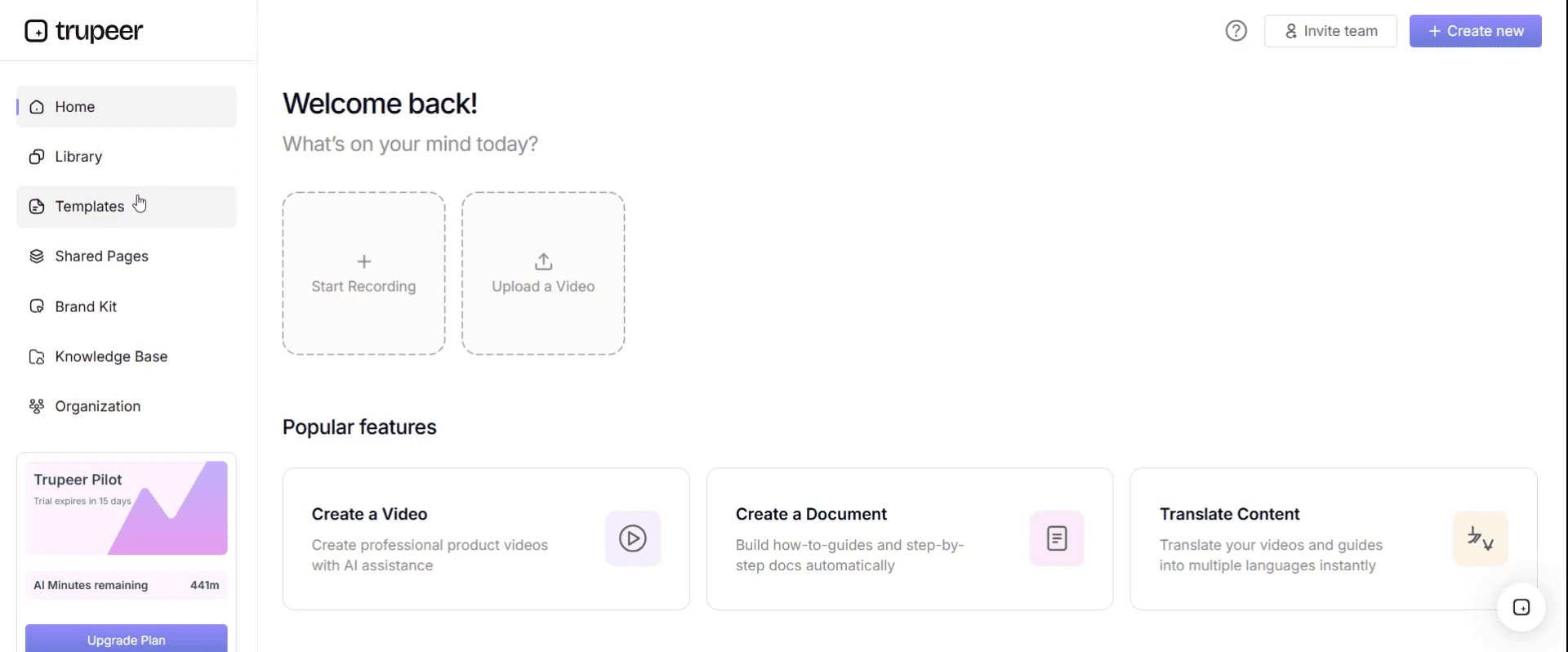
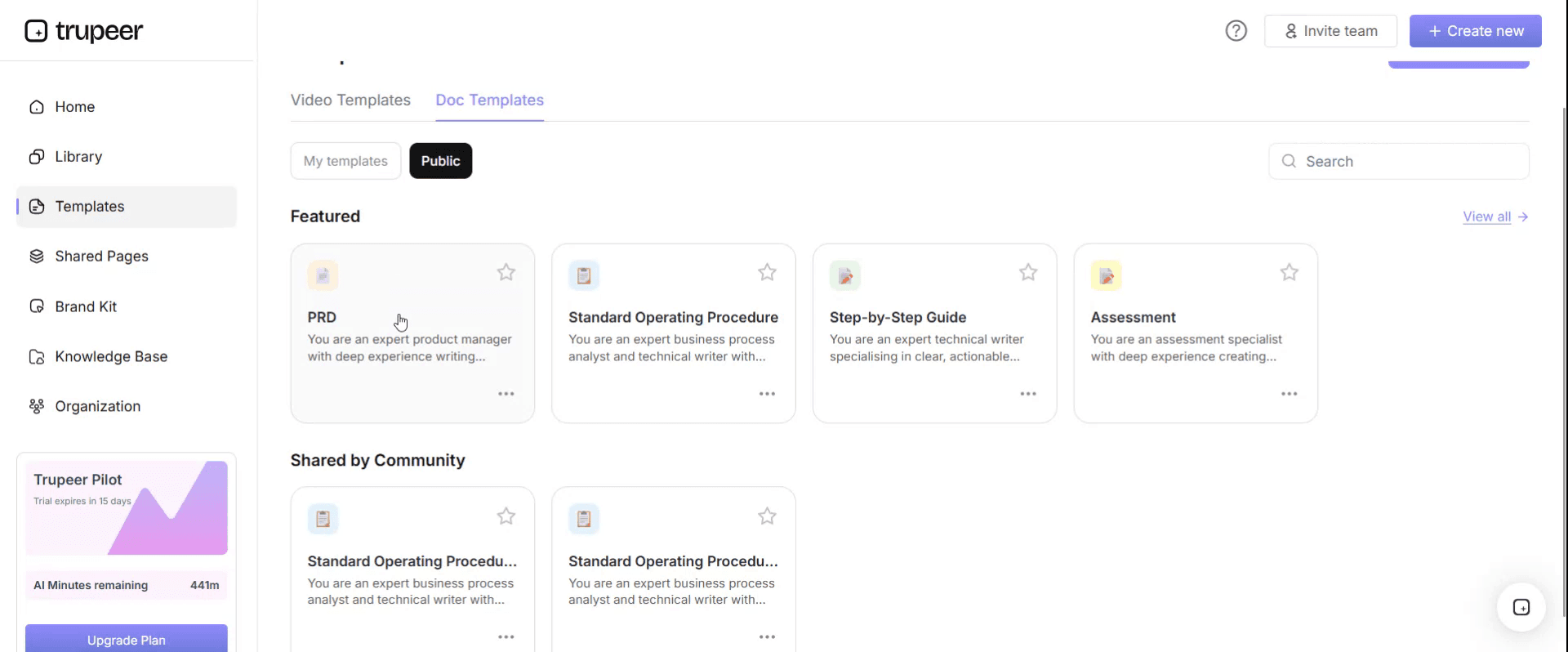
Schritt 2: Wählen Sie eine Vorlage aus und öffnen Sie sie
Klicken Sie auf eine beliebige Vorlage, mit der Sie arbeiten möchten, um sie zu öffnen.
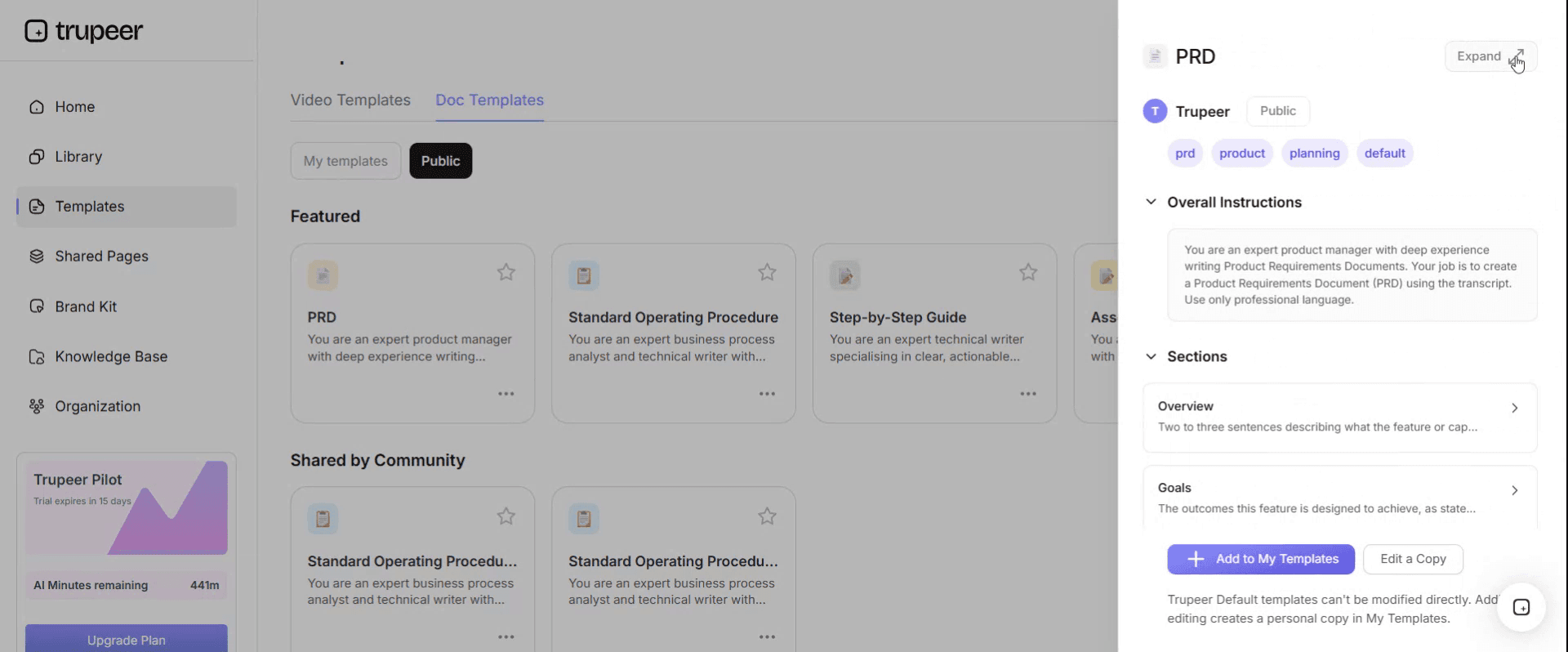
Schritt 3: Erweitern Sie die Vorlagenansicht
Falls nötig, erweitern Sie die Vorlagenansicht, um das vollständige Layout und die Details klar zu sehen.
Schritt 4: Bearbeiten Sie die Vorlage
Klicken Sie auf Bearbeiten, um mit der Anpassung der ausgewählten Vorlage zu beginnen.
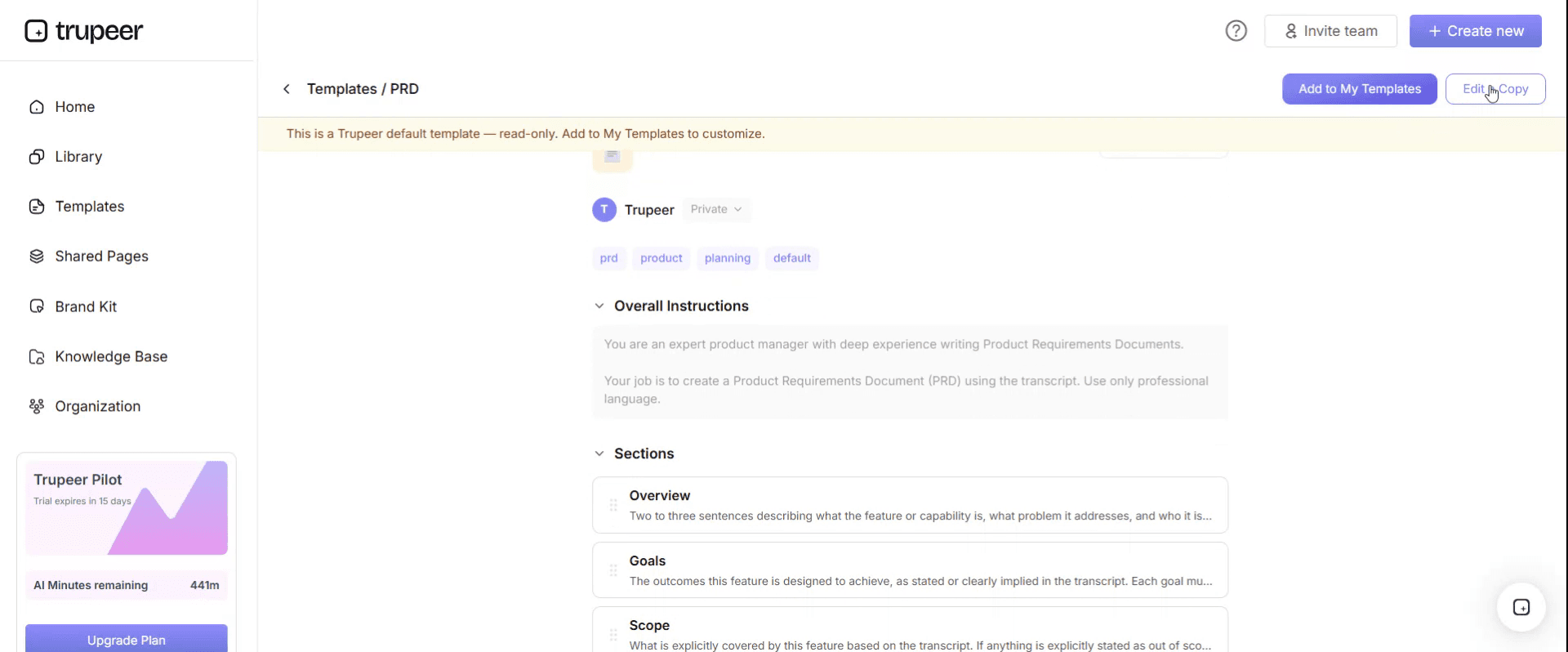
Im Editor können Sie:
Neue Abschnitte hinzufügen
Formatierungsregeln definieren oder aktualisieren
Ein Logo hinzufügen und dessen Position sowie zugehörige Einstellungen anpassen
Schritt 5: Speichern Sie Ihre angepasste Vorlage
Nachdem Sie alle erforderlichen Änderungen vorgenommen haben, klicken Sie auf Speichern, um die aktualisierte Vorlage als Ihre eigene zu sichern.
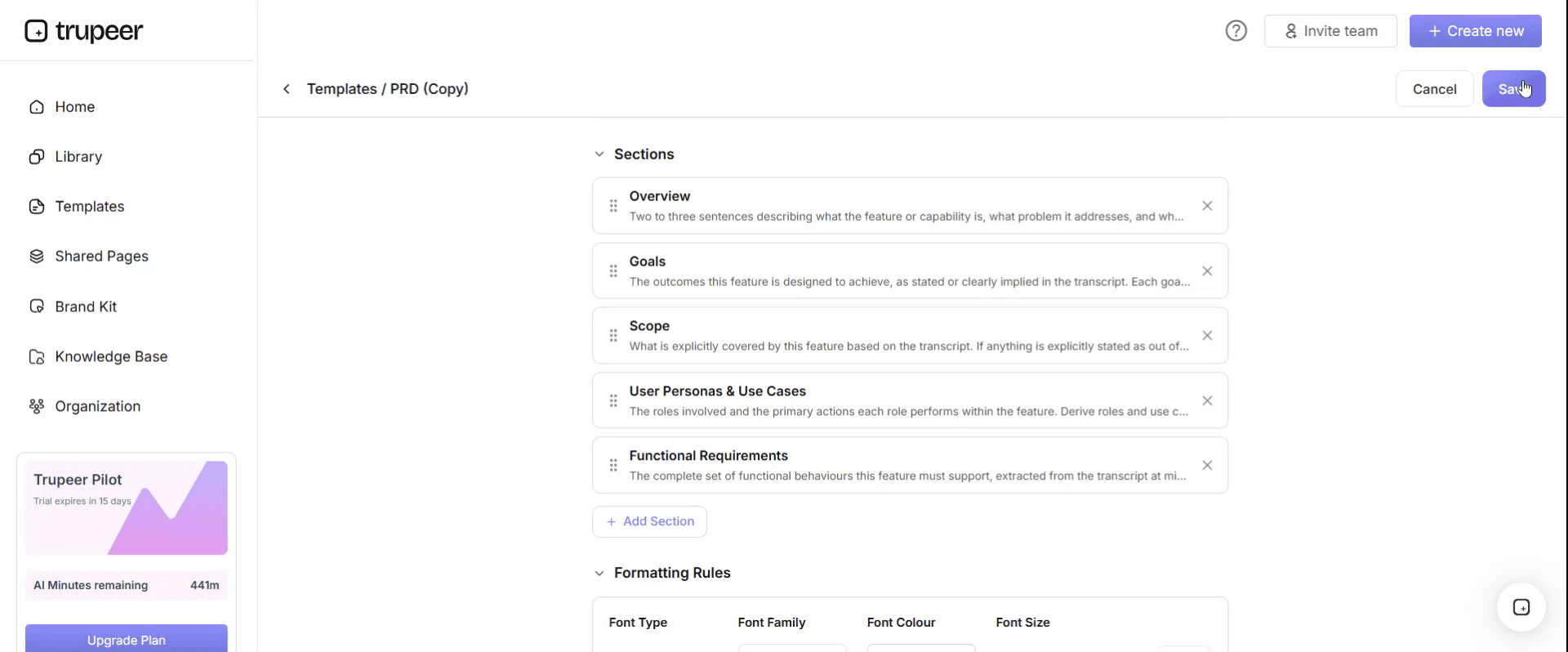
Schritt 6: Vorschau anzeigen und die Vorlage feinabstimmen
Wenn Sie sehen möchten, wie Ihre angepasste Vorlage aussieht, öffnen Sie die Vorschau.
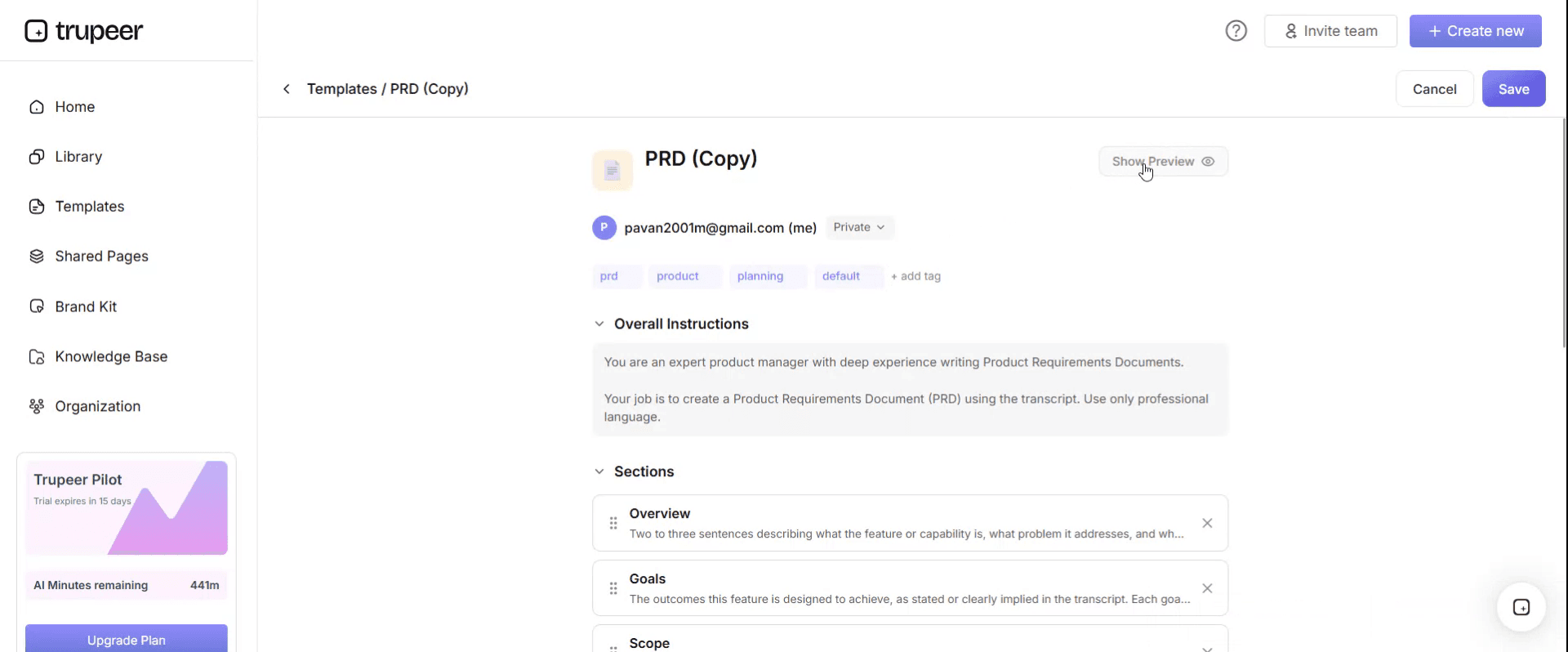
Auf dem Vorschaubildschirm können Sie bei Bedarf weiterhin direkt Anpassungen vornehmen und so sicherstellen, dass die Vorlage genau so erscheint, wie Sie es möchten.
Mit einer Vorlage für eine Operational-Level-Vereinbarung können Sie:
Stunden beim Schreiben sparen: Überspringen Sie die leere Seite mit einer Struktur, die speziell für OLAs entwickelt wurde.
Interne Teams ausrichten: Integrierte Felder stellen sicher, dass jedes Team seine Verantwortung kennt.
Im Markenauftritt bleiben: Wenden Sie Ihr Logo, Ihre Schriftarten und Farben mit dem Brand Kit von Trupeer an.
Kunden-SLAs schützen: Starke OLAs verhindern, dass interne Übergaben externe Versprechen gefährden.
Über Services hinweg standardisieren: Verwenden Sie dieselbe OLA-Vorlage für jede interne Vereinbarung.
Globale Teams erreichen: Übersetzen Sie OLAs mit einem Klick in über 65 Sprachen.
Eine gute OLA macht aus SLA-Versprechen eine verlässliche Umsetzung. Verwenden Sie diese Vorlage, um interne Teams hinter gemeinsamen Servicestandards auszurichten.
Häufig gestellte Fragen
Was ist eine Operational-Level-Vereinbarung (OLA)?
Eine Operational-Level-Vereinbarung ist eine interne Vereinbarung zwischen Teams innerhalb derselben Organisation - typischerweise IT-, Support- und Betriebsteams - die festlegt, wie sie zusammenarbeiten, um externe SLAs zu erfüllen. OLAs decken Verantwortlichkeiten, Reaktionszeiten, Abhängigkeiten und Eskalationsverfahren ab.
Was ist der Unterschied zwischen einem SLA und einer OLA?
Ein SLA ist eine externe Vereinbarung zwischen einem Dienstanbieter und einem Kunden - sie definiert die Servicestandards, die Kunden erwarten können. Eine OLA ist intern - sie definiert, wie Teams innerhalb des Anbieters zusammenarbeiten, um diese SLAs zu erfüllen. Kunden sehen SLAs; interne Teams arbeiten nach OLAs.
Was sollte eine OLA enthalten?
Eine vollständige OLA umfasst die abgedeckten Services, die beteiligten internen Teams und ihre Verantwortlichkeiten, Zielvorgaben für Reaktions- und Lösungszeiten, Abhängigkeiten und Übergaben, Eskalationsverfahren, Kommunikationskanäle, Leistungsberichte und den Überprüfungsrhythmus.
Wie schreibt man eine OLA?
Beginnen Sie damit, das kundenorientierte SLA zu erfassen. Identifizieren Sie jedes interne Team, das an der Bereitstellung beteiligt ist. Definieren Sie die spezifischen Verantwortlichkeiten und Zeitziele jedes Teams - sie müssen zusammen unter der gesamten SLA-Zeit liegen. Dokumentieren Sie Übergaben und Eskalationswege. Lassen Sie vor der Veröffentlichung alle beteiligten Teamleiter zustimmen.
Warum sind OLAs wichtig?
OLAs verhindern die häufigste Ursache für SLA-Verstöße: dass interne Teams ihre Rolle oder den zeitlichen Ablauf bei der Bereitstellung nicht kennen. Sie reduzieren außerdem Schuldzuweisungen, klären Verantwortlichkeiten und schaffen eine gemeinsame Grundlage für Leistungsbeurteilungen. Ohne OLAs hängen SLA-Versprechen von gutem Willen und Hoffnung ab.