Trupeer Blog
In 2026, producing training videos in regional languages is vital for Indian L&D teams aiming to deliver effective learning experiences across diverse linguistic audiences. With over 19,500 languages and dialects spoken in India, creating content that resonates with regional nuances is crucial. Failing to do so can mean missing out on engaging a significant part of your workforce, which can affect productivity and learning outcomes. A training video production system that supports regional languages can bridge this gap effectively.
Consider a scenario where an organization needs to train its sales team across different states. Each region has its own language and cultural context. A one-size-fits-all training video might fall flat in such a case. According to a recent survey,
organizations using regional language training saw a 30% increase in learner engagement.
This statistic underscores the importance of localized training content in achieving better learning outcomes. For L&D teams, the challenge isn't just about translating content, it's about creating meaningful learning material that speaks to the audience's cultural and linguistic context.
Why does regional language training video production matter?
For businesses operating in India, the linguistic diversity poses both a challenge and an opportunity. Training videos tailored to regional languages can significantly enhance communication and understanding among employees. When instructional content is available in the language that employees are most comfortable with, it becomes easier for them to grasp complex concepts. This, in turn, can lead to better performance and productivity at work.
Also, multilingual training videos cater to the diverse linguistic backgrounds of employees, making them feel more included and valued. This inclusivity can lead to higher motivation levels and lower turnover rates. Language barriers can result in misinterpretations and errors, which are costly for businesses. Tailored training videos help mitigate these risks by ensuring that all employees have a clear understanding of their roles and tasks. Now, with tools like Trupeer, companies can efficiently produce training videos that cater to multiple languages without compromising on quality or content.
What are the benefits of regional language training video production?
Investing in regional language training videos offers multiple advantages for organizations looking to maximize their training impact.
Enhanced Comprehension. Training in a familiar language improves understanding, reducing the time needed to train employees. This means faster onboarding and quicker integration into their roles.
Increased Engagement. Videos that speak the audience's language often see higher engagement rates. For example, a sap training guide tailored to a specific region can significantly boost participation.
Reduced Errors. Clear communication in training materials minimizes misunderstandings and mistakes, leading to more accurate job performance and a safer work environment.
Stronger Cultural Relevance. By recognizing and respecting regional languages, companies demonstrate cultural sensitivity, which can strengthen employee loyalty and retention.
Broader Reach. A video generation platform that supports multiple languages allows companies to extend their training programs to a more diverse audience, increasing their market reach and operational efficiency.
Cost Efficiency. Although initially demanding, investing in regional language training can reduce long-term costs associated with retraining and correcting errors, leading to better ROI.
Which Trupeer features help you produce regional language training videos?
Trupeer offers a range of features to help you create effective regional language training videos with ease and precision.
AI screen recording with auto-zoom and click detection
This feature allows you to capture high-quality screen recordings that automatically focus on the areas of interest. With auto-zoom, you ensure that no detail is too small to miss. This capability is invaluable when demonstrating software applications or digital workflows, as it highlights critical actions and interfaces clearly. The click detection feature adds another layer of clarity by tracking user interactions, making it easier for viewers to follow along. For L&D teams, this means producing clear, focused content without manual intervention.
AI voiceover in 65+ natural voices, adjustable pace and tone
Delivering training in regional languages is simplified with Trupeer's AI voiceover feature. You can choose from over 50 natural-sounding voices, ensuring that your content is relatable and engaging. The ability to adjust the pace and tone means you can fine-tune the delivery to match the cultural expectations of different regions. This flexibility ensures that the training videos are not just understandable but also resonate emotionally with diverse audiences, enhancing engagement and retention.
AI avatars / talking-head video
Using AI avatars, you can add a personal touch to your training videos without casting real actors. Trupeer offers a stock library of avatars, which can be customized to appear more relatable to your audience. This feature is particularly effective for delivering training content in a conversational style, making it feel more personal and engaging. Combined with Trupeer's video knowledge base, these talking-head videos can make complex information more digestible and memorable.
AI dubbing for non-English audiences
Trupeer's AI dubbing feature offers smooth translation and dubbing into over 40 languages, complete with lip-syncing. This capability is critical for ensuring that your training videos maintain their effectiveness across different language groups. It eliminates the need to create separate videos for each language, saving time and resources. By using AI dubbing, you ensure that all employees receive the same quality of training, regardless of their linguistic background.
AI-searchable knowledge base with timestamp deep-links
With Trupeer's training video software with guide, you can create an AI-searchable knowledge base that allows employees to find specific information quickly. Timestamp deep-links enable direct access to particular sections of a video, facilitating quick reference and reducing the time spent searching for information. This feature enhances the overall learning experience, providing a dynamic and responsive training resource that adapts to individual learning needs.
How do you produce regional language training videos step by step with Trupeer?
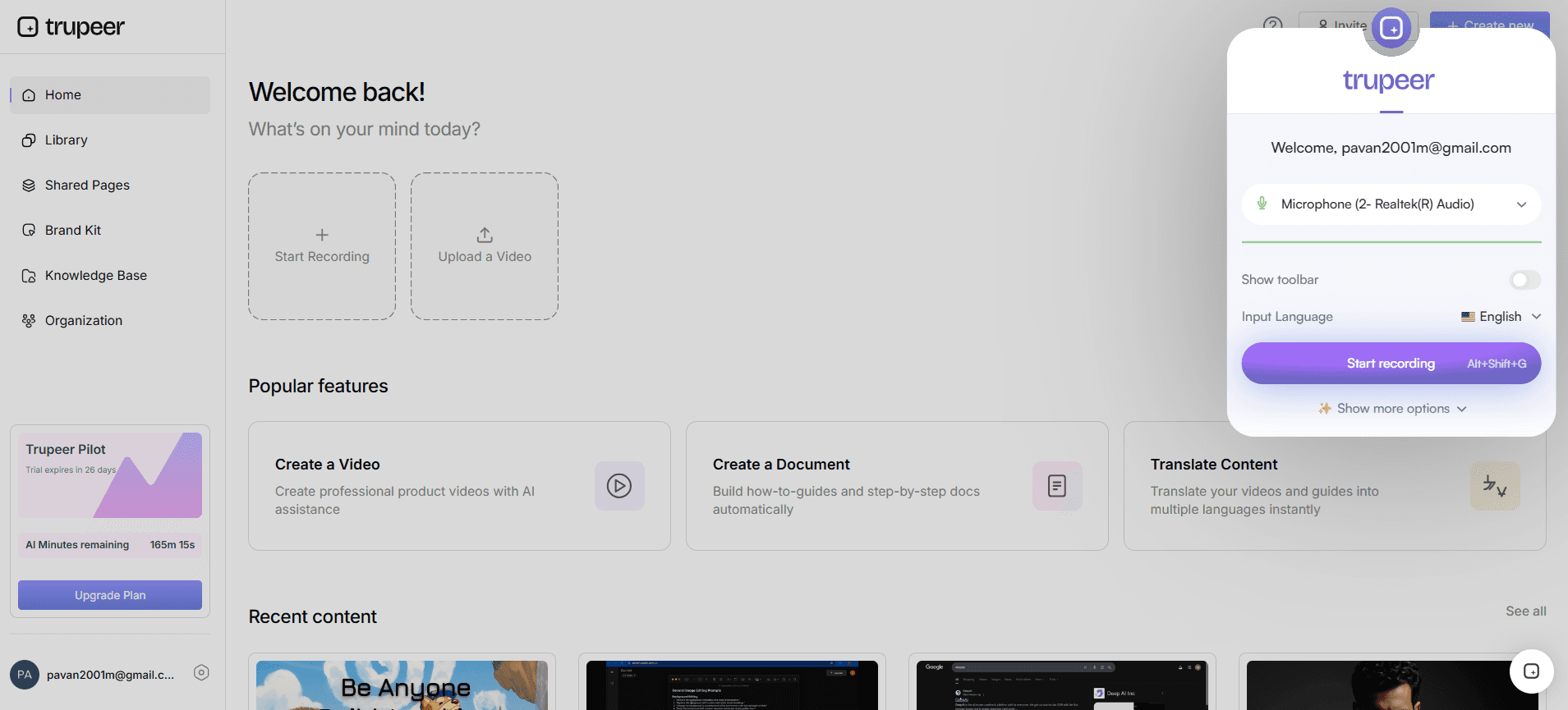
Step 1: Capture Your Screen
Start by using Trupeer's AI screen recording with auto-zoom and click detection. Open the Trupeer desktop app or browser-based recorder. Initiate a new recording by clicking the "Start Recording" button. The auto-zoom feature will ensure that important areas of the screen are highlighted, and click detection will keep track of mouse interactions, making the video clear and engaging. The recording adjusts dynamically to focus on the areas of interest, which is perfect for software tutorials. Depending on the complexity, this process can take 10 to 30 minutes. Remember to review the captured footage for any unnecessary elements before proceeding to the next step.
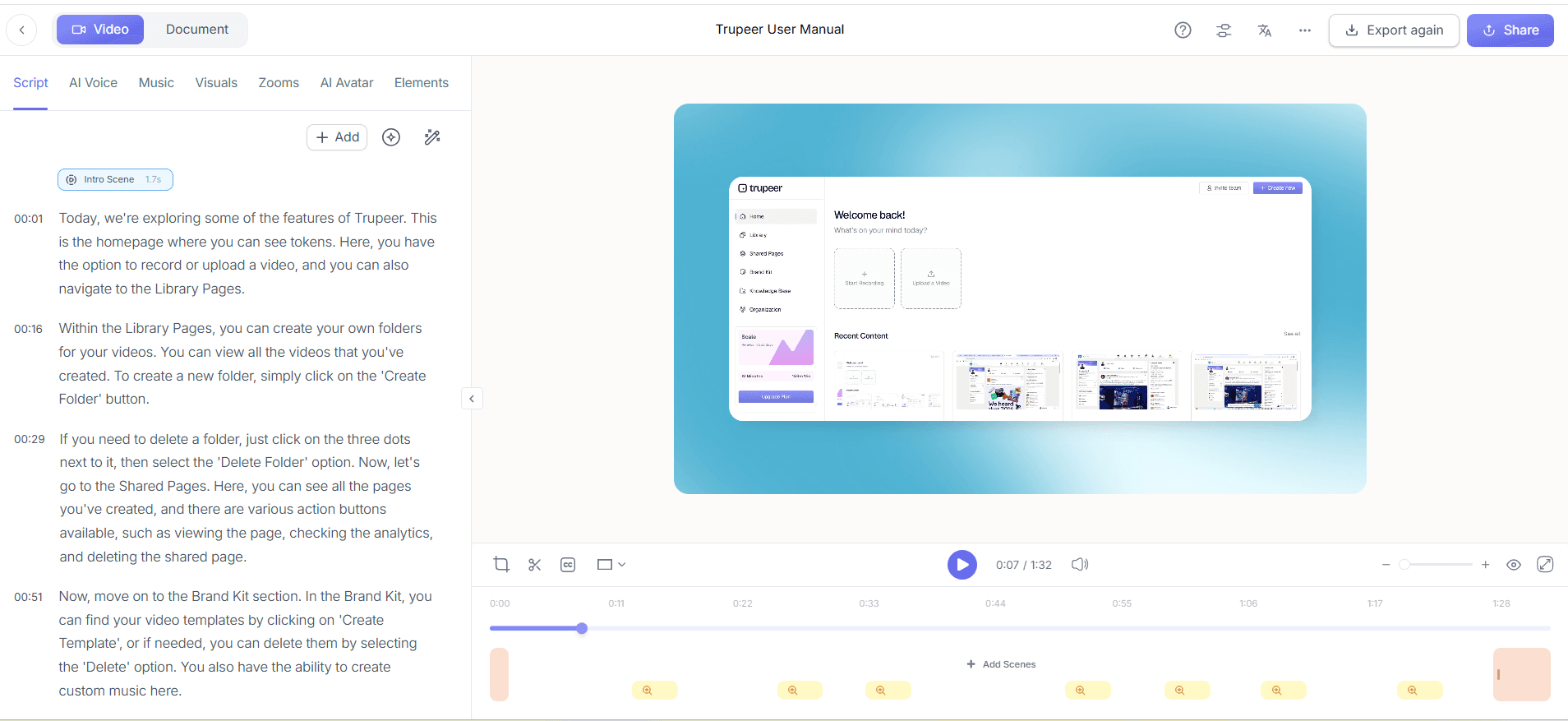
Step 2: Edit and Enhance
Once you have your raw footage, use Trupeer's AI-powered editing tools. Access the editing suite by selecting your recording from the library. Trupeer automatically removes filler words like "um" and "ah," simplifying your video. You can also add AI-generated voiceovers by choosing from 65+ natural voices, adjusting the pace and tone to match your regional audience. This step ensures that your video is professional and engaging, perfect for holding your audience's attention. Editing typically takes about 20 to 40 minutes, depending on the video's length and complexity.
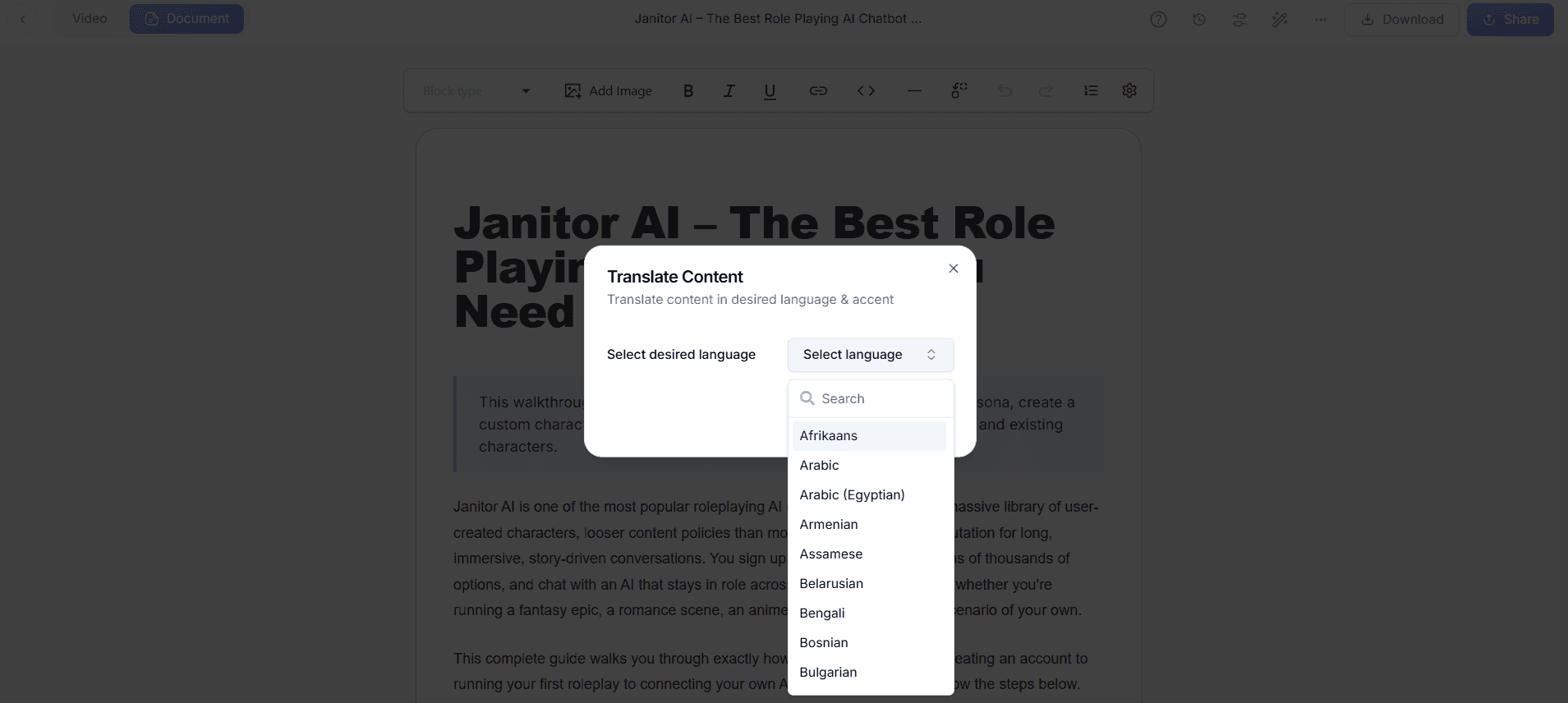
Step 3: Localize the Content
With the video edited, move to localization. use Trupeer's AI translation into 40+ languages and AI dubbing with accurate lip-sync. Select the desired languages and let Trupeer handle the translation and dubbing. This feature ensures that your training video is accessible and understandable to a diverse audience. The lip-sync capability aligns the dubbed audio perfectly with on-screen visuals, creating a smooth viewing experience. Localization can take around 30 minutes per language, depending on the video's length and complexity.
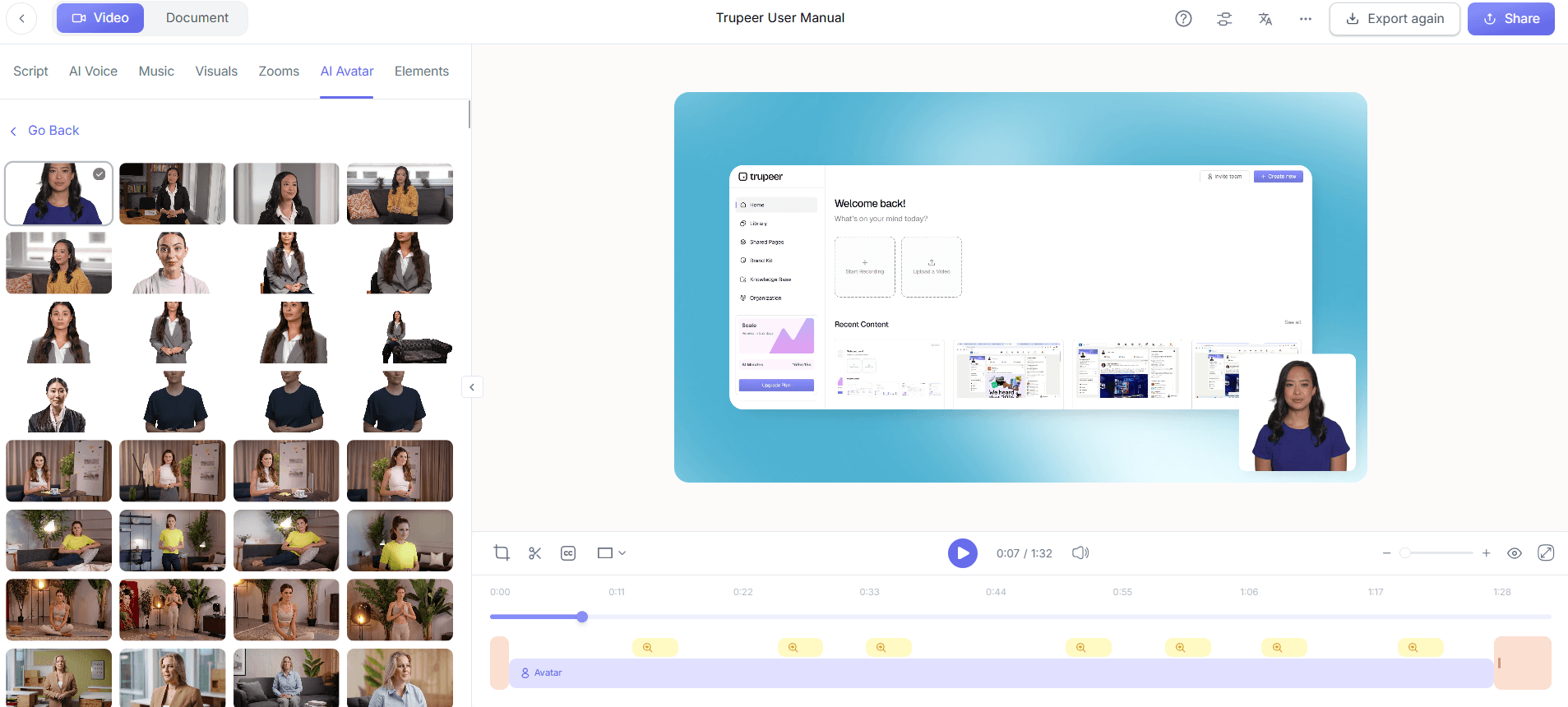
Step 4: Add AI Avatars
Enhance your video with AI avatars for a more engaging presentation. Navigate to the avatar library within Trupeer and choose an avatar that aligns with your audience's cultural context. Customize the avatar's appearance if needed, then integrate it into your video. This step helps humanize the content, offering a relatable face to the training material. It's particularly effective for explanatory segments and can make the learning experience more immersive. Setting up avatars usually takes about 15 to 20 minutes.
Step 5: Generate Documentation
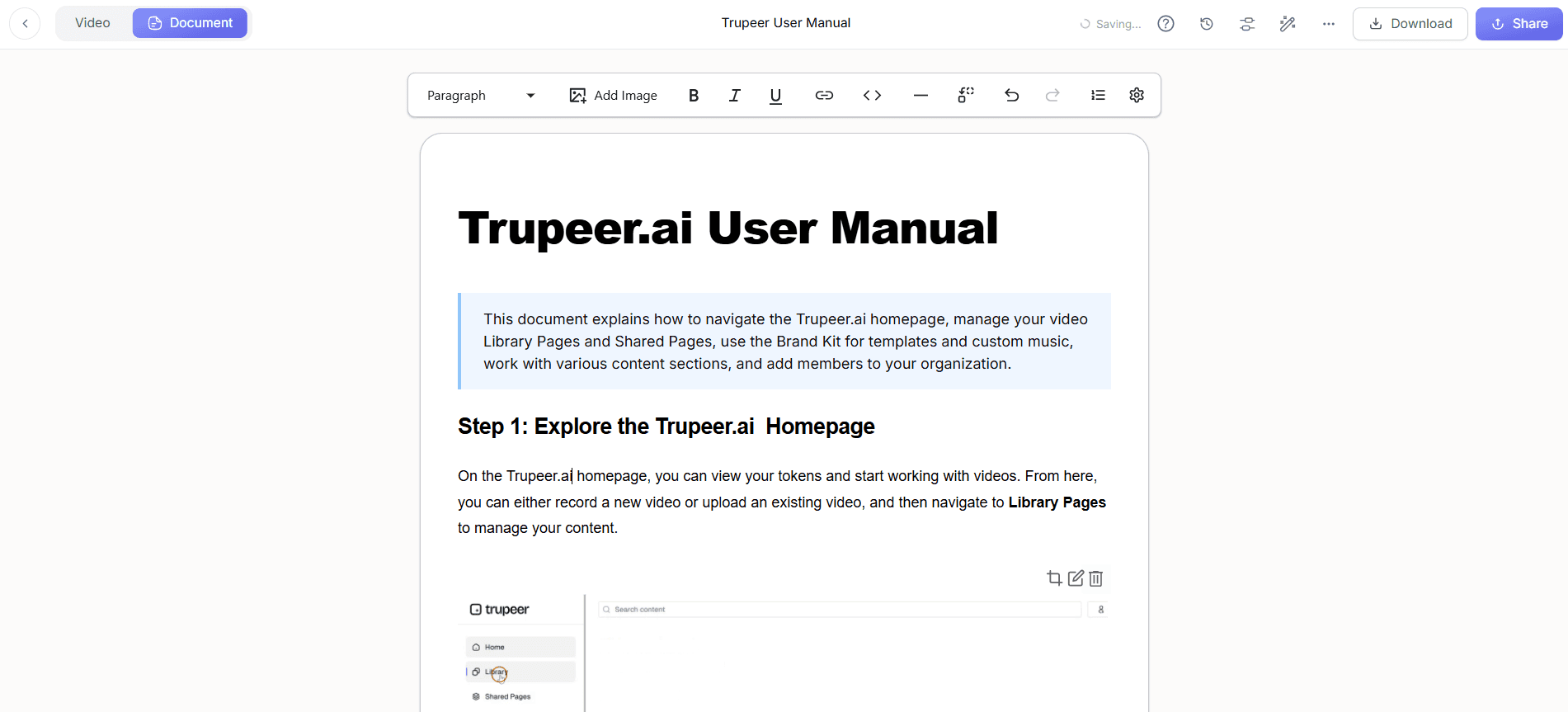
After finalizing your video, create accompanying documentation using Trupeer's automatic SOP generation feature. Select the completed video and opt for the "Generate Documentation" option. Trupeer will produce a detailed, editable document that outlines the key points from your video. This is crucial for learners who benefit from written materials alongside video content. It also provides a quick reference guide for future use. Generating documentation takes just a few minutes, providing a significant time-saving compared to manual methods.
Step 6: Distribute and Measure Engagement
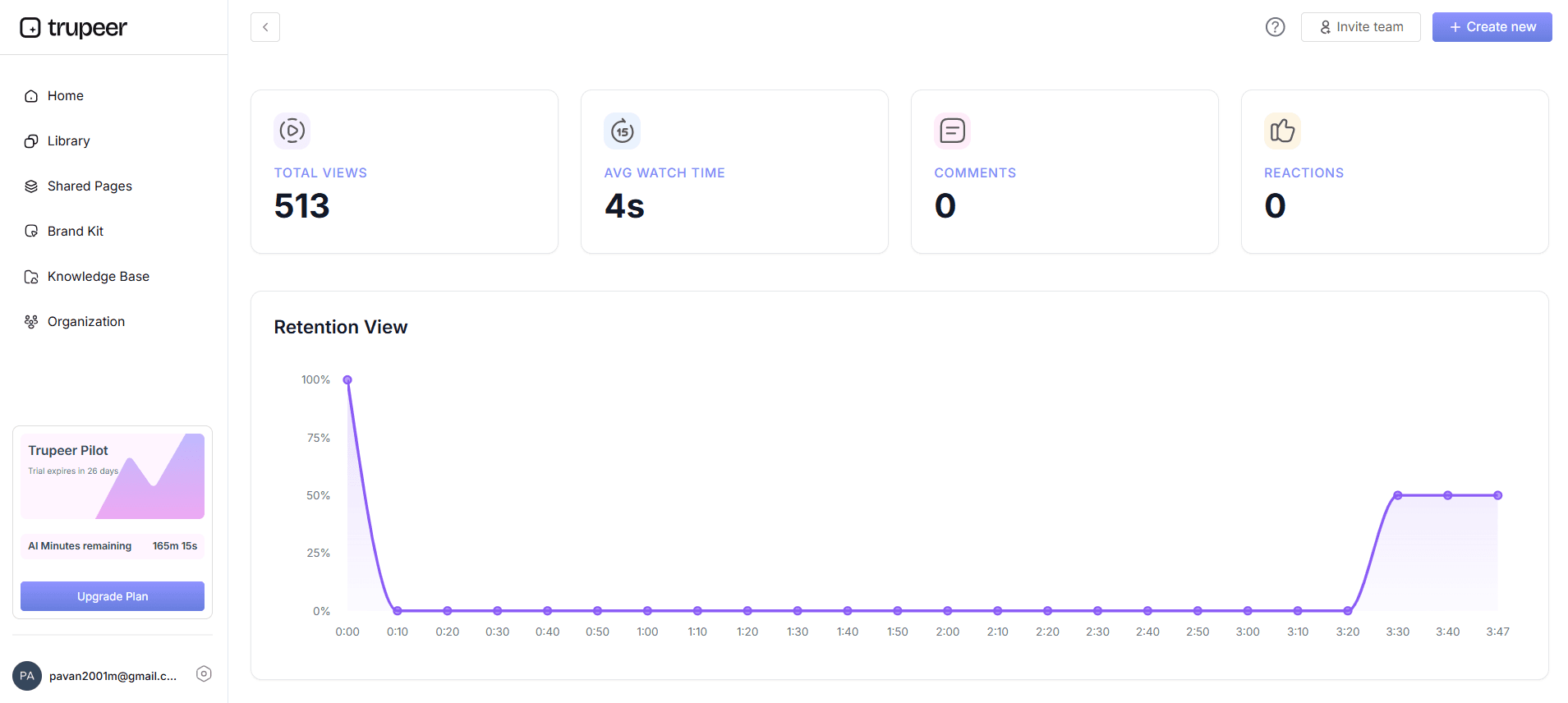
Finally, distribute your video using Trupeer's AI-searchable knowledge base. Upload the video and tag it with relevant keywords for easy searchability. You can also embed the video in a custom-domain portal with SSO for secure access. Once distributed, use Trupeer's viewer engagement analytics to track how your audience interacts with the content. Monitor drop-off points and heatmaps to identify areas for improvement. This step ensures that your training reaches the right audience and remains effective. Distribution and analysis typically take about 10 to 20 minutes. When SOPs come into the same conversation, a Scribe alternatives comparison helps clarify the scope.
What tips help you produce regional language training videos?
Creating effective regional language training videos requires attention to detail and cultural sensitivity. These tips will guide you in producing content that resonates with diverse audiences.
Understand Your Audience. Research the linguistic and cultural backgrounds of your audience to tailor content that resonates with them. This understanding will guide your language choices and presentation style.
Use Consistent Branding. Apply brand kits and templates to maintain a consistent visual style across all videos. It enhances brand recognition and professionalism.
use AI Tools. use AI capabilities for translation and dubbing to ensure accuracy and efficiency. They save time and reduce the risk of human error.
Prioritize Clarity. Keep content clear and concise to avoid overwhelming your audience. Use auto-chapters to break down complex topics into manageable segments.
Test Across Devices. Ensure your videos are accessible on multiple devices and platforms. This increases accessibility and convenience for your audience.
Gather Feedback. Use collaborative review workflows to gather feedback from a diverse group of stakeholders. It helps refine content and ensure it meets audience needs.
Stay Updated. Regularly update your training videos and documentation to reflect new information and changes. This keeps your content relevant and valuable.
Teams weighing tools often start with a Loom alternatives comparison before standardizing on a workflow.
Frequently asked questions
How do I ensure my training video is culturally appropriate?
To ensure cultural appropriateness, research the cultural norms and values of your target audience. This involves understanding their language preferences, social customs, and sensitivities. Collaborate with local experts or team members who can provide insights into regional nuances. Use Trupeer's AI avatars, which can be customized to reflect cultural identities, making your content relatable. also, gather feedback from a diverse group of stakeholders during the review process to identify any potential cultural missteps before finalizing your video.
What are the best practices for dubbing and translation?
Best practices for dubbing and translation include selecting professional services that understand the cultural context of the target language. Trupeer's AI dubbing provides high-quality lip-sync, ensuring the audio matches the on-screen content accurately. Prioritize clarity and simplicity in your original script to facilitate accurate translations. Test the translated content with native speakers to verify accuracy and cultural appropriateness. Finally, review the dubbed video to ensure that the voice tone and pace align with the original intention, maintaining the video's effectiveness and engagement.
Why should I use AI tools for video production?
AI tools simplify the video production process, enhancing efficiency and accuracy. They automate tasks like editing, voiceover, and translation, reducing manual efforts and errors. Trupeer's AI capabilities, such as automatic filler-word removal and AI-generated voiceovers, save time and enhance content quality. By using AI tools, you can focus on creating engaging content while ensuring consistency and precision across your videos. also, AI analytics provide insights into viewer engagement, allowing you to refine your content for better outcomes.
Can I integrate videos into my existing LMS?
Yes, you can integrate videos into your existing Learning Management System (LMS). Trupeer supports multi-format exports, including SCORM, making it easy to incorporate training videos into various LMS platforms. By embedding videos directly into your LMS, you enhance accessibility and simplify the learning experience for your audience. Ensure compatibility by testing the video within your LMS environment before full deployment. This integration allows you to use existing infrastructure, enhancing the efficiency and reach of your training programs.
Does Trupeer support multilingual content distribution?
Yes, Trupeer supports multilingual content distribution, making it easy to reach diverse audiences. With capabilities like AI translation and dubbing, you can produce content in multiple languages efficiently. Trupeer also offers an AI-searchable knowledge base and custom-domain hosting to distribute your videos effectively. By ensuring content is accessible in various languages, you enhance engagement and inclusivity across different regions. This comprehensive approach to video localization helps maintain consistent training quality worldwide.
Verwandte Blogbeiträge