Trupeer Blog
Zusammenfassen
Stellen Sie sich vor, Sie leiten die Rechts- oder Compliance-Abteilung eines multinationalen Unternehmens. Ihr Unternehmen erwägt die Einführung einer KI-gestützten Voice-Cloning-Technologie für verschiedene Kundeninteraktionen und Schulungsmodule. Diese Technologie verspricht erhebliche Effizienzgewinne, bringt jedoch die entscheidende Verantwortung mit sich, die Einhaltung von Vorschriften wie der DSGVO sicherzustellen. Fehler in diesem Bereich sind nicht nur kostspielig – sie können auch den Ruf Ihres Unternehmens gefährden. Im Jahr 2025 meldete die Europäische Union, dass mehr als 80% der Datenpannen auf eine Nichteinhaltung der DSGVO zurückzuführen waren, was zu Bußgeldern im Durchschnitt von 1,3 Mio. € pro Vorfall führte.
Voice Cloning auf Enterprise-Niveau geht nicht nur um technologische Machbarkeit; es geht darum, rechtliche und ethische Compliance sicherzustellen. Die Anforderungen sind hoch, da Unternehmen eine komplexe Landschaft aus Einwilligung, Datenschutz und Nutzerprivatsphäre bewältigen müssen. Dieser Artikel liefert Einblicke, wie Ihre Rechts-, Datenschutz- und Technologieteams gemeinsam daran arbeiten können, Voice Cloning verantwortungsvoll einzusetzen. Ganz gleich, ob Sie für Unternehmenskommunikation, Produktentwicklung oder Kundenservice zuständig sind: Das Verständnis dieser Aspekte ist entscheidend für eine erfolgreiche Implementierung.
Für Organisationen, die pendo alternatives enterprise prüfen, kann die Integration von KI-Voice-Cloning ein innovativer Schritt nach vorn sein – vorausgesetzt, sie erfolgt in einem Rahmen, der die Rechte der Nutzer und die regulatorischen Vorgaben respektiert.
Warum ist die DSGVO-Compliance bei KI-Voice-Cloning so wichtig?
KI-Voice-Cloning hat das Potenzial, die Art zu verändern, wie Unternehmen mit Kunden interagieren, indem es personalisierte, skalierbare Lösungen bereitstellt. Ohne strikte DSGVO-Compliance können diese Vorteile jedoch schnell zu Haftungsrisiken werden. Die DSGVO schreibt vor, dass personenbezogene Daten mit ausdrücklicher Einwilligung, Transparenz und Verantwortlichkeit verarbeitet werden müssen. Für Voice Cloning bedeutet das: Sie müssen eine klare Einwilligung von den Personen einholen, deren Stimmen geklont werden. Ohne diese Einwilligung riskieren Unternehmen empfindliche Strafen.
Ein weiterer kritischer Faktor ist das potenzielle Missbrauchs- oder unbefugte Verwenden geklonter Stimmen. Stellen Sie sich eine Situation vor, in der eine geklonte Stimme ohne Einwilligung der ursprünglichen Sprecherin oder des ursprünglichen Sprechers verwendet wird – mit dem Ergebnis unbefugter Transaktionen oder Fehlinformationen. Das verstößt nicht nur gegen die DSGVO, sondern kann auch den Ruf eines Unternehmens erheblich schädigen. außerdem sind die finanziellen Auswirkungen einer Nichteinhaltung beträchtlich. DSGVO-Bußgelder können bis zu 20 Mio. € oder 4% des jährlichen weltweiten Umsatzes erreichen – je nachdem, was höher ist. Daher ist die Sicherstellung der Compliance nicht nur ein regulatorisches Abhaken; sie ist eine grundlegende geschäftliche Voraussetzung, um sich gegen Reputations- und finanzielle Risiken abzusichern.
Die Integration von KI-Voice-Cloning in den Betrieb von Unternehmen bedeutet außerdem, Bedenken verschiedener Stakeholder zu adressieren – darunter Rechtsabteilungen, IT-Abteilungen und Manager im Kundenservice. Diese Teams müssen eng zusammenarbeiten, um Workflows zu entwickeln, die den Datenschutz und die Einwilligung der Nutzer priorisieren. Das Verständnis des ai adoption use case und seiner Auswirkungen kann diesen Prozess vereinfachen und sicherstellen, dass Voice Cloning nicht nur effektiv, sondern auch mit globalen Standards compliant ist.
Welche Vorteile bietet die DSGVO-Compliance bei KI-Voice-Cloning?
Die Einhaltung der DSGVO bei der Implementierung von KI-Voice-Cloning bietet zahlreiche Vorteile, die sowohl die betriebliche Effizienz als auch das Vertrauen der Kunden stärken können.
Stärkeres Kundenvertrauen. Durch die Einhaltung der DSGVO-Standards zeigen Unternehmen ein starkes Engagement für den Schutz von Kundendaten – was zu mehr Vertrauen und Loyalität führt. Dieses Vertrauen kann sich in langfristige Kundenbeziehungen übersetzen.
Risikominimierung. Die Compliance mit der DSGVO reduziert das Risiko von Datenpannen und damit verbundenen Strafen erheblich. Durch solide Maßnahmen zum Schutz von Daten können Unternehmen kostspielige Bußgelder und rechtliche Auseinandersetzungen vermeiden.
Wettbewerbsvorteil. Unternehmen, die strenge Maßnahmen zum Schutz von Daten nachweisen, werden von Verbrauchern und Partnern häufig positiver wahrgenommen. Diese Wahrnehmung kann im Markt einen Wettbewerbsvorteil schaffen – insbesondere wenn Sie pendo alternatives enterprise suchen.
Operative Effizienz. Die Implementierung von KI-Voice-Cloning mit DSGVO-Compliance kann Abläufe vereinfachen, indem Prozesse automatisiert werden, die eine Interaktion per Stimme erfordern. Diese Effizienz wird durch die Nutzung einer umfassenden AI video platform gesteigert, die sich reibungslos in bestehende Workflows integriert.
Besseres Datenmanagement. Die DSGVO-Compliance fördert bessere Praktiken im Datenmanagement und stellt sicher, dass personenbezogene Daten korrekt erfasst und sicher gespeichert werden. Das führt zu verlässlicheren Daten, die für fundierte geschäftliche Entscheidungen genutzt werden können.
Stärkung des Rufs. Unternehmen, die für ihr Engagement in Bezug auf Datenschutz und Compliance bekannt sind, werden eher respektiert und vom öffentlichen Vertrauen getragen. Dieser Ruf kann in einer zunehmend datenschutzbewussten Welt von unschätzbarem Wert sein.
Welche Trupeer-Funktionen helfen Ihnen, die DSGVO-Einwilligung bei KI-Voice-Cloning zu steuern?
Trupeer bietet mehrere Funktionen, die Unternehmen dabei unterstützen können, DSGVO-Compliance zu erreichen, während sie KI-Voice-Cloning implementieren. Diese Möglichkeiten stellen die notwendigen Tools bereit, um Einwilligungen zu verwalten, den Datenschutz sicherzustellen und die Privatsphäre der Nutzer zu wahren.
KI-Voice-Cloning aus einem kurzen Sample
Das KI-Voice-Cloning von Trupeer ermöglicht es Unternehmen, Voice-Clones aus kurzen Samples zu erstellen – und sorgt so für eine minimale Datenerfassung und -speicherung. Dieser Ansatz entspricht dem Prinzip der Datenminimierung der DSGVO, das vorschreibt, dass nur die notwendigen Daten erfasst und verarbeitet werden. Mit dieser Funktion können Unternehmen die erforderlichen Voice-Samples auf eine DSGVO-konforme Weise erhalten und sicherstellen, dass die Einwilligung der Nutzer explizit eingeholt und dokumentiert wird. Diese Funktion ist entscheidend, um Vertrauen und Transparenz gegenüber Nutzern aufrechtzuerhalten, da sie eine klare und unkomplizierte Methode zur Verwaltung der Einwilligung bietet.
Das AI voice changer tool von Trupeer verbessert diese Funktion weiter, indem es Modifikationen ermöglicht, ohne die Originaldaten zu beeinträchtigen – im Einklang mit den Prinzipien der DSGVO zu Integrität und Vertraulichkeit.
KI-Übersetzung in 40+ Sprachen mit Lip-Sync
Diese Funktion ist entscheidend, um sicherzustellen, dass Voice-Cloning-Lösungen für ein globales Publikum zugänglich sind und gleichzeitig DSGVO-konform bleiben. Durch die Bereitstellung von Übersetzungs- und Lip-Sync-Funktionen ermöglicht Trupeer Unternehmen, personalisierte Voice-Interaktionen in mehreren Sprachen anzubieten – und dabei sicherzustellen, dass die Standards für Einwilligungsmanagement und Datenschutz eingehalten werden. Das ist besonders nützlich für Unternehmen, die in mehrsprachigen Märkten tätig sind, in denen regulatorische Anforderungen variieren können. Mit den soliden Übersetzungsfunktionen von Trupeer können Unternehmen ihre Voice-Cloning-Anwendungen selbstbewusst erweitern, ohne eine Nichteinhaltung zu riskieren.
Für Organisationen, die sich auf AI documentation platform-Bedarfe konzentrieren, ist die Integration von mehrsprachigem Support ein strategischer Vorteil.
Automatische SOP-Erstellung aus jeder Aufnahme
Die Fähigkeit von Trupeer, Standard Operating Procedures (SOPs) aus Aufnahmen zu generieren, stellt sicher, dass Einwilligungs- und Compliance-Prozesse umfassend dokumentiert sind. Diese Funktion ist entscheidend, um transparente und prüfbare Aufzeichnungen darüber zu erstellen, wie Voice Cloning umgesetzt und verwaltet wird. Durch das automatische Generieren von SOPs können Unternehmen die Einhaltung des DSGVO-Grundsatzes der Verantwortlichkeit nachweisen, der verlangt, dass Organisationen zeigen, wie sie ihren Verpflichtungen zum Datenschutz nachkommen. Diese Funktion vereinfacht außerdem den Prozess, Mitarbeitende für Compliance-Protokolle zu schulen, und sorgt so für eine konsistente Einhaltung in der gesamten Organisation.
KI-durchsuchbare Wissensdatenbank mit Timestamp-Deep-Links
Die KI-durchsuchbare Wissensdatenbank von Trupeer ist ein unverzichtbares Tool für die Verwaltung und den Zugriff auf compliance-relevante Informationen. Durch die Bereitstellung von Deep-Links auf Timestamp-Ebene ermöglicht diese Funktion es Unternehmen, schnell bestimmte Instanzen des Einwilligungsmanagements und der Datenverarbeitung zu finden und zu überprüfen. Diese Funktion unterstützt die Transparenzanforderung der DSGVO, indem sichergestellt wird, dass alle Aktionen im Zusammenhang mit personenbezogenen Daten leicht zugänglich und überprüfbar sind. außerdem erleichtert eine umfassende Wissensdatenbank die effiziente Zusammenarbeit zwischen Teams und stellt sicher, dass alle auf die Compliance-Ziele ausgerichtet sind.
Viewer-Engagement-Analytics, Drop-off und Heatmaps
Zu verstehen, wie Nutzer mit Voice-Cloning-Anwendungen interagieren, ist entscheidend, um die DSGVO-Compliance aufrechtzuerhalten. Die Engagement-Analytics von Trupeer liefern Einblicke in das Nutzerverhalten und helfen Unternehmen dabei, potenzielle Compliance-Probleme sowie Bereiche für Verbesserungen zu identifizieren. Durch die Analyse von Kennzahlen wie Drop-off-Raten und Heatmaps können Unternehmen ihre Voice-Cloning-Implementierungen so optimieren, dass sie die Bedürfnisse der Nutzer besser erfüllen – und gleichzeitig sicherstellen, dass Einwilligungs- und Datenschutzstandards eingehalten werden. Dieser datenbasierte Ansatz verbessert nicht nur die Compliance, sondern auch die Gesamtwirksamkeit von Voice-Cloning-Lösungen.
Mit diesen Funktionen stellt Trupeer ein umfassendes Set an Tools bereit, das nicht nur die Implementierung von KI-Voice-Cloning erleichtert, sondern auch sicherstellt, dass dies so geschieht, dass die Rechte der Nutzer respektiert werden und die DSGVO-Vorschriften eingehalten werden.
Wie implementieren Sie DSGVO-Compliance für KI-Voice-Cloning Schritt für Schritt mit Trupeer?
Schritt 1: Erste Voice-Samples erfassen
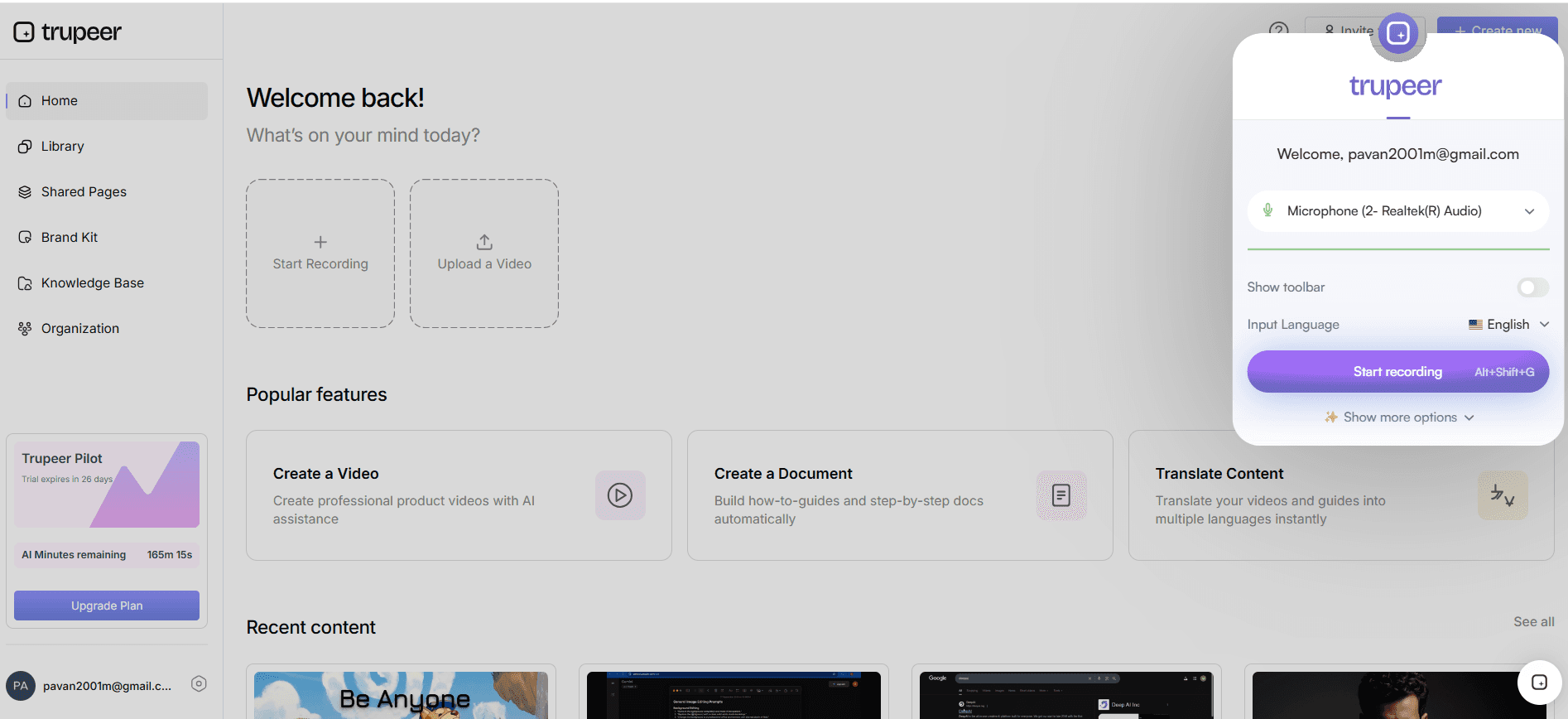
Beginnen Sie damit, die ersten Voice-Samples mithilfe der KI-Screenaufzeichnung von Trupeer mit Auto-Zoom und Click-Detection zu erfassen. Greifen Sie auf die Trupeer-Plattform über den browserbasierten Recorder zu – ohne dass eine Softwareinstallation erforderlich ist. Diese Funktion ist besonders nützlich, um Voice-Daten in kontrollierter und DSGVO-konformer Weise zu sammeln. Stellen Sie sicher, dass die Personen über den Aufzeichnungsprozess informiert sind und eine ausdrückliche Einwilligung gegeben haben. Sobald die Samples erfasst sind, werden sie sicher innerhalb der Plattform gespeichert und sind bereit für die Verarbeitung. Dieser Schritt ist entscheidend, um die notwendigen Daten zu sammeln und dabei die DSGVO-Anforderungen an informierte Einwilligung und minimale Datenerfassung einzuhalten. Teams, die Tools abwägen, starten oft mit einer Loom alternatives comparison, bevor sie sich auf einen Workflow standardisieren.
Schritt 2: Voice-Clones erstellen
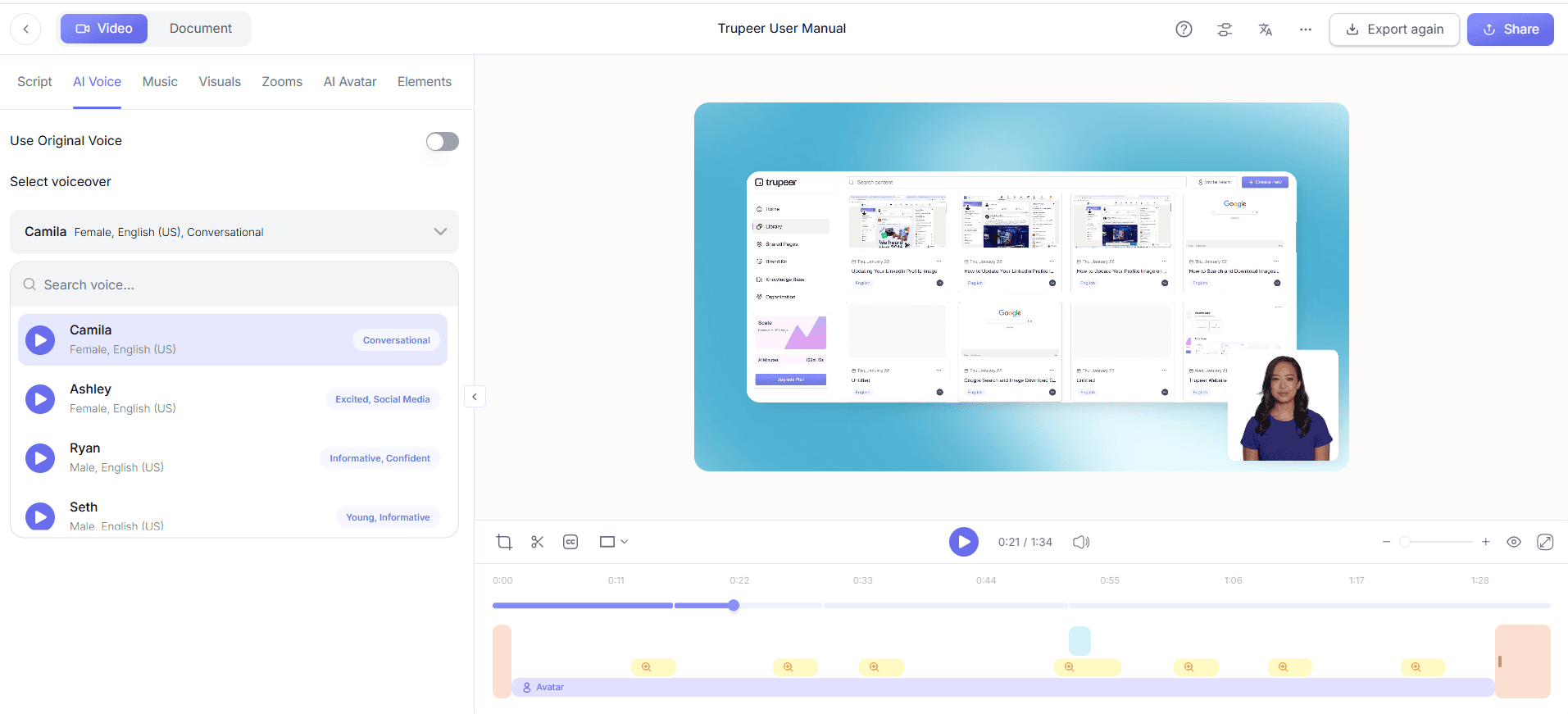
Verwenden Sie als Nächstes das KI-Voice-Cloning von Trupeer aus einem kurzen Sample, um die Voice-Clones zu generieren. Diese Fähigkeit minimiert die Datenspeicherung, da nur kurze Voice-Samples benötigt werden. Navigieren Sie im Trupeer-Dashboard zum Bereich für KI-Voice-Cloning und laden Sie Ihre aufgezeichneten Samples hoch. Das System verarbeitet diese Samples schnell – typischerweise innerhalb weniger Minuten –, um realistische Voice-Clones zu erstellen. Stellen Sie sicher, dass alle Daten mit Einwilligung verarbeitet werden und die Datenschutzprinzipien der DSGVO eingehalten werden. Dieser Schritt erzeugt effizient Voice-Clones, die die Qualität und Authentizität der Originalstimmen beibehalten – und gleichzeitig die Einhaltung von Datenschutzstandards sicherstellen.
Schritt 3: Voice-Inhalte übersetzen und lokalisieren
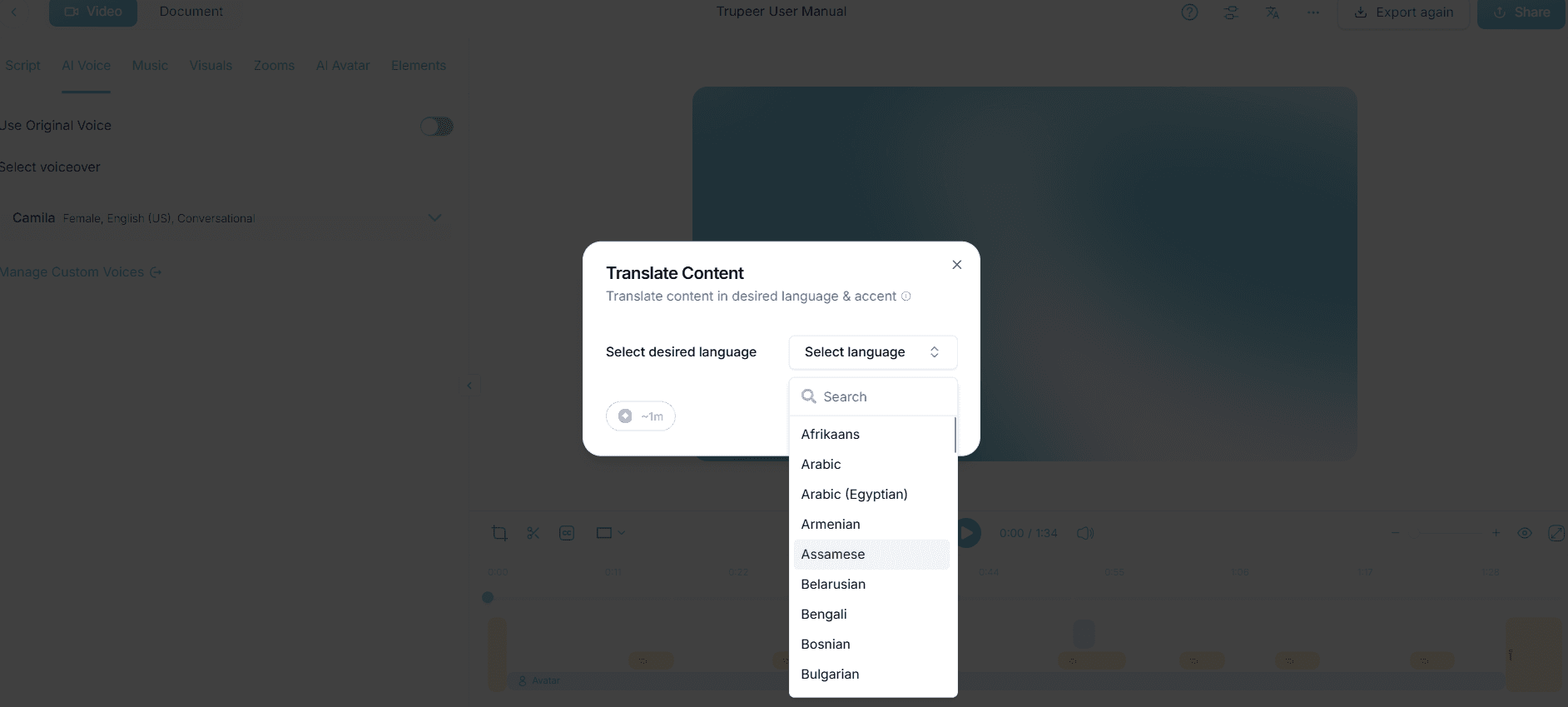
Sobald die Voice-Clones bereit sind, nutzen Sie die KI-Übersetzung von Trupeer in 40+ Sprachen mit Lip-Sync für die Lokalisierung. Diese Funktion stellt sicher, dass Ihre Voice-Inhalte für ein vielfältiges Publikum zugänglich sind, ohne die DSGVO-Compliance zu beeinträchtigen. Wählen Sie im Trupeer-Dashboard die Übersetzungsoption aus und legen Sie Ihre Zielsprache(n) fest. Das System liefert synchronisierte Übersetzungen mit Lip-Sync, um den natürlichen Sprachfluss beizubehalten. Dieser Prozess hilft dabei, Ihre Reichweite auf Zielgruppen auszuweiten, die kein Englisch sprechen – und stellt gleichzeitig sicher, dass alle Übersetzungen die ursprünglichen Einwilligungsvereinbarungen respektieren. Das ist entscheidend, um die DSGVO-Compliance in unterschiedlichen Regionen aufrechtzuerhalten.
Schritt 4: Einwilligung und Verfahren dokumentieren
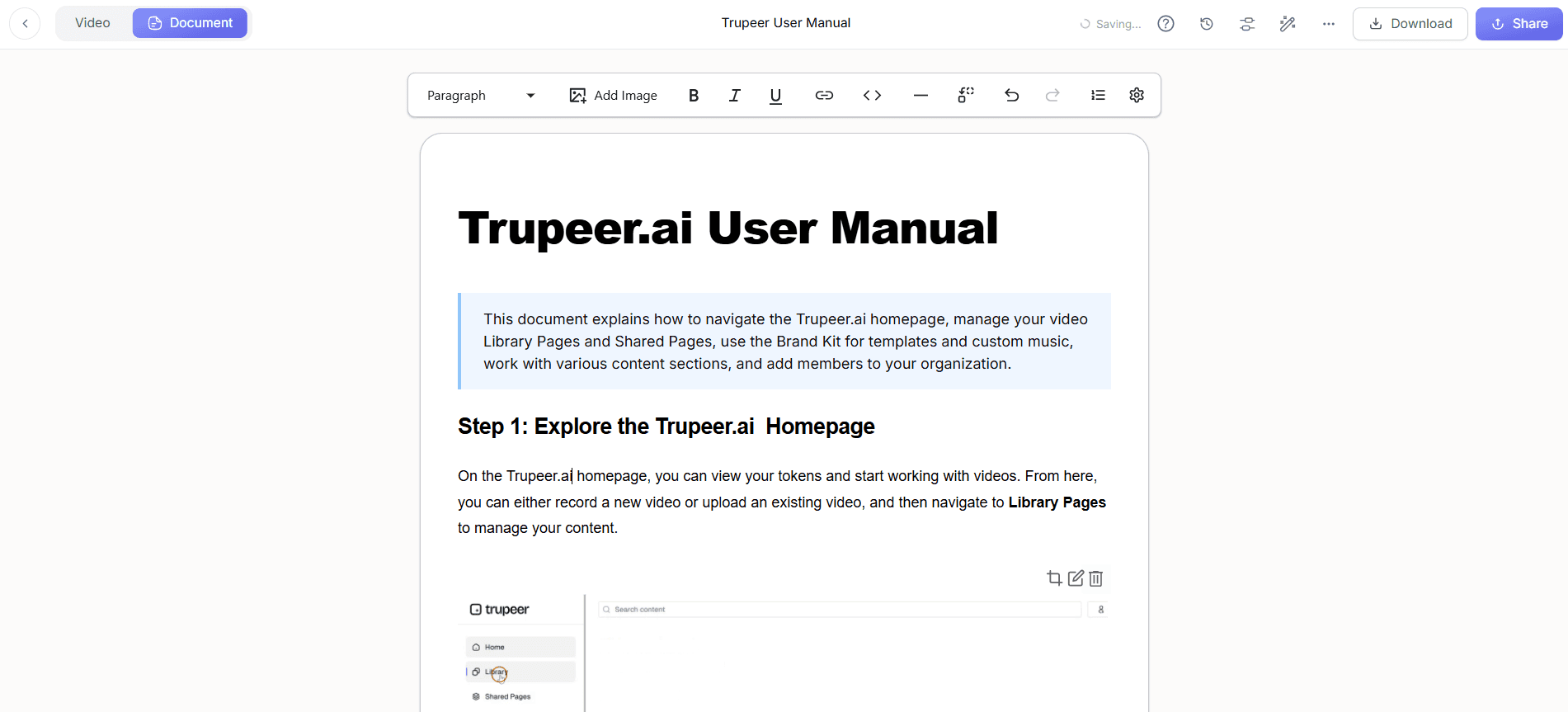
Nutzen Sie die automatische SOP-Erstellung von Trupeer aus jeder Aufnahme, um den Einwilligungsprozess und die operativen Verfahren zu dokumentieren. Diese Funktion erstellt detaillierte SOPs, die jeden Schritt des Voice-Cloning-Workflows beschreiben – und sorgt so für Transparenz und Verantwortlichkeit. Navigieren Sie zum Dokumentationsbereich und wählen Sie die Aufnahmen aus, die zu Ihrem Voice-Cloning-Projekt gehören. Das System generiert automatisch umfassende SOPs, die für Audits und den Nachweis der Compliance unerlässlich sind. Diese Dokumente dienen als wichtige Ressource für die Schulung und stellen sicher, dass alle Teammitglieder die DSGVO-Anforderungen konsistent einhalten.
Schritt 5: Inhalte sicher verteilen und verwalten
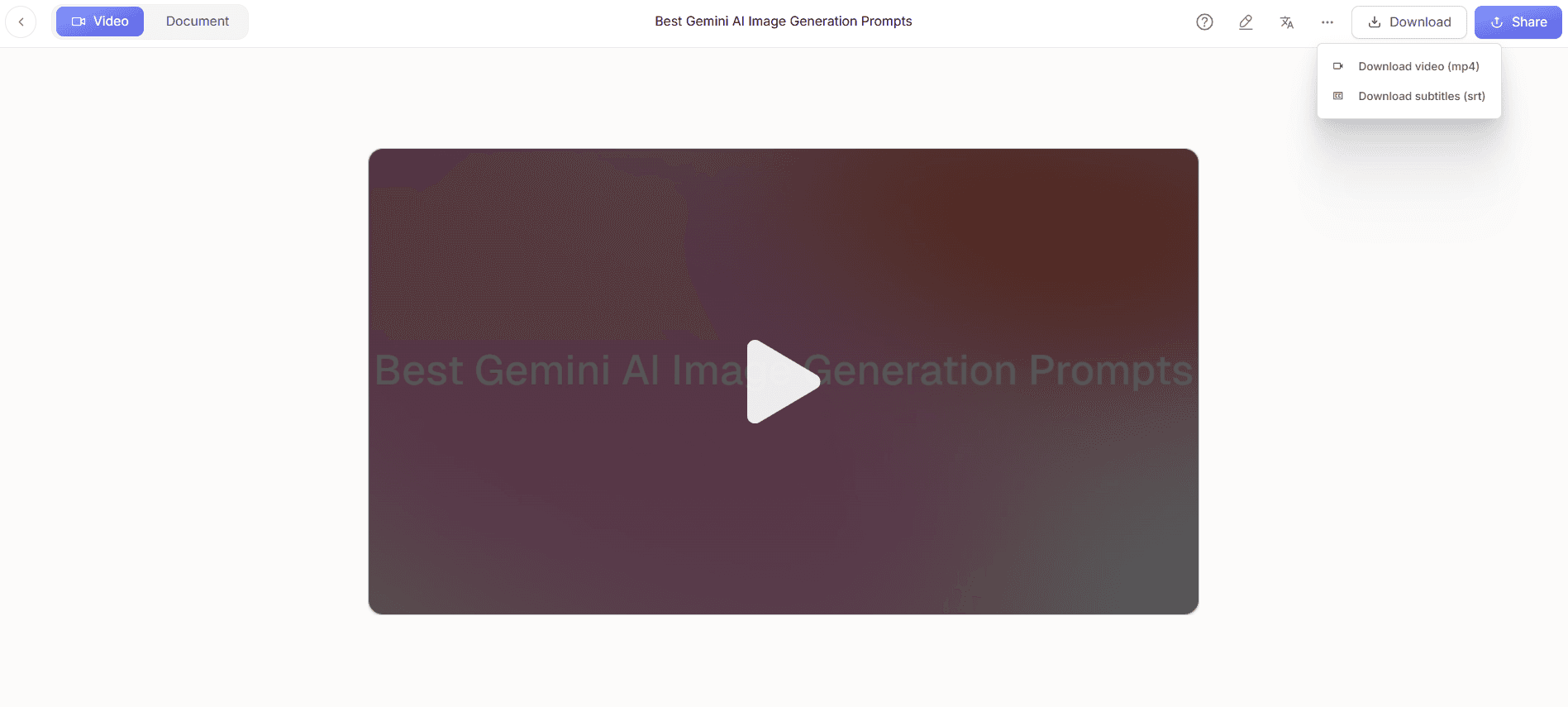
Nutzen Sie das benutzerdefinierte Domain-Hosting von Trupeer mit SSO, um Ihre Voice-Cloning-Inhalte sicher zu verteilen. Diese Funktion stellt sicher, dass nur autorisierte Nutzer auf sensible Materialien zugreifen können – im Einklang mit den DSGVO-Vorgaben zur Zugriffskontrolle. Richten Sie Ihre benutzerdefinierte Domain in der Trupeer-Plattform ein und konfigurieren Sie Single Sign-on (SSO) für eine sichere Anmeldung. Diese Einrichtung schützt Ihre Inhalte nicht nur vor unbefugtem Zugriff, sondern vereinfacht auch das Nutzer-Management in Ihrer Organisation. Wenn Sie die Verteilung sicher verwalten, können Sie die Compliance aufrechterhalten und gleichzeitig effizient Ihre Zielgruppe erreichen.
Schritt 6: Nutzer-Engagement und Feedback überwachen
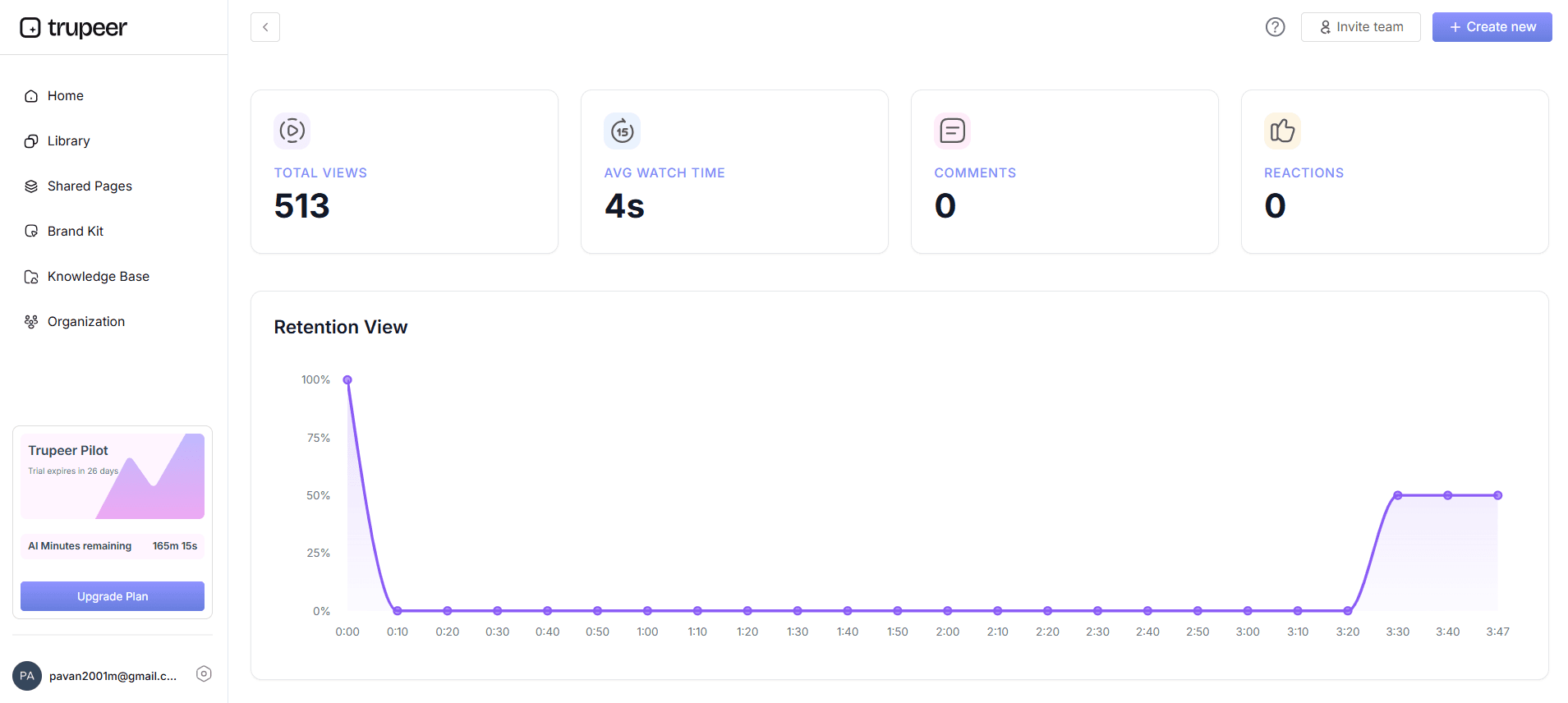
Verwenden Sie abschließend die Viewer-Engagement-Analytics, Drop-off- und Heatmaps von Trupeer, um zu beobachten, wie Nutzer mit Ihren Voice-Cloning-Inhalten interagieren. Greifen Sie über das Trupeer-Dashboard auf diese Analytics zu, um das Nutzerverhalten und das Feedback zu bewerten. Analysieren Sie Kennzahlen wie die Dauer des Engagements und die Drop-off-Punkte, um Bereiche für Verbesserungen zu identifizieren. Dieser datenbasierte Ansatz hilft Ihnen, Ihre Voice-Cloning-Strategien zu verfeinern – und stellt gleichzeitig sicher, dass sie mit den Nutzerpräferenzen und der DSGVO-Compliance übereinstimmen. Durch kontinuierliches Monitoring und Optimieren halten Sie in Ihren Voice-Cloning-Projekten einen hohen Qualitäts- und Compliance-Standard aufrecht.
Welche Tipps helfen Ihnen, die DSGVO-Compliance bei KI-Voice-Cloning sicherzustellen?
Die Sicherstellung der DSGVO-Compliance bei KI-Voice-Cloning erfordert, rechtliche Anforderungen zu verstehen und bewährte Vorgehensweisen umzusetzen. Hier sind einige praktische Tipps, die Sie durch Ihren Implementierungsprozess begleiten.
Holn Sie explizite Einwilligung ein. Sichern Sie immer eine klare und dokumentierte Einwilligung von den Personen, bevor Sie deren Voice-Daten verwenden. Das ist ein nicht verhandelbarer Bestandteil der DSGVO-Compliance.
Setzen Sie auf Datenminimierung. Erfassen und verarbeiten Sie nur Voice-Daten, die für Ihren beabsichtigten Zweck unbedingt erforderlich sind. Das reduziert Risiken und entspricht den Prinzipien der DSGVO.
Führen Sie regelmäßige Audits durch. Überprüfen und auditieren Sie Ihre Voice-Cloning-Prozesse regelmäßig, um die fortlaufende Compliance sicherzustellen. Nutzen Sie eine Scribe alternative comparison für effektive Audit-Tools.
Verwenden Sie sichere Speicherlösungen. Stellen Sie sicher, dass alle Voice-Daten sicher gespeichert werden – mithilfe von Verschlüsselung und Zugriffskontrollen, um unbefugten Zugriff oder Datenpannen zu verhindern.
Schulen Sie Ihr Team. Vermitteln Sie Ihrem Team die Anforderungen der DSGVO und bewährte Vorgehensweisen für den Umgang mit Voice-Daten. nutzen Sie enterprise training video software für umfassende Schulungsmodule.
Bleiben Sie über DSGVO-Updates informiert. Halten Sie Änderungen oder Updates der DSGVO-Vorschriften im Blick, damit Ihre Prozesse langfristig compliant bleiben.
Erstellen Sie transparente Richtlinien. Entwickeln und pflegen Sie klare, transparente Richtlinien dazu, wie Voice-Daten verwendet und geschützt werden, und kommunizieren Sie diese Richtlinien an alle Stakeholder.
Häufig gestellte Fragen
Wie stellen Sie die DSGVO-Compliance bei Voice-Cloning sicher?
Die Erreichung der DSGVO-Compliance beim Voice-Cloning umfasst mehrere Schritte, darunter das Einholen einer ausdrücklichen Einwilligung, das Minimieren der Datenerfassung und das Sicherstellen einer sicheren Datenspeicherung. Unternehmen müssen Einwilligungsprozesse dokumentieren und ihre Datenverarbeitungspraktiken regelmäßig auditieren. Es ist entscheidend, starke Zugriffskontrollen und Verschlüsselungsmethoden zu implementieren, um Voice-Daten zu schützen. außerdem sind das Schulung von Mitarbeitenden zu den Anforderungen der DSGVO und das Verfolgen regulatorischer Updates wesentliche Praktiken. Wenn Sie diese Schritte in Ihren Betrieb integrieren, können Sie die Compliance effektiv aufrechterhalten und die Privatsphäre der Nutzer schützen.
Welche Konsequenzen hat es, wenn man bei Voice-Cloning nicht mit der DSGVO konform ist?
Eine Nichteinhaltung der DSGVO beim Voice-Cloning kann zu erheblichen Bußgeldern, rechtlichen Schritten und Reputationsschäden führen. DSGVO-Bußgelder können bis zu 20 Mio. € oder 4% des jährlichen weltweiten Umsatzes des Unternehmens betragen – je nachdem, was höher ist. Zusätzlich zu finanziellen Sanktionen können Unternehmen einer stärkeren Prüfung durch Aufsichtsbehörden ausgesetzt sein und das Vertrauen der Kunden verlieren. Dieser Vertrauensverlust kann zu weniger Geschäftsmöglichkeiten und langfristigen Schäden für die Marke führen. Daher ist die Sicherstellung der Compliance entscheidend, um die finanzielle und reputationsbezogene Position Ihrer Organisation zu schützen.
Kann Trupeer bei der DSGVO-Compliance für Voice-Cloning helfen?
Ja, Trupeer stellt Tools bereit, die darauf ausgelegt sind, DSGVO-Compliance in Voice-Cloning-Projekten zu unterstützen. Funktionen wie KI-Voice-Cloning erfordern minimale Daten und halten sich an die Prinzipien der Datenminimierung. Die automatische SOP-Erstellung von Trupeer dokumentiert Einwilligung und Verfahren und erleichtert so Transparenz und Verantwortlichkeit. außerdem stellen die sichere Hosting-Umgebung der Plattform und die Optionen für Single Sign-on sicher, dass nur autorisierte Nutzer auf sensible Daten zugreifen – im Einklang mit den DSGVO-Anforderungen an die Zugriffskontrolle. Durch die Nutzung der Funktionen von Trupeer können Unternehmen ihre Compliance-Bemühungen verbessern und Nutzerdaten effektiv schützen. Für globale Zielgruppen erweitert das Hinzufügen von AI video translation denselben Workflow über 40+ Sprachen mit Lip-Sync.
Beeinflusst die Nutzung von KI-Voice-Cloning die Privatsphäre der Nutzer?
KI-Voice-Cloning kann die Privatsphäre der Nutzer beeinträchtigen, wenn es nicht korrekt verwaltet wird. Die Einhaltung der DSGVO-Richtlinien kann jedoch diese Risiken mindern. Dazu gehören das Einholen einer ausdrücklichen Einwilligung, die Verwendung von Datenverschlüsselung und die Beschränkung des Datenzugriffs auf nur autorisiertes Personal. Eine klare Kommunikation darüber, wie Voice-Daten verwendet und geschützt werden, trägt ebenfalls dazu bei, Transparenz und Vertrauen aufrechtzuerhalten. Durch die Umsetzung dieser Maßnahmen können Unternehmen Voice-Cloning-Technologien nutzen, während sie die Privatsphäre der Nutzer respektieren und Datenschutzstandards einhalten.
Ist Voice-Cloning-Technologie zuverlässig für den Enterprise-Einsatz?
Voice-Cloning-Technologie hat sich deutlich weiterentwickelt und ist damit ein zuverlässiges Tool für Enterprise-Anwendungen. Unternehmen können hochwertige Voice-Clones erstellen, die Kundeninteraktionen verbessern und Abläufe vereinfachen. Allerdings hängt die Zuverlässigkeit auch davon ab, die richtige Plattform auszuwählen und die Einhaltung von Datenschutzvorschriften wie der DSGVO sicherzustellen. Trupeer bietet Funktionen, die sowohl hochwertiges Voice-Cloning als auch Compliance unterstützen, wodurch es eine sinnvolle Option für Unternehmen ist, die diese Technologie verantwortungsvoll integrieren möchten. Durch die Auswahl einer Plattform, die Compliance und Datenschutz priorisiert, können Unternehmen die Voice-Cloning-Funktionen effektiv nutzen.
Verwandte Blogbeiträge