Trupeer Blog
Shrnout
For a small business, the right training software isn't the one with the most features. It's the one you can afford, launch this week, and run without hiring a dedicated trainer. Enterprise buyers optimize for depth and governance; you optimize for budget, speed, and simplicity, and the tools that win those two races are rarely the same.
There's also a specific small-business trap worth naming up front. Most training platforms assume you already have the training content, the courses, videos, and guides that teach your team. Enterprises have instructional designers and L&D teams to create that. You probably don't. So for a small business, the real bottleneck usually isn't delivering training, it's creating it in the first place without a specialist on payroll. That's the gap a content tool fills, and it's why the list below separates the platforms that deliver training from the tools that help you make it.
Below, we compare 20 platforms that fit a small-business budget and skill set, what each genuinely does best, and where each falls short, so you can match the tool to how you actually work.
Why trust this review
We work with small and growing teams producing training content every day, so we evaluate these tools on real fit and real cost, not spec sheets. For this guide we assessed each platform against vendor documentation, verified pricing on public pricing pages (July 2026), and cross-referenced aggregated user reviews from G2 and Capterra with hands-on evaluation of the tools we could access. Every listing notes where a tool wins and where it falls short, including our own product. We do not earn affiliate commissions on these picks, and we refresh this guide quarterly.
Our top picks
If you need... | Choose... |
|---|---|
Best overall for small business | TalentLMS |
Best for creating training without a trainer | Trupeer AI |
Best free option | ProProfs Training Maker |
Best ready-made course library | GoSkills |
Best for frontline / deskless teams | Connecteam |
Best for selling courses | Thinkific |
Which tool is right for you? A quick decision guide
Use this to self-select before comparing individual tools:
Is your real problem creating the training content?
Choose a content tool: Trupeer AI, paired with whatever you use to share it.Do you want the cheapest way to start?
Choose a free tier: ProProfs Training Maker or Connecteam (both free up to ~10 users).Do you want ready-made courses you don't have to build?
Choose GoSkills (built-in library and microlearning).Are you training a frontline or deskless team?
Choose Connecteam (mobile-first, in the app they already use).Do you want the easiest all-round LMS?
Choose TalentLMS (launch in hours, scales as you grow).
Whatever you pick, someone still has to create the training, and for a small business that's usually the hard part, so budget for the content layer too.
How this differs from our other training guides
"Training software for small business" overlaps two adjacent categories, and it's worth pointing you to the right guide:
If you want the full landscape of employee learning platforms (LMS, LXP, skills), regardless of company size, see Best employee training software.
If your challenge is the operational logistics of running training, especially instructor-led scheduling and resources, see Best training management software.
This guide is specifically about what works for a small business: affordable, fast, and simple enough to run without a dedicated L&D team.
Comparison chart
# | Tool | Best for | Starting price | Free option |
|---|---|---|---|---|
1 | Trupeer AI | Creating training content fast | From $49/mo | Free trial |
2 | TalentLMS | Best overall SMB LMS | From ~$89/mo | Free up to 5 users |
3 | GoSkills | Ready-made course library | From ~$29/user/mo | Trial |
4 | iSpring Learn | Authoring + strong support | From ~$2.29/user/mo | Trial |
5 | Connecteam | Frontline / deskless teams | Free up to 10; ~$29/mo | Free plan |
6 | ProProfs Training Maker | Free & micro-teams | From ~$1.99/learner/mo | Free up to 10 |
7 | Thinkific | Selling & delivering courses | From ~$36/mo | Free plan |
8 | FreshLearn | All-in-one, transparent pricing | From ~$37/mo | Free plan |
9 | LearnDash | WordPress-based LMS | From ~$199/yr | No (trial/demo) |
10 | Moodle | Open-source, full control | Free (hosting extra) | Open-source |
11 | 360Learning | Collaborative team learning | From ~$8/user/mo | Trial |
12 | Trainual | Process & onboarding training | From ~$300/mo | Trial |
13 | SafetyCulture (EdApp) | Free microlearning, frontline | Free; paid tiers | Free plan |
14 | Absorb LMS | Growing into compliance needs | Custom | Demo |
15 | LearnUpon | Simple, scalable multi-audience | Custom | Demo |
16 | Coassemble | Quick course building | From ~$50/mo | Trial |
17 | Workademy | AI course creation for SMEs | From ~$/mo (tiered) | Demo |
18 | Teachable | Creating & selling courses | From ~$39/mo | Free plan |
19 | Tovuti | All-in-one engagement LMS | Custom | Demo |
20 | Rippling Learning | Training inside your HRIS | ~$8/user/mo (modular) | Demo |
Feature comparison matrix
Tool | Free tier | Fast to launch | Content authoring | Ready-made library | Compliance | Mobile |
|---|---|---|---|---|---|---|
Trupeer AI | Trial | Yes | Yes | – | – | Yes |
TalentLMS | Yes | Yes | Basic | Add-on | Yes | Yes |
GoSkills | Trial | Yes | Basic | Yes | Yes | Yes |
iSpring Learn | Trial | Yes | Yes | Add-on | Yes | Yes |
Connecteam | Yes | Yes | Basic | – | Yes | Yes |
ProProfs | Yes | Yes | Yes | Yes | Yes | Yes |
Moodle | Free | – | Basic | – | Add-on | Yes |
"Content authoring" means basic slide/quiz building; only a dedicated content tool turns a real screen recording of your process into a finished video and guide, which is the gap this comparison turns on.
The 20 best training software platforms for small businesses
1. Trupeer AI: Best for creating training content without a trainer
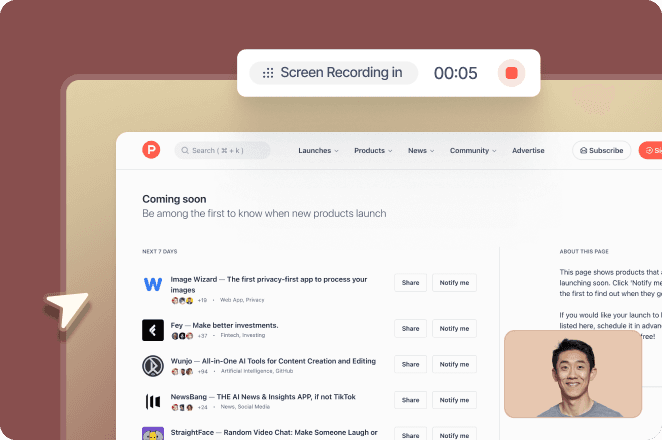
Most platforms on this list deliver and track training, and quietly assume you already have the content. For a small business with no instructional designer, that assumption is the whole problem. Trupeer AI removes it. One person records a screen walkthrough of a process and gets a polished training video and a step-by-step written guide from the same recording, no production skills required. Filler words and background noise are removed automatically, everything carries your brand, and built-in translation covers a multilingual team. For a lean team, it replaces the specialist you don't have.
Where it fits honestly: Trupeer AI is not an LMS. It won't enroll learners, track completions, or run compliance reports. For a very small team you can share its videos and guides directly; as you grow, pair it with an affordable LMS below and let Trupeer AI create the content that fills it.
Best for: Small teams that need to produce training fast without hiring a content person.
Key features: AI screen recorder, dual video + document output, auto-editing, brand kit, multi-language translation, AI avatars, knowledge base.
Pricing: From $49/month, with a free trial.
Pros: Solves the content-creation bottleneck; video + guide from one recording; flat pricing that doesn't scale per seat.
Cons: Not an LMS, no enrollment, tracking, or compliance engine; AI drafts benefit from a human review pass.
2. TalentLMS: Best overall for small business
The most widely adopted SMB LMS for a reason: you can launch a course before lunch. Upload a video or slide deck, drop in quizzes, invite learners, done. It scales cleanly from a handful of users to a few hundred, with a free tier to start and transparent paid plans.
Best for: Small-to-mid teams wanting the easiest all-round LMS.
Pricing: Free up to 5 users / 10 courses; paid from ~$89/month.
Pros: Extremely easy; fast time-to-value; scales with you.
Cons: Authoring is basic; some features sit in higher tiers.
3. GoSkills: Best ready-made course library
An AI-first, affordable LMS/LXP that ships with a built-in library of microlearning courses, so you skip building modules from scratch. Learners move through five-minute lessons with quizzes and automatic certificates, and admins brand the portal in a few clicks.
Best for: Teams that need training now and have no one to build it.
Pricing: From ~$29/user/month (team plans available).
Pros: Ready-made content; microlearning format; quick setup.
Cons: Per-user pricing adds up; library may not cover your niche processes.
4. iSpring Learn: Best authoring with strong support
A simple LMS paired with genuinely strong PowerPoint-based authoring, backed by responsive, personal support, a frequent small-business favorite. Good for turning existing slide decks into structured courses fast. Need a narrated video instead of a course? A PPT to video tool gets you there in minutes.
Best for: Teams that build courses from slides and value support.
Pricing: From ~$2.29/user/month (annual).
Pros: Excellent authoring; low learning curve; strong support.
Cons: Fewer advanced LXP/skills features; annual commitment for best rates.
5. Connecteam: Best for frontline and deskless teams
An all-in-one app that puts training in the same tool deskless staff already use for schedules and timesheets. Mobile-first, with read tracking and a genuinely usable free plan for up to 10 users, making it a strong pick for shops, restaurants, and field teams.
Best for: Small frontline, field, and shift-based teams.
Pricing: Free for up to 10 users; paid from ~$29/month (flat for a small team).
Pros: Mobile-first; generous free tier; combines training with scheduling and comms.
Cons: No large ready-made library; not built for deep course design.
6. ProProfs Training Maker: Best free and micro-team option
The most accessible entry point for very small teams: a forever-free plan covers up to 10 learners with full course creation, quizzes, and completion tracking, and it can turn documents into structured courses with AI.
Best for: Micro-teams and startups testing the waters.
Pricing: Free up to 10 learners; paid from ~$1.99/active learner/month.
Pros: Truly usable free tier; AI course creation; simple.
Cons: Advanced features and scale need paid tiers.
7. Thinkific: Best for selling and delivering courses
A drag-and-drop course builder that feels like designing a website, with built-in checkout (Stripe/PayPal) and zero transaction fees. A flat monthly fee covers unlimited students, and you can invite internal staff free while selling to customers or partners.
Best for: Small businesses that train employees and monetize courses.
Pricing: From ~$36/month (unlimited students; 0% transaction fees).
Pros: Flat pricing; strong course-selling features; easy builder.
Cons: Oriented to external/course-selling; lighter on internal compliance tracking.
8. FreshLearn: Best all-in-one with transparent pricing
An all-in-one platform for creators and small businesses to build, market, and sell courses, with AI content creation, assessments, certificates, and no transaction fees, launchable in hours with clear, predictable pricing.
Best for: Small businesses wanting an affordable, transparent all-in-one.
Pricing: From ~$37/month; free plan available.
Pros: Transparent pricing; AI content help; zero transaction fees.
Cons: Creator/SMB focus; less suited to complex internal L&D.
9. LearnDash: Best WordPress-based LMS
If your site already runs on WordPress, LearnDash turns your own domain into a full LMS with a one-time annual license, giving you control and ownership without per-user SaaS fees.
Best for: WordPress-based businesses wanting to own their LMS.
Pricing: From ~$199/year (one site).
Pros: Own your platform; no per-user fees; deep WordPress integration.
Cons: Requires hosting and WordPress upkeep; watch the true total cost.
10. Moodle: Best open-source, full-control option
The leading open-source LMS: free to license, endlessly customizable, and a strong fit for teams with a little technical ability who want control at minimal software cost.
Best for: Technically comfortable teams wanting free and customizable.
Pricing: Free (hosting, setup, and maintenance are the real costs).
Pros: No license fee; highly customizable; large community.
Cons: Requires technical setup and upkeep; hosting costs $200–$400+/year.
11. 360Learning: Best for collaborative team learning
A collaborative platform that turns your in-house experts into course creators, with AI-assisted authoring and native HR sync (BambooHR, HiBob, Rippling), good for growing teams that learn from each other.
Best for: Growing teams building training from internal knowledge.
Pricing: From ~$8/user/month.
Pros: Collaborative authoring; HR integrations; AI drafts.
Cons: Per-user pricing scales with headcount; more than a micro-team needs.
12. Trainual: Best for process and onboarding training
Blends onboarding, process documentation, and role-based training, assigning playbooks and SOPs so people learn the actual job. A favorite for small businesses standardizing how work gets done.
Best for: Growing businesses documenting processes and roles.
Pricing: From ~$300/month (small-business tier).
Pros: Strong SOP and role-based delivery; quick to stand up.
Cons: Higher entry price than lightweight LMSs; not a full course platform.
13. SafetyCulture (EdApp): Best free microlearning for frontline
A mobile-first microlearning platform with a free tier and a large course library, strong for frontline and distributed teams that learn in short bursts on their phones.
Best for: Frontline teams wanting free, mobile microlearning.
Pricing: Free; paid tiers for advanced features.
Pros: Free to start; mobile microlearning; ready-made courses.
Cons: Advanced features and integrations need paid plans.
14. Absorb LMS: Best for growing into compliance needs
An AI-powered LMS that starts SMB-friendly and scales into mid-market, with strong compliance automation and audit-ready reporting, a good pick if you expect regulated growth.
Best for: Small businesses in regulated sectors expecting to scale.
Pricing: Custom.
Pros: Scales cleanly; strong compliance and reporting.
Cons: Custom pricing; more than the smallest teams need.
15. LearnUpon: Best simple, scalable multi-audience LMS
A clean, learner-first LMS that trains employees, partners, and customers from one platform and grows with you, without the complexity of enterprise suites.
Best for: Growing teams training more than one audience.
Pricing: Custom.
Pros: Easy to use; multi-audience; scalable.
Cons: Custom pricing; more than a micro-team needs.
16. Coassemble: Best quick course builder
A friendly course builder focused on turning content into engaging, interactive lessons fast, aimed at teams that want polished courses without a design background.
Best for: Small teams wanting quick, engaging course creation.
Pricing: From ~$50/month.
Pros: Easy, engaging course building; templates.
Cons: Lighter on advanced LMS administration and compliance.
17. Workademy: Best AI course creation for SMEs
An SME-focused platform promising enterprise-grade features at small-business pricing, with AI that cuts course-creation time significantly and fast (1–2 week) setup plus HR integrations.
Best for: SMEs (roughly 50–750 employees) wanting AI course creation affordably.
Pricing: Tiered SME pricing (from roughly a few hundred/month).
Pros: AI speeds content creation; fast setup; transparent SME pricing.
Cons: Newer platform; not built for very large enterprises.
18. Teachable: Best for creating and selling courses
A popular platform for building and selling online courses with minimal technical effort, useful for small businesses that train customers or productize their expertise.
Best for: Small businesses monetizing courses and training customers.
Pricing: From ~$39/month; free plan available.
Pros: Easy course creation and selling; low technical barrier.
Cons: External-course focus; lighter internal training features.
19. Tovuti: Best all-in-one engagement LMS
An all-in-one LMS with strong interactivity, gamification, and virtual-classroom features, aimed at teams that want engaging training in a single platform.
Best for: Teams wanting engagement features in one place.
Pricing: Custom.
Pros: Rich interactivity and gamification; all-in-one.
Cons: Custom pricing; broader feature set to configure.
20. Rippling Learning: Best for training inside your HRIS
If you already run Rippling for HR, its learning module delivers training tied directly to employee records and roles, keeping everything in one system.
Best for: Small businesses already on Rippling.
Pricing: ~$8/user/month (modular add-on).
Pros: Unified with HR data; automatic role-based assignment.
Cons: Best value only inside the Rippling ecosystem; learning is one module.
How to choose the right small-business training software
Start with fit, not features, because the most common small-business mistake is buying a 50-feature platform for the 10 features you'll actually use. Work through it in this order:
First, name your real gap. If it's creating content, start with a content tool like Trupeer AI. If it's the cheapest way to begin, start with a free tier (ProProfs, Connecteam). If it's ready-made courses, GoSkills. If it's a frontline team, Connecteam. If it's an easy all-round LMS, TalentLMS.
Second, calculate total cost of ownership, not the sticker price. A "$199/year" self-hosted tool can pass $1,000 in year one once you add hosting, a theme, and setup help; a "free" open-source LMS still costs $200–$400+ a year to host. Watch for per-seat pricing that jumps sharply between tiers as you grow.
Third, insist on speed and simplicity. Small businesses need results in days, not an 8–12 week implementation. If you'd need IT or a consultant to run it, it's probably the wrong tool.
Fourth, plan for content. No LMS creates your training for you, and you don't have a designer, so decide how courses will actually get made before you buy the platform to hold them.
Finally, pilot it. Run a real course with real employees for a week before committing. What feels smooth in a demo often reveals friction in practice.
Recommendations by team size and industry
By team size
Size | Best platform | Best content layer |
|---|---|---|
Solo / micro (1–10) | ProProfs (free) or Connecteam (free) | Trupeer AI |
Small (10–50) | TalentLMS or GoSkills | Trupeer AI |
Growing (50–250) | 360Learning or LearnUpon | Trupeer AI |
Regulated / scaling | Absorb LMS | Trupeer AI |
By industry
Industry | Top consideration | Strong fit |
|---|---|---|
Retail / Hospitality | Frontline, mobile, cheap | Connecteam + Trupeer AI |
Trades / Field services | Deskless, on-the-go | Connecteam / SafetyCulture |
Professional services | Process & onboarding | Trainual + Trupeer AI |
SaaS / Tech startup | Product & process training | TalentLMS + Trupeer AI |
Ecommerce / Creators | Sell & deliver courses | Thinkific / Teachable |
Nonprofit | Low cost, simple | Moodle / ProProfs |
Manufacturing (small) | Safety & compliance | Absorb / SafetyCulture |
Implementation timelines
Small businesses need results in days, not months. Here's roughly how long each type of tool takes to get running:
Tool | Typical time to launch |
|---|---|
Trupeer AI | Hours (record and publish) |
ProProfs / Connecteam | Hours to a day |
TalentLMS / GoSkills / iSpring | Hours to a few days |
Thinkific / FreshLearn / Teachable | Days |
360Learning / LearnUpon | 1–3 weeks |
Absorb LMS | 2–6 weeks |
Moodle / LearnDash (self-hosted) | Days to weeks (plus hosting setup) |
Estimated annual cost by team size
Rough planning figures using published entry rates, so you can sanity-check budget before demos. Always confirm with a current quote; per-seat tools climb as you grow.
Team size | Free options | Typical paid range (per year) |
|---|---|---|
1–10 | ProProfs, Connecteam, Moodle | $0–$1,200 |
10–50 | Moodle (self-host) | $1,000–$6,000 |
50–100 | (few free at this size) | $5,000–$15,000 |
100–250 | – | $12,000–$35,000+ |
Content layer (any size) | Trupeer AI free trial | ~$588 flat (from $49/mo) |
The pattern to notice: per-seat platforms scale with headcount, while a flat-priced content tool stays constant, which is why pairing an affordable LMS with a flat content layer often beats buying one expensive all-in-one.
When NOT to buy training software
Being honest about this builds more trust than pretending every team needs a platform. You probably don't need to buy a full LMS yet if:
You have fewer than about 10 people and can share videos and guides directly. Start with a content tool and a free tier, and add an LMS when tracking starts to matter.
You have no formal training process to systematize yet. Fix the process first; software won't create one for you.
It's a one-off rollout, not recurring training. A few well-made guides may be all you need.
Your only real gap is content, not delivery. In that case a content tool alone is the higher-leverage buy, and an LMS can wait.
The 8 biggest small-business training software mistakes
Buying on feature lists, not workflow fit. Fifty features are worthless if the ten you need daily aren't among them.
Ignoring total cost of ownership. Hosting, themes, add-ons, and setup help turn "cheap" tools expensive. Model the real year-one cost.
Missing per-seat price jumps. Some tools price aggressively at entry, then spike at the next user threshold. Check the tier above yours.
No plan to create content. You have no instructional designer, so decide how training gets made before buying a platform to hold it.
Over-buying enterprise features. Advanced compliance, multi-portal, and LXP depth you'll never configure are money wasted.
Choosing "free," then migrating. A free tool you outgrow in a year can cost more in migration than starting with the right paid plan.
Ignoring frontline and mobile. If your team is deskless, a desktop-only LMS won't get used.
Skipping the pilot. Demos hide friction. Run a real course with real people before you commit.
30+ small-business training statistics for 2026
Why SMB training matters
Small businesses make up 99.9% of all US businesses (SBA / Research.com).
Companies with strong training programs see 25–40% lower turnover (Workademy).
Corporate training delivers about $4.50 for every $1 invested (Deloitte / Skillademia).
Companies with strong L&D see 218% higher revenue per employee (Skillademia).
Cost and savings
Moving training online can cut training spend by up to 60% (industry study, Digital Hill).
Small firms pay a 133% per-learner premium versus large enterprises (LMSPedia).
Affordable LMS tiers run roughly $1–$10 per user per month; mid-range $10–$25 (ProProfs).
Free open-source LMS still costs $200–$400+/year to host (FreshLearn).
Speed and adoption
SMB cloud LMS tools can be set up in days, not the 8–12 weeks of enterprise rollouts (LMSPedia / Workademy).
The right LMS can cut new-hire time-to-productivity from weeks to days (Workademy).
90% of organizations use an LMS for L&D functions (Training Orchestra).
The global LMS market roughly doubled from $8.76B (2019) to $16.19B (2022) and continues to climb (Research.com).
The content and skills gap
39% of core job skills are expected to change by 2030 (WEF).
77% of employers plan to upskill their workers (Selleo).
Only about 8% of organizations measure training's business impact (eLearning Industry).
Microlearning adoption grew 72% in 2025 (Skillademia).
Frequently asked questions
What is training software for small business?
Affordable, easy-to-use software that helps a small team create, deliver, and track employee training, without the cost, complexity, or dedicated L&D staff that enterprise platforms assume. It spans lightweight LMS platforms, microlearning apps, and content-creation tools.
How much does training software for a small business cost in 2026?
A lot less than enterprise tools. Free tiers exist (ProProfs, Connecteam, Moodle); low-cost plans run roughly $1–$10 per user per month; mid-range $10–$25. Flat-fee options like Thinkific (~$36/mo) and content tools like Trupeer AI (from $49/mo) don't scale per seat.
What's the difference between an LMS and training management software?
An LMS delivers and tracks courses and learner progress. A training management system handles the operational logistics of running training, especially instructor-led scheduling and resources. Most small businesses need an LMS or a content tool, not a full TMS. See our training management guide if live sessions are your focus.
Do I need to create my own training content?
For anything specific to your business, yes, no library covers your product, tools, or processes. Since you likely have no instructional designer, a tool like Trupeer AI that turns a screen recording into a video and guide is often the highest-leverage first purchase.
What's the best free training software for a small business?
ProProfs Training Maker (free up to 10 learners) and Connecteam (free up to 10 users) are the strongest genuinely-free options; Moodle is free to license but costs money to host.
How fast can a small business launch training software?
Most SMB cloud tools go live in hours to days. TalentLMS can have a course running the same day; avoid platforms that need an 8–12 week implementation or a consultant.
What is total cost of ownership and why does it matter?
TCO is the real all-in cost: licensing plus hosting, themes, add-ons, integrations, and setup. A "cheap" tool can become expensive once these are added, which is why you should model year-one TCO, not just the sticker price.
Can training software handle compliance for a small business?
Yes, many affordable LMSs offer mandatory-course assignment, certificates, and audit-ready reporting. Absorb and SAP Litmos are strong if compliance is central; TalentLMS and iSpring cover common needs.
How do I train a frontline or deskless small team?
Use a mobile-first tool like Connecteam or SafetyCulture, and pair it with short video guides, which a tool like Trupeer AI can produce from a single recording.
Will the software grow with my business?
Some scale better than others. TalentLMS, Absorb, and LearnUpon grow into mid-market cleanly; very lightweight free tools may require migration later, so weigh that against starting on a scalable plan.
How is AI changing small-business training in 2026?
AI now drafts courses from documents, personalizes paths, and, with content tools, generates the training videos and guides themselves, letting a lean team produce training that used to require a specialist.
Do I need an instructional designer?
Increasingly, no. AI content tools let one non-specialist record a process and turn it into a structured video and guide, which is exactly why small businesses lean on tools like Trupeer AI instead of hiring.
How do I measure whether training is working?
Start simple: completion and quiz scores, then on-the-job performance and retention. Even basic tracking beats the spreadsheets most small businesses replace.
Can I use one tool for both employee and customer training?
Some platforms (Thinkific, LearnUpon, Teachable) handle both. If you train customers or sell courses as well as train staff, look for multi-audience or course-selling support.
When should a small business not buy an LMS?
If you're tiny and your only gap is creating content, you may not need an LMS yet, start with a content tool and share directly, then add an affordable LMS when tracking and scale start to matter.
Související blogy