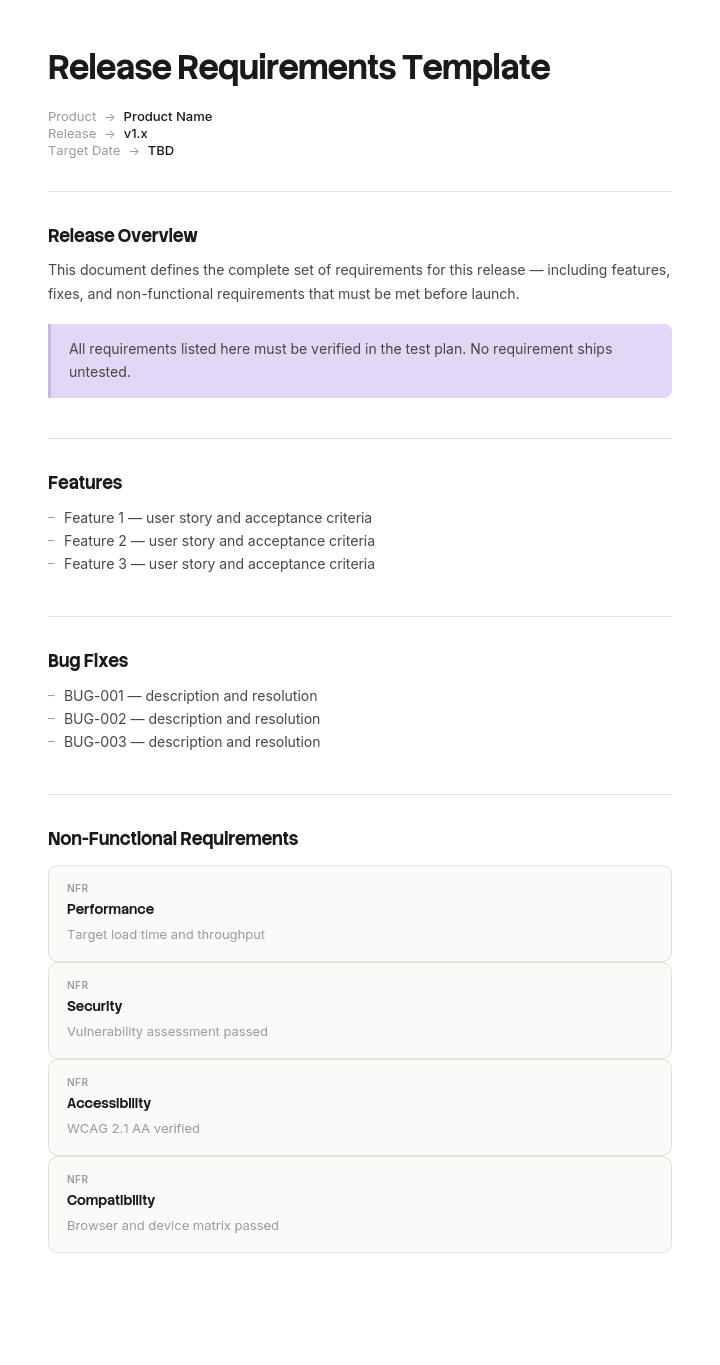
使用此模板
一份出色的发布计划,能把“代码已完成”转化为“对客户产生影响”。使用 Trupeer,您可以从免费的发布需求模板开始,结合您的 品牌规范 进行定制,并将发布计划转化为视频更新,从而让工程、QA、支持与客户保持一致,节省发布规划的数小时工作量。
什么是免费的发布需求模板?
免费的发布需求模板,是一种可复用的结构,用于明确在特定版本发布之前必须满足的所有条件。
“必须满足的所有条件”这句话在这里做了刻意的工作。大多数此类文档会列出产品必须做什么,然后就结束了。那是功能规格说明。发布需求则更广泛:它是任何缺失就应当阻止发布的条件,而其中很大一部分条件与代码并无直接关系。
模板不是需求本身。它会给您一张表格,而搭建这张表格只需要几分钟。决定一次发布是否顺利的,是是否有人想到要把“支持需要培训”“账单报表需要新增一列”“回滚从未真正执行过”等内容写下来。
格式遵循用途。免费的发布需求模板 Excel 文件适合需求表格——文档主体的大部分内容确实是表格化的。免费的发布需求模板 Word 版本适合叙述性章节、范围说明以及签字确认。免费的发布需求模板 PDF 则是随发布记录附带的版本。
发布需求并不等同于产品需求
值得清晰地区分,因为两者会被合并,而这种合并正是导致遗漏的原因。
产品需求描述“这个东西做什么”。它在开发之前或开发期间编写,由产品团队负责,并回答“我们在构建什么”。产品需求文档或业务需求文档都覆盖这一部分,而且通常是按产品领域撰写一次,而不是按每次发布撰写一次。
发布需求描述“为了让这次特定发布能够上线,必须满足什么”。它在发布之前编写,由对发布结果负责的人负责,并回答“我们能不能发布”。它们包含本次发布中涉及的产品需求,也包含大量其他内容。
这种区分之所以重要,是因为两份文档的失败模式不同。产品需求文档会因为表述含糊而失败——于是错误的东西被构建出来。发布需求文档会因为不完整而失败——于是正确的东西被交付到一个尚未准备好的组织中。
如果您要找的是前者,您需要的是需求文档而不是本文档。如果您正准备上线某些内容,请继续阅读。
如何在 Trupeer 中自定义此模板
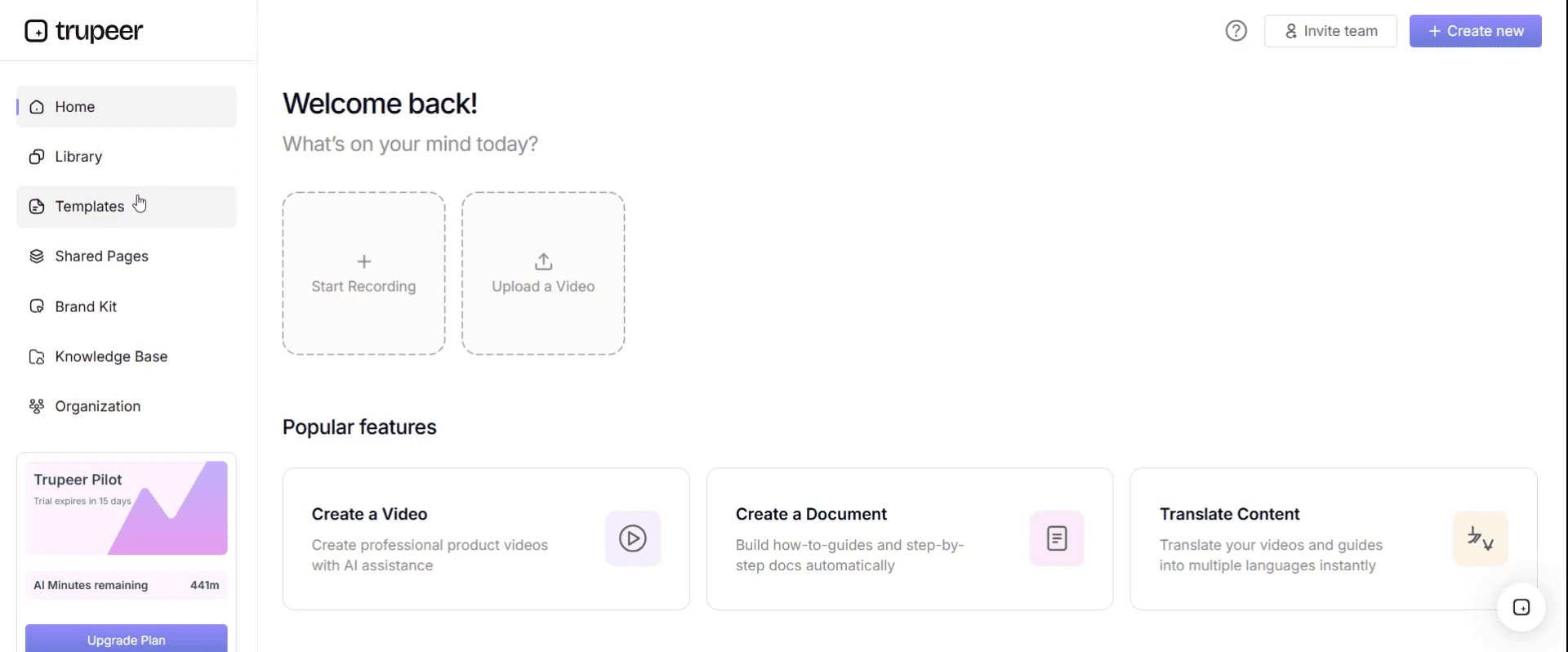
步骤 1:打开“模板”栏目
从主导航进入“模板”栏目。
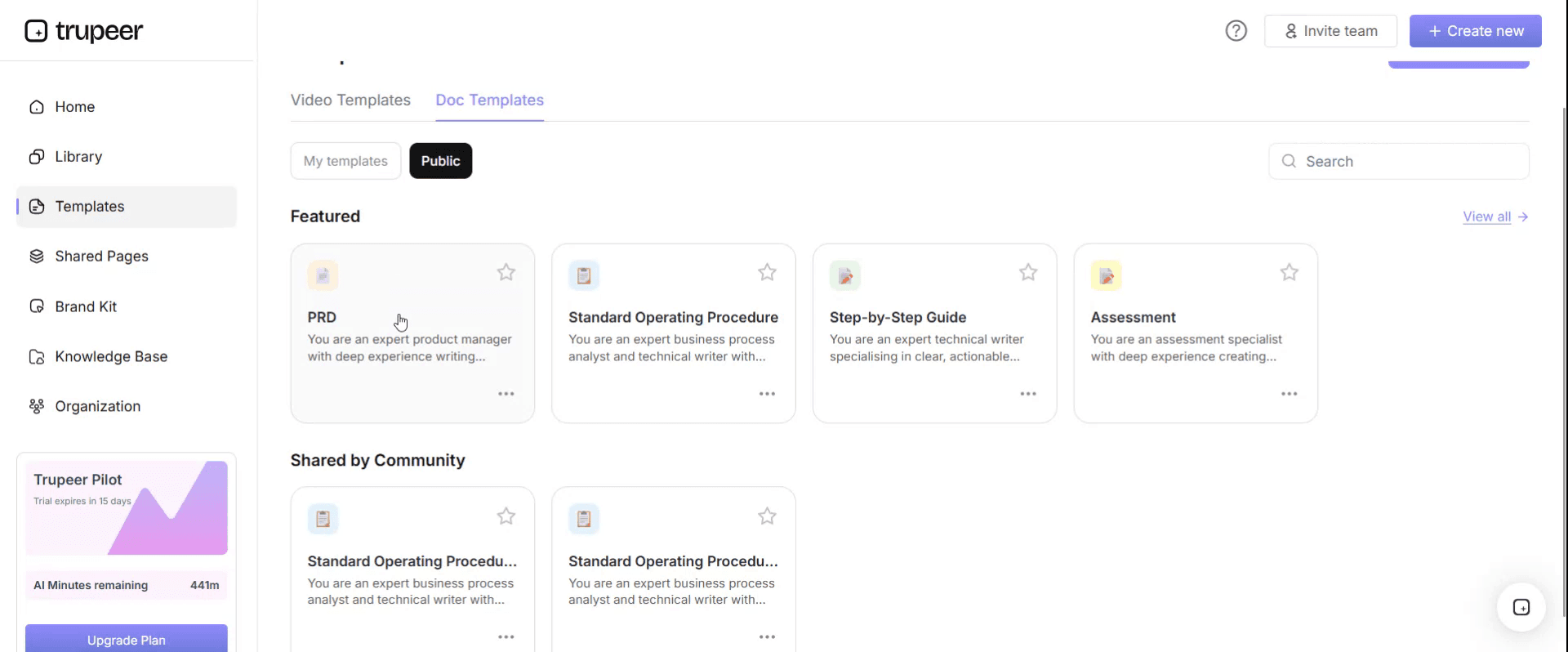
步骤 2:选择并打开模板
点击任意您想要处理的模板以将其打开。
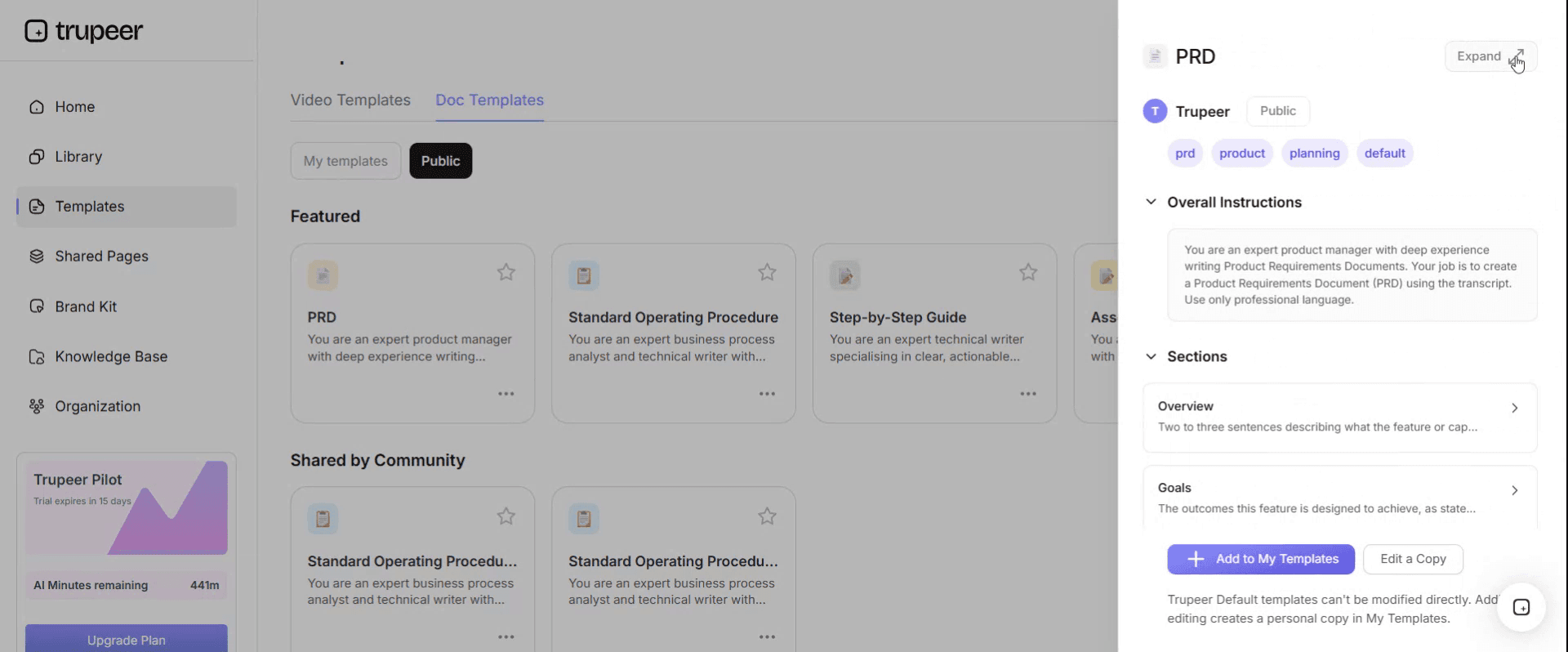
步骤 3:展开模板视图
如有需要,展开模板视图以清晰查看完整布局与细节。
步骤 4:编辑模板
点击“编辑”开始修改所选模板。
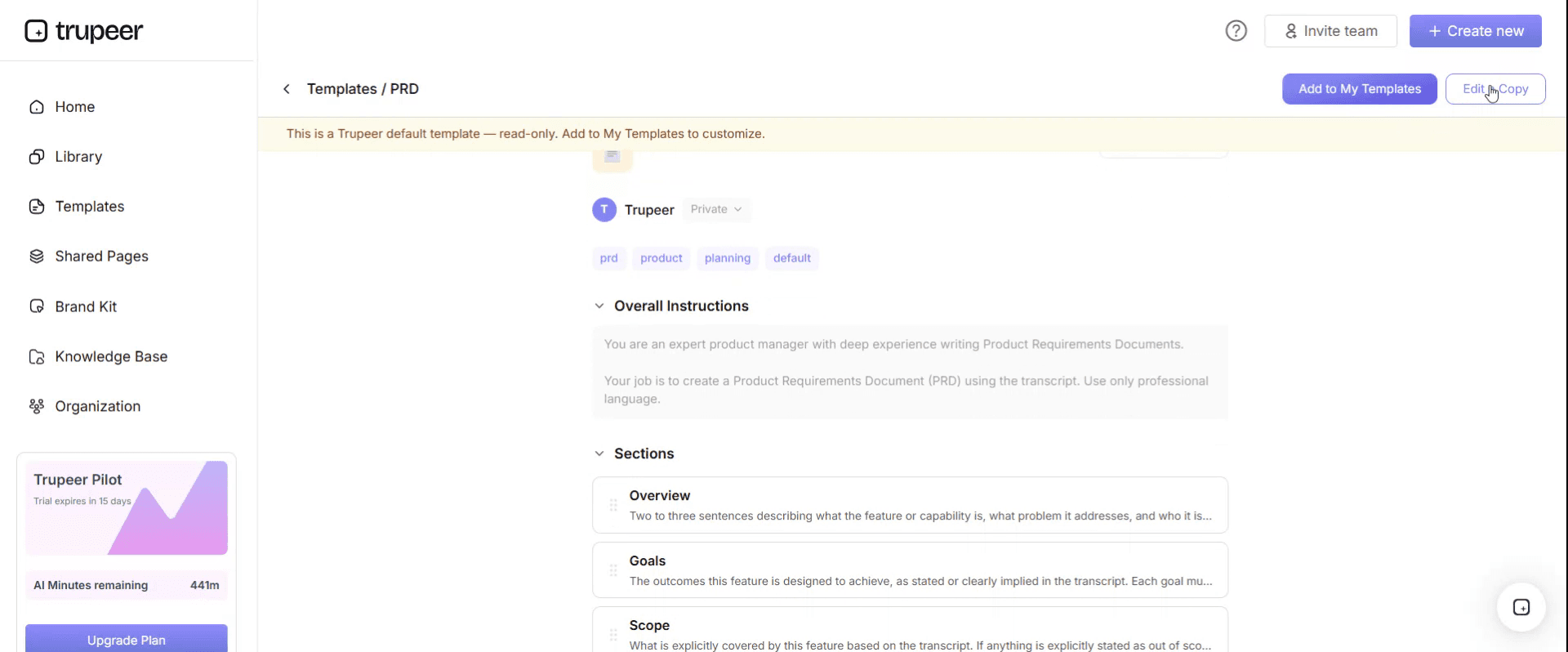
在编辑器中,您可以:
添加新的章节
定义或更新格式规则
添加徽标并调整其位置及相关设置
步骤 5:保存您的自定义模板
完成所有必要更改后,点击“保存”,将更新后的模板存为您自己的版本。
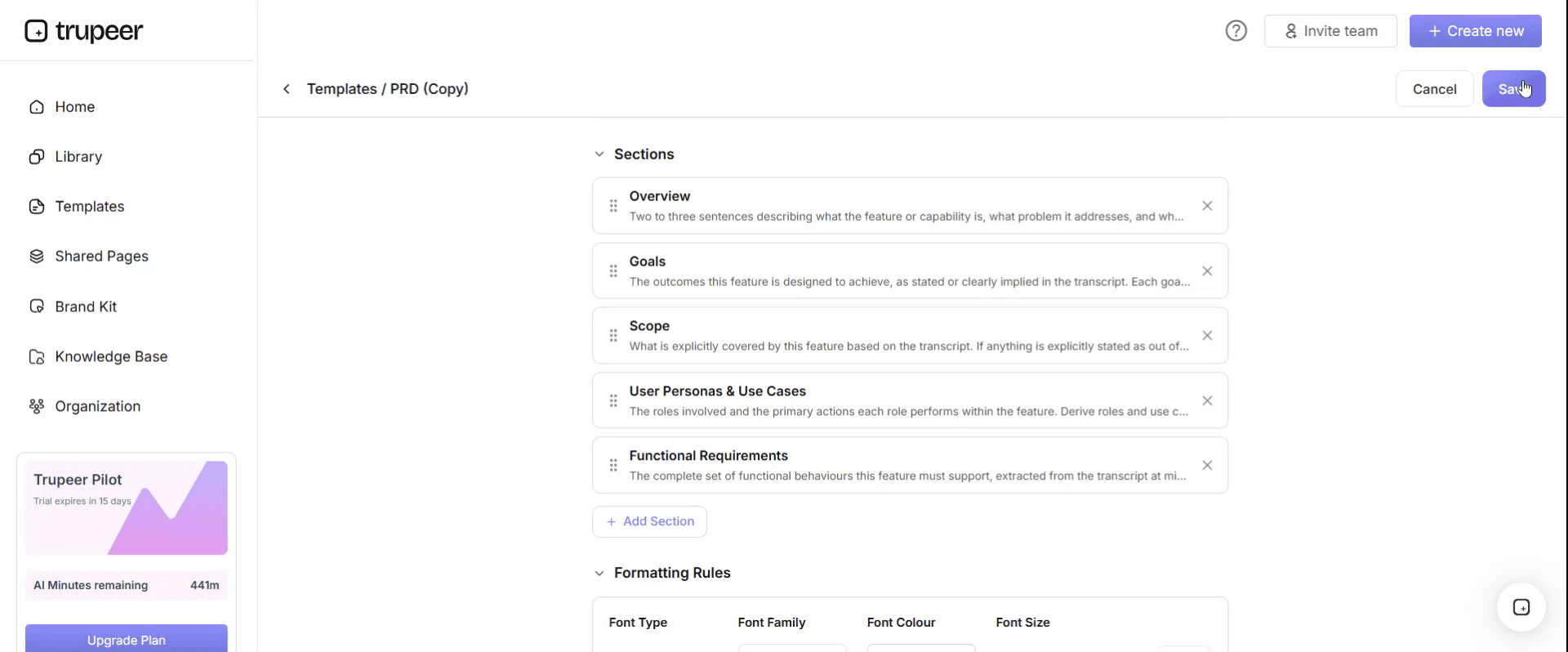
步骤 6:预览并微调模板
当您想查看自定义模板的效果时,打开“预览”。
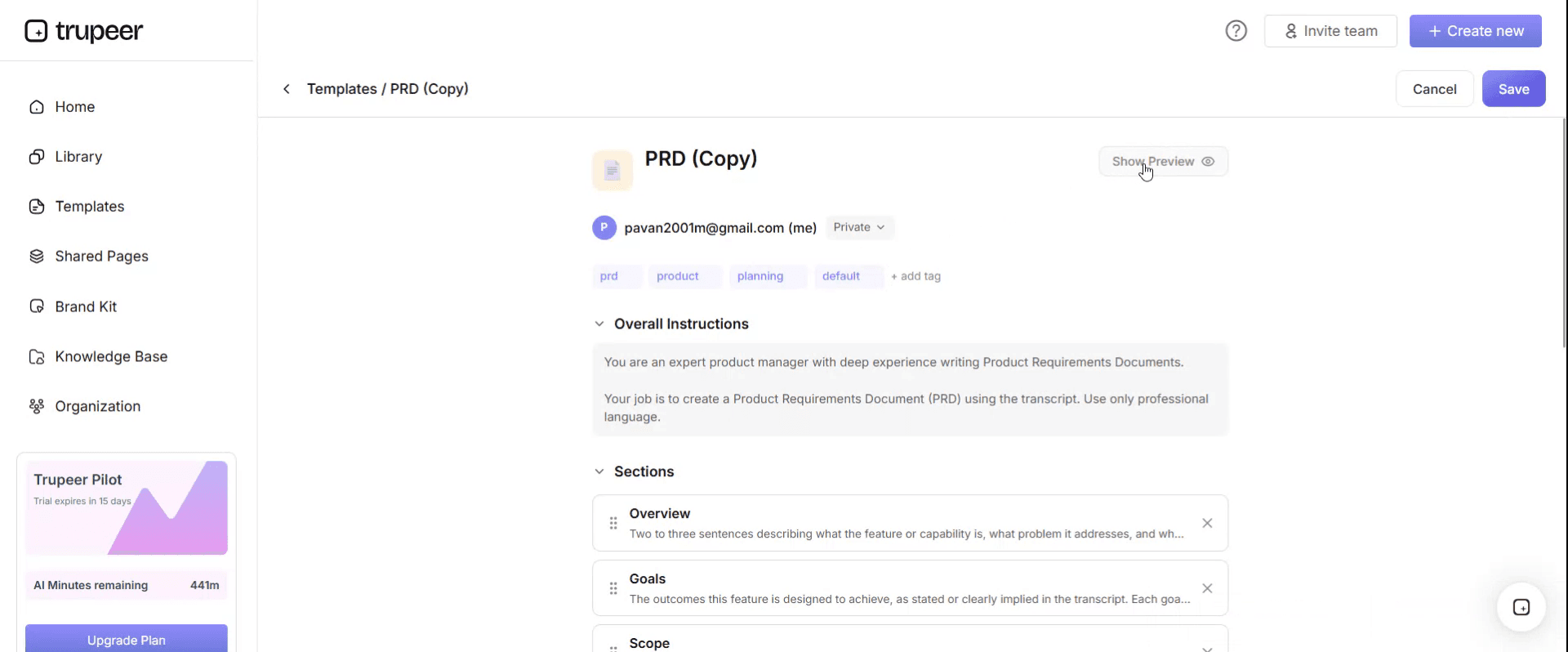
在预览界面中,如有需要,您还可以继续直接进行调整,确保模板呈现得与您期望完全一致。
使用发布需求模板,您可以:
节省规划时间:跳过空白页面,从为发布场景搭建的结构开始。
降低发布风险:内置用于测试、回滚与依赖关系的章节。
保持品牌一致:使用 Trupeer 的品牌套件应用您的徽标、字体与颜色。
清晰沟通发布内容:将计划转化为视频更新,供跨职能团队使用。
实现跨发布标准化:每次发布都使用同一模板。
触达全球团队:一键将发布计划翻译为 65+ 种语言。
阻止发布的需求通常与产品无关
回想一下您组织里上一次进展不顺的发布,并追问:到底哪里出了问题。
在大多数情况下,软件是正常工作的。失败的是相邻环节:支持团队不知道该功能的存在;帮助中心仍在描述旧行为;账单系统中未配置定价;销售团队无法给出报价;迁移流程跑了,但没人测试过回滚;法务尚未审核条款变更;用于宣布的邮件发错了受众分组。
以上每一项,都是发布需求。它们都不是产品需求,而且也不会出现在由构建该功能的人撰写的文档中,因为每一项都属于别的团队负责。
这就是结构性的根因。产品需求由产品与工程团队编写——他们在各自领域内足够专业且严谨,但看不到账单对账报表。因此,文档对“要构建的东西”是完整的,却对“接收它的组织”保持沉默。
纠正的方法,是把文档拆成两部分,并让第二部分获得同等权重。产品需求:它必须做什么。就绪需求:在它能上线之前,其他地方必须满足什么。成熟的发布中,第二份清单通常比第一份更长——这会让第一次写的人感到意外。
发布需求模板必须包含什么
八个组成部分。就绪部分正是把这份文档与功能清单区分开来的关键。
组件 | 它做什么 |
|---|---|
发布标识 | 发布内容是什么、版本号、目标日期,以及明确不包含哪些内容。 |
产品需求 | 发布必须做什么。每一条都要写到可验证而不是可争论的程度。 |
就绪需求 | 在其他地方必须满足什么。支持、文档、账单、销售、法务、运营、沟通。 |
每条需求的负责人 | 每条一位姓名;而就绪需求的负责人通常不在工程团队内部。 |
验证方法 | 如何确认每条需求已满足。测试、演示、文档或签字确认。 |
是否阻止发布 | 没有它发布是否会停止。应提前决定,而不是在“能否发布”的会议上临时决定。 |
回滚 | 如果出错会发生什么、由谁做决定,以及确认回滚已执行过,而不是仅仅写在文档里。 |
签字确认 | 谁可以授权发布,以及他们签字所依据的证据是什么。 |
“是否阻止发布”这一列会改变行为。提前把需求标记为阻止或不阻止,会迫使争论在一周前发生——当时还是讨论;而不是在“能否发布”的会议上发生——那时是在时间压力下进行谈判,且所有人都已经承诺了日期。
免费发布需求模板:可复制的结构
用真实示例填充,而不是占位符。该发布在一款业务软件产品中引入新的基于用量的定价档位。
从这里复制。
发布标识。 名称、版本、目标日期,以及明确的排除项。
基于用量的档位。发布 4.9。目标日期 10 月 14 日。不包含:将现有客户迁移到新档位(在 4.10 中进行),以及自助升级流程(已推迟)。
产品需求。
# | 需求 | 负责人 | 由谁验证 | 阻止 |
|---|---|---|---|---|
P1 | 注册时可选择新档位,并应用正确的限制 | A Bellamy | 自动化测试套件 + 测试环境中的人工检查 | 是 |
P2 | 按小时计量用量,并在 1 小时内对客户可见 | A Bellamy | 计量测试 + 测试环境中 24 小时浸泡 | 是 |
P3 | 超出部分在计费前计算并展示 | A Bellamy | 针对 5 个示例账户的人工测试 | 是 |
P4 | 现有客户的计划或账单不发生变化 | A Bellamy | 回归测试套件 + 测试环境中 100 个线上账户检查 | 是 |
就绪需求。 被留出的那一半。
# | 需求 | 负责人 | 由谁验证 | 阻止 |
|---|---|---|---|---|
R1 | 账单对账报表将新档位作为一个类别包含在内 | S Achebe, Finance | 用测试环境数据运行报表并检查 | 是 |
R2 | 账单系统中的定价已配置,并与已发布的价格完成对账 | S Achebe, Finance | 由两人对定价页面进行核对 | 是 |
R3 | 支持宏与帮助中心文章已更新 | D Yilmaz, Support | 发布 6 篇文章,4 个宏上线 | 是 |
R4 | 支持团队已简报,回答了预计的前十个问题 | D Yilmaz, Support | 召开会议并记录出席情况 | 是 |
R5 | 销售报价工具能为新档位生成正确报价 | M Rowntree, Sales | 审核 3 份测试报价 | 是 |
R6 | 服务条款变更已审核并发布 | Legal | 书面确认 | 是 |
R7 | 客户公告已起草、分组并安排发送 | Marketing | 稿件已获批准,发送名单已核对 | 否 |
R8 | 面向全体员工的内部公告 | Marketing | 已安排 | 否 |
8 条就绪需求对应 4 条产品需求。这个比例很正常,也是这份文档的要点。
回滚。 如果出错会发生什么。
功能开关在注册后 5 分钟内禁用新档位,现有注册不受影响。计量仍会继续记录,但不会产生计费。回滚在 10 月 7 日于测试环境中由 A Bellamy 执行,而不仅仅是写在文档里。是否回滚由值班工程负责人决定,无需审批。
签字确认。 由产品负责人和支持负责人共同授权发布,并以已完成的表格为依据——每一条阻止性需求都标记为已验证。无口头确认。
从这里复制。
发布需求示例:34 条需求已满足,900 张工单
Merrivale Software 是一家拥有约 4000 名客户的业务软件公司,发布了新的基于用量的定价档位。
发布需求文档列出了 34 条需求。每一条都可运行、每一条都已满足、每一条都经过测试,并且发布在目标日期上线。按照团队用来衡量自己的标准来看,这次做得非常完美。
首周的支持工单量为 900,而正常基线约为 210。
文档中有 3 件事被遗漏了,而这 3 件事都属于编写该文档之外的其他团队。
帮助中心仍在描述旧计划,因此支持团队在长达 4 天内自信地使用了错误材料来回答问题。
账单对账报表中没有新档位的类别,因此在有人注意到之前,41 位客户在两个月内都按旧费率开具了发票。少计 6.2 万英镑,而要从已经被告知应付金额的客户那里追回这笔钱,是一场令人不快的沟通,且影响了多个账户。
销售报价工具无法为新档位生成报价,因此有 11 笔交易是用人工搭建的报价完成的——这些报价包含 3 种不同结构,其中有 2 种与产品实际提供的内容不一致。
复盘发现,没有人犯了“通常意义上的错误”。这份文档由产品与工程团队彻底地编写,内容围绕他们正在构建的东西展开。那间屋子里没有任何人知道对账报表的存在。
Merrivale 所做的改变,是文档的结构形态,而不是严谨程度。由原来的一份变成两份。产品需求与就绪需求。并且新增一条规则:在工程团队之外必须有明确的负责人同意该就绪需求,直到满足这一点,它才算完整。
下一次发布有 19 条产品需求和 23 条就绪需求。发布周的工单量为 240,而基线为 210。
第二份清单的撰写花了大约 90 分钟,会议中包含支持、财务与销售。这就是全部介入。
如何用六个步骤编写发布需求
说明发布中包含什么、以及不包含什么。排除项能阻止最常见的签字争论——通常争论的是“大家都以为会包含的某件事”。
为每条需求编写可验证的产品需求。下一节会讲到。
从负责这些事项的人那里获取就绪需求。不要靠想象他们可能需要什么。把支持、财务、销售、法务与运营拉到同一间屋子里 90 分钟,问清楚:如果现在就上线,会对他们造成什么影响或会“卡住”什么。
为每条需求指定负责人和验证方法。未验证的需求,本质上只是意图。
现在就标记为阻止或不阻止。提前完成这一步,会把一场谈判转化为一个决策。
测试回滚,而不是只写回滚文档。从未执行过的回滚计划只是一种假设,而发布当晚并不是用来测试假设的好时机。
第三步就是整个练习本身,而 90 分钟对大多数发布来说确实足够。负责就绪需求的人在没有准备的情况下也知道它们是什么,因为当它们缺失时,受影响的就是他们。
如何编写一条可验证的需求
大多数需求缺陷并不是遗漏,而是含糊不清;而且它们通常呈现为少数几种固定形态。
程度形容词。 快速、直观、可靠、可扩展。这些是没有刻度的评分。把它们替换成数字与条件:例如“在 50 个并发用户下 2 秒内响应”。
没有执行者的被动义务。 报表应该被更新。但由谁更新?又如何让任何人知道它已经发生?每条需求都要写明负责人。
复合型需求。 任何包含“和(and)”的内容,通常都是两条需求,而这两条需求往往只能满足一半。把它们拆开,因为一行内容无法做到“一半可验证”。
把需求写成解决方案。 在设置页面添加一个下拉框。这是在指定实现方式,并把真正的需求隐藏起来——真正的需求是用户必须能够更改某些内容。解决方案属于设计,而不是需求;除非该解决方案本身确实就是需求,并且有值得陈述的理由。
实际测试方法是:逐行阅读并问“需要什么证据才能解决关于它是否已满足的分歧”。如果您无法用一句话说清楚那份证据是什么,那么这条需求就还没完成。
发布需求模板的不同版本
结构保持不变,但就绪清单会发生显著变化。
软件发布。 以上示例。就绪部分主要由支持、文档、账单与沟通构成,而最常被忽略的项目通常是任何与金钱相关的内容。
移动应用发布。 增加应用商店审核时间线——这是外部且不可预测的因素;另外,旧版本上的用户会持续存在数月。向后兼容就从“礼貌”变成了“需求”。
硬件或实体产品发布。 增加制造就绪、包装、备件、分发与退货处理。交付周期意味着就绪需求必须比软件更早满足。
受监管的发布。 医疗器械、金融产品、制药、安全关键系统。内容与证据经常被强制要求;签字确认权限由外部定义;记录必须经得起审计。本页面内容无法替代适用标准;在受监管行业的任何发布都应在您的质量体系下进行,并进行合格的评审。
营销或活动上线。 产品部分会缩小,就绪部分会扩展。资产、法务审核、渠道排期、追踪,以及任何接电话的人能够就此进行说明的能力。
内部系统发布。 就绪几乎完全是培训、访问与支持路径;而跳过它的诱惑最强,因为受众是同事而不是客户。出于这个原因,内部发布会产生不成比例的、可避免的中断。
发布需求、PRD、BRD 或需求文档?
这些内容会被交替搜索,并覆盖不同范围,因此在采用模板之前,值得先明确您需要的是哪一种。
一份 业务需求文档 用业务语言说明业务需要什么以及原因。它通常写得很早,由业务团队负责,并且基本不包含实现细节。
一份 产品需求文档 说明产品必须做什么来满足这些需求。由产品团队负责,按产品领域或按具体计划/项目来撰写。
一份 功能或软件需求规格说明 以足够详细的程度描述行为,以便据此构建与测试。由工程团队或业务分析负责。
需求收集是产生前三者的活动。一个需求收集模板 Excel 免费下载,是一种采集工具:用于捕获并分类来自相关方的输入;它不是发布文档。
发布需求是上线门槛。它们会基于本次发布中包含的所有内容,并补上其他文档都未覆盖的那一半就绪要求。
搜索“发布需求”的结果大多会返回另外四类,因为该术语尚未被广泛建立。如果您真正需要的是行为规格说明,请使用需求文档模板 Word 文件并沿用那套写法。如果您需要决定能否上线,这一页就是正确的选择。更大范围工作的边界在 项目范围 中。
谁来签字确认发布,以及“完成”意味着什么
需要两个人签字,而不是一个;并且他们应代表不同的利益相关方。
第一个是对产品能正常工作负责的人。第二个是对组织如何应对它负责的人,通常是支持团队或运营团队。仅由构建该发布的人授权发布,缺少对就绪情况的独立核查——而这正是就绪部分存在的目的:用来弥补这一缺口。
签字确认应基于证据,而不是基于信心。每一条阻止性需求都标记为已验证,并记录验证方法。由负责人在其名下标记为“完成”,且没有任何附加说明——这是一种自我报告。
会议可以直接从需求表格本身来开,或从基于该表格生成的免费发布需求模板 PowerPoint 视图来开,绝不要从单独维护的演示文稿来开。要在足够早的时间召开,让“否”可以变成可执行的行动。发布前一个下午开的会议只能做批准,因为到那时,停止的成本已经高于大多数问题的成本。通常两天工作日就足以让真正的决策成为可能。
质量门与测试证据会与此并列出现在 QA 计划 中,该计划涵盖如何确保验证本身得到落实。
免费发布需求模板无法解决什么
从未向其他职能团队询问他们需要什么的团队。模板提供了一个章节。填写它需要一次沟通,而任何“免费发布需求模板免费下载安装”都无法替您完成这次沟通。
无法变动的日期。如果无论如何都要发布,那么需求文档就会变成记录,而不是门槛。这偶尔是一种合理选择,应该明确写出来,而不是假装不是这样。
只覆盖产品那一半的模板。我见过的几乎每一个“免费发布需求模板 Word 免费下载”都恰好做到了这一点,所以请您自行补上就绪部分。
没有否决权的签字确认。从未阻止任何事情的门槛,并不是真正的门槛。
不存在的文档。支持简报与帮助中心更新,是最常被标记为不阻止的就绪需求——并不是因为它们不重要,而是因为制作它们的成本较高。这是成本问题,而不是优先级问题;下面会说明如何处理。
展示变化,而不是只描述它
几乎每份发布清单里都会出现两条就绪需求,而且几乎总是最容易“滑过去”的那两条:文档已更新,以及支持已完成简报。
它们之所以会“滑过去”,是因为有实际原因,而不是文化原因。为变更后的流程撰写帮助中心文章、截取截图、在上线前设计发生变化时再更新截图,然后再对支持团队做简报——这是一连串几天的工作,最终落在大家最忙的那一周。所以它会被标记为不阻止,而发布时支持团队只能基于描述旧行为的材料来回答问题。
Trupeer AI 改变了这种成本。有人只需要在录制过程中走一遍新的流程,输出就是一篇已包含截图的书面文章(截图已捕获并放置好),并且同时配有视频,且都使用您自己的品牌风格。文章会进入帮助中心。视频就是支持简报。两者都在以前用来收集截图所需的时间内完成。
记录它。打造品牌风格。翻译它。用 Trupeer 来做。
对发布而言,有两个特别重要的结果。当流程在后期才发生变化(确实会发生)时,重新录制比编辑更快,因此文档可以重新生成而不是被放弃。并且当您用多种语言支持客户时,同一份录制会在每种语言中生成相同的文章——因此不会出现“只用一种语言完成文档、其他语言却没有支持”的情况。
这些内容放在您的 知识库 中,同时也可作为对支持与销售的 培训。一旦文档在发布周期内生成的成本足够低,它就可以被标记为阻止性需求——也就是它应该属于的位置。与您其他文档保持一致,只需要先设置一次 品牌套件,而在 文档模板设置指南 中也有对应的设置说明。
常见问题
有免费的发布需求模板 Excel 版本吗?
Excel 比大多数格式更适合这份文档,因为它的核心是一张表:每行都有负责人、验证方法以及阻止标记,而且您会希望对其进行筛选。
用产品需求与就绪需求构建免费的发布需求模板 Excel 文件:把它们放在同一张表里,并用“类型”列区分,而不是拆成两个工作表。把它们放在同一处,才能让比例一目了然;而这个比例也是页面上最具信息量的内容。
有免费的发布需求模板 Word 版本吗?
Word 更适合配套的叙述内容:发布中包含什么、排除什么、回滚计划以及签字确认。用嵌入了需求表格的方式构建免费的发布需求模板 Word 文件,并将排除项保留在第一页。
如果需求清单很长,请把它放在电子表格中,并在文档中引用它,而不是维护两份副本。文档是人们阅读的内容,电子表格是人们工作的依据。
有免费的发布需求模板 Word 免费下载吗?
免费的发布需求模板 Word 免费下载为您提供的是“章节清单”,而且几乎肯定只包含产品那一半。几乎所有已发布的模板都会把需求当作功能规格说明。
请手动添加就绪部分。支持、文档、账单、销售、法务、运营与沟通——每一项都要指定交付团队之外的负责人。添加这一步只需要 10 分钟;它也是功能清单与发布门槛之间的差别。
有需求文档模板 Word 版本吗?
有,而且它与本文档是不同的文档。一份需求文档模板 Word 文件会规定产品或系统必须做什么,并以足够详细的程度支持构建与测试;它按具体计划/项目来写,而不是按每次发布来写。
如果您在定义行为,请使用它。如果您在决定能否上线,请使用发布需求文档。第二份会基于第一份,并补上第一份没有覆盖的所有内容。
在哪里可以找到需求收集模板 Excel 免费下载?
需求收集是从相关方收集需求的活动,而需求收集模板 Excel 免费下载是一种采集工具:来源、相关方、需求、优先级、状态。
它在工作开始阶段确实很有用,而且它不是发布文档。如果您正在收集需求,就用它。如果您正准备上线,您需要的是验证与就绪两列——而需求收集模板并不包含这些列。
有免费的发布需求模板 PDF 吗?
PDF 是已签字并归档的版本。等到每一条阻止性需求都已验证、发布也已获授权后,导出一份免费的发布需求模板 PDF(包含签字人姓名与日期),并将其附加到发布记录中。
这比大多数文档更重要,因为“发布前达成了什么共识”的问题,通常会在发布出错之后被追问得更频繁,而不是发布之前。
有免费的发布需求模板 PowerPoint 版本吗?
幻灯片更适合用于“能否发布”的会议,而不是用于文档本身。一份免费的发布需求模板 PowerPoint 演示文稿,展示阻止性需求、它们的状态以及仍待完成的事项,是进行 15 分钟决策的好方式。
请从表格生成它,而不是单独维护。与需求清单脱节的演示文稿,比没有演示文稿更糟,因为人们记住的是那份版本。
有免费的发布需求模板免费下载安装值得使用吗?
表格结构本身自己搭建大约需要 10 分钟,这比评估一次“免费发布需求模板免费下载安装”所花的时间还少。
如果您确实要采用它,请检查两件事:它是否为交付团队之外的负责人预留了位置,以及它是否能区分阻止与不阻止。几乎没有已发布的模板同时具备这两点,而这两列承载了大部分价值。