Trupeer Blog
Podsumuj
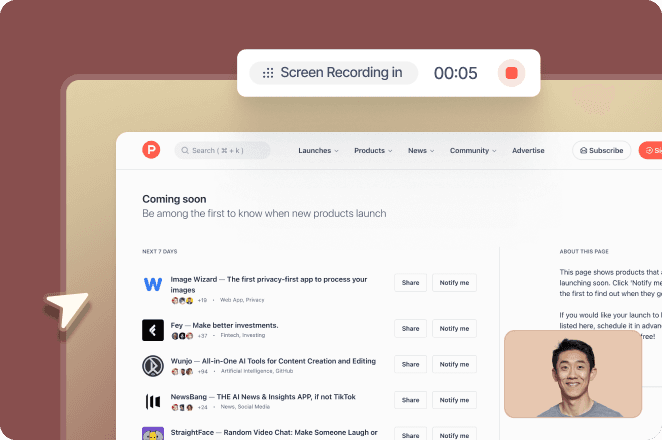
Imagine you're running a successful manufacturing company. Your lead engineer, John, has been with you for over 30 years, driving innovation and solving complex problems that have kept the company competitive. But John is set to retire in six months, and you realize that a significant amount of his knowledge isn't documented anywhere. Without a proper succession planning documentation strategy, you risk losing decades of expertise. A AI documentation generator can be invaluable here, capturing detailed processes and problem-solving approaches that are second nature to John but foreign to new hires. According to a recent study, 60% of companies report losing critical capabilities when key employees retire. This stark reality underscores the importance of capturing expert knowledge before it's too late.
Succession planning documentation is crucial for any business facing the retirement of key personnel. It ensures continuity and preserves institutional knowledge. With the right tools and strategies, you can capture and transfer this expertise efficiently, ensuring your organization remains resilient and competitive. This is particularly relevant for industries with highly specialized roles, where the learning curve is steep and mistakes can be costly. So, how do you ensure a smooth transition when a vital team member retires? It starts by understanding the stakes and implementing effective documentation processes.
Why does succession planning documentation matter?
Succession planning documentation is not just a best practice; it's a necessity for any organization aiming for longevity and stability. When key employees retire without documenting their knowledge, companies face disruptions in operations, loss of competitive edge, and increased training costs for replacements. The operations use case is a prime example, where smooth workflow transitions are critical. In manufacturing, for instance, an unrecorded process can lead to significant downtime and financial loss.
Also, this documentation ensures that new employees can quickly get up to speed, reducing the typical productivity dip that occurs when a seasoned employee leaves. For stakeholders, including HR managers and department heads, the stakes are high. They need to ensure that the transition is smooth and that new employees can perform to the same standard as their predecessors. This is where detailed succession planning documentation becomes invaluable, providing new hires with a roadmap to follow and learn from. Without it, companies risk inefficiencies that could impact their bottom line.
What are the benefits of effective succession planning documentation?
Effective succession planning documentation offers numerous advantages that directly impact an organization’s efficiency and stability. Here are some of the key benefits:
Knowledge retention. By capturing the expertise of retiring employees, companies retain critical knowledge that would otherwise be lost. This ensures continuity and avoids disruptions in business processes.
simplified onboarding. With comprehensive documentation, new hires can quickly understand and integrate into their roles. This reduces training time and accelerates productivity, making the best use of best documentation software.
Enhanced decision-making. Access to documented expert insights allows for informed decision-making, reducing the likelihood of errors and improving overall business performance.
Operational consistency. Documentation ensures that processes are followed consistently, maintaining quality and efficiency across the organization. This is particularly beneficial in regulated industries where compliance is critical.
Risk mitigation. By having a documented succession plan, companies can better manage risks associated with losing key personnel, ensuring that operations continue smoothly without interruption.
Increased employee confidence. When employees know that their knowledge is valued and preserved, it boosts morale and encourages a culture of knowledge sharing, supported by tools like an AI video platform.
Which Trupeer features help you capture expert knowledge?
Trupeer offers a range of features designed to facilitate effective succession planning documentation. These capabilities help capture and transfer expert knowledge smoothly, ensuring a smooth transition when key employees retire.
Automatic SOP generation from any recording
Trupeer's AI documentation platform simplifies the creation of standard operating procedures (SOPs) by automatically generating them from video recordings. This feature is particularly useful for capturing complex processes and workflows that experts like John have mastered over years of experience. The generated SOPs are edit-ready and can be exported in various formats, making it easy to share and implement across teams. This capability ensures that critical knowledge is preserved in a structured and accessible manner.
AI screen recording with auto-zoom and click detection
This feature captures every detail of an expert's workflow, highlighting important actions and decisions. The auto-zoom and click detection functions ensure that no critical step is missed, providing a comprehensive view of the process. For employees taking over, this detailed visual documentation serves as an invaluable training resource. It's especially beneficial in technical fields where precise actions are crucial. By using Trupeer's AI-searchable knowledge base, these recordings are easily retrievable and searchable, further enhancing their utility.
Silent screen recording with automatic AI narration
Trupeer's silent screen recording feature captures workflows without disrupting the expert’s routine. The automatic AI narration adds context and explanations to the captured content, making it easier for successors to understand the rationale behind each action. This is particularly useful in environments where real-time explanations are impractical. The narrated recordings can be accessed through Trupeer's enterprise documentation knowledge base platform tool, ensuring they are available whenever needed.
AI voice cloning from a short sample
With AI voice cloning, Trupeer allows you to capture the unique way an expert communicates, preserving their voice for future training materials. This feature can create a familiar learning environment for new employees, helping them connect better with the material. By cloning an expert’s voice, companies can add a personal touch to their training resources, enhancing engagement and retention of information.
Auto-updating documentation tied to the underlying recording
This capability ensures that documentation remains current, automatically updating any changes in the underlying recordings. This feature is crucial for maintaining accuracy over time, especially in fast-evolving industries. Users can rely on Trupeer's system to keep their documents in sync with the latest practices and standards. This minimizes the risk of outdated information leading to errors, ensuring that the organization stays ahead of the curve.
How do you capture expert knowledge step by step with Trupeer?
Step 1: Initiate a Screen Recording
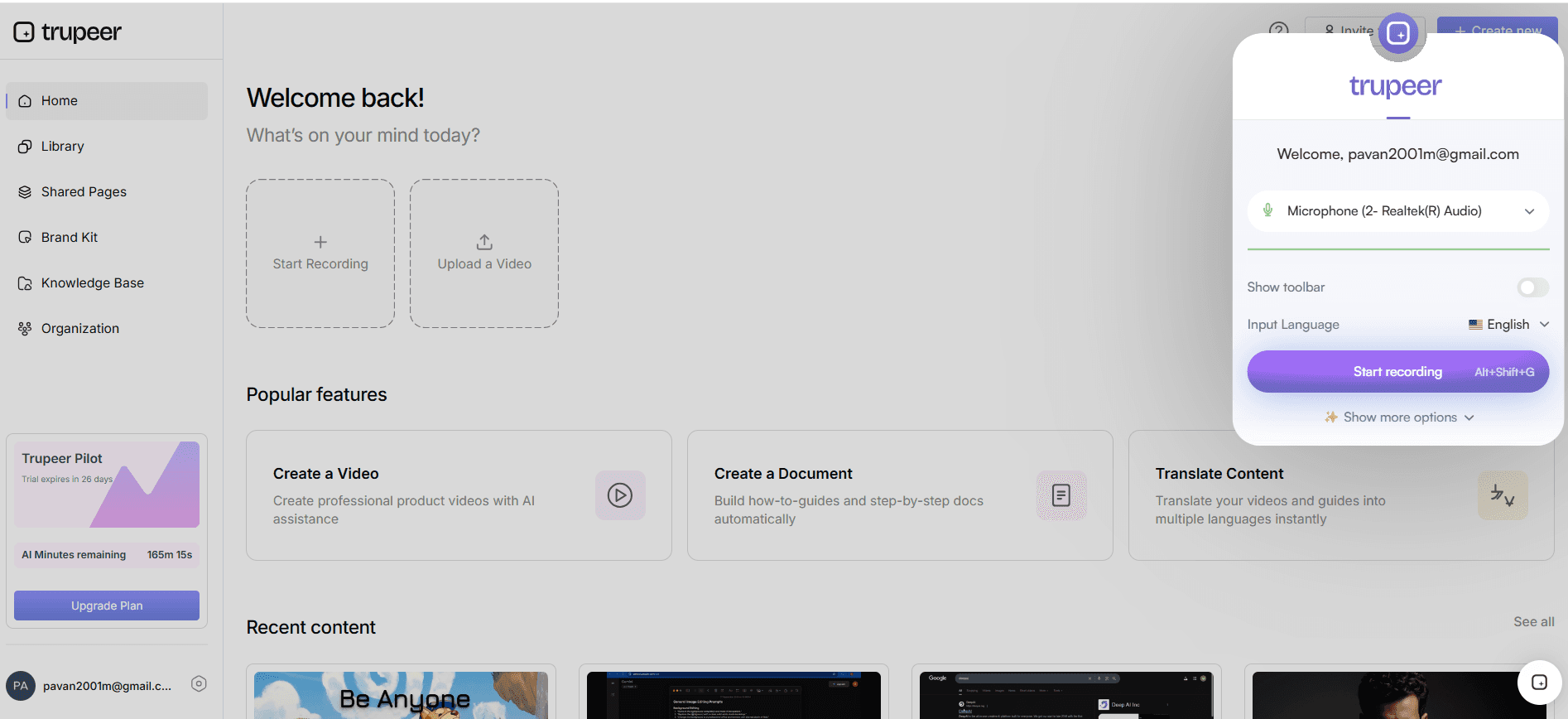
Start by using Trupeer's browser-based recorder, which requires no installation. Open the Trupeer platform, select the "Start Recording" option, and choose "AI screen recording with auto-zoom and click detection." As the expert performs their tasks, Trupeer automatically highlights key actions and zooms in on important areas. This ensures that every crucial detail is captured without missing a beat. The process is smooth, allowing experts to work uninterrupted while the system records. Typically, a 30-minute session will capture enough data for a comprehensive SOP draft. Teams weighing tools often start with a Loom alternatives comparison before standardizing on a workflow.
Step 2: Add Context with AI Narration
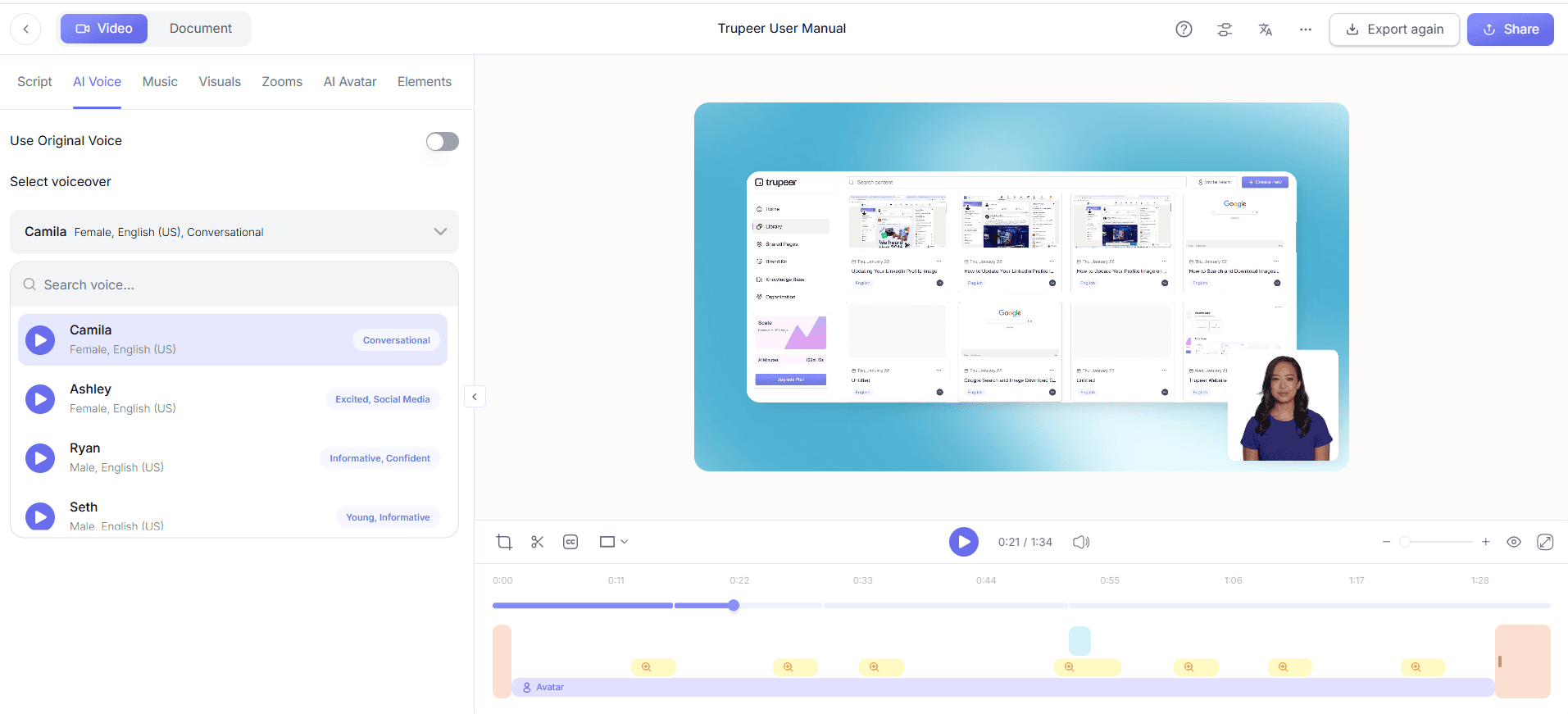
Once the recording is complete, use the "Silent screen recording with automatic AI narration" feature to add context. Trupeer's AI analyzes the recording and inserts narration where necessary, providing explanations for each action. The user can review and edit the narration if needed, ensuring clarity. This step is crucial in making the recording understandable for successors who might not be familiar with all the intricacies. The AI narration typically takes about 10 minutes to process a 30-minute recording.
Step 3: Generate an SOP
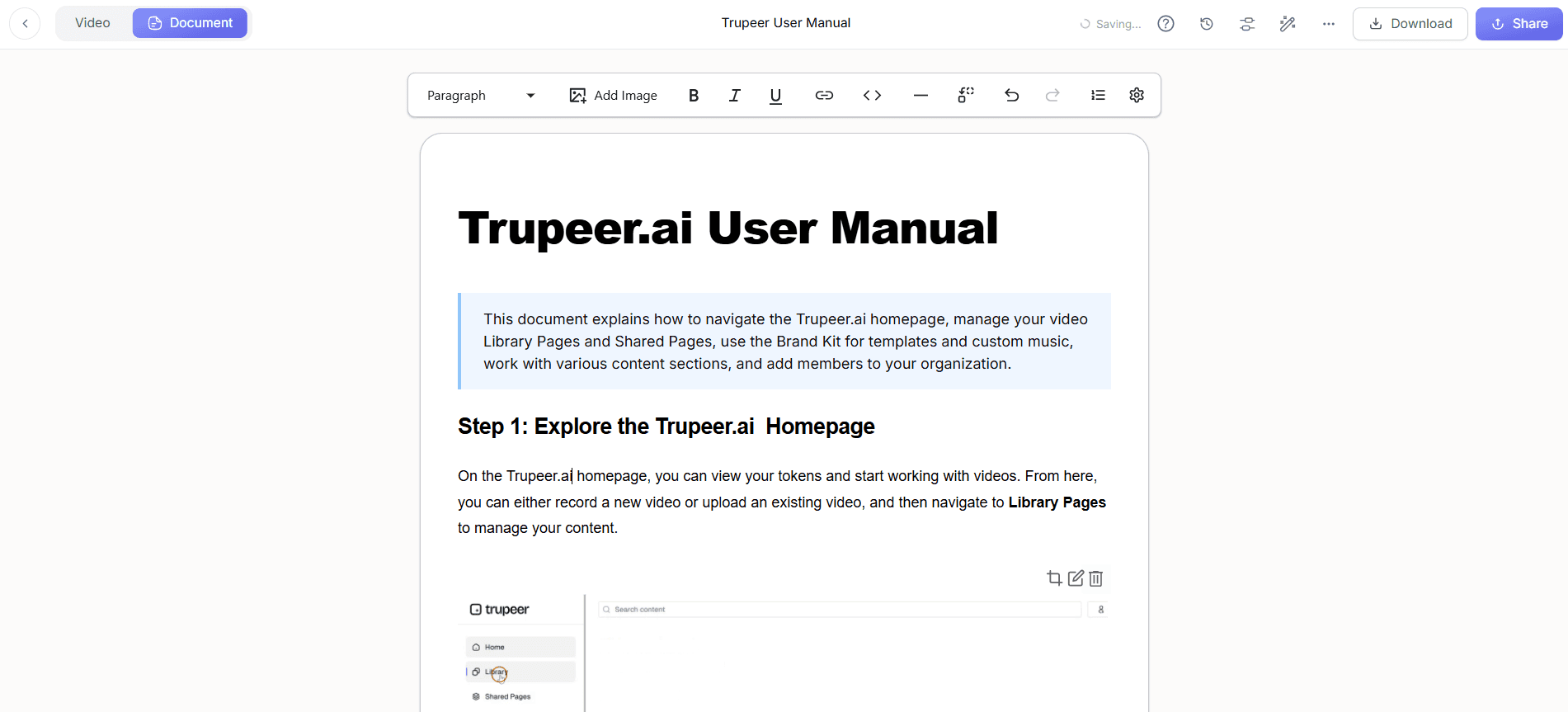
With your recording and narration ready, generate an SOP by selecting the "Automatic SOP generation from any recording" option. Trupeer converts video content into a detailed, text-based procedure that can be easily followed. This includes step-by-step instructions, complete with screenshots from the recording. The SOP is edit-ready, allowing you to make adjustments as needed. Export the document in the desired format, such as PDF or HTML, for easy distribution. This step usually takes less than 5 minutes once the initial setup is complete.
Step 4: Review with AI Voice Cloning
Enhance your documentation with personalized voiceovers using "AI voice cloning from a short sample." Have the expert record a brief voice sample, which Trupeer will use to create a custom voice model. Apply this to your recordings, so they reflect the expert's unique communication style. This personalized touch can help new employees better relate to and understand the material. The cloning process is quick, typically taking about 15 minutes to create the initial voice model.
Step 5: Distribute via Knowledge Base
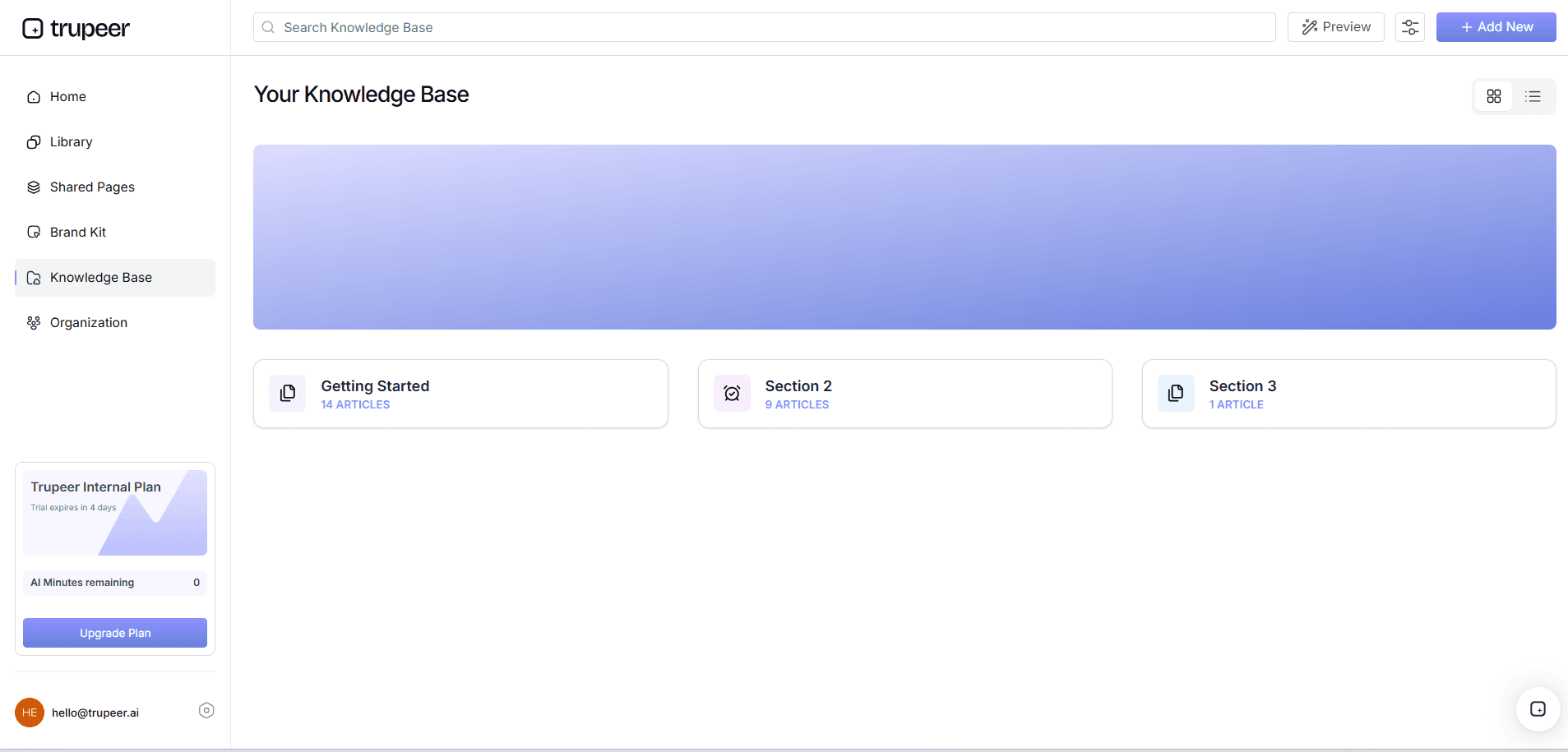
Upload your final documentation and recordings to Trupeer's internal documentation platform knowledge base management. This ensures that all materials are stored in a centralized location, making them accessible to all relevant stakeholders. Use the "AI-searchable knowledge base" feature to allow users to find specific content using keywords and timestamps. This facilitates quick access and retrieval, ensuring that knowledge is always at hand when needed.
Step 6: Monitor Engagement
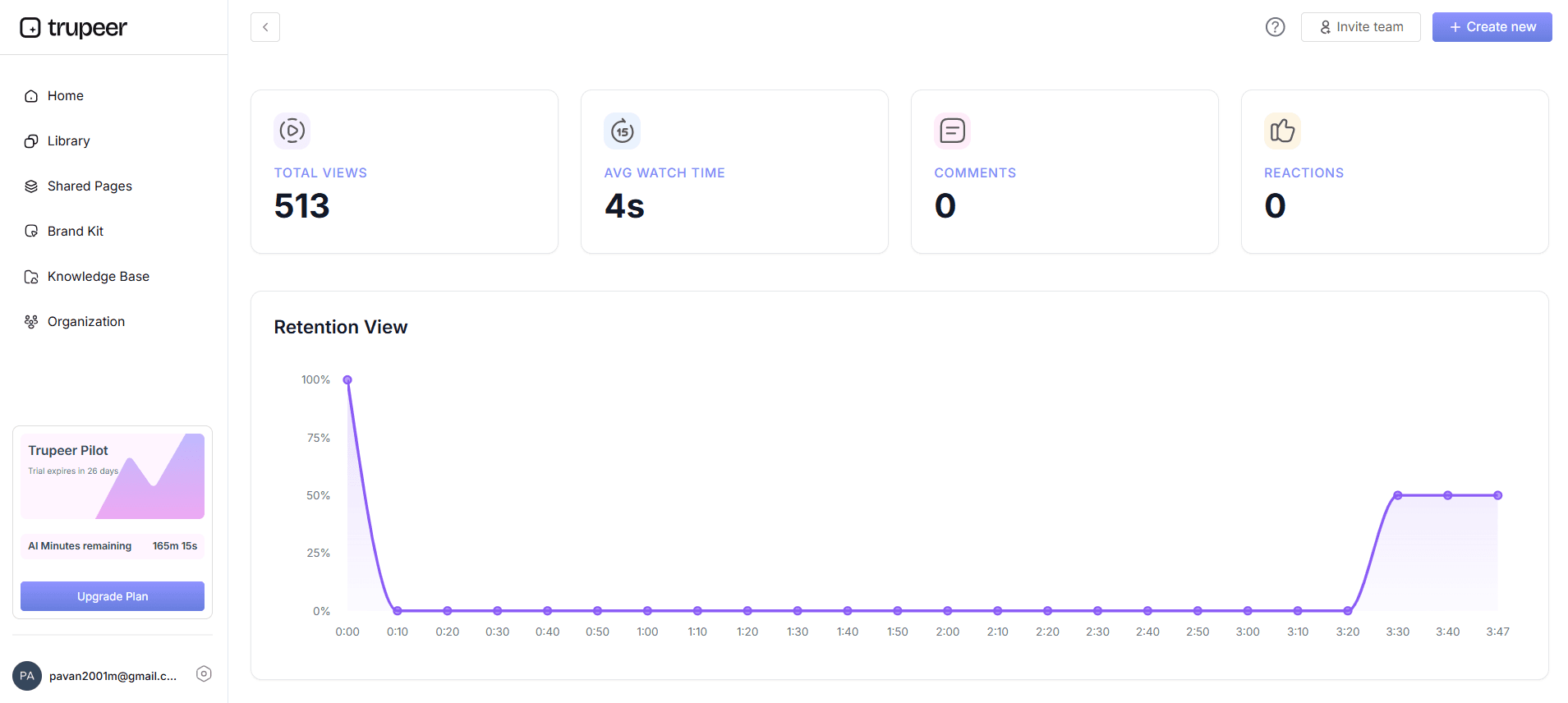
Finally, use Trupeer's "Viewer engagement analytics, drop-off, and heatmaps" to monitor how new hires interact with the documentation. This feature provides insights into which sections are most engaging and where viewers tend to drop off. Use this data to refine and improve your materials, ensuring they meet the needs of your audience. Regularly revisiting this data helps maintain the relevance and effectiveness of your documentation, making it a living resource that evolves with your organization.
What tips help you capture expert knowledge effectively?
Capturing expert knowledge before retirement is a strategic process that requires careful planning and execution. Here are some practical tips to ensure success:
Plan early. Start the documentation process well in advance of the expert's retirement to allow ample time for capturing and refining knowledge.
Use structured interviews. Conduct interviews with the expert to extract tacit knowledge that might not be apparent in daily workflows, using tools like a Scribe alternative comparison.
Involve multiple perspectives. Include input from colleagues who work closely with the expert to ensure a comprehensive understanding of their role and knowledge.
Regularly update documentation. Keep your documentation current by revisiting it periodically and updating it as processes evolve.
Standardize formats. Use a documentation app tool to maintain consistency across all materials, making them easier to follow and understand.
Encourage knowledge sharing. build a culture of knowledge sharing within the organization to ease future transitions and reduce reliance on single points of expertise.
Test the documentation. Have new hires use the documentation to perform tasks and gather feedback to identify areas for improvement.
Frequently asked questions
How do you ensure the accuracy of captured knowledge?
Ensuring accuracy involves a thorough review process. After capturing the expert knowledge, it's crucial to have both the expert and other knowledgeable team members review the documentation. This collaborative approach helps identify and correct any inaccuracies. also, using Trupeer's AI tools, like automatic AI narration and voice cloning, can enhance the accuracy by ensuring the content closely matches the expert's original explanations. Regular updates and feedback loops with the team are also essential to maintain the document's accuracy over time.
What should be included in succession planning documentation?
Effective succession planning documentation should include detailed process descriptions, key contacts, tools and systems used, and any proprietary knowledge or techniques. It's also important to document the reasoning behind certain processes and decisions to provide context. Visual aids like videos or screenshots can enhance understanding. Using Trupeer's AI tools, such as screen recording with auto-zoom and SOP generation, can help create comprehensive and clear documentation. Including an FAQ section within the documentation can also address common queries from successors.
Can Trupeer handle multilingual documentation?
Yes, Trupeer can manage multilingual documentation through its AI translation feature. This allows you to translate documentation into 40+ languages, ensuring accessibility for non-English speaking team members. The translation process is efficient and integrates lip-sync technology, making it particularly effective for video content. To explore how this can support your succession planning, ai/translation">video localization tool. This feature ensures that your documentation is inclusive and can be used by a global workforce, enhancing the transfer of knowledge across diverse teams.
Why is AI important in succession planning documentation?
AI simplifies and enhances the process of capturing and transferring knowledge. It automates repetitive tasks like transcription and SOP generation, saving time and reducing errors. AI also enables advanced features such as voice cloning and searchable knowledge bases, which improve the usability and accessibility of documentation. By using AI, organizations can ensure that their documentation is comprehensive and up to date, providing a solid resource for new employees. This technological edge is crucial for maintaining operational continuity and efficiency as key personnel retire.
Does Trupeer support collaborative documentation processes?
Yes, Trupeer supports collaborative documentation processes through its platform features. It enables multiple users to contribute to and review documentation, ensuring that the final product is comprehensive and accurate. The platform includes tools for collaborative review and approval workflows, allowing teams to work together smoothly. This collaboration is particularly important in capturing complex processes that require input from various experts. By facilitating teamwork, Trupeer helps organizations create more thorough and reliable documentation, which is essential for effective succession planning.
How do you retain institutional knowledge before a key employee leaves?
Record what they know while they're still there and turn it into reusable documentation. Trupeer AI captures an expert's screen workflows and auto-generates videos and step-by-step guides, so critical processes stay with the team long after the person who built them moves on.
Powiązane blogi