Trupeer Blog
Podsumuj
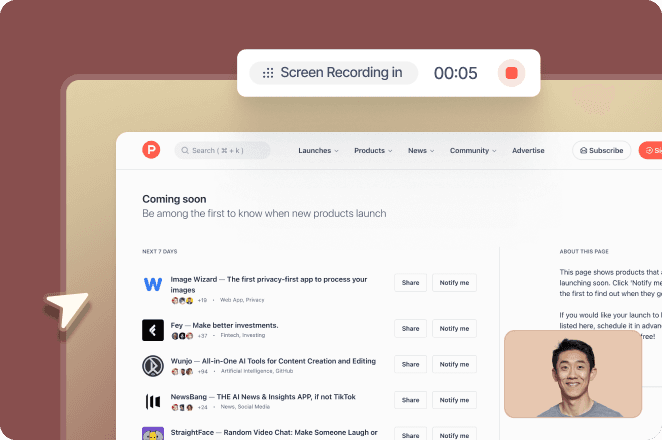
Imagine a bustling service desk where every second counts. Your team is inundated with tickets, and the pressure to resolve issues quickly mounts. A well-organized IT knowledge base could be the key to alleviating this pressure. By structuring your articles effectively, you can enable your service desk to deflect up to 40% of incoming tickets. This isn't just about reducing workload; it's about improving the quality of support your team provides. Consider the best knowledge base examples that illustrate how strategic organization can transform your service desk operations. With the right structure, your team can focus on complex issues while users find answers independently. This shift not only boosts efficiency but also enhances user satisfaction, leading to a more simplified and effective support operation.
Why does IT knowledge base structure matter?
A well-structured IT knowledge base is crucial for several reasons. First, it directly impacts the efficiency of your service desk by allowing quick access to information. When articles are organized logically, service desk agents can find solutions faster, reducing average handling time. This efficiency translates into cost savings and improved service levels. Second, an organized knowledge base significantly enhances self-service capabilities for end users. When users can easily find answers, it reduces the volume of tickets logged, allowing your team to focus on more critical issues.
Also, the structure of your knowledge base affects how your team collaborates. A disorganized knowledge base can lead to duplicate content, conflicting information, and wasted effort. By implementing a clear organizational strategy, you enable better knowledge sharing and consistency across your team. For customer success teams, a structured knowledge base is a valuable asset that supports proactive engagement and issue resolution. It becomes a foundation for building trust and improving customer satisfaction. Integrating this structure into a customer success workflow ensures that your support and success teams are aligned, working towards common goals.
What are the benefits of a structured IT knowledge base?
Organizing your IT knowledge base brings several tangible benefits that can transform your service desk operations.
Improved Response Times. A structured knowledge base allows for quick retrieval of information, leading to faster issue resolution and reduced wait times for end users.
Enhanced Self-Service. Users can find answers independently, reducing the number of support tickets. This self-service capability is facilitated by a well-structured knowledge base one.
Consistency in Support. With a standardized structure, information is consistent across all articles, ensuring users receive the same guidance regardless of who accesses the knowledge base.
Increased Agent Efficiency. Agents spend less time searching for information and more time solving complex issues, enhancing productivity and job satisfaction.
Scalable Solution. As your organization grows, a well-organized knowledge base scales effortlessly, accommodating new content without losing effectiveness.
Reduced Training Time. New agents can onboard faster with a clear, structured resource at their fingertips, minimizing the learning curve and accelerating productivity.
Teams ship this workflow end-to-end using Trupeer's AI video platform, which turns raw recordings into polished output without an editor.
Which Trupeer features help you organize your IT knowledge base effectively?
Trupeer offers several features designed to enhance the organization and accessibility of your IT knowledge base, making it easier for your team to manage and users to navigate.
AI-searchable knowledge base
Trupeer's AI-searchable knowledge base is a big shift for service desks. This feature indexes every recording with timestamp-level deep links, allowing users to jump directly to the relevant section of a video. This capability minimizes the time spent searching for answers and maximizes the usefulness of each recorded session. By integrating this feature, your knowledge base becomes a dynamic tool that adapts to the needs of your users, providing precise information exactly when it's needed.
Automatic SOP generation
Creating and maintaining standard operating procedures (SOPs) can be time-consuming. Trupeer simplifies this process with its auto-generated documentation. This feature automatically generates SOPs from any recording, producing edit-ready documents that can be exported in various formats. It ensures that your procedures are consistently documented and easily accessible, supporting efficient service desk operations and reducing the risk of errors in task execution.
AI screen recording with auto-zoom and click detection
Capturing detailed processes is effortless with Trupeer's AI screen recording features. The auto-zoom and click detection capabilities highlight key actions, ensuring that recordings are clear and focused on the essential parts of the process. This feature is particularly useful for creating training materials and troubleshooting guides, as it emphasizes the critical steps users need to understand. Your service desk can create high-quality instructional content quickly, enhancing both internal training and user support resources.
Multi-format export
Flexibility in content distribution is vital for a knowledge base. With Trupeer's multi-format export options, you can convert recordings into various formats such as MP4, HTML, PDF, and SCORM. This versatility ensures that your knowledge base content is accessible across different platforms and devices, catering to diverse user preferences. It allows for smooth integration into existing systems and workflows, ensuring that your knowledge base remains a central and accessible resource for all users.
Brand kits and branded templates
Maintaining a consistent visual style across your knowledge base enhances user experience and reinforces your brand identity. Trupeer provides brand kits and branded templates that ensure all content adheres to your organization's guidelines. This consistency not only strengthens your brand but also creates a professional and cohesive look that users recognize and trust. By standardizing the appearance of your knowledge base materials, you facilitate easier navigation and improve overall user satisfaction.
How do you organize your IT knowledge base step by step with Trupeer?
Step 1: Record Essential Processes
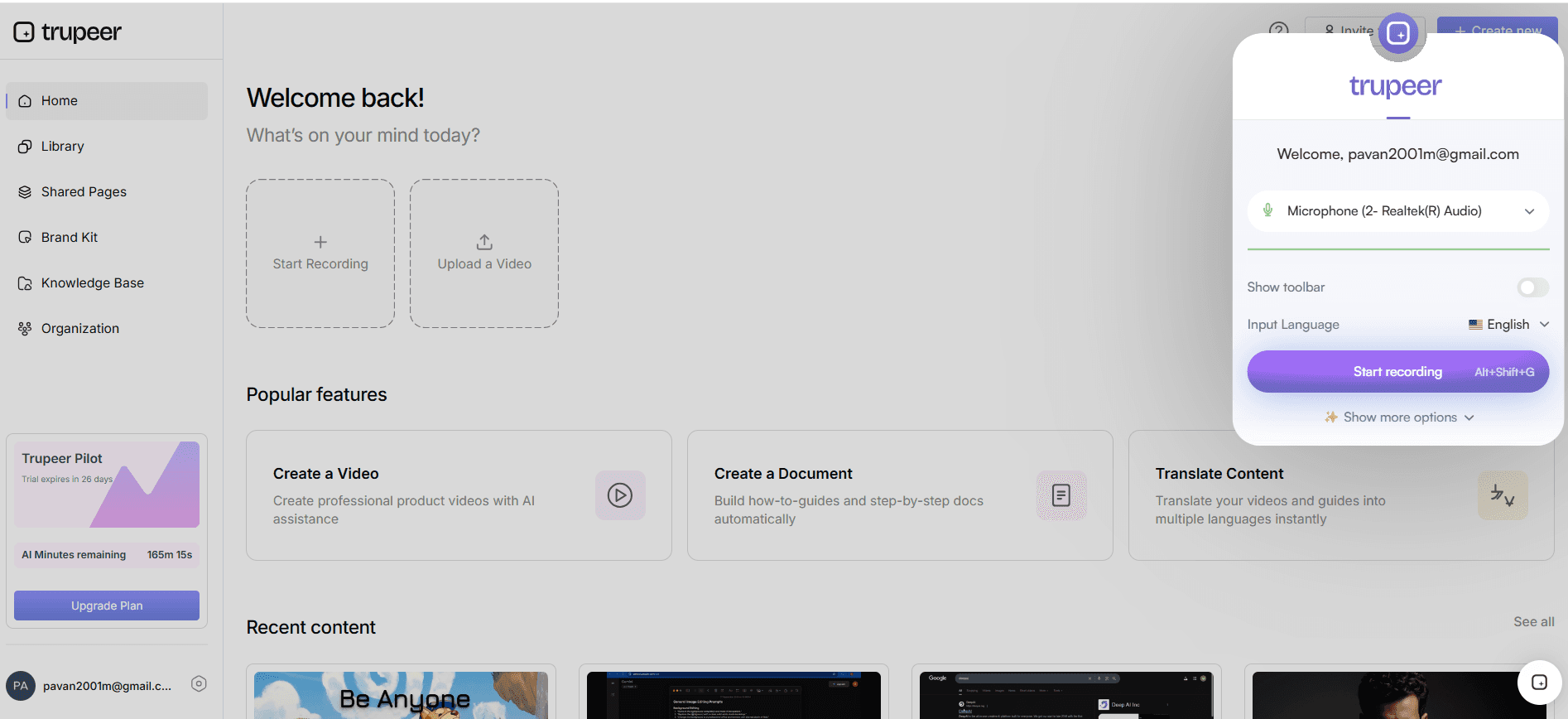
Start by using Trupeer's browser-based recorder or desktop app to capture key processes. This tool doesn't require any installation, making it accessible instantly. Click "Record" and choose whether to include audio or webcam input. The AI screen recording with auto-zoom and click detection ensures that every significant action during the process is highlighted. This feature is particularly useful for capturing detailed workflows that require precise visual guidance. Once the recording is complete, Trupeer processes and saves it automatically, allowing you to review and annotate the recording immediately. This step sets a solid foundation for creating comprehensive knowledge base articles.
Step 2: Generate Documentation
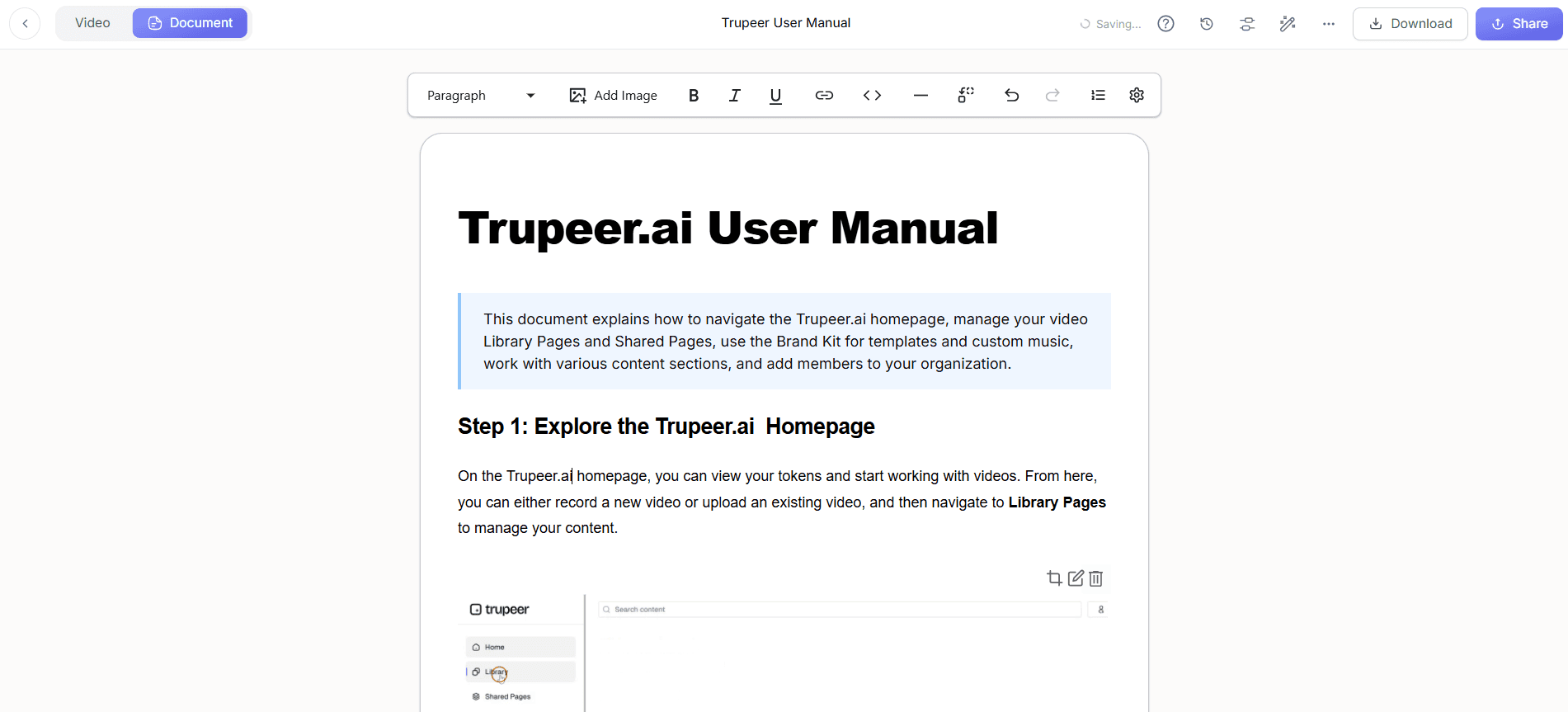
After recording, use Trupeer's automatic SOP generation. This feature transforms your recordings into edit-ready documents, providing a clear and structured template for your knowledge base. Simply select the recording and click on "Generate SOP." Trupeer analyzes the video, identifies key actions, and formats them into structured documentation. This process typically takes only a few minutes, ensuring you have a draft ready for review quickly. Edit the generated document to add any additional context or instructions needed, then save it for integration into your knowledge base. This step helps maintain consistency and accuracy across your documentation.
Step 3: Translate and Localize Content
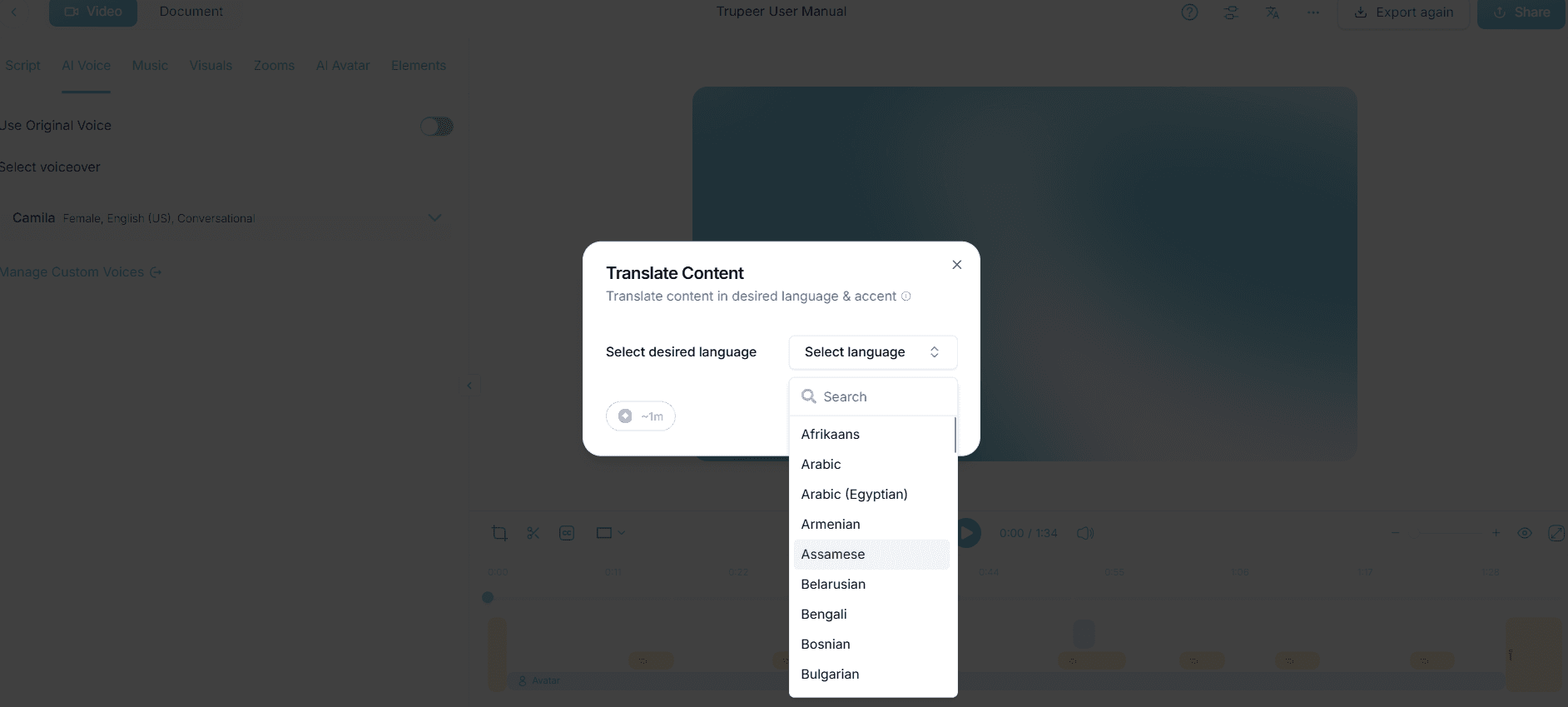
To cater to a diverse user base, use Trupeer's AI translation and dubbing capabilities. Select the document or video you want to translate and choose from over 40 available languages. Trupeer automatically translates the text and synchronizes lip movements for video content, ensuring a natural viewing experience. This feature is invaluable for organizations operating in multilingual environments. The translation process is quick and requires minimal manual intervention, making it an efficient way to expand your knowledge base's reach. Consider nuances in language and context to ensure translations meet cultural expectations effectively.
Step 4: Enhance with AI Voiceovers
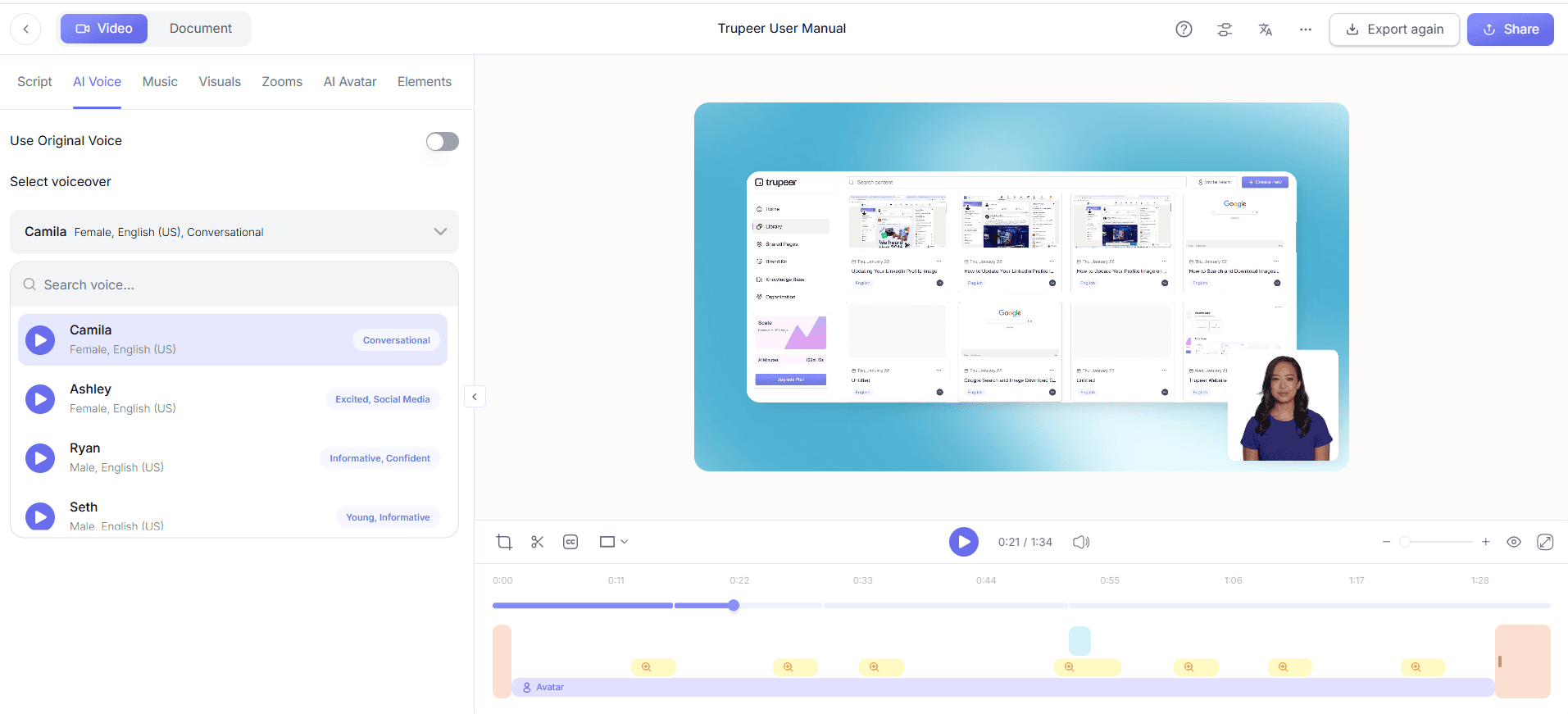
For videos, add AI-generated voiceovers to improve engagement and accessibility. Trupeer offers over 65+ natural voices with adjustable tone and pace. Click on "Add Voiceover" and choose the voice that best suits your content. This feature is particularly useful for creating instructional videos where clarity and engagement are crucial. The AI voiceover can be customized to match the tone of your organization, ensuring consistency across all media. The process is swift, and the results are smoothly integrated into your videos, providing a polished and professional finish.
Step 5: Implement Consistent Branding
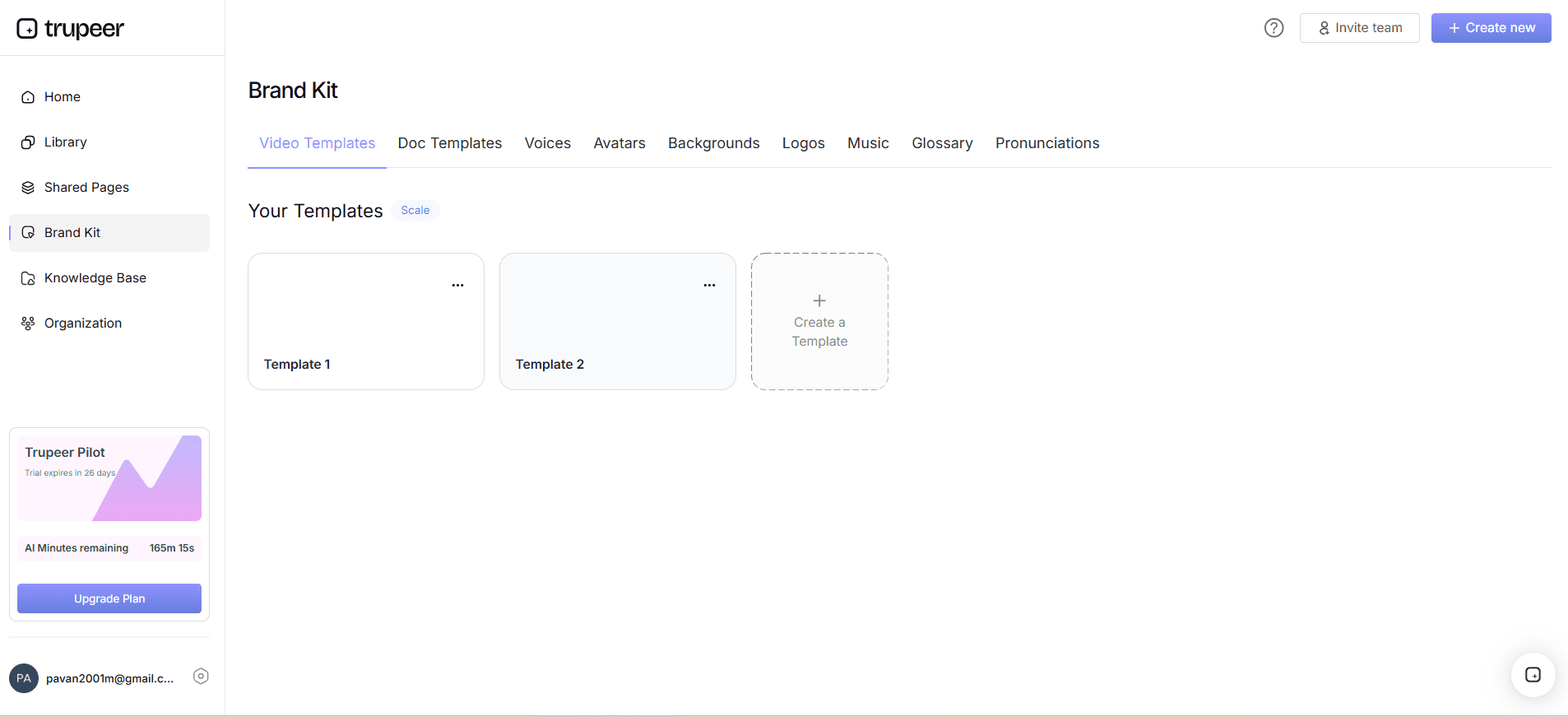
Use Trupeer's brand kits and branded templates to ensure all content aligns with your company's visual identity. Access the "Brand Kit" feature and upload your brand assets, such as logos, color schemes, and fonts. Apply these templates to your videos and documents to maintain a consistent look and feel across all your knowledge base materials. This consistency reinforces your brand and enhances user experience by creating a recognizable and trustworthy resource. Trupeer's templates are customizable, allowing for flexibility while adhering to brand standards. When SOPs come into the same conversation, a Scribe alternatives comparison helps clarify the scope.
Step 6: Distribute Content Effectively
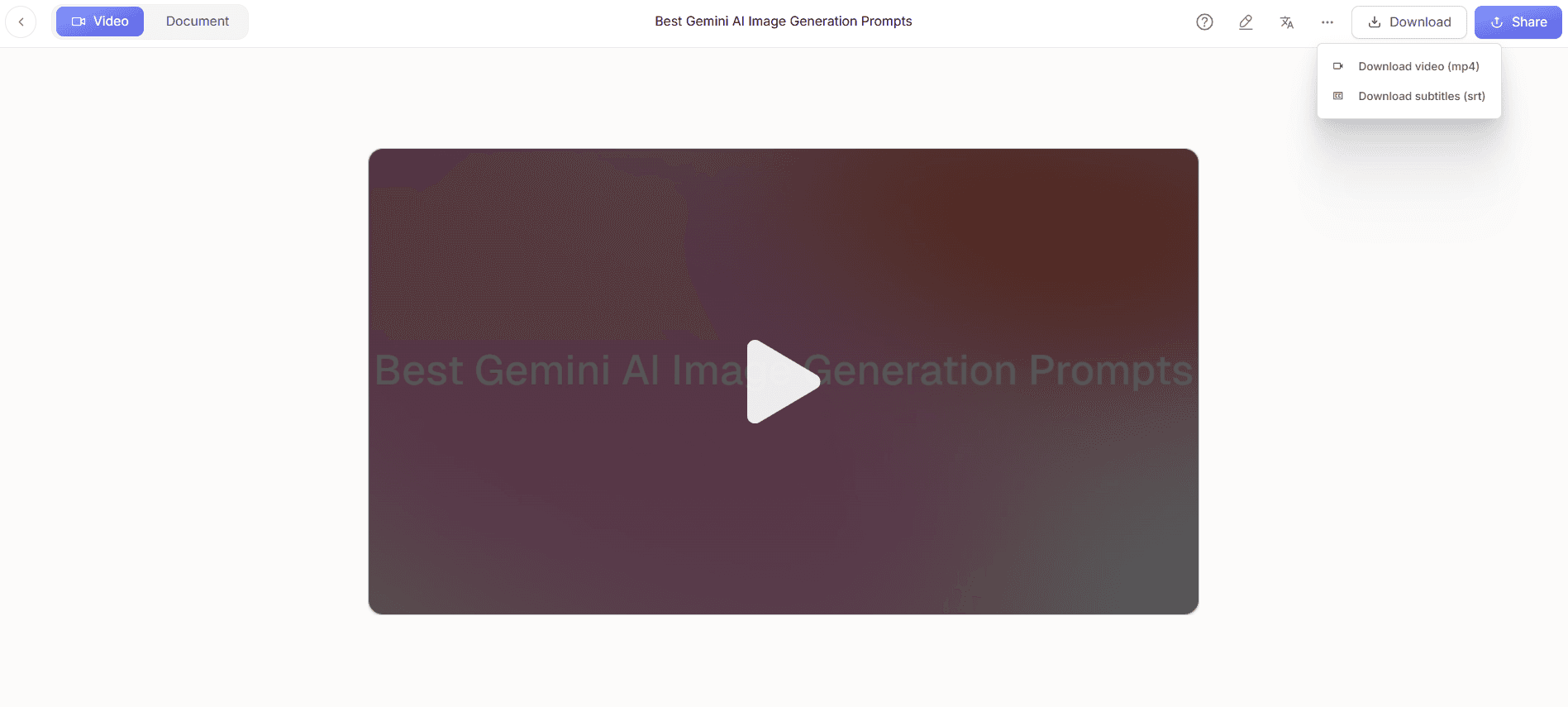
Finally, distribute your knowledge base content using Trupeer's custom-domain hosting with SSO and embeddable video widgets. After finalizing your content, use the "Share" feature to host videos on a custom domain, making them easily accessible to your users. Enable single sign-on (SSO) for secure and simplified access. also, use embeddable widgets to integrate videos directly into other applications or websites, providing in-context guidance. This distribution strategy ensures that your knowledge base content is available where and when your users need it, maximizing its impact.
What tips help you organize your IT knowledge base?
Creating a well-structured IT knowledge base requires strategic planning and implementation. Here are some practical tips to ensure your knowledge base is effective and user-friendly.
Prioritize Content Quality. Ensure each article is well-researched and clearly written, focusing on accuracy and clarity.
Use a Consistent Structure. Standardize the format of your articles to make navigation intuitive. A consistent structure helps users find information quickly.
Regularly Update Content. Schedule periodic reviews to keep information current and relevant. Updating ensures that your knowledge base remains a reliable resource.
Incorporate Multimedia. Use videos and images to complement text and provide visual clarity. Multimedia elements enhance engagement and comprehension.
Encourage User Feedback. Implement feedback mechanisms to gather insights on content effectiveness and usability. User feedback helps identify areas for improvement.
Optimize for Searchability. Use clear titles and keywords to improve searchability. An optimized search function helps users find what they need faster.
Monitor Usage Analytics. Use analytics to track how users interact with the knowledge base. Insights from analytics can guide content development and improvements.
Teams weighing tools often start with a Loom alternatives comparison before standardizing on a workflow.
Frequently asked questions
How often should you update your IT knowledge base?
It's recommended to update your IT knowledge base at least quarterly. Regular updates ensure that the information remains accurate and relevant, reflecting any changes in processes, tools, or technologies. By scheduling consistent reviews, you can identify outdated content and make necessary revisions. This practice not only maintains the reliability of your knowledge base but also enhances user trust, as they can rely on the resource for up-to-date information. Regular updates also provide an opportunity to incorporate user feedback, further improving the content's usefulness.
What is the best way to organize knowledge base articles?
The best way to organize knowledge base articles is to use a clear, hierarchical structure that mirrors the user's journey. Begin with broad categories and break them down into subcategories, ensuring each article is easily accessible. Use tags and keywords to improve searchability and consider user behavior when designing the navigation. This approach allows users to quickly locate the information they need, reducing frustration and improving the overall user experience. also, employing a consistent format across articles aids in comprehension and retention.
Does a knowledge base help reduce support tickets?
Yes, a well-organized knowledge base can significantly reduce support tickets. By providing users with easy access to answers and solutions for common issues, you enable them to resolve problems independently. This self-service capability decreases the number of tickets your support team receives, allowing them to focus on more complex issues. also, with resources like AI video translation, you can cater to a broader audience, further enhancing self-service opportunities. This reduction in support tickets leads to improved efficiency and cost savings for your organization.
Can AI improve the effectiveness of a knowledge base?
AI can greatly enhance the effectiveness of a knowledge base. AI technologies, like Trupeer's AI voiceovers and searchable knowledge base features, simplify content creation and retrieval processes. These tools help automate the documentation process, ensuring consistency and reducing manual effort. AI can also improve the search functionality within the knowledge base, allowing users to find relevant information quickly. By using AI, organizations can create a dynamic and responsive knowledge base that meets the evolving needs of its users, ultimately improving satisfaction and engagement.
Why is branding important in a knowledge base?
Branding in a knowledge base is important because it reinforces your organization's identity and builds trust with users. Consistent branding elements, such as logos, color schemes, and fonts, create a cohesive look that users recognize and associate with quality and reliability. This consistency enhances the user experience by making navigation more intuitive and content more engaging. also, a well-branded knowledge base distinguishes your organization from competitors, showcasing professionalism and attention to detail. Users are more likely to trust and rely on a knowledge base that reflects a strong and consistent brand identity.
Related Blogs