Trupeer Blog
Podsumuj
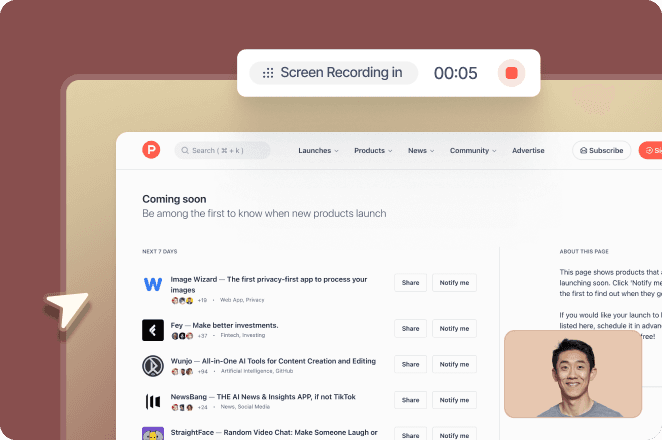
Imagine a scenario where your clients are constantly reaching out to your support team with repetitive questions, leading to an overwhelming workload for your staff. This not only strains your resources but also delays response times, frustrating clients. A well-structured client knowledge base portal can be a big shift in such situations. By facilitating self-service access, it enables your clients to find answers independently. But how do you balance open access with content control? A knowledge base one doesn't just offer convenience; it enhances your service efficiency. For instance, companies that implement a solid client knowledge base often see a 60% reduction in support tickets within the first year. This guide is for customer success managers, product managers, and anyone responsible for ensuring client satisfaction and efficient service delivery. It will walk you through what to include in your portal and how to expertly manage access.
Why does managing a client knowledge base portal matter?
For many businesses, client satisfaction and efficient service delivery are major priorities. A client knowledge base portal serves as a centralized repository of information that clients can access to resolve their queries without waiting for support. If your clients are frequently contacting support for basic information, it indicates an inefficiency in your communication process. By implementing a client knowledge base, you address this gap, allowing your support team to focus on more complex issues that require human intervention.
Also, having a well-managed knowledge base is vital for businesses looking to simplify their product marketing workflow. It ensures that customers can easily access up-to-date product information, leading to more informed decision-making. This, in turn, can have a direct impact on your bottom line. When clients have easy access to accurate and timely information, it builds trust and confidence in your brand. This is particularly important in competitive markets where customer loyalty can be volatile. By providing a self-service portal, you not only improve client satisfaction but also create opportunities for upselling and cross-selling, as clients are more likely to explore additional services when they have a clear understanding of your offerings.
What are the benefits of a client knowledge base portal?
A client knowledge base portal offers several tangible benefits that can significantly enhance your business operations.
Reduce support tickets. By providing clients with direct access to information, a best knowledge base reduces the volume of support tickets by up to 60%, freeing up your team to focus on complex issues.
Enhance client satisfaction. Clients appreciate the ability to instantly find answers to their questions without waiting for support, leading to higher satisfaction scores and improved client retention rates.
Improve onboarding efficiency. A well-organized knowledge base simplifies the onboarding process for new clients, reducing the time it takes for them to become familiar with your products and services.
Maintain consistency in information. Centralizing your information ensures that all clients have access to the same, up-to-date data, minimizing the risk of discrepancies and errors in client communications.
Facilitate product marketing. A comprehensive knowledge base can support your AI-powered video tool efforts by providing detailed product information that helps clients make informed purchasing decisions.
Optimize internal resources. By reducing the dependency on support staff for routine queries, you can allocate resources more effectively, focusing on strategic initiatives that drive business growth.
Which Trupeer features help you build and manage a client knowledge base portal?
Trupeer offers a solid set of features designed to make building and managing a client knowledge base portal both efficient and effective.
AI screen recording with auto-zoom and click detection
Trupeer's AI screen recording feature allows you to create clear, instructional videos by automatically zooming in on areas where clicks occur. This is particularly useful for creating step-by-step guides within your knowledge base. When clients can visually follow along with a process, it reduces confusion and enhances learning. The auto-zoom ensures that every key action is highlighted, making your recordings more engaging and informative.
Automatic SOP generation from any recording
With Trupeer, every screen recording can be transformed into an edit-ready SOP (Standard Operating Procedure). This feature saves time and effort, as you don't need to manually transcribe or format instructions. The documentation generator produces SOPs that can be easily exported in multiple formats, ensuring that your knowledge base content remains dynamic and up-to-date. This is crucial for maintaining consistency and accuracy across your client-facing materials.
AI-searchable knowledge base with timestamp deep-links
This feature makes Trupeer's knowledge base highly efficient for users looking for specific information. By indexing every video with timestamp-level deep links, clients can jump directly to the part of a video that answers their question. This not only saves time but also enhances user experience by providing precise and relevant content. Trupeer's searchable knowledge base ensures that clients can quickly find the information they need without sifting through irrelevant content.
Multi-format export: MP4, HTML, PDF, SCORM
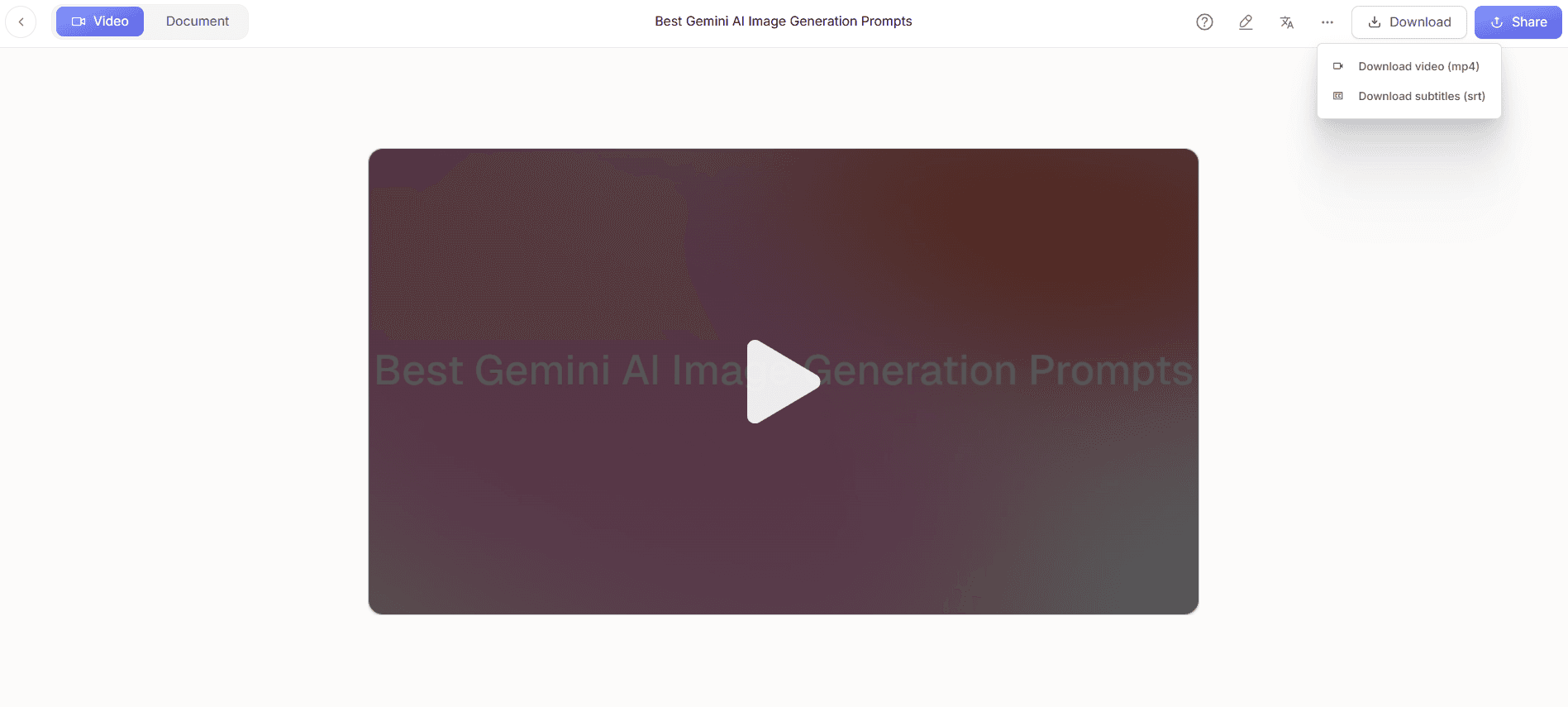
Trupeer's multi-format export functionality is a significant advantage for businesses that need to cater to diverse client preferences. Whether clients prefer to watch a video, read a document, or integrate content into their learning management system, Trupeer delivers. This flexibility ensures that your knowledge base can serve a broad audience, accommodating various learning styles and technical requirements.
Viewer engagement analytics, drop-off, and heatmaps
Understanding how clients interact with your knowledge base is essential for continuous improvement. Trupeer provides detailed analytics on viewer engagement, allowing you to identify which sections of your content are most effective and which may need refinement. By analyzing drop-off rates and heatmaps, you can make data-driven decisions to enhance your content and improve client satisfaction. This feature is invaluable for optimizing your knowledge base generator tool and ensuring it remains a valuable resource for your clients.
How do you build and manage a client knowledge base portal step by step with Trupeer?
Step 1: Record a Demonstration
Begin by using Trupeer's AI screen recording with auto-zoom and click detection to capture a clear demonstration video. Open the Trupeer recorder from your browser or desktop app, and select the screen area to capture. As you navigate through your process, Trupeer automatically zooms in on areas where clicks occur, enhancing viewer focus. This intelligent recording makes your content visually engaging without requiring post-edit adjustments. The recording process is smooth, allowing you to review and finalize within minutes. For longer demonstrations, consider breaking down content into chapters for easier navigation.
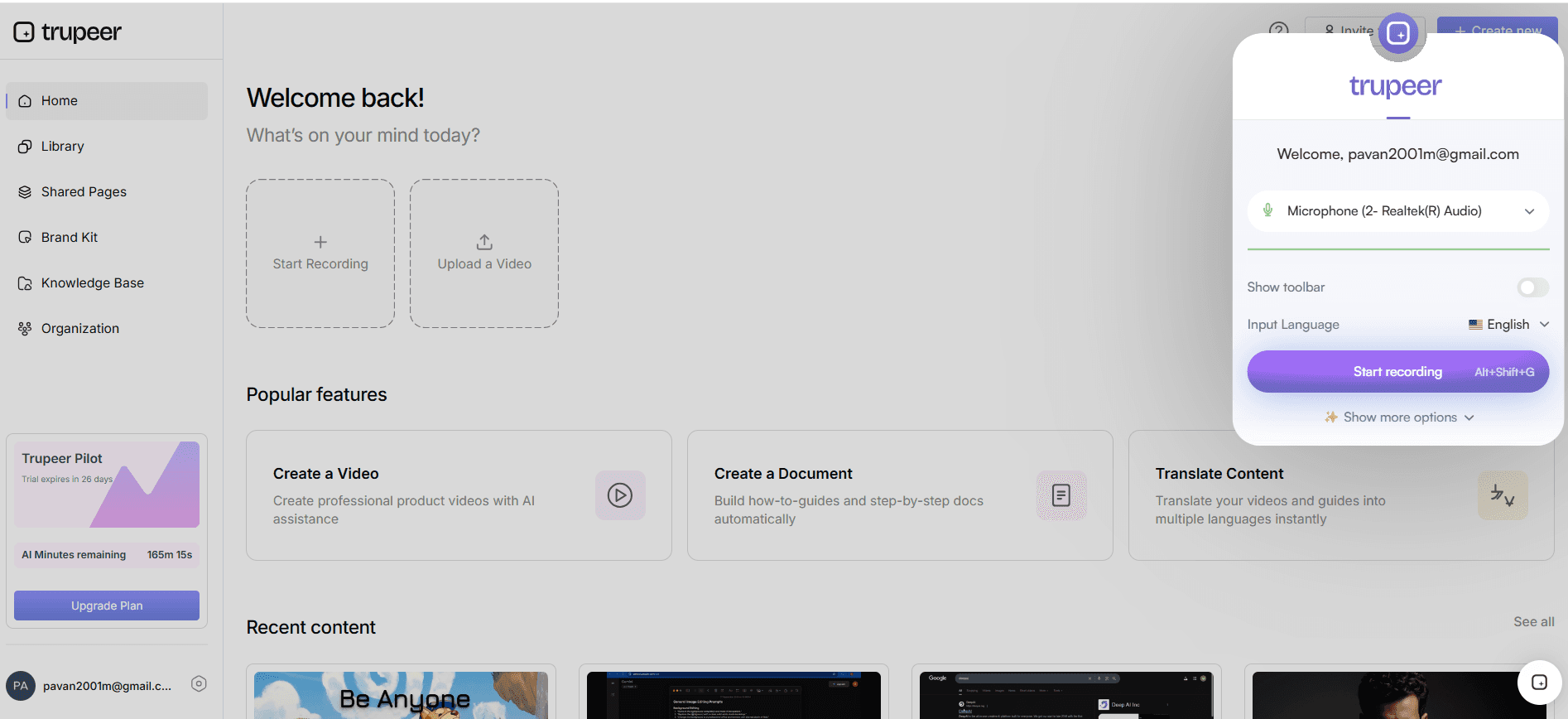
Step 2: Generate an SOP from the Recording
Once your video is recorded, use Trupeer's automatic SOP generation feature. Navigate to the recording menu and select "Generate SOP." Trupeer instantly transcribes your video into a detailed, editable document. This document is exportable in formats like HTML and PDF, making it easy to integrate into your knowledge base. The auto-generated SOP captures each step accurately and can be adjusted for clarity or additional context. This step typically takes a few seconds, allowing you to focus on refining content rather than creating it from scratch.
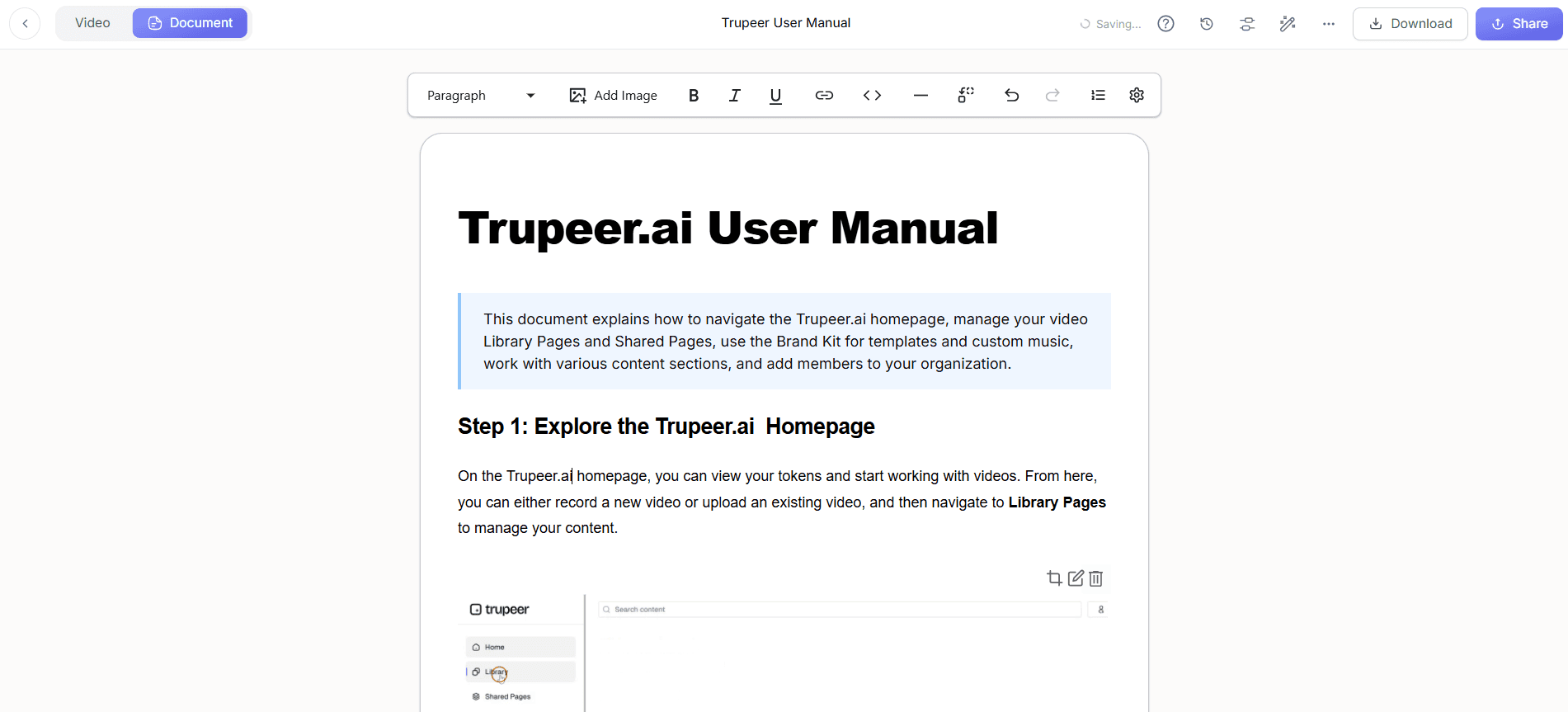
Step 3: Translate for Global Reach
Use Trupeer's AI translation into 40+ languages to make your knowledge base accessible to a global audience. After generating your SOP, click on "Translate" and select the desired languages. Trupeer's AI ensures accurate translation with lip-sync capabilities, preserving the natural flow of content. This process is quick, usually completing translations in under a minute per language. For non-English speakers, AI dubbing provides an additional layer of accessibility, enhancing user experience regardless of language barriers. When SOPs come into the same conversation, a Scribe alternatives comparison helps clarify the scope.
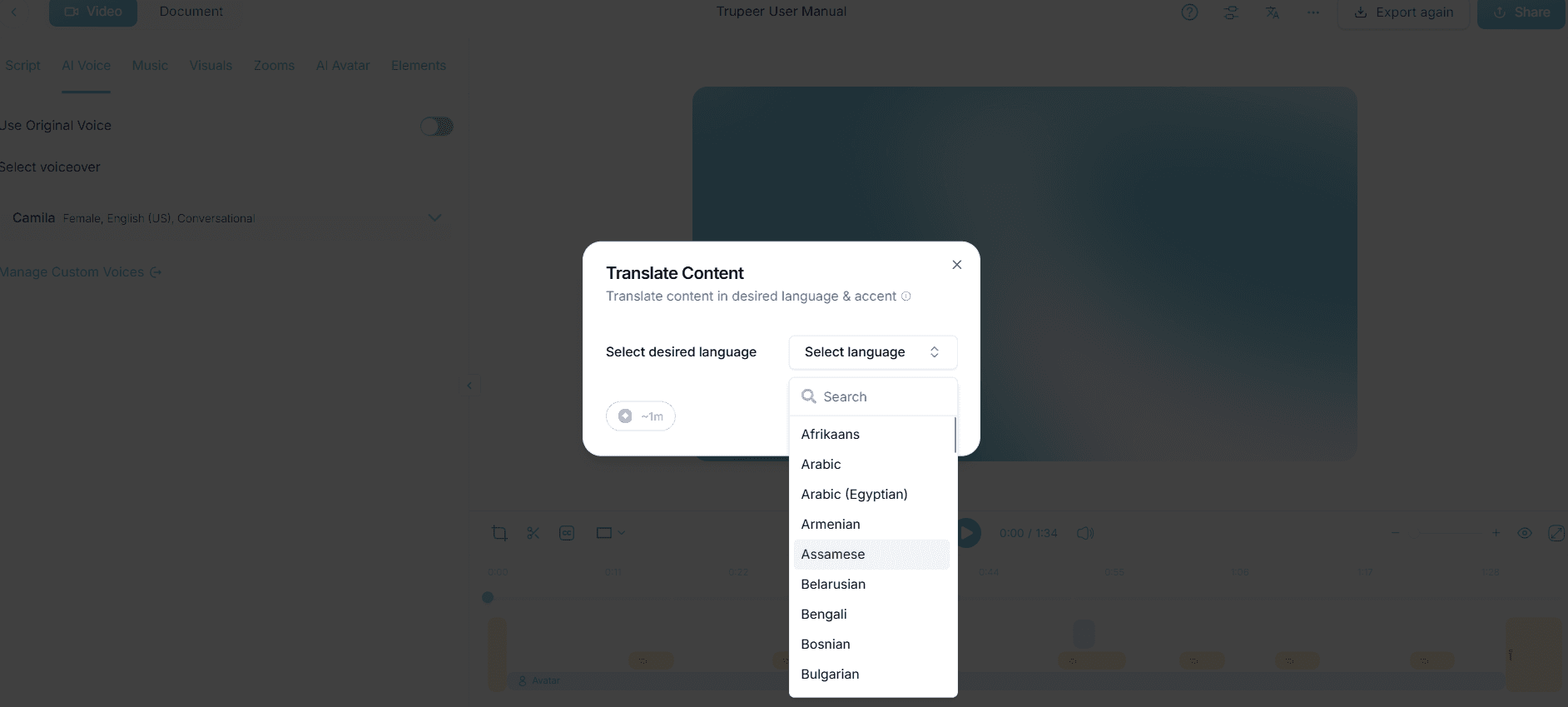
Step 4: Create a Searchable Knowledge Base
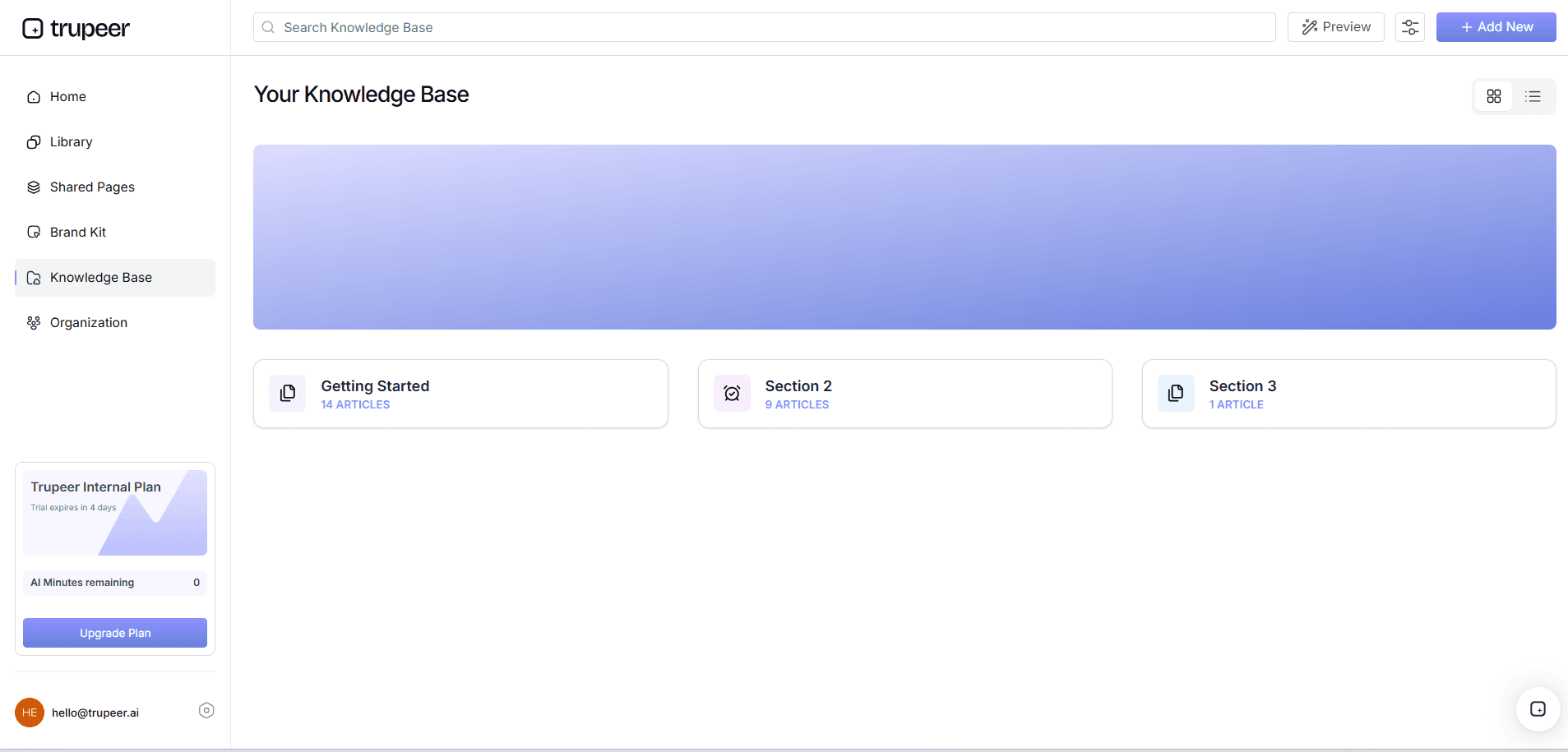
Develop a comprehensive, AI-searchable knowledge base by using Trupeer's platform. Upload your videos and documents to Trupeer, where they are indexed with timestamp deep-links. This feature allows users to quickly locate specific information within your content. To set this up, go to the knowledge base section in Trupeer, and drag your files into the upload area. This setup ensures that every piece of content is accessible and searchable, reducing the time clients spend searching for answers. Regularly update your content to reflect changes, maintaining relevance and accuracy.
Step 5: Monitor Engagement and Optimize Content
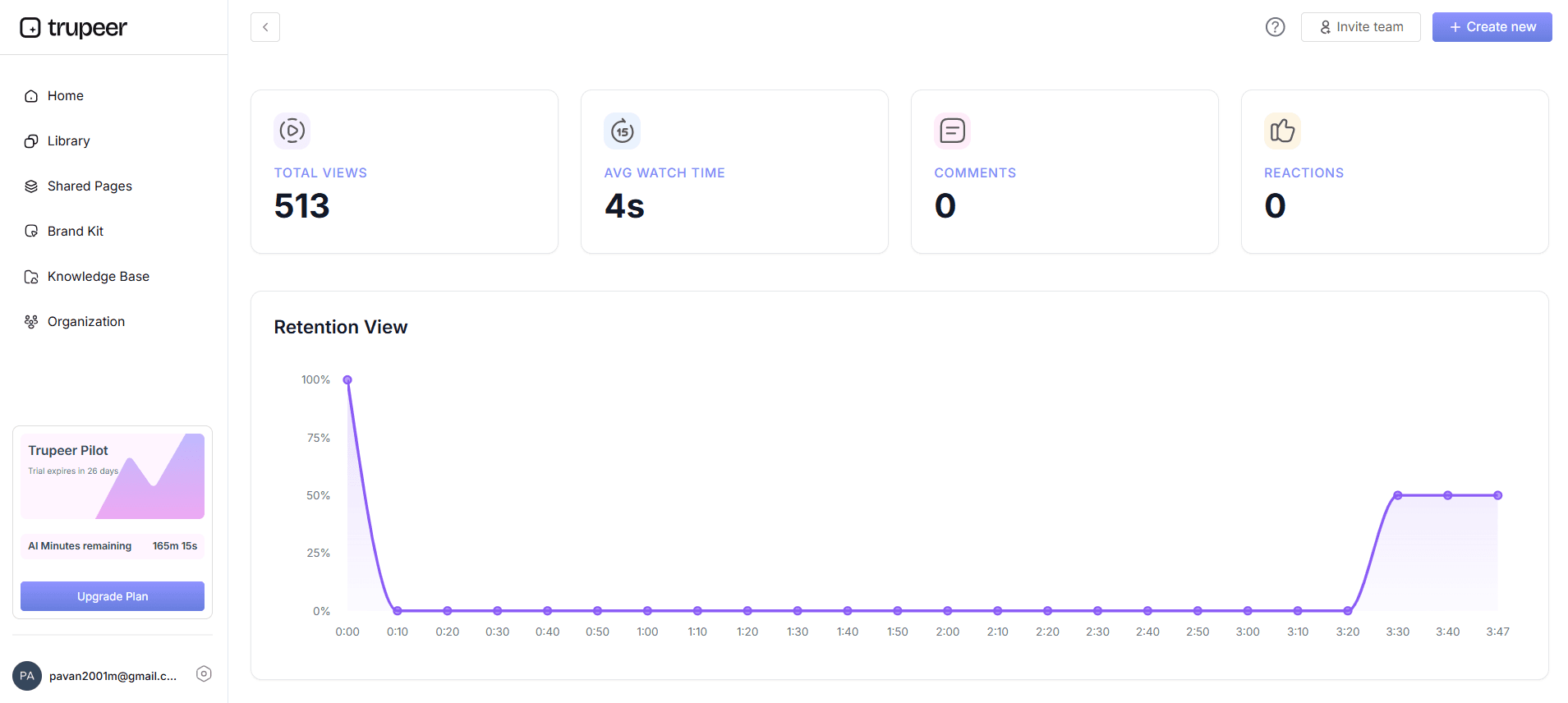
Use Trupeer's viewer engagement analytics to evaluate how clients interact with your knowledge base. Access the analytics dashboard to view metrics like drop-off rates and heatmaps. This data provides insights into which parts of your content are most effective and where improvements may be needed. Adjust your content strategy based on these insights, such as refining sections with high drop-off rates or enhancing popular topics. This iterative process is essential for maintaining a knowledge base that consistently meets client needs.
Step 6: Customize and Deploy
Finally, personalize your client knowledge base portal using Trupeer's brand kits and branded templates. Navigate to the customization menu to apply your brand's color schemes and logos. This step reinforces brand identity and ensures a consistent visual experience across all client interactions. Once customized, deploy your knowledge base on a custom domain with SSO for secure access. This deployment phase is straightforward, with Trupeer handling technical integrations, allowing your team to focus on client engagement and content updates.
What tips help you manage a client knowledge base portal?
Managing a client knowledge base portal effectively requires strategic planning and execution. Here are practical tips to enhance your knowledge base management.
Regularly update content. Schedule routine reviews to ensure all information is current and relevant, preventing outdated content from misleading clients.
Incorporate multimedia elements. Use videos and images to complement text, catering to various learning preferences and improving content retention.
use analytics for improvement. Analyze engagement data to identify content gaps and areas for enhancement, ensuring your knowledge base evolves with client needs.
Standardize format and style. Consistent formatting across documents and videos enhances readability and builds a professional appearance.
Encourage client feedback. Solicit feedback to gain insights into user satisfaction and potential areas for improvement, building a client-centered approach.
Integrate with other tools. use integrations with CRM and support systems to simplify information flow, enhancing service delivery and efficiency.
Secure access appropriately. Implement role-based access controls to protect sensitive information, ensuring that users only see content relevant to their needs.
Teams weighing tools often start with a Loom alternatives comparison before standardizing on a workflow.
Frequently asked questions
How do you ensure the information in a knowledge base is accurate?
Regular updates and reviews are critical for maintaining accuracy in a knowledge base. Assign a dedicated team to audit content periodically, checking for outdated or incorrect information. Use client feedback to identify areas needing revision and use analytics to spot common user questions that aren't effectively addressed. Integrating AI video translation tools can also help in ensuring consistency across different languages, minimizing errors during localization.
What security measures can be implemented for a client knowledge base?
Implementing role-based access controls is essential for securing a client knowledge base. This approach ensures users only access information relevant to their roles, protecting sensitive data from unauthorized viewing. also, using secure protocols for data transmission, regular security audits, and solid authentication methods like SSO (Single Sign-On) enhances overall security. Deploying on a custom domain can further fortify your knowledge base's security infrastructure.
Why is client feedback important to a knowledge base?
Client feedback is invaluable for continuously improving a knowledge base. Feedback provides insights into user satisfaction and helps identify areas for enhancement, ensuring the knowledge base remains relevant and useful. Encourage clients to share their experiences and suggestions, which can highlight content gaps or usability issues. By responding to feedback, you demonstrate a commitment to client satisfaction, building trust and engagement.
Can a knowledge base portal support multiple languages?
Yes, a well-designed knowledge base portal can support multiple languages, expanding its reach to a global audience. Tools like Trupeer's AI translation and dubbing capabilities enable content to be accurately translated and synchronized with audio, maintaining the integrity of the original material. This feature is crucial for businesses with diverse client bases, ensuring all users access information in their preferred language without compromising on quality or detail.
What are the best practices for organizing a knowledge base?
Effective organization is key to a successful knowledge base. Begin by categorizing content into clear, logical sections that align with user needs and common queries. Use searchable tags and keywords to facilitate easy navigation. Incorporate multimedia content judiciously to enhance understanding. Lastly, ensure all information is consistently formatted, which aids readability and professionalism. Regularly evaluate the structure to adapt to evolving client requirements and industry standards.
How does IT regain control over shadow-IT tool adoption?
Shadow IT shrinks when the sanctioned tool is genuinely easier than the workaround, with admin controls. Trupeer publishes your guides to a searchable internal knowledge base software, kept current with version history.
Powiązane blogi