4.8/5
AI SAP Enablement Platform
Build an SAP enablement library your process owners can actually maintain. Capture transactions once, generate videos and work instructions, and keep both current through every release.
See how SAP enablement works
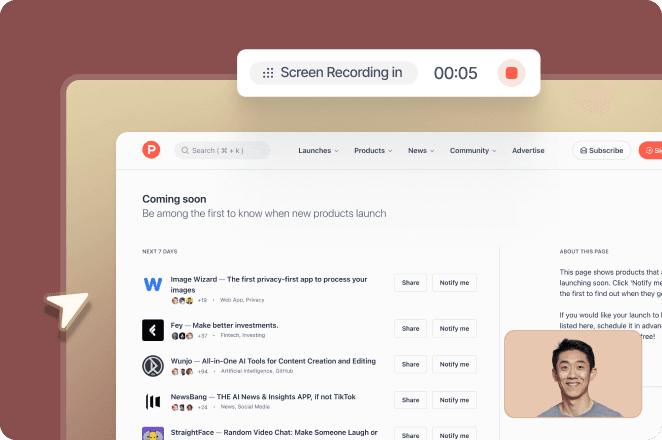
Most SAP programmes treat enablement as a deliverable rather than a function. Content gets produced in the months before go-live, signed off, uploaded to the LMS, and then quietly abandoned. Eighteen months later the enablement library describes a configuration that no longer exists, the consultants who built it have rolled off, and nobody owns the gap between what the material says and what the system does.
Trupeer is an SAP enablement platform built around that ownership problem. Instead of commissioning enablement content as a project, your functional teams and process owners capture SAP transactions as they work, and the platform turns those recordings into a maintained library of training videos and written work instructions. Enablement becomes something the people closest to the process do continuously, rather than something a vendor delivers once.
If you need the production mechanics for a single asset, the SAP training video generator covers how one transaction becomes one video. This page is about the layer above that: how a global SAP enablement programme gets built, governed, localised and kept alive across releases.
Why SAP enablement fails after go-live
The failure pattern is remarkably consistent across implementations, and it has almost nothing to do with the quality of the original content.
Nobody owns maintenance. The implementation partner delivered the enablement content and left. There is no named owner for re-recording a transaction after a quarterly release, so the library ages until users stop trusting it entirely.
Production is too expensive to repeat. When updating an SAP enablement asset requires a video editor and a production queue, teams rationally choose not to. The cost of change is what makes the content go stale, not indifference.
Content is organised by module, not by role. Enablement libraries structured around MM, FI and SD force a warehouse supervisor to work out which of forty assets apply to them. Most give up and raise a ticket instead.
Local variations get ignored. A global template plus country-specific process differences means the standard enablement asset is subtly wrong in half your markets, and local teams build shadow documentation nobody governs.
Nobody measures whether it worked. Completion rates in an LMS tell you someone opened a video. They do not tell you which transaction users rewatch three times, which is the signal that predicts your support ticket volume.
Enablement and documentation live in different systems. The video says one thing, the work instruction in the knowledge base says another, and both were correct at different points in the configuration history.
These are operating model problems. A platform helps only if it makes the ongoing work cheap enough that the operating model becomes sustainable.
What an SAP enablement platform needs to do
Trupeer approaches SAP enablement as content operations rather than course production.
Capture sits with the people who know the process. A functional consultant, process owner or super user records a transaction in your SAP environment through a browser extension, with nothing to install on locked-down machines. The AI handles what would otherwise require a production team: zooming on the fields that were used, removing the pauses while SAP processes a posting, generating narration, and writing the step-by-step work instruction.
Because every asset is generated from a recording rather than authored from scratch, the marginal cost of updating one falls far enough that maintenance actually happens. A process owner re-records a changed transaction in ten minutes and the enablement library stays current through a release cycle.
The written and video outputs are produced from the same capture, so your knowledge base and your training library cannot drift apart. Implementation-side runbooks come from the SAP runbook generator.
Building an SAP enablement programme
Step 1: Map enablement to roles, not modules
Start from the transactions each role runs weekly. A procurement clerk needs six assets, not access to a library of two hundred. Role-based scoping is what makes an enablement library usable and what makes it maintainable, since a changed transaction affects a known, small set of assets.
Step 2: Capture during UAT, while knowledge is still in the room
Record transactions while the consultants who configured them are still on the programme. This is the single highest-leverage timing decision in SAP enablement, because that context is unrecoverable once the partner rolls off.
Step 3: Assign named owners per process area
Every enablement asset needs someone accountable for re-recording it. Because capture takes minutes rather than a production cycle, this can sit with the process owner rather than a central team, which is what makes it survive.
Step 4: Localise for every market in scope
Use the AI video translator to produce each asset in 40+ languages without re-recording. Multi-country SAP rollouts are where enablement budgets usually break, and this is the line item that breaks them.
Step 5: Publish into the systems people already use
Enablement that lives only in an LMS gets consumed once during training and never again. Push assets into the knowledge base, the service desk and, where it helps, in-app guidance so users find them at the moment of need.
Step 6: Instrument, then prune
Watch which transactions get rewatched and which assets nobody opens. Rewatch behaviour is an early warning for support volume; unopened assets are the ones to retire so the library stays small enough to trust.
Platform capabilities for SAP enablement teams
Capture by the process owner, not a production team. Anyone who can run the transaction can produce the enablement asset, which removes the bottleneck that makes maintenance uneconomic.
Script-based updating. Correct a line of text and the video regenerates. This is the mechanism that makes an enablement library survive quarterly releases.
Video and work instruction from one capture. Training content and documentation are generated together, so they always describe the same configuration.
40+ languages. Localise the whole library for every rollout country without commissioning native-speaker recordings per market.
Programme-wide consistency. Brand kits and templates mean assets from twelve different process owners look like one programme.
Consumption analytics. See rewatch and drop-off behaviour per transaction, which is a better predictor of hypercare load than LMS completion rates.
Works across the SAP estate. SAP GUI, Fiori, S/4HANA, SuccessFactors and Ariba, plus the non-SAP tools that appear in the same workflow.
Where enablement runs across the SAP lifecycle
Pre-go-live enablement. Role-based transaction libraries delivered before cut-over, so users arrive having already seen their screens.
Hypercare. A self-serve layer that absorbs the repetitive "how do I post this" questions flooding the service desk in the first weeks, which is where enablement either proves its value or does not.
Steady state. New joiners, role changes and quarterly releases, handled by process owners rather than a project team.
Change and adoption. Enablement is the delivery mechanism for behaviour change, and it fails most visibly when the content is out of date. See change management training videos for enterprise rollouts.
Ongoing adoption measurement. Enablement consumption data feeds the wider adoption picture, showing which processes users still struggle with months after go-live.
Practical guidance for SAP enablement leads
Keep the library small. A hundred trusted assets beat four hundred where a third are wrong. Retire aggressively.
One transaction per asset. Granular assets are the precondition for cheap maintenance, because a configuration change touches one asset rather than a forty-minute module video.
Budget maintenance, not just build. Most programmes fund creation and nothing else. A named owner and a quarterly review cycle costs a fraction of the original build.
Structure the library before you fill it. Structuring an SAP video library is easier to get right at the start than to retrofit at two hundred assets.
Plan for the library to age. Keeping an ERP library current when the product changes is the difference between an asset and a liability.
Explore related tools and reading
Built for enablement that outlives the implementation
Owned by Process Owners
Anyone who can run the transaction can produce the enablement asset. No production queue, no central team bottleneck, no dependency on a partner who has rolled off.
Maintenance That Actually Happens
Updating is a script edit, not a re-edit. When the cost of change drops to minutes, quarterly release updates stop being the thing everyone postpones.
One Library, Every Market
Localise the full enablement library into 40+ languages without commissioning native-speaker recordings per country.
Run SAP Enablement in 3 Steps
Step 1
Process owners capture transactions in your SAP environment
Step 2
AI generates the training video and the work instruction
Step 3
Localise, publish, and re-record as configuration changes
Frequently Asked Questions
How is this different from the SAP training video generator?
They solve different scopes. The SAP training video generator is about producing one training video from one transaction recording. This page is about the programme layer: role-based library structure, named ownership for maintenance, multi-country localisation, publishing into the systems users already work in, and consumption analytics. Most teams start with the generator and grow into the platform view.
How does this compare to SAP Enable Now?
SAP Enable Now is a full authoring suite that assumes dedicated authors and a substantial setup investment, which works well for programmes with a standing enablement team. Trupeer assumes the opposite: that capture should sit with process owners who have no video skills and no time for an authoring tool. SAP Enable Now competitors compares the landscape.
Does it replace our LMS?
No. Trupeer produces and maintains the enablement content; your LMS still handles assignment, completion tracking and compliance records. Assets export for LMS delivery and can also be published to a knowledge base or service desk so users find them at the moment of need rather than only during formal training.
Can we keep enablement content current through quarterly releases?
That is the core design goal. Because editing happens in the script rather than on a timeline, a process owner re-records an affected transaction and updates the narration in minutes. The practical requirement is granularity: one transaction per asset, so a configuration change touches a small, known set of items.
Who should own SAP enablement using this?
Typically an enablement or change lead owns the library structure and the review cadence, while individual process owners own the assets in their area. This distributed model is only viable when capture is cheap, which is the constraint the platform is built to remove.
More Tools