14 Best WalkMe Alternatives for Enterprise Teams (2026)
WalkMe pioneered the digital adoption platform (DAP) category: interactive walkthroughs and tooltips layered on top of web applications so users learn software without leaving it. Since SAP completed its acquisition of WalkMe in September 2024, the product has become even more focused on large enterprises, and many mid-market teams are now looking for WalkMe alternatives that are faster to deploy and easier to budget for.
If you are comparing alternatives to WalkMe, this guide covers 14 WalkMe alternatives and competitors, grouped into tools for training content and documentation, and digital adoption platforms for in-app guidance, with pricing, key features, pros and cons for each.
TL;DR: Which WalkMe Alternative Should You Choose?
Training videos and documentation from screen recordings:
TrupeerClosest enterprise DAP replacement:
Whatfix, Apty, Userlane or Lemon LearningProduct analytics with in-app guides:
PendoIn-app onboarding for SaaS products:
Userpilot, UserGuiding or UsetifulQuick how-to videos or written SOPs:
Guidde, Scribe or TangoSales enablement in CRM:
Spekit
What Is WalkMe and How Much Does It Cost?
WalkMe is an enterprise digital adoption platform that adds walkthroughs, tooltips, task lists and automation on top of enterprise applications such as Salesforce, SAP and Workday, with analytics on how employees and customers use software. Founded in 2011, it is now part of SAP. If SAP is your main application, see our AI SAP adoption platform.
WalkMe pricing is not published. WalkMe cost is quoted by sales based on users, applications and features, usually on annual or multi-year contracts, and implementation often involves dedicated administrators or services.
Why Teams Look for WalkMe Alternatives
Cost and contracts:
Quote-only enterprise pricing and multi-year commitments are hard to justify for mid-market teams.Complexity:
Building and maintaining walkthroughs often needs specialist administrators.Scope:
In-app overlays only help users who are already inside the application. Teams also need training videos, help center articles and SOPs they can share anywhere.Enterprise focus:
Since the SAP acquisition, WalkMe is aimed at the largest organizations.
WalkMe Guides Screens. Trupeer Captures the Process Behind Them.
WalkMe is built to help people click the right thing inside an application. That solves one part of adoption. It doesn't tell anyone why the process works the way it does, what to do with exceptions, or how the work continues in the next system.
WalkMe | Trupeer | |
|---|---|---|
What it does | Guides users through screens in real time | Captures how a process really runs and turns it into training and documentation |
Scope | Inside the applications it is deployed on | The whole process, across every system and team |
Output | Walkthroughs, tooltips, task lists | Training videos, step-by-step SOPs, process maps and a knowledge base |
When it helps most | After go-live, inside the application | Before and during rollouts, transitions and process standardisation |
When screens change | Walkthroughs need rebuilding | Edit the script or re-record one step |
That is why many enterprise teams pair the two, or start with process capture: standardise the process and train people on it first, then add in-app guidance only where people still get stuck.
How We Chose These WalkMe Alternatives
We selected these tools by looking at the platforms buyers most often compare with WalkMe, vendor documentation and published pricing, and how each tool fits the main reasons teams leave WalkMe: cost, complexity and the need for content beyond in-app overlays. Each entry lists what the tool is best for and its watch-outs so you can rule options in or out quickly. Prices were checked in October 2026.
Best WalkMe Alternatives and Competitors at a Glance
Tool | Type | Best for | Starting price |
|---|---|---|---|
Trupeer | AI video and documentation | Training videos and guides from screen recordings | Pro $49/mo ($40/mo billed annually) |
Guidde | AI how-to videos | Quick narrated video guides | Free plan; paid from about $16/creator/mo |
Scribe | Written step-by-step guides | Process documentation and SOPs | Free plan; Pro from about $23/mo |
Tango | Written step-by-step guides | Click-capture how-to guides | Free plan; Pro $22/user/mo billed annually |
Whatfix | Enterprise DAP | In-app guidance across many applications | Quote; published estimates from about $10,000/yr |
Pendo | Product DAP + analytics | Analytics-first product teams | Free up to 500 MAU; paid by quote |
Apty | Enterprise DAP | Process compliance on enterprise apps | Custom quote |
Userlane | Enterprise DAP | European and regulated organizations | Custom quote |
Userpilot | Product adoption | Mid-market SaaS onboarding | $299/mo (up to 2,000 MAU) |
UserGuiding | Product adoption | No-code onboarding on a budget | $174/mo billed annually (2,000 MAU) |
Usetiful | Lightweight DAP | Low-cost tours and smart tips | From about $29/mo (up to 2,500 MAU) |
Lemon Learning | Enterprise DAP | Predictable pricing in Europe | Annual quote, no mandatory services |
Nexthink Adopt | DAP + DEX | Guidance tied to employee experience data | Custom quote |
Spekit | Sales enablement | Just-in-time enablement in CRM | Custom quote |
Prices checked in October 2026 from vendor pricing pages and published plan listings; confirm current pricing with each vendor.
Best WalkMe Alternatives for Training Videos and Documentation
1. Trupeer: Best for Training Content From Screen Recordings

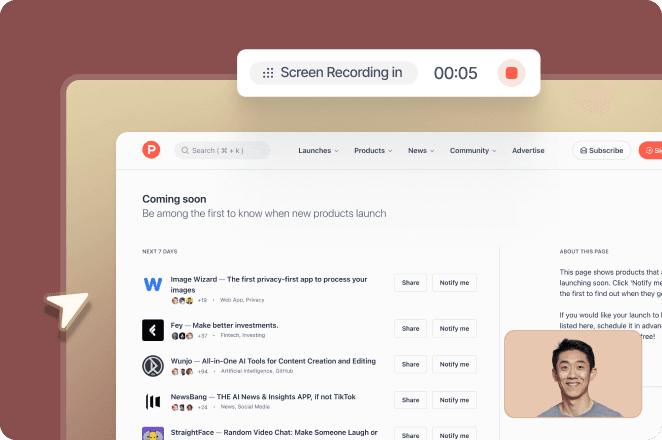
WalkMe’s guidance only works inside the application where it is deployed. Trupeer takes a different approach: record a workflow once with the Trupeer Chrome extension or upload an existing recording, and Trupeer generates a polished video with AI voiceover and zooms, plus a step-by-step guide with screenshots.
You can share the content anywhere your users are: embed it in Notion, Confluence or your help center, send a share link, or publish it in a Trupeer knowledge base. Embeds update automatically when you edit the content. Teams often use Trupeer alongside a DAP, with the DAP handling in-app guidance and Trupeer producing the training videos, SOPs and help content.
Key features:
Video and step-by-step guide from one recording
Export documents to DOC, PDF and Markdown, and video to MP4 with captions
Rewrite with AI and AI voices
AI translation in videos and documents on Scale and above
ISO 27001 certified and SOC 2 Type II compliant
Pricing: Free for 10 days; Pro $49/month or $40/month billed annually (2,000 AI credits, recordings up to 10 minutes); Scale $249/month or $199/month billed annually (3 creator seats, translation); Enterprise custom. See Trupeer pricing.
Pros: Fast content production for any application, with published pricing.
Cons: No real-time in-app overlay engine; pair it with a DAP if you need tooltips inside your app.
Trupeer vs WalkMe: WalkMe guides users inside one application at a time; Trupeer produces videos and written guides that work in any channel, and is often used alongside a DAP.
Best for:
Training content teams, L&D and support teams that need videos and guides users can access anywhereWatch-outs:
You still need a DAP if you require real-time tooltips inside the app
2. Guidde: Best for Quick Narrated How-To Videos

Guidde turns browser recordings into narrated how-to videos with AI-written step descriptions, popular with support and customer success teams that need quick visual answers.
Key features:
AI-narrated video guides from browser recordings
Step descriptions and share links
Library for organizing guides
Pricing: Free plan; paid plans from about $16 per creator per month.
Pros: Fast and simple for short video answers.
Cons: No in-app overlays, and less focus on written documentation.
Guidde vs WalkMe: WalkMe overlays live applications; Guidde creates standalone how-to videos.
Best for:
Support teams answering “how do I” questions with short videosWatch-outs:
Not an in-app guidance tool
3. Scribe: Best for Written SOPs and Process Docs

Scribe captures clicks and keystrokes as you work and turns them into a written step-by-step guide with screenshots, which makes it quick to document internal processes.
Key features:
Automatic written guides with screenshots
Combine guides into longer documents
Team workspaces on team plans
Pricing: Free Basic plan; Pro Personal from about $23 per month; Pro Team per seat with a 5-seat minimum; Enterprise custom.
Pros: Very fast written documentation.
Cons: No video or voiceover, and desktop capture needs a paid plan.
Scribe vs WalkMe: WalkMe guides users in real time; Scribe documents the process as a written guide.
Best for:
Operations and IT teams documenting processes in writingWatch-outs:
No video, voiceover or in-app guidance
4. Tango: Best for Click-Capture Step-by-Step Guides
Tango is a Chrome extension that captures click-based workflows and turns them into annotated step-by-step guides with screenshots, without recording video. It suits teams that want quick written how-tos for browser-based tasks, and its Enterprise plan adds in-app tooltips called Nuggets.
Key features:
Automatic step-by-step guides from clicks
Desktop Capture on Pro and above
In-app Nuggets tooltips on Enterprise
Translation on Enterprise
Pricing: Free for up to 15 workflows; Pro $22 per user per month billed annually ($26 monthly); Enterprise custom.
Pros: Very fast written guides with a free plan.
Cons: No video or voiceover, and in-app tooltips and translation are Enterprise-only.
Tango vs WalkMe: WalkMe guides users in real time inside the application; Tango documents the workflow as a written guide, with lighter in-app tips on its top plan.
Best for:
Teams documenting browser workflows quickly in writingWatch-outs:
No video, and key features need Enterprise
Best WalkMe Alternatives for In-App Guidance (Digital Adoption Platforms)
5. Whatfix: Best Enterprise DAP Alternative
Founded: 2014
Whatfix is WalkMe’s closest competitor: an enterprise DAP with walkthroughs, task lists, a self-help widget and analytics across web and desktop applications.
Key features:
Walkthroughs, tooltips and task lists
Self-help inside applications
Adoption analytics
Desktop and web support
Pricing: Custom quote. Whatfix’s own published estimates put Standard plans from about $10,000 per year for a single application, Premium from about $40,000, and a typical contract at $30,000–$70,000 per year.
Pros: Broad enterprise coverage with built-in content tools.
Cons: Enterprise pricing and implementation effort.
Whatfix vs WalkMe: The closest like-for-like replacement: both are enterprise DAPs with walkthroughs, self-help and analytics. Whatfix is independent, while WalkMe is part of SAP.
Best for:
Enterprises guiding employees across many web and desktop applicationsWatch-outs:
Enterprise pricing and implementation effort
6. Pendo: Best for Product Analytics With In-App Guides
Founded: 2013
Pendo combines product analytics with in-app guides, which suits product teams improving customer-facing SaaS products. See our Pendo alternatives guide for trade-offs.
Key features:
Product analytics and retention
In-app guides
NPS and feedback
Multi-product support
Pricing: Free up to 500 MAU; paid plans by custom quote.
Pros: Deep analytics and a free plan.
Cons: Lighter for internal employee applications.
Pendo vs WalkMe: Pendo leads with product analytics for customer-facing products; WalkMe leads with enterprise guidance for employee applications.
Best for:
Product-led teams that want analytics and in-app guides in one platformWatch-outs:
Lighter for internal employee applications
7. Apty: Best for Process Compliance on Enterprise Apps
Founded: 2018
Apty is an enterprise DAP focused on guiding employees through critical workflows and validating data entry on applications like Salesforce, SAP and Workday. Compare it further in our Apty alternatives guide.
Key features:
In-app guidance and walkthroughs
Process compliance and data validation
Usage analytics
Generative AI guidance with Apty OneX
Pricing: Custom quote.
Pros: Strong enterprise fit at a lower profile than WalkMe.
Cons: Quote-only pricing and a smaller partner network.
Apty vs WalkMe: Apty focuses on process compliance and data validation; WalkMe is a broader enterprise guidance layer.
Best for:
Process-heavy teams standardizing workflows on enterprise web appsWatch-outs:
Quote-only pricing and a smaller partner network
8. Userlane: Best for European and Regulated Organizations
Founded: 2015
Userlane provides interactive in-app guidance for employee software adoption, with HEART-based analytics and a strong presence in Europe and regulated industries.
Key features:
Interactive in-app guides
HEART-based adoption analytics
Enterprise integrations and SSO
Pricing: Custom quote with annual contracts.
Pros: Good fit for EU and regulated buyers.
Cons: Smaller footprint outside Europe.
Userlane vs WalkMe: Both deliver enterprise in-app guidance; Userlane emphasizes HEART-based adoption analytics and an EU presence.
Best for:
European and regulated organizations adopting web-based applicationsWatch-outs:
Smaller footprint outside Europe
9. Userpilot: Best for Mid-Market SaaS Onboarding
Userpilot is a product adoption platform with no-code flows, checklists, surveys and analytics, a better fit than WalkMe for customer onboarding inside your own SaaS product.
Key features:
No-code flows and checklists
Segmentation and analytics
In-app surveys and NPS
Video embeds, including Trupeer
Pricing: Starter $299/month for up to 2,000 MAU; higher plans by quote.
Pros: Fast setup and published entry pricing.
Cons: Not built for internal enterprise applications.
Userpilot vs WalkMe: WalkMe targets employee adoption of enterprise software; Userpilot targets customer onboarding inside your product.
Best for:
SaaS companies onboarding their own customersWatch-outs:
Not built for internal enterprise applications
10. UserGuiding: Best for No-Code Onboarding on a Budget
UserGuiding offers product tours, hotspots, checklists and a resource center through a visual builder non-technical teams can use.
Key features:
Product tours and checklists
Resource center
In-app surveys
Pricing: Free plan for knowledge base and resource center; Starter $174/month billed annually for 2,000 MAU.
Pros: Affordable and quick to launch.
Cons: Lighter analytics and limits on lower tiers.
UserGuiding vs WalkMe: A far lighter, lower-cost option for product tours and checklists rather than enterprise-wide adoption.
Best for:
Small SaaS teams that need no-code onboarding on a budgetWatch-outs:
Lighter analytics and limits on lower tiers
11. Usetiful: Best Low-Cost Lightweight DAP
Usetiful is a lightweight DAP with product tours, smart tips, checklists and an in-app assistant, deployed with a single JavaScript snippet. For how Usetiful’s plans compare, see Usetiful vs Trupeer pricing.
Key features:
Product tours and smart tips
Onboarding checklists
In-app assistant widget
Pricing: From about $29/month for up to 2,500 MAU.
Pros: Low cost and quick to deploy.
Cons: Less depth for complex enterprise needs.
Usetiful vs WalkMe: Covers WalkMe’s core overlay use case for simple applications at a much lower cost.
Best for:
Teams that want basic tours and smart tips quickly and cheaplyWatch-outs:
Less depth for complex enterprise needs
12. Lemon Learning: Best for Predictable Enterprise Pricing
Lemon Learning is a European DAP for employee onboarding and software adoption, positioned on transparent annual pricing with no mandatory professional services and European hosting.
Key features:
In-app guides and tooltips
Onboarding programs for new applications
Adoption analytics
European hosting
Pricing: Annual pricing by quote, with no mandatory professional services.
Pros: Predictable costs and EU hosting.
Cons: Smaller ecosystem than the largest DAPs.
Lemon Learning vs WalkMe: Both guide employees inside enterprise applications; Lemon Learning emphasizes simpler contracts and no required services.
Best for:
European organizations that want predictable DAP costsWatch-outs:
Fewer integrations and partners than WalkMe
13. Nexthink Adopt: Best for DAP Plus Digital Employee Experience
Nexthink, a digital employee experience (DEX) vendor, acquired the DAP AppLearn and offers it as Nexthink Adopt, connecting in-app guidance with device and experience data.
Key features:
In-app guidance and walkthroughs
Connection to DEX and device analytics
Employee experience data
Enterprise IT focus
Pricing: Custom quote.
Pros: Combines adoption with wider digital experience data.
Cons: Best value if you also use Nexthink’s DEX platform.
Nexthink Adopt vs WalkMe: WalkMe is a standalone enterprise DAP; Nexthink Adopt ties guidance to IT’s digital employee experience data.
Best for:
IT teams already investing in digital employee experienceWatch-outs:
Less compelling without the wider Nexthink platform
14. Spekit: Best for Just-in-Time Sales Enablement
Founded: 2018
Spekit brings answers, content and short training into the tools sales teams already use, such as Salesforce, rather than full process walkthroughs.
Key features:
In-app knowledge and answers
Bite-size training and reinforcement
Browser extension across apps
Content analytics
Pricing: Custom quote.
Pros: Low friction for sales and revenue teams.
Cons: Not a full DAP for complex process guidance.
Spekit vs WalkMe: WalkMe guides users through workflows across many systems; Spekit delivers enablement content inside a few core sales tools.
Best for:
CRM-heavy sales and RevOps teamsWatch-outs:
Enterprise-wide programs need a full DAP
WalkMe vs Whatfix: Which Is Better?
WalkMe and Whatfix are the two most established enterprise DAPs. Both provide walkthroughs, task lists, analytics and coverage for major enterprise applications, and both price by custom quote. WalkMe, now part of SAP, suits the largest and most complex organizations and adds workflow automation. Whatfix is often chosen by mid-size to large enterprises that want broad guidance plus self-help and content tools in one platform. Run a pilot on the same workflow with both before deciding. For more options, see our Whatfix alternatives.
What About SAP Enable Now?
SAP Enable Now, SAP's own tool for in-app help and training content, is often shortlisted alongside WalkMe by SAP customers. It is no longer a good long-term choice: SAP ended new development in March 2025, Enable Now Cloud subscriptions cannot be renewed after April 2027, and support ends in 2030. SAP positions WalkMe as the path forward. If you use Enable Now today, plan your move now; see our guide to SAP Enable Now alternatives.
How to Choose the Right WalkMe Alternative
If you need training videos and help documentation:
Trupeer turns recordings into videos and written guides you can share in any channel.If you need an enterprise DAP for employees:
Compare Whatfix, Apty and Userlane on your most important workflow.If you need in-app onboarding for your SaaS product:
Userpilot, Pendo, UserGuiding or Usetiful.If you need quick videos or SOPs:
Guidde, Scribe or Tango.
Many teams find they do not need one platform for everything. A DAP for in-app guidance plus a content tool for training and documentation often covers more needs at lower cost. For a primer on the category, read our digital adoption platform guide.
Tips for Migrating Away From WalkMe
Audit your walkthroughs:
Export your active WalkMe content and usage data, and identify what is actually used.Start with high-traffic content:
Rebuild the most-used walkthroughs first to prove the new setup works.Expand the format:
Turn key walkthroughs into videos, written guides or interactive demos that work outside the app too.Plan around your renewal date:
Start migrating well before your WalkMe contract renews.Tell users what is changing:
Have replacement content ready in your help center or onboarding flows before you switch off WalkMe.
WalkMe Alternatives FAQs
What are the best WalkMe alternatives?
The best WalkMe alternatives are Whatfix, Apty and Userlane for enterprise in-app guidance, Pendo, Userpilot, UserGuiding and Usetiful for SaaS product adoption, and Trupeer, Guidde, Scribe and Tango for training videos and documentation.
Who are the main WalkMe competitors?
The main WalkMe competitors are Whatfix, Pendo, Apty, Userlane, Lemon Learning and Nexthink Adopt among digital adoption platforms, and Userpilot and Appcues for customer-facing product adoption.
How much does WalkMe cost?
WalkMe does not publish pricing. Costs are quoted by sales based on users, applications and features, typically on annual or multi-year contracts. For comparison, Whatfix publishes estimates starting at about $10,000 per year for a single application.
Is there a free WalkMe alternative?
Several alternatives have free plans, including Pendo (up to 500 MAU), Scribe, Guidde and Tango, and Trupeer offers a 10-day free plan. Free plans are limited, so expect to upgrade for production use.
Do I need a digital adoption platform?
Only if you need real-time guidance inside an application. If your main need is training videos, help center content and SOPs that users can access anywhere, a content tool such as Trupeer may cover it, alone or alongside a lighter DAP.
The Bottom Line
WalkMe built the digital adoption category, but most teams now need a mix of in-app guidance and shareable training content. Choose Whatfix, Apty or Userlane if you need an enterprise DAP, a product adoption tool such as Userpilot or Pendo for SaaS onboarding, and Trupeer when you need training videos and documentation produced quickly from screen recordings.
People also compare
Whatfix Alternatives
WalkMe vs Trupeer Features
WalkMe vs Trupeer Pricing
Tango vs Trupeer Features
UserGuiding Alternatives
Scribe vs Trupeer Features
Other Tool Comparisons