
Use this template
The sales-to-service handoff is one of the most fragile moments in the customer lifecycle. With Trupeer, you can save hours on handoff coordination by starting with a free sales-to-service handoff template, customizing it with your brand guidelines, and turning handoffs into video summaries the customer success team can watch on day one.
What is a free sales to service handoff template?
A free sales to service handoff template is a reusable structure for transferring a newly won customer from the person who sold to them to the people who will deliver and support them.
Most versions of this document collect information that already exists somewhere else. Contract value, modules purchased, start date, main contact, billing details. All of it is in the contract or the CRM, and copying it into a handoff form produces a document that is accurate, tidy and adds nothing.
The information that only exists in one person's head is different in kind. What the customer was told during the sale. What they asked for that got an encouraging answer. What they believe success looks like, in their own words. Who inside their organisation was against buying. What competitor they were also considering and what was said about it.
None of that is in the contract. All of it determines how the first ninety days go.
The template is not the handoff. It supplies a form, and the form's only real job is to ask questions whose answers exist nowhere else.
Format follows use. A free sales to service handoff template Word free download suits a narrative handoff with room to write. A free sales to service handoff template Excel version suits tracking handoffs across many accounts. Most teams eventually move it into the CRM as a required stage, which is the right destination and works only if the questions are right first.
Why sales to service handoffs fail
The failure is rarely that information was withheld. Salespeople are not usually hiding things at handoff, and the ones who are have a different problem than a template can solve.
The failure is that the handoff document asks about the transaction while the risk lives in the conversation.
A deal closes after weeks of calls, demos and questions. Across those, dozens of small assurances get given, most accurate at the time and in context. Yes, that is possible. Yes, we work with that system. Yes, that is usually a couple of weeks. Each one is reasonable. Collectively they form the customer's picture of what they have bought, and that picture is frequently more expansive than the contract.
The contract records the commercial agreement. It does not record the picture. So the picture transfers only if somebody thinks to write it down, and no standard handoff form asks for it, because forms get designed around fields with obvious answers.
The consequence arrives in week four or five, when delivery meets an expectation nobody in the room has heard of. At that point three things are simultaneously true. The customer is not being unreasonable, because they were told. The delivery team is not being obstructive, because it is not in scope. And the salesperson was not lying, because they said something reasonable in context four months ago. Every party is acting in good faith and the outcome is still a fight.
How to customize this template in Trupeer
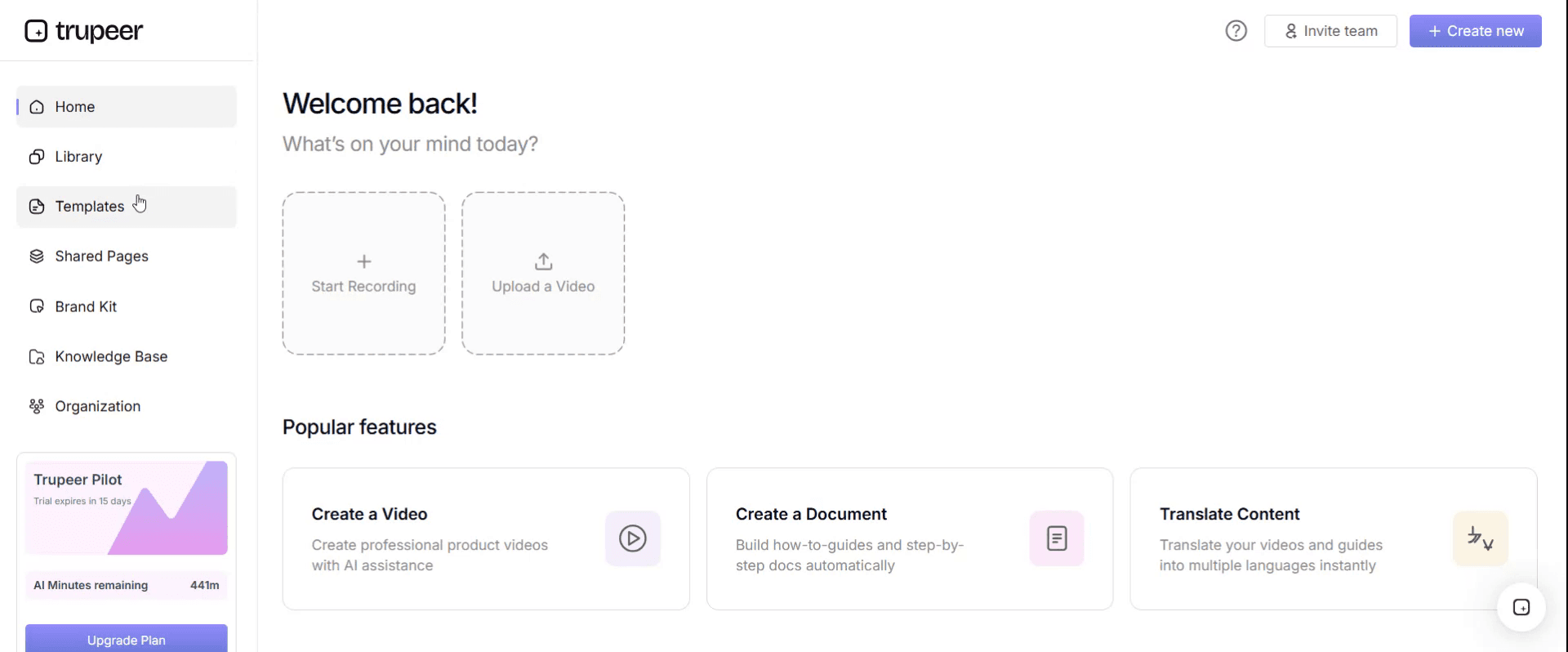
Step 1: Open the Templates Section
Go to the Templates section from the main navigation.
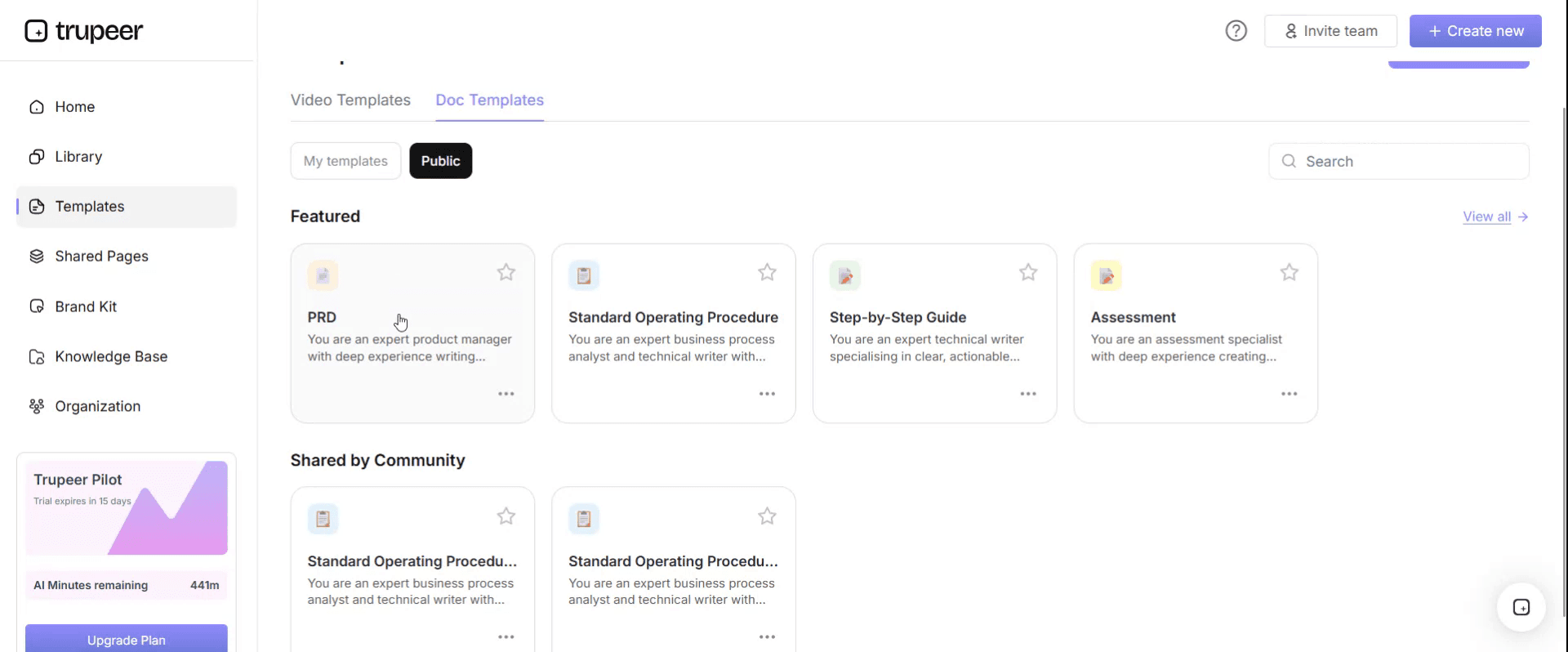
Step 2: Select and Open a Template
Click on any template you want to work with to open it.
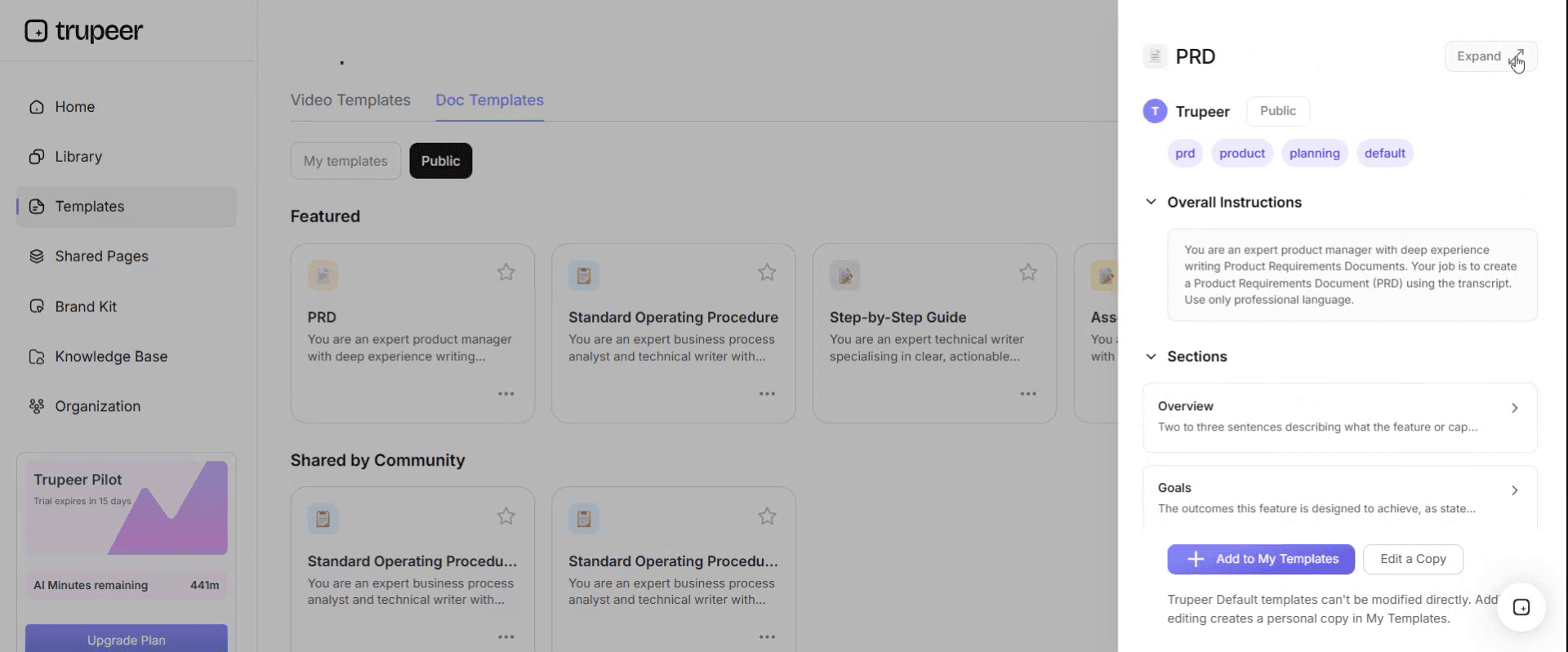
Step 3: Expand the Template View
If needed, expand the template view to see the full layout and details clearly.
Step 4: Edit the Template
Click on Edit to start modifying the selected template.
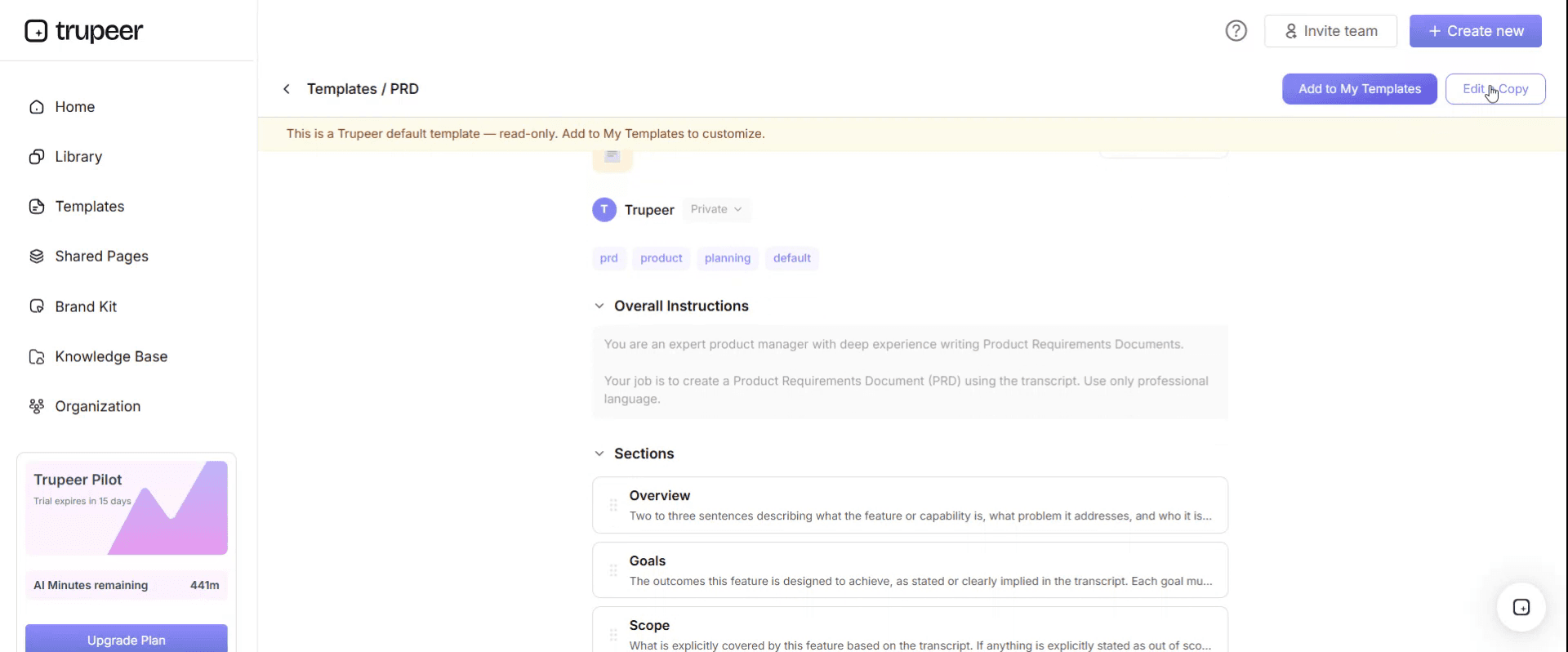
Within the editor, you can:
Add new sections
Define or update formatting rules
Add a logo and adjust its position and related settings
Step 5: Save Your Customized Template
After making all necessary changes, click Save to store the updated template as your own.
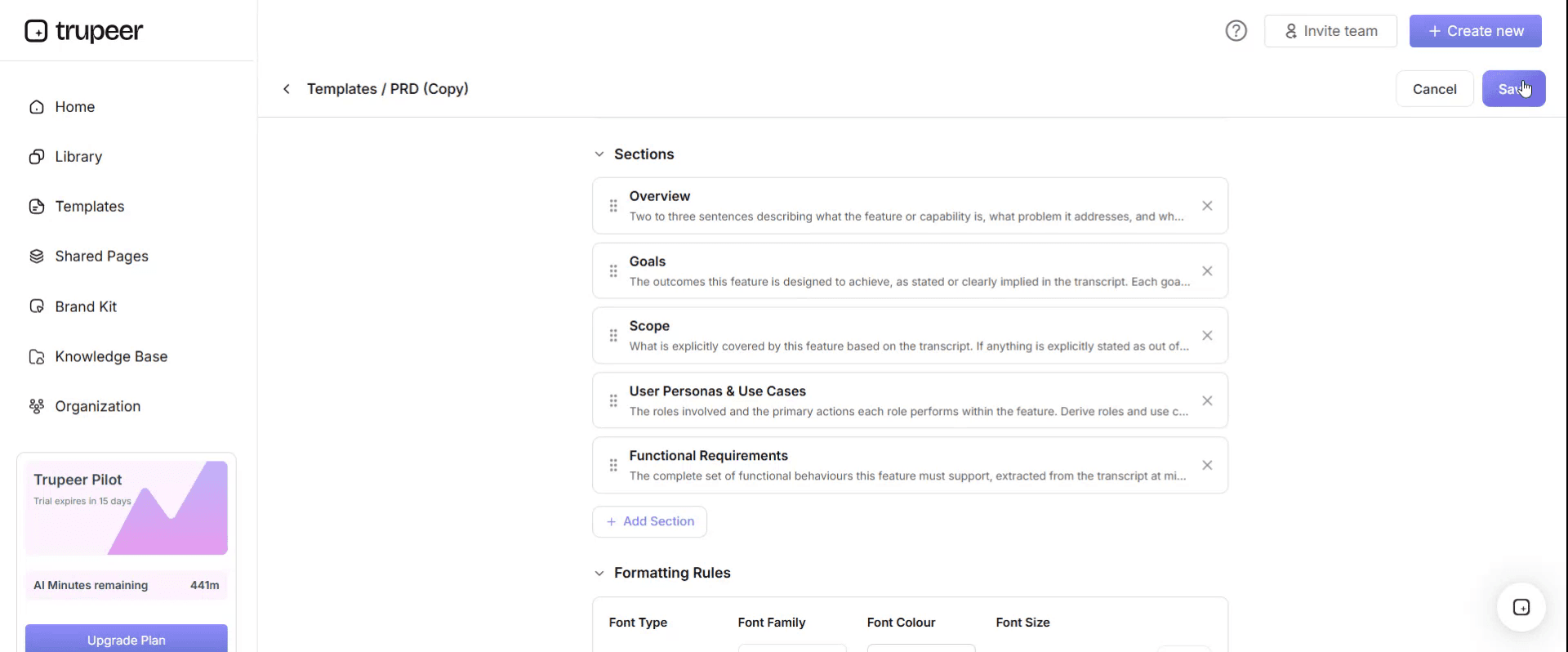
Step 6: Preview and Fine-Tune the Template
When you want to see how your customized template looks, open the Preview.
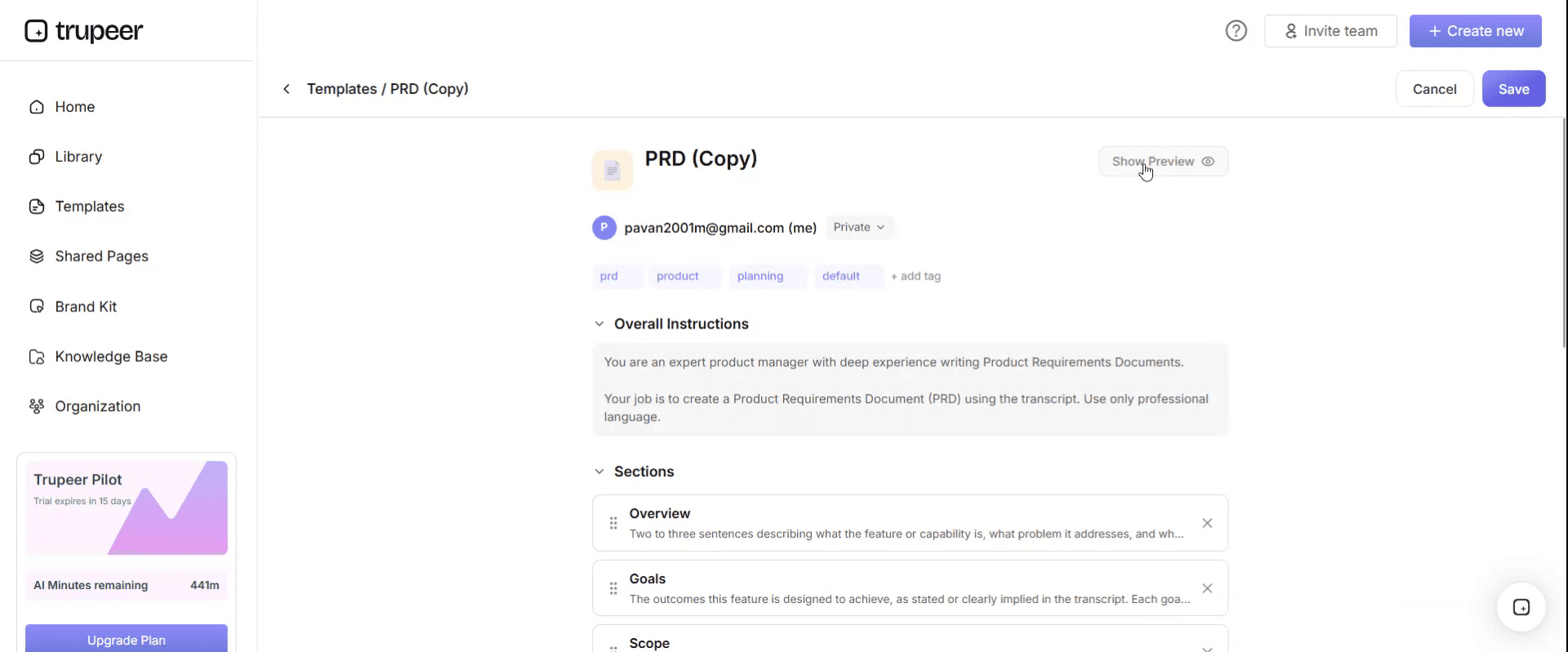
From the preview screen, you can continue to make adjustments directly if needed, ensuring the template appears exactly as you want.
With a sales-to-service handoff template you can:
Save hours on handoffs: Skip the blank page with a structure built for sales-CS transitions.
Capture full deal context: Built-in fields ensure CS knows what was promised and why.
Stay on-brand: Apply your logo, fonts and colors using Trupeer's brand kit.
Start customers strong: Pair docs with video summaries CS can absorb in minutes.
Standardize across deals: Use the same template for every new customer.
Reach global teams: Translate handoff documents into 65+ languages with one click.
Record what was said, not what was signed
The design change is to build the form around questions the CRM cannot answer.
Five of them cover most of it, and they should be mandatory free text rather than optional fields.
What did we say yes to that is not in the contract? The highest value question on the form. Ask it plainly, and make clear it is not an accusation, because a salesperson who fears the answer will be used against them will write "nothing".
What did they ask for that we declined, and how did they take it? A declined request the buyer accepted cheerfully is different from one they accepted while visibly disappointed. The second comes back.
What does the customer say success looks like, in their words? Not your success metrics. Theirs, quoted. This is what the renewal conversation gets judged against.
Who inside their organisation did not want this? Most deals have one. Delivery will meet them, usually at the point of maximum friction, and knowing they exist beforehand is worth more than almost any other single fact.
What were we compared against, and what did we say about it? If the customer chose you over a competitor on the strength of a specific claim, delivery needs to know which claim.
Two rules make these work. Answers are written by the person who was in the room, not summarised by a manager. And the form is completed before the deal is marked closed internally, because the accuracy of the answers decays quickly once commission is booked.
What a sales to service handoff template must contain
Eight components. The first two transfer knowledge rather than data.
Component | What it does |
|---|---|
The five questions | What was said, what was declined, their definition of success, internal opposition, competitive claims. |
Stakeholder map | Who signed, who will use it, who influences renewal, who was against it, and how each was involved. |
Commercial summary | Value, term, what is included and explicitly what is excluded. Short, because it points at the contract. |
Timeline and commitments | Any date mentioned to the customer, including ones that were never contractual. |
Technical context | Systems, integrations, data, constraints, and anything demonstrated during the sale. |
Open items | Anything unresolved at signature, with an owner and a date. |
Accept or reject | Whether service has accepted the handoff. Covered below. |
Introduction plan | How and when the customer is told about the transition, and by whom. |
The exclusions line in the commercial summary matters more than its length. A handoff listing what was sold, without what was not, hands the delivery team half a boundary. The same argument applies here as in the project scope, where exclusions do most of the work.
Free sales to service handoff template: the structure to copy
Filled with a real example rather than placeholders. The customer is a facilities management company buying workforce software.
Copy from here.
Header. Account, value and term, close date, sales owner, receiving owner, handoff date, status.
Fairmount Facilities. One hundred and forty five thousand annual, three year term. Closed 9 May. Sold by T Iyer. Received by M Boateng, Onboarding. Handoff 12 May. Status: accepted 14 May.
The five questions. Written by the person who was in the room.
What did we say yes to that is not in the contract? In the second demo their operations lead asked whether we could pull rota data from their existing payroll system. I said yes, we integrate with it. That is true via our API with development work. I did not say it was included and I did not say it was extra. They have referred to it twice since as though it is happening.
What did they ask for that we declined? Custom branded mobile app, declined clearly, accepted easily. Also a named support contact, declined, and that landed less well.
What does success look like in their words? "If I can stop building the rota in a spreadsheet on a Sunday night, this has paid for itself." Their operations lead said this twice.
Who did not want this? Their finance director, who wanted to renew the incumbent and was overruled by the operations director. Will be involved at the year one renewal.
What were we compared against? The incumbent and one other. We won on rota building speed. I built a two hundred person rota in under four minutes in the demo and they referred to it repeatedly.
Stakeholder map.
Name | Role | Involvement | Renewal influence |
|---|---|---|---|
Operations Director | Signed | Sponsor and champion | High |
Operations Lead | Daily user | In every call, defined the requirements | High, and the real user |
Finance Director | Approved reluctantly | Preferred the incumbent | High |
IT Manager | Implementation | Two technical calls, no objections | Low |
Commercial summary. Three modules named, two hundred licences. Excluded: payroll integration development, custom branding, dedicated support contact, historical data migration beyond twelve months.
Timeline and commitments. Contractual go live 1 August. I told them a realistic first rota would run by mid July. Not contractual, and they have planned around it.
Technical context. Payroll system named. Data currently in spreadsheets, roughly four years of history. IT Manager confirmed export access is available. Demo used their own sample data, which they supplied.
Open items.
Item | Owner | By |
|---|---|---|
Confirm payroll integration is out of scope in writing | T Iyer with M Boateng | 20 May |
Agree how much history is migrated | M Boateng | 27 May |
Accept or reject. Accepted by M Boateng on 14 May, subject to the first open item closing before kickoff. Once accepted, this is exported as a free sales to service handoff template PDF and attached to the account record.
Introduction plan. T Iyer introduces M Boateng by email on 15 May and attends the kickoff call. T Iyer remains reachable for thirty days.
Copy to here.
Sales to service handoff example: one sentence in a demo
Kestrelbridge, a workforce software company of about two hundred people, closed a hundred and forty five thousand pound annual contract with a facilities management business.
The handoff was not neglected. The CRM record transferred, the contract was attached, and there was a twenty minute call. The form captured contract value, modules, main contact and go live date, all accurately.
Four months earlier, in the second demo, the account executive had been asked whether the product could pull rota data from the customer's existing payroll system. He said yes, we integrate with that. It was true. It required API development that was neither scoped nor priced.
He did not think about it again. The buyer thought about it constantly, because for her it was the difference between the system being useful on day one and useful in year two.
Onboarding discovered it in week five, when the customer asked when the payroll connection would be configured.
Six weeks of argument followed, during which the customer's project sponsor was in a genuinely difficult position, having told her own board the integration was included. Kestrelbridge built it without charge: two hundred and forty hours, about fifty eight thousand pounds of unbudgeted delivery.
The account renewed at year one at ninety six thousand, down from a hundred and forty five. The sponsor left the business eight months later.
What made the review useful was widening it. Of forty accounts handed off that year, fourteen had at least one expectation surface in the first ninety days that was not in the contract. Delivery on those accounts overran by an average of thirty one percent.
Two changes followed. The form was rewritten around the five questions above, replacing fields that duplicated the CRM. And the handoff became something onboarding could reject rather than merely receive, with a deal not counted as internally complete until accepted.
The third change cost nothing and may have mattered most. The account executive now attends the kickoff call. The person who made the promises is in the room when scope is stated, which is the cheapest possible moment for a misunderstanding to surface.
Across the next forty accounts, four had an expectation gap rather than fourteen.
Make the handoff an accept, not a send
Most handoffs are a transmission. Sales completes a form, sends it, and the account becomes service's problem.
That design contains no quality gate, so handoff quality drifts towards the minimum that gets accepted, which is whatever nobody objects to.
Make it two sided. Service reviews the handoff and either accepts it or returns it with what is missing. A returned handoff is not a complaint about a colleague, it is a request for information only that colleague holds, and framing it that way is most of what makes it survive contact with a sales team.
Two conditions stop it becoming a bureaucratic irritation.
Acceptance has to be quick. Two working days, or it becomes the thing that delays kickoff and gets resented.
And returns have to be specific. "Not enough detail" is a complaint. "Question three is blank and we need their words on success before the kickoff call" is a request answerable in four minutes.
Attach the gate to the internal definition of a closed deal rather than to goodwill, because goodwill is highest in the month a process is introduced and lowest in the quarter when everyone is busy, which is exactly when handoffs matter most.
How to run the handoff in five steps
Complete the form before the deal is internally closed. Recall decays fast, and once commission is booked the incentive to reconstruct a four month conversation disappears.
Have the receiving team accept or return it within two days. Specific returns only.
Hold a handoff meeting with both sides and no customer present. Twenty minutes, for the questions the form did not anticipate.
Introduce the customer to the new owner by email from the salesperson, not from the new owner. The relationship transfers on the strength of the old one.
Have the salesperson attend the kickoff call. They need not speak. Their presence means any gap between what was said and what is being scoped surfaces immediately, in front of everyone, while it is still cheap.
Step five gets resisted and it pays. It costs a salesperson thirty minutes and removes the most expensive category of handoff failure.
The handoff meeting and who should be in it
Keep it small and internal. The outgoing salesperson, the person taking the account, and whoever leads the technical or delivery work. Twenty minutes.
Do not invite the customer. A meeting with the customer present becomes a performance in which nobody mentions that the finance director was against it.
The agenda is the five questions read aloud, with the receiving team free to interrupt. Reading aloud matters, because written answers get skimmed and spoken answers get followed up. Most of the value comes from the second question the receiver asks rather than from the form itself.
Where volume makes a meeting per account impossible, run a weekly session covering that week's handoffs and reserve individual meetings for accounts above a value threshold or with known complexity.
Sales to service handoff template variants
The structure holds and the depth changes with account value.
High touch enterprise handoff. Full form, individual meeting, salesperson reachable for a defined period, and a stakeholder map including people who were against the purchase.
Volume or low touch handoff. Same five questions, shorter answers, batched weekly. Cut the length of the answers rather than the number of questions.
Sales to customer success handoff. Emphasis moves to renewal risk and adoption, which makes the definition of success question the most important item on the form.
Sales to professional services handoff. Emphasis moves to scope and technical commitments. What was demonstrated matters enormously, since a demo is a promise whether or not anyone intended it as one.
Marketing to sales handoff. A different transition earlier in the process, sharing the structure and almost none of the content. What was promised in a campaign, what the lead has been told, and what they have already read.
Account transition between reps. Distinct from a sales to service handoff, though it borrows sections. Pipeline state and relationship history dominate, and the five questions become questions about the relationship rather than about the sale.
Metrics worth tracking
Four, and the first is the diagnostic.
Expectation gaps surfaced per account in the first ninety days. Count them without attributing blame and track the trend. This is the direct measure of handoff quality and almost nobody records it.
Time from close to kickoff. Long gaps let enthusiasm cool and memory of what was agreed drift.
Handoffs returned by service, and why. A return rate of zero means the gate is not being used, not that quality is perfect.
Year one renewal rate by account executive. Slower and noisier than the others, and the one that eventually shows whether the promises being made are the ones that can be kept.
Resist adding a handoff completion rate. It will reach ninety eight percent within a quarter and tell you nothing about whether the forms contain anything.
What a free sales to service handoff template cannot fix
Incentives that reward closing over delivering. If nothing in a salesperson's compensation is touched by what happens after signature, the form is asking for candour it does not reward. That is a compensation question rather than a documentation one.
A template built for a different transition. No free sales to service handoff template free download will help if what you actually need is temporary absence cover, and an out of office handover template will not transfer a customer relationship.
A form that duplicates the CRM. The most common failure and the reason handoff processes get abandoned. If every field could be auto populated, people correctly conclude the form is pointless.
A gap so wide it should not have been sold. Occasionally a handoff reveals a deal that cannot be delivered as understood. Better found now, and the honest response is escalation rather than a delivery team quietly absorbing it.
No relationship between the teams. Handoff quality tracks how well the two functions know each other. Process helps, and people who have never spoken will exchange documents rather than knowledge.
Show what was demonstrated, not just what was described
One artefact captures customer expectation more accurately than any form, and almost nobody transfers it.
The demo.
Whatever was on screen during the sale is what the customer believes they bought. Not the contract, not the proposal, and certainly not the handoff summary. The specific configuration they saw, the speed at which something happened, the data that was loaded, the feature that impressed them. Kestrelbridge's account executive built a two hundred person rota in four minutes, and that four minutes was the thing the customer bought.
Trupeer AI makes that transferable. Record the demo once, and the output is a video plus a written walkthrough with screenshots already captured and placed, in your own branding. Attach it to the handoff. The delivery team watches what the customer watched, in ten minutes, and sees exactly what impression was created.
Record it. Brand it. Translate it. Trupeer it.
Two further uses follow naturally. The same recordings become the customer facing walkthroughs used during onboarding, so what the customer sees after signing matches what they saw before it. And where you sell across languages, the same recording produces the same walkthrough in each, so the picture created in the sale is consistent everywhere.
The material sits in your knowledge base and doubles as training for new account executives, who otherwise learn what to promise by watching whoever sits nearest. Consistency with your other documents is a matter of setting the brand kit once, and setup is covered in the document template setup guide.
Frequently Asked Questions
Is there a free sales to service handoff template Word version?
Word suits this document because the valuable parts are written answers rather than fields. Build the free sales to service handoff template Word file with the five questions as headings and genuine space under each, since a form offering one line will receive one line.
Put the five questions first and the commercial summary last. Anything duplicating the contract belongs at the bottom, where its low value is obvious, rather than at the top where it sets the tone.
Is there a free sales to service handoff template Word free download?
Most of what a free sales to service handoff template Word free download provides is a field list covering contract value, contacts and dates, all of which already exist in your CRM.
If you adopt one, delete every field that could be auto populated and add the five questions. That inversion takes ten minutes and is the whole difference between a form people complete properly and one they fill from the deal record in ninety seconds.
Is there a free sales to service handoff template Excel version?
Excel suits tracking handoffs across accounts rather than conducting any single one. A free sales to service handoff template Excel file works well for status, accept or reject, open items and the metrics above.
The five questions do not belong in cells. Written answers get truncated to fit column widths, and truncation removes exactly the nuance the questions exist to capture. Track in a spreadsheet, capture in a document or in the CRM.
Is there a free sales to service handoff template PDF?
PDF suits the version attached to the account record once the handoff is accepted. Export a free sales to service handoff template PDF at that point, with the date and both names on it.
A free sales to service handoff template PDF is an archive rather than a working form, so do not distribute a blank one for completion. Handoff forms need filling in quickly by people who are between other things, and anything requiring printing will not be.
Is there a free sales to service handoff template free download worth using?
The structure takes twenty minutes to build and most published examples duplicate the CRM, so a free sales to service handoff template free download saves less than it appears to.
Check one thing on any of them. See whether there is a single open question asking what the customer was told. Almost none have one, and that question is the reason the document exists.
Is an out of office handover template the same thing?
No, and they get confused because of the shared word. An out of office handover template covers temporary cover during annual leave or absence: what is in flight, who is covering what, and what can wait until you return.
It is short, it is temporary, and the relationship does not transfer. A sales to service handoff is permanent and transfers ownership of a customer relationship. If you need cover for two weeks, use the absence document rather than this one.
Are cash handover and charge handover formats related to this?
No. A cash handover letter format in Word records the physical transfer of money between individuals or shifts, typically in retail, banking or hospitality, and exists to establish accountability for an amount at a moment in time.
A charge handover format PDF free download usually refers to shift handover in nursing, security or plant operations, where responsibility for people or equipment passes between shifts. Both are unrelated to moving a customer from sales to service, and neither structure transfers usefully. Search results mix them in because of the shared word.
What should be in a sales to service handoff email?
Two emails rather than one. The first is internal, attaching the completed handoff and naming the accept or reject deadline.
The second goes to the customer, from the salesperson rather than from the new owner, and does three things. It introduces the new contact by name with a sentence on why they are the right person, states clearly that the salesperson remains reachable for a defined period, and confirms the next step with a date. Handing over by silence, where the customer notices the change when somebody new appears on a call, is the most common way a relationship gets damaged at the moment it is most fragile.


