Trupeer Blog
Summarise
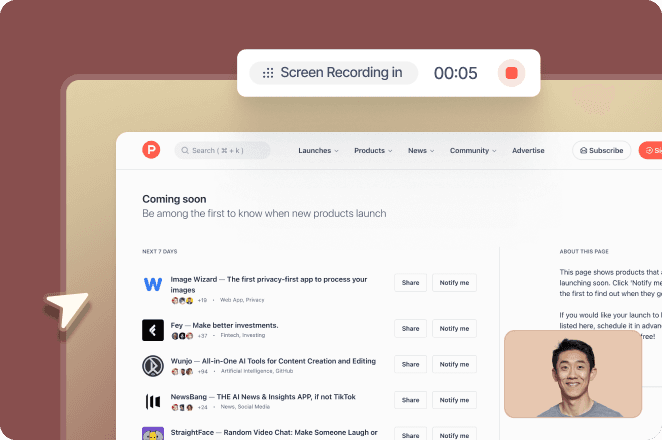
Keeping your knowledge base up-to-date can be a logistical headache, especially if your company regularly updates content or documentation. Imagine the time saved if every change in source material automatically triggered a knowledge base update. This is where webhook triggers come into play. They automate updates, ensuring that your knowledge base remains current without manual intervention. For example, consider how a company like Atlassian might handle their vast repository of user guides. By using webhooks, they could automatically update relevant sections of their knowledge base whenever new product features roll out. This not only ensures accuracy but also enhances user satisfaction, as customers are always accessing the most relevant information.
In a study by Zendesk, 69% of customers prefer to solve issues on their own before reaching out to support. With this in mind, it's clear that having a self-service knowledge base that's always up-to-date can dramatically reduce support costs and improve customer satisfaction. For more insights into effective knowledge bases, check out some of the best knowledge base examples that set the standard for quality and accessibility.
Why does webhook-triggered knowledge base updates matter?
In the fast-paced world of business, information needs to flow smoothly. Outdated knowledge bases are a common problem. They cause confusion, increase support costs, and frustrate users who seek accurate, timely information. When your team rolls out new content or updates existing documentation, it's crucial that these changes reflect immediately in your knowledge base.
Manual updates are not only time-consuming but also prone to errors. An overlooked update can lead to inconsistencies, which can damage your organization's credibility. Webhook-triggered updates solve this by automatically syncing changes as they happen. This is particularly beneficial for customer success teams where having the latest information is critical. For instance, a customer success use case might require the latest troubleshooting steps to be readily available, ensuring that users can resolve issues quickly without contacting support.
Also, as companies scale, the volume of content grows exponentially. Managing this manually becomes untenable. Automated updates using webhooks ensure that every piece of content, whether it's a minor tweak or a major overhaul, is reflected across all channels. This not only maintains consistency but frees up your team to focus on creating new content rather than managing existing material. As a result, companies can maintain high standards of information accuracy, leading to improved user trust and operational efficiency.
What are the benefits of webhook-triggered knowledge base updates?
Webhook-triggered updates can transform how your organization handles information dissemination. Here are some of the key benefits:
Real-Time Accuracy. With webhooks, every change in your source content automatically updates your knowledge base, ensuring users always access the most current information.
Reduced Manual Effort. Automating updates means your team spends less time on administrative tasks and more on strategic initiatives. This is particularly beneficial when using a knowledge base one.
Consistency Across Platforms. Webhooks ensure that updates are applied uniformly across all platforms, reducing discrepancies and maintaining brand integrity.
Improved User Experience. Users expect accurate, updated information. An AI video platform can enhance user satisfaction by providing up-to-date content in an engaging format.
Cost Efficiency. Automating updates reduces the need for a large support team, cutting down on operational costs while maintaining service quality.
Scalability. As your organization grows, so does your content. Webhook-triggered updates ensure that your knowledge base can scale without becoming unmanageable.
Which Trupeer features help you set up webhook-triggered knowledge base updates?
Trupeer offers several features that can simplify the process of setting up webhook-triggered updates. These tools ensure your knowledge base remains current, accurate, and engaging.
AI screen recording with auto-zoom and click detection
This feature captures screen activity in precise detail, automatically zooming in on areas of interest and detecting clicks. When new content is created or existing content is revised, this recording can be smoothly integrated into your knowledge base. This ensures users always have access to the latest guides and demonstrations. The auto-zoom functionality helps highlight key actions, making it easier for users to follow along with tutorials or procedural instructions. This feature is essential for companies that rely on visual content to communicate complex processes or updates to their audience.
Automatic SOP generation from any recording
Trupeer's automatic SOP generation is a big shift for documentation. By extracting step-by-step instructions from any recording, it creates ready-to-use, exportable SOPs. This is particularly useful when updates occur, as the SOPs can be immediately refreshed and linked to the relevant sections of your knowledge base. This feature eliminates the tedious process of manual documentation, allowing teams to focus on content creation and strategic initiatives. For organizations that frequently update procedures, this capability ensures that all team members have consistent, up-to-date instructions.
AI-searchable knowledge base with timestamp deep-links
With Trupeer's AI-searchable knowledge base, every piece of content is indexed with precision. Users can search for specific information and be directed to the exact moment in a video or documentation where their query is addressed. This feature enhances user experience by reducing the time spent searching for information and ensures that users access the most current content available. Timestamp deep-links are particularly useful for complex topics that require detailed explanations spread across multiple media.
AI translation into 40+ languages with lip-sync
Trupeer's translation capabilities ensure that your knowledge base is accessible to a global audience. By translating content into over 40 languages, organizations can cater to non-English speaking users without compromising on quality. The lip-sync feature maintains the natural flow of videos, providing a smooth viewing experience. This capability is essential for multinational companies that need to maintain consistency across different regions. It also eliminates the need for multiple versions of the same content, ensuring that all users receive the same high-quality information regardless of language.
Auto-updating documentation tied to the underlying recording
This feature links documentation directly to its source recording, ensuring that updates are automatically reflected in the knowledge base. As changes are made to the original content, the documentation updates in real time, maintaining accuracy and consistency. This is particularly beneficial for technical teams that frequently update product features or troubleshooting steps. The auto-update functionality reduces the risk of outdated information and ensures that users always have access to the most recent data. It also simplifies the process of managing large volumes of documentation, freeing up resources for other critical tasks.
How do you set up webhook-triggered knowledge base updates step by step with Trupeer?
Step 1: Record the Source Content
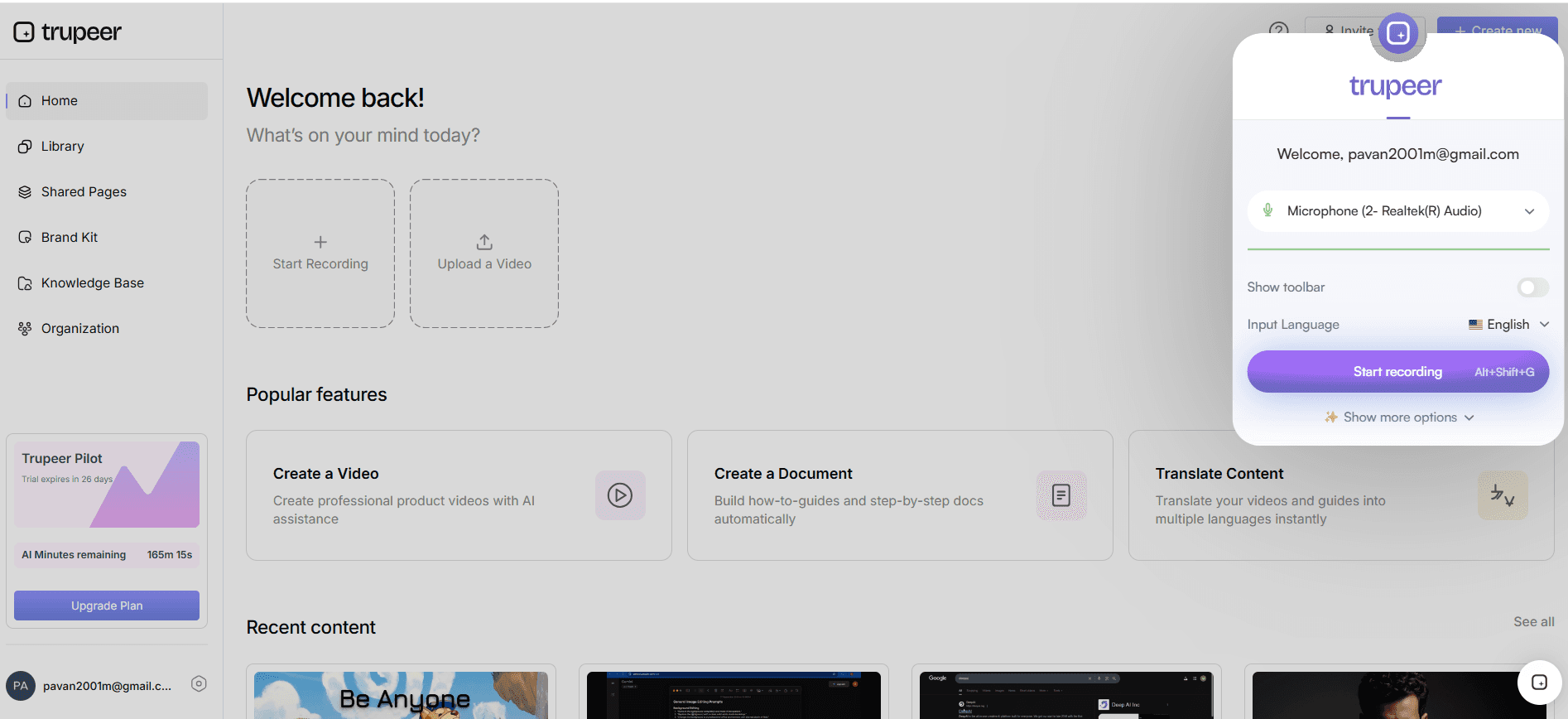
Begin by capturing the content you need to update using Trupeer's AI screen recording with auto-zoom and click detection. Launch the browser-based recorder from your dashboard, select the screen or application window you want to capture, and hit 'Record'. The AI automatically zooms in on areas of interest, such as forms or buttons, and detects clicks, creating a detailed recording. This recording serves as the foundational content for your knowledge base update. If you encounter a long recording session, don't worry, the AI will manage filler word removal and enhance pacing, ensuring clarity and conciseness in the final output.
Step 2: Generate SOPs Automatically
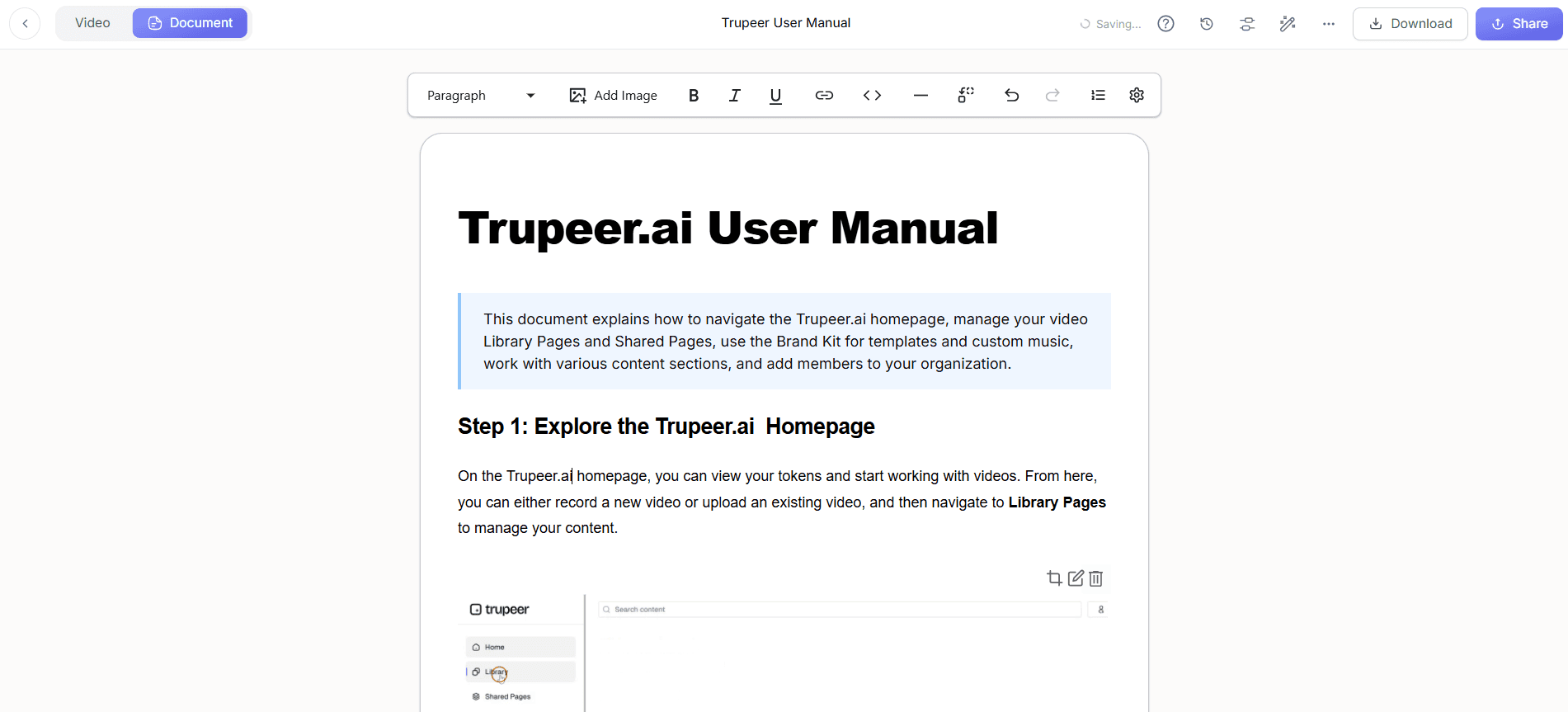
Once your recording is complete, use Trupeer's automatic SOP generation feature. Navigate to the 'SOPs' section in Trupeer, and upload your recording. The system analyzes the content and generates a step-by-step SOP, ready for review. This SOP is not only edit-ready but can also be exported in multiple formats like HTML or PDF. This capability is invaluable for ensuring every team member has up-to-date procedural instructions, especially when workflows change frequently. The process typically takes a few minutes, depending on the complexity of the recording.
Step 3: Update the Knowledge Base
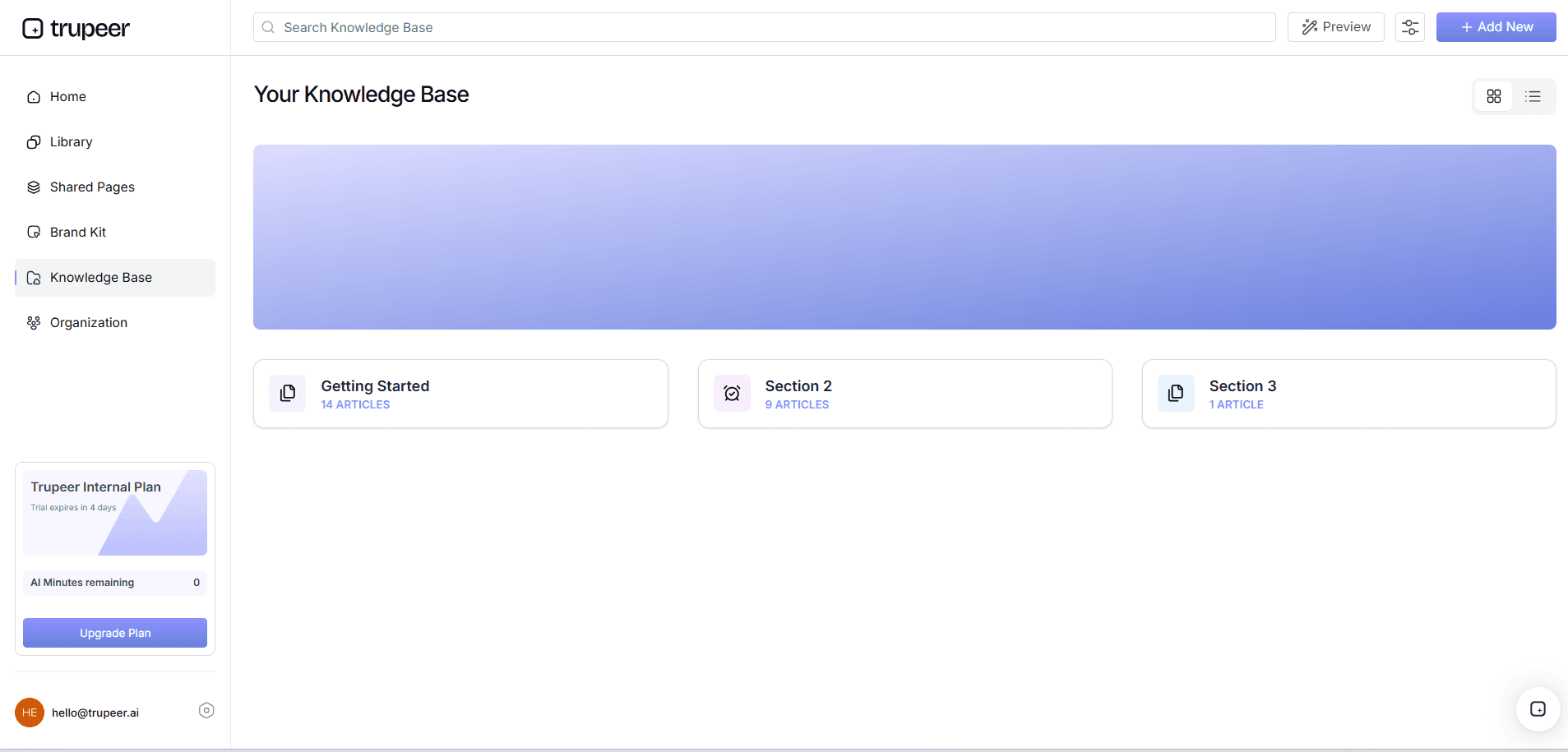
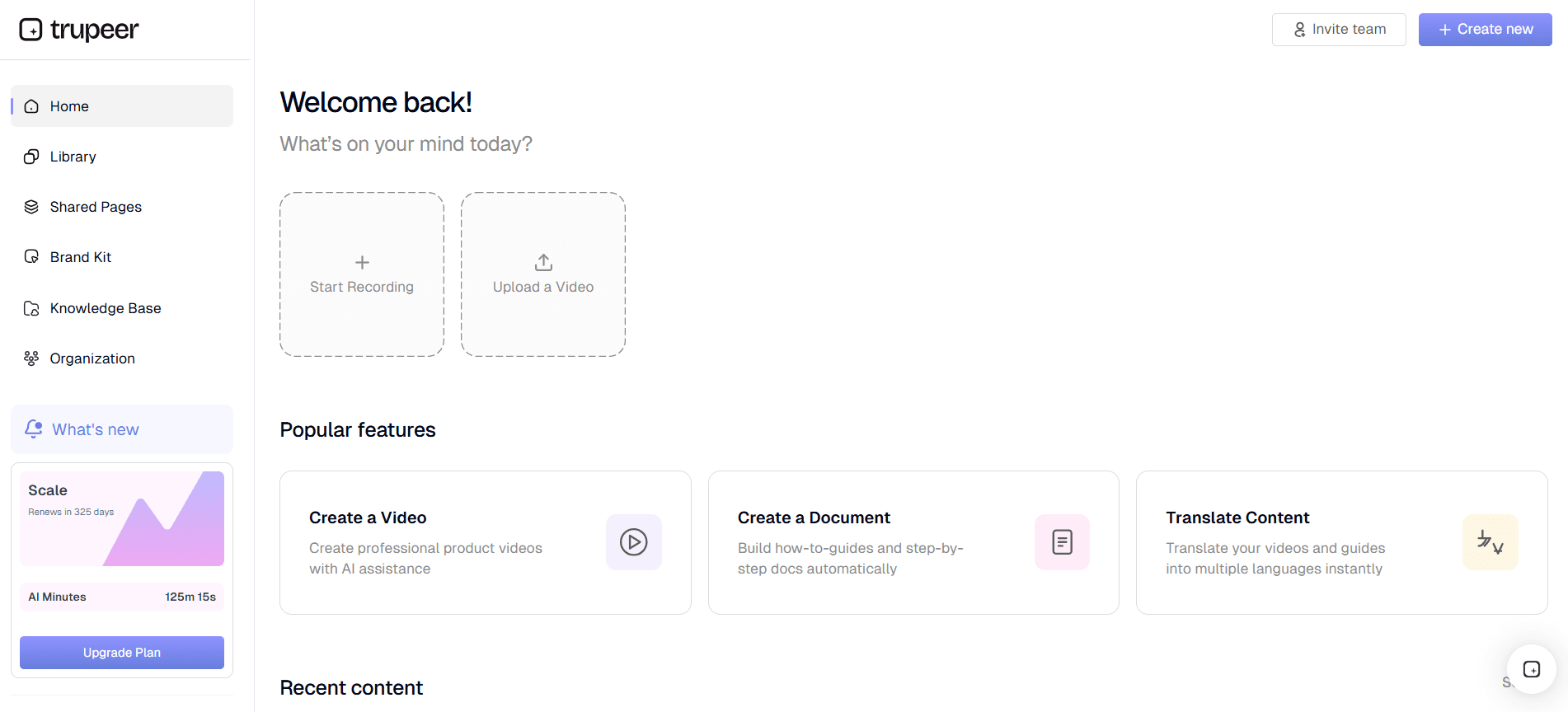
With the SOP in hand, head over to the 'Knowledge Base Management' tab on Trupeer. Here, you can integrate your new SOP into the existing knowledge base. Use the 'Import' function to add the SOP, and assign it to the relevant category or section. Trupeer's internal knowledge base wiki software automatically links the new content to existing articles, ensuring smooth navigation for users. This step ensures that users accessing your knowledge base find the latest information without unnecessary clicks.
Step 4: Set Up Webhook Triggers
To automate future updates, configure webhook triggers within Trupeer. Go to the 'Integrations' panel and select 'Webhook Setup'. Define the event that will trigger the update, such as a new SOP upload or a change in the underlying recording. Specify the URL endpoint where the webhook should send the data. This ensures that every time the defined event occurs, your knowledge base updates automatically, reflecting the latest changes. This setup is crucial for maintaining real-time accuracy across your entire documentation suite. Teams weighing tools often start with a Loom alternatives comparison before standardizing on a workflow.
Step 5: Test the Automation
It's important to test your webhook setup to ensure everything functions as expected. Perform a test update by making a small change in your content and observing if the webhook triggers the update in your knowledge base. Trupeer provides a testing mode in the 'Webhook Setup' section, allowing you to simulate updates without affecting the live system. If the test runs smoothly, your system is ready for deployment. If not, adjust the webhook settings and troubleshoot any connectivity issues.
Step 6: Monitor and Optimize
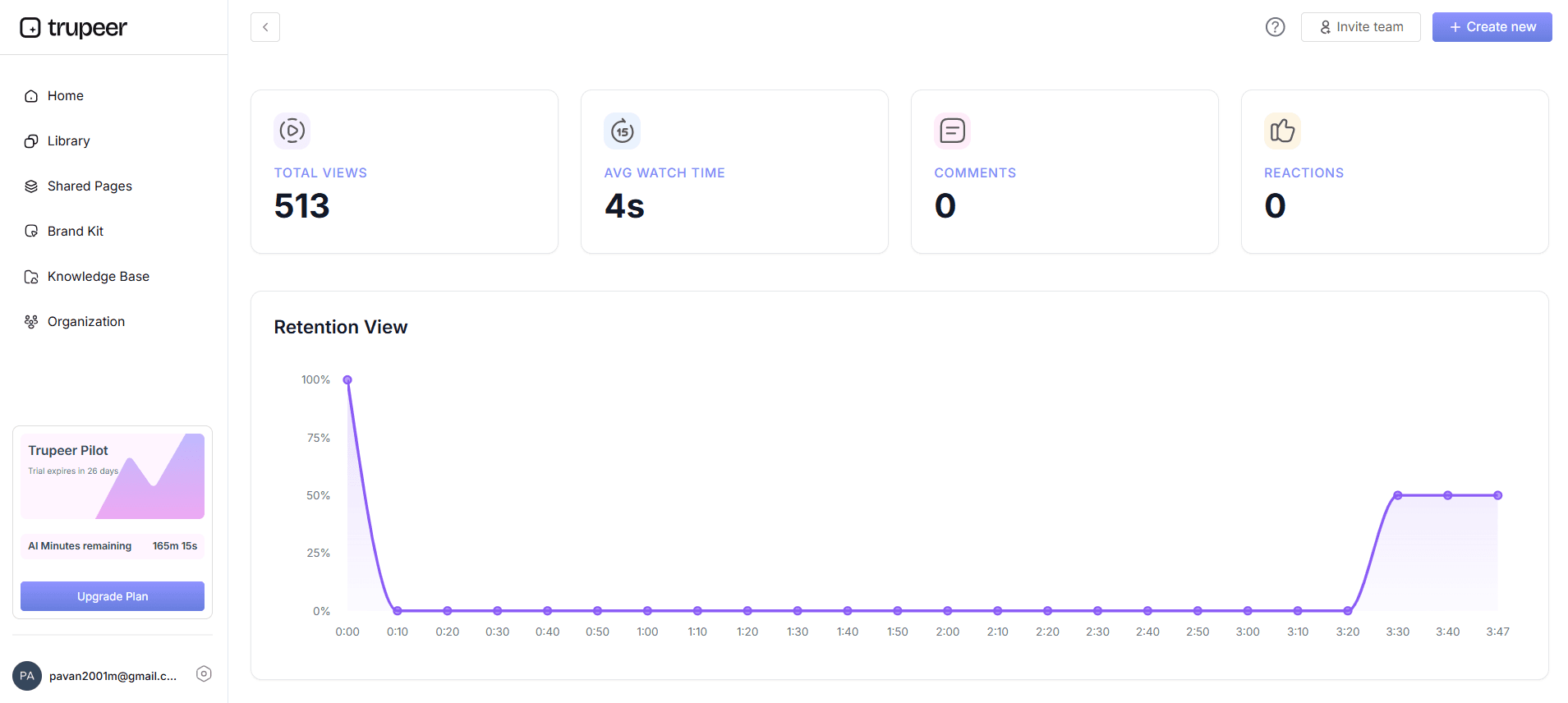
After deploying your webhook-triggered updates, use Trupeer's viewer engagement analytics to monitor how users interact with the updated content. Check metrics such as page views, drop-off points, and heatmaps available in the 'Analytics' dashboard. These insights help identify areas where users may encounter difficulties, allowing you to refine content and improve user experience over time. Regularly reviewing this data ensures that your knowledge base not only remains current but also effectively meets user needs.
What tips help you set up webhook-triggered knowledge base updates?
Efficiently setting up webhook-triggered knowledge base updates requires strategic planning and execution. Here are some tips to guide you through the process and ensure success:
Clarify Your Update Triggers. Clearly define which events should trigger updates to avoid unnecessary changes.
simplify Content Formats. Use consistent formats like Trupeer's Scribe alternative comparison to maintain uniformity across updates.
Establish Clear Categories. Organize your knowledge base into well-defined categories to make updates easier to manage and locate.
use AI Capabilities. use AI features for translation and dubbing to reach global audiences efficiently.
Regularly Audit Content. Schedule periodic reviews of your knowledge base to ensure all information remains relevant and accurate.
Train Your Team. Ensure your team understands how to use webhook features and troubleshoot common issues.
Use a Reliable Platform. Opt for solid tools like Trupeer's knowledge base software teams customers to ensure smooth operation and support.
Frequently asked questions
How do I know if my webhook setup is working correctly?
To verify that your webhook setup is functioning correctly, use Trupeer's testing mode available in the 'Webhook Setup' section. This mode allows you to simulate webhook events and observe the resulting updates in a controlled environment. If the test executes as expected, it's a good indication that your setup is correct. Troubleshoot any issues by checking for connectivity problems, incorrect endpoint URLs, or misconfigured triggers. Monitoring logs and error messages can also provide insights into potential issues.
What happens if a webhook fails during an update?
If a webhook fails during an update, it's important to have a fallback plan. Trupeer logs failed webhook attempts, which you can access in the 'Logs' section to diagnose the problem. Common issues include connectivity problems, incorrect endpoint URLs, or server errors on the receiving end. To mitigate these risks, ensure redundancy by setting up backup endpoints or configuring retries. Regularly testing your webhook setup can also help identify and fix issues before they lead to significant disruptions.
Can I customize the content format for different audiences?
Yes, Trupeer allows for content customization to suit various audiences. Use its AI translation and dubbing features to tailor content for non-English speakers, maintaining consistency with lip-sync technology. also, Trupeer's brand kits and branded templates enable you to align content with your organization's visual style, ensuring a cohesive user experience across different regions and demographics. This customization ensures that your knowledge base remains accessible and relevant to a diverse audience.
Why should I integrate webhooks into my knowledge base strategy?
Integrating webhooks into your knowledge base strategy offers significant advantages. It automates updates, ensuring real-time accuracy and reducing manual effort. This automation is crucial for maintaining consistency and reliability across your documentation. also, webhooks provide scalability as your organization grows, allowing for smooth updates across multiple platforms. By reducing the burden of manual updates, your team can focus on strategic initiatives and content creation, ultimately enhancing the user experience.
Does Trupeer support video localization for knowledge bases?
Yes, Trupeer supports AI video translation and localization, making it an ideal choice for knowledge bases serving international audiences. Its AI-powered translation capabilities cover over 40 languages, complete with lip-sync to maintain natural video flow. This ensures that your content remains accessible and engaging, regardless of the user's language. By offering localized content, Trupeer helps organizations reach a broader audience, improve user satisfaction, and maintain a competitive edge in global markets.
Related Blogs