Trupeer Blog
Summarise
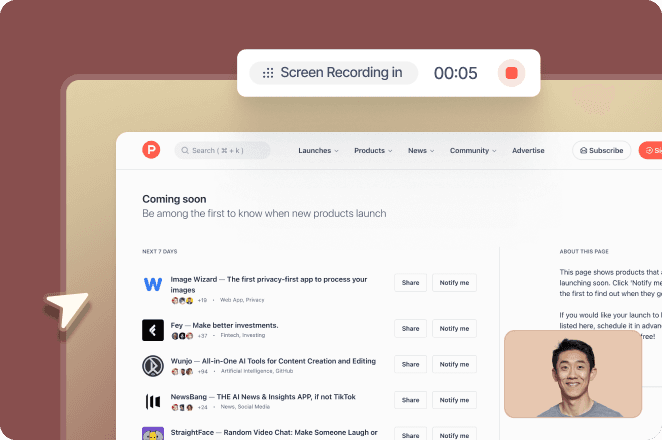
Imagine rolling out a modern software product that changes how businesses manage customer data. Despite its potential, your support team is flooded with questions from users who struggle to get the most out of the product. Many of these queries could be efficiently addressed with video tutorials, yet creating a video for every question isn't feasible. Your team needs to prioritize which questions warrant a video response to maximize impact and efficiency.
Research indicates that video tutorials can reduce customer support calls by up to 40%.
This significant reduction underscores the importance of identifying the right questions for video answers. By focusing your efforts on the most impactful queries, you can enhance customer satisfaction, reduce support costs, and improve product adoption. This guide is aimed at product managers, support leaders, and content creators looking to optimize their video production strategy for maximum return on investment. When SOPs come into the same conversation, a Scribe alternatives comparison helps clarify the scope.
Why does identifying which product questions deserve a video answer matter?
In the competitive landscape of software products, customer experience is a crucial differentiator. Companies that fail to address user concerns promptly often see higher churn rates and lower customer satisfaction scores. Videos are a powerful medium for conveying complex information quickly and effectively. However, not every question justifies the time and resources required to produce a video. Prioritizing video answers for the most common or challenging questions allows your team to allocate resources more efficiently. Teams weighing tools often start with a Loom alternatives comparison before standardizing on a workflow.
For stakeholders such as product managers, understanding which product questions deserve a video answer is vital for strategic planning. They need to ensure that the product's unique features are clearly articulated to the users. Customer support teams also benefit, as they can focus on high-impact areas, reducing repetitive inquiries. Marketing teams can use these videos to highlight the product's strengths in promotional materials. This approach not only saves time but also aligns with the broader business objectives of enhancing user engagement and satisfaction.
What are the benefits of prioritizing product questions for video answers?
Strategically selecting which product questions to address with videos has several advantages. Here are some key benefits:
Enhanced user understanding. Prioritizing video content for complex questions helps users grasp intricate concepts faster, leading to better product usage and satisfaction.
Reduced support burden. By addressing frequently asked questions through videos, you can significantly lower the volume of support tickets and calls, freeing up resources for other tasks. Read more about how to make product demo videos.
Consistent messaging. Videos ensure that every user receives the same professional and polished explanation, reducing the risk of miscommunication and enhancing brand consistency.
Increased user engagement. Videos are more engaging than text-based content, resulting in higher retention rates and better user comprehension. An AI video platform can make this process smooth.
Scalability. Once a video is created, it can be reused indefinitely, providing a scalable solution to customer education and training without ongoing resource investment.
Improved product adoption. Clear, informative videos can accelerate the learning curve for new users, leading to faster and more widespread adoption of your product.
Which Trupeer features help you prioritize product questions for video answers?
Trupeer offers a suite of capabilities designed to simplify the process of identifying which product questions warrant a video response. Here are some key features that can help:
AI screen recording with auto-zoom and click detection
This feature helps capture detailed product demonstrations by automatically zooming in on areas of the screen where actions occur. It detects clicks and highlights them, ensuring that users can easily follow along with the tutorial. This is particularly useful for questions that involve step-by-step procedures, as it provides clear visual cues that enhance understanding. The product demo video maker tool ensures that your recordings are clear and professional, making them more effective for user education.
Silent screen recording with automatic AI narration
Trupeer’s silent screen recording feature captures video without audio, which can then be enhanced with AI-generated narration. This allows for precise control over the messaging and ensures that the narration is clear and free of distractions. The capability to add AI narration post-recording means you can focus on perfecting the script to address the most crucial product questions. It’s an excellent way to ensure consistency and quality in instructional videos.
Automatic filler-word removal
When producing video content, maintaining a professional and concise delivery is essential. Trupeer’s automatic filler-word removal takes care of this by eliminating unnecessary "um"s, "ah"s, and pauses from your recordings. This feature saves you time in post-production and ensures that your videos are engaging and to the point. It’s particularly beneficial for videos that address common product questions, where clarity and brevity are key.
AI voice cloning from a short sample
For brands that want to maintain a consistent voice across all their educational content, Trupeer’s AI voice cloning is invaluable. By using a short sample of your existing voiceover artist or spokesperson, the AI can generate a cloned voice that matches perfectly. This ensures that all video answers to product questions have a unified tone and style, reinforcing brand identity and making the content more relatable and trustworthy.
AI-searchable knowledge base
Trupeer’s AI-searchable knowledge base allows you to organize and index your video content efficiently. This feature makes it easy for users to find answers to their questions through a simple search interface. By having all videos tagged and searchable, you can quickly identify which product questions have already been addressed and which ones need a video response, ensuring that your resources are focused where they’re most needed.
How do you identify which product questions most deserve a video answer step by step with Trupeer?
Step 1: Collect and Analyze Support Data
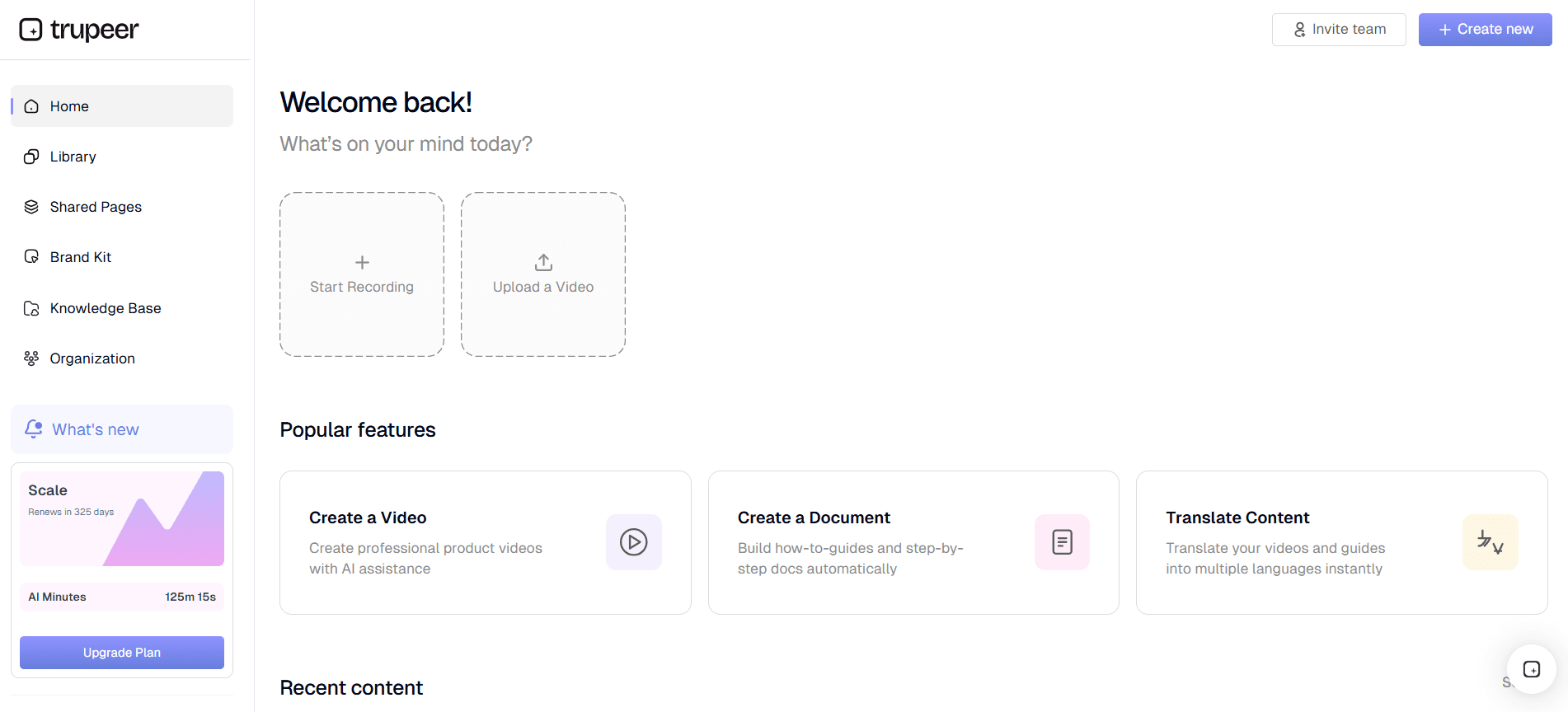
Begin by gathering data from your customer support interactions. Use Trupeer’s AI-searchable knowledge base to access and review previous support tickets, chat logs, and email inquiries. This tool allows you to filter and categorize the data by frequency and topic, helping to identify recurring questions. The analysis process typically takes a few hours, depending on your volume of data. Look for patterns in customer queries to pinpoint which questions are most common or complex. This step ensures you focus on the most impactful areas, maximizing your video production efforts.
Step 2: Prioritize Questions Based on Impact
Once you've identified common questions, prioritize them based on their potential impact on user satisfaction and product adoption. Use Trupeer’s analytics features to assess how often these questions lead to negative feedback or product churn. Consider how a video answer could improve these metrics. For example, questions that frequently cause confusion and result in support tickets are prime candidates for video answers. This step involves weighing the importance of each question, which can be done quickly with the right data at hand.
Step 3: Record Screen Demonstrations
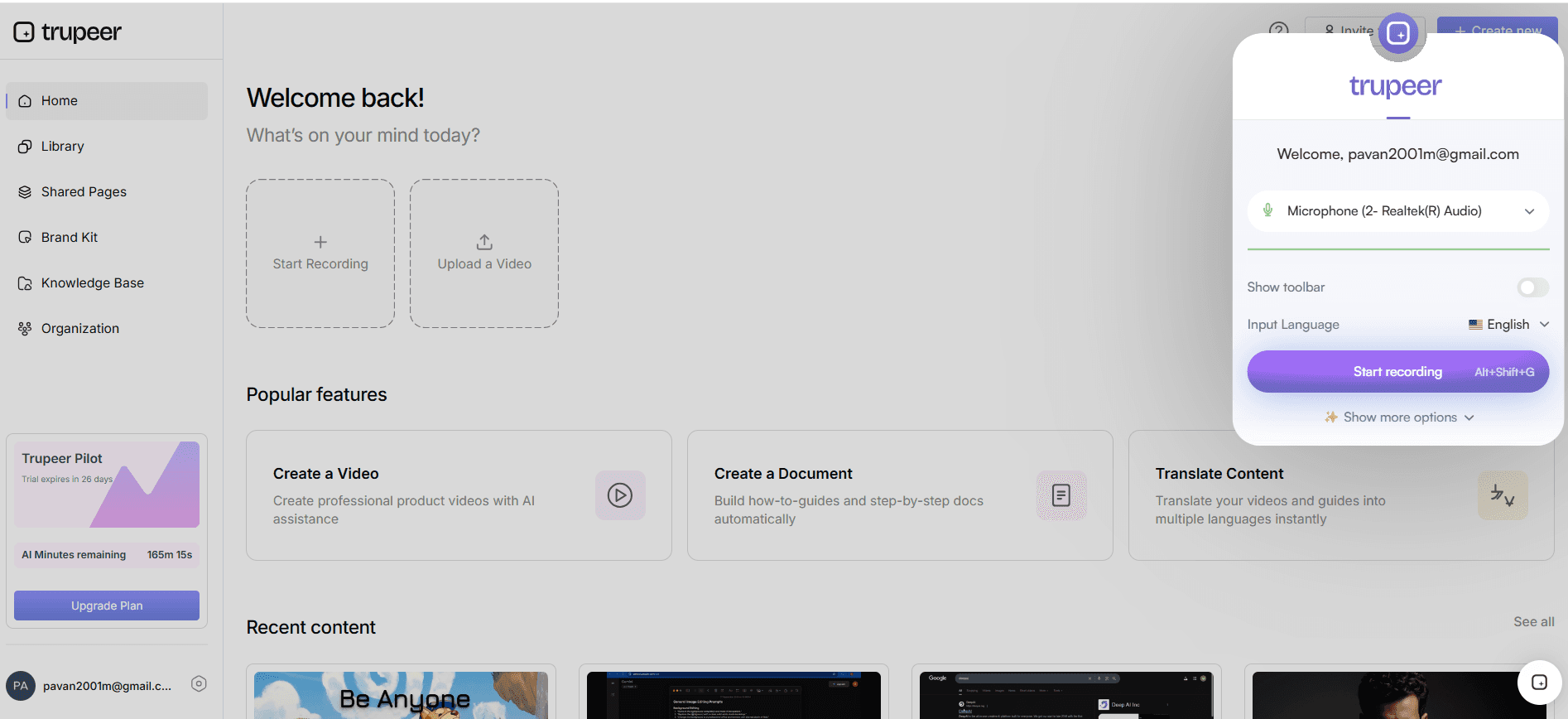
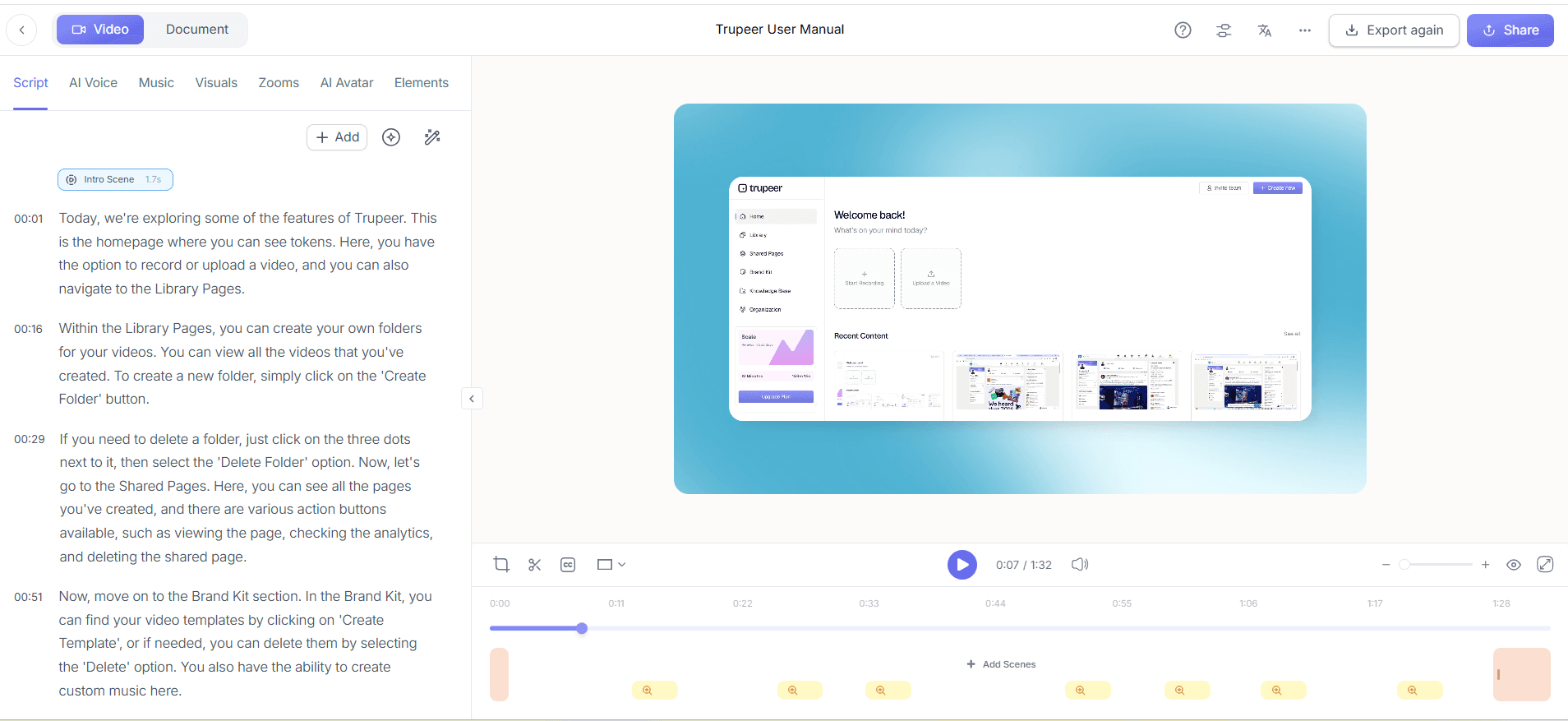
For each prioritized question, use Trupeer’s AI screen recording with auto-zoom and click detection to create a visual demonstration. Begin by clicking "Start Recording" in the Trupeer dashboard. The tool automatically highlights clicks and zooms in on important areas, making it easy to follow along. This recording process usually takes under an hour per video. Ensure you capture all relevant steps needed to answer the question thoroughly. The result is a clear, focused video that helps users understand the product feature being demonstrated. For a deeper look, our guide on product video creation covers the adjacent playbook.
Step 4: Add AI Narration
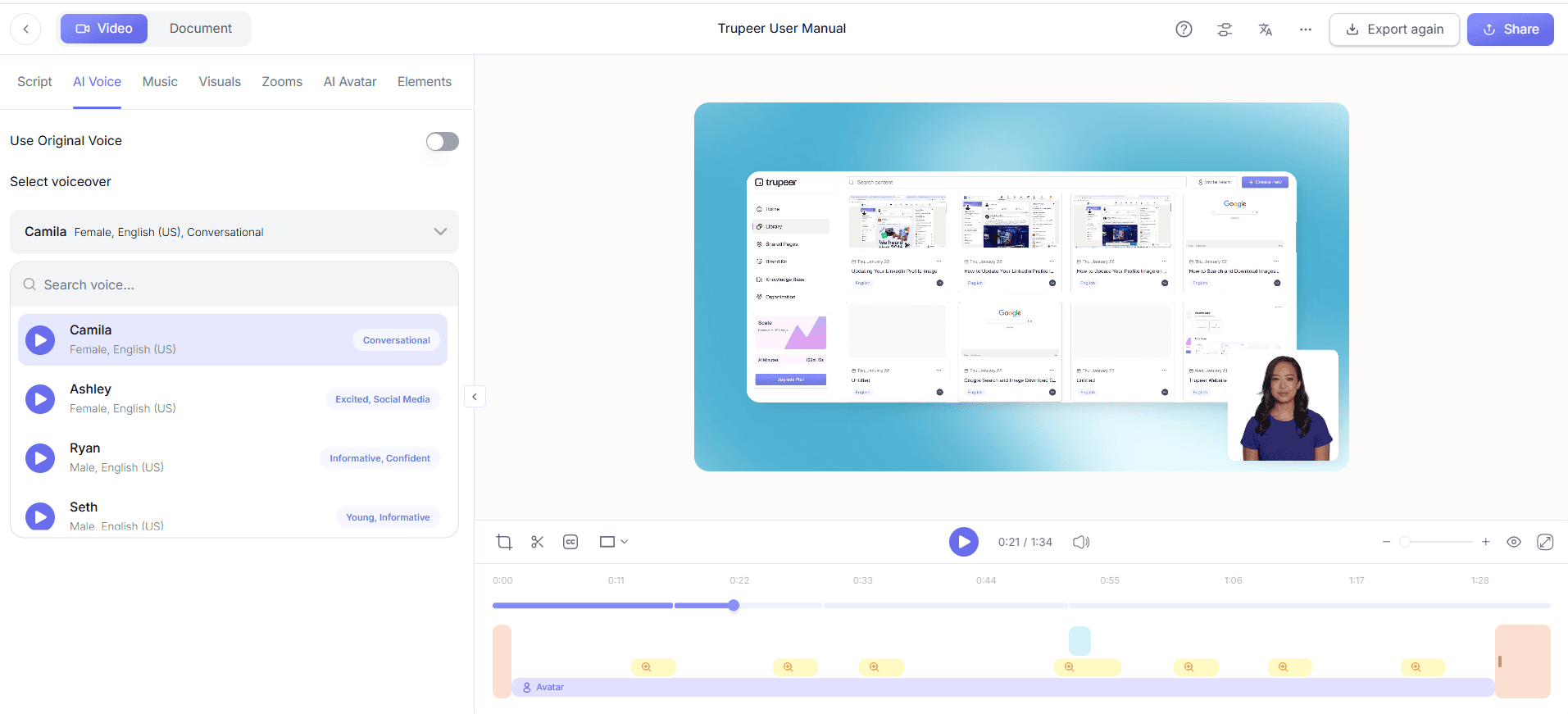
Enhance your video with narration using Trupeer’s silent screen recording with automatic AI narration feature. After recording, select "Add Narration" in the editing interface. You can choose from 65+ natural voices and adjust the pace and tone to match your brand's style. This step is crucial for providing context and clarity, especially for complex topics. Narration can be completed in about 30 minutes, and it transforms a simple screen recording into a comprehensive tutorial.
Step 5: Edit and Enhance the Video
Use Trupeer’s editing tools to refine your video. Automatically remove filler words and long pauses to ensure the content is concise and engaging. Click "Edit" in the dashboard, select "Remove Fillers," and let the AI process your video. This enhancement takes just a few minutes and significantly increases the professionalism of the final product. You can also use brand kits and templates for consistent visual styling, reinforcing your brand identity across all videos.
Step 6: Distribute and Monitor Engagement
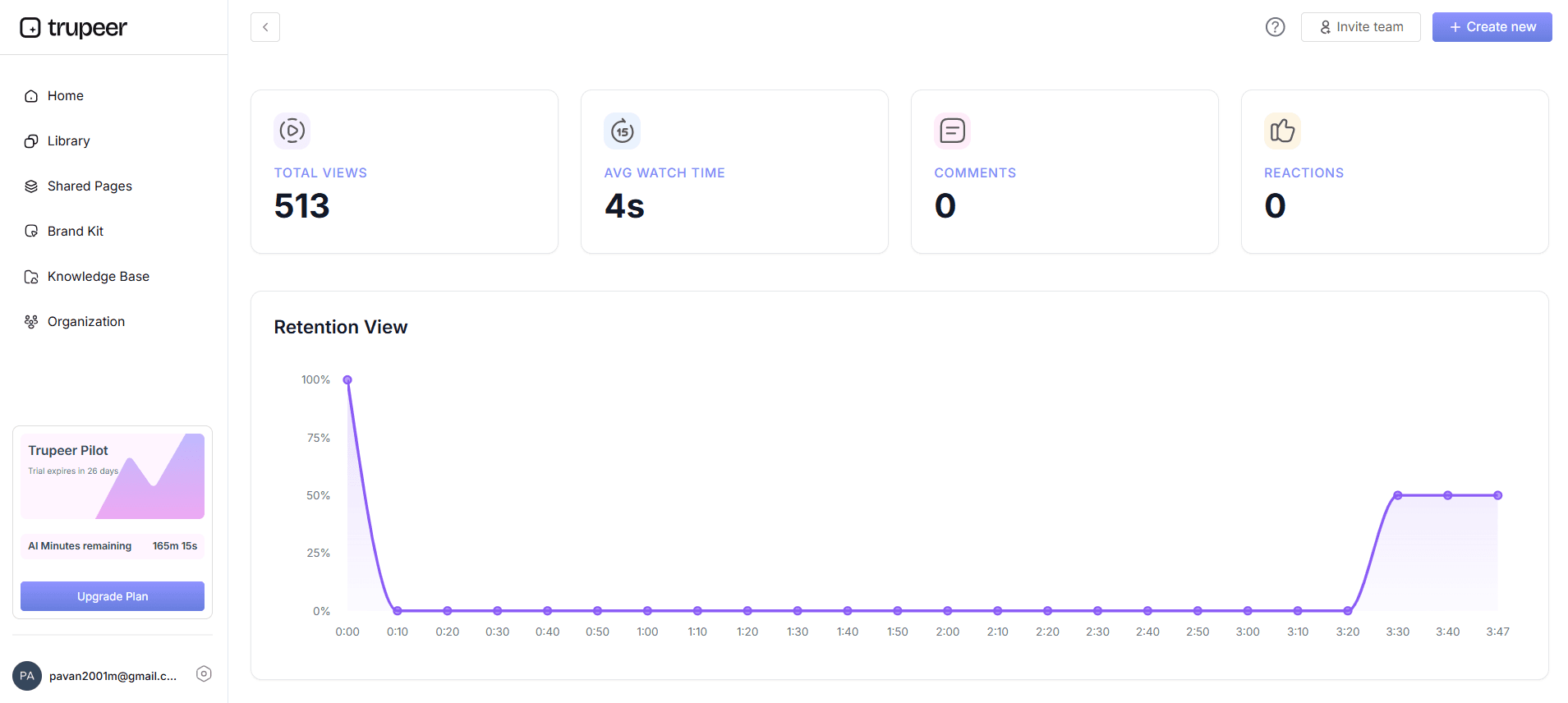
Finally, distribute your videos using Trupeer’s custom-domain hosting and AI-searchable knowledge base. Share the videos through your website, client portals, or embedded in-app guidance. Monitor viewer engagement analytics to see how users interact with the videos, identifying any drop-off points or areas needing improvement. This data-driven approach allows you to iterate on content and ensure that the videos effectively address user needs, leading to improved customer satisfaction and reduced support costs.
What tips help you identify which product questions most deserve a video answer?
Prioritizing which product questions to address with video content involves strategic decision-making and practical execution. Here are some tips to guide you:
use Data Analytics. Use analytics to identify high-impact questions that frequently appear in customer support interactions.
Focus on Complexity. Prioritize videos for questions that are difficult to explain through text alone, enhancing user comprehension.
use Feedback Loops. Regularly review user feedback and engagement metrics to refine your video content strategy.
Standardize Formats. Create a consistent format for your videos, using templates to maintain quality and brand consistency.
Integrate with Existing Tools. Use a video trimmer to refine content and ensure all videos meet your quality standards.
Test and Iterate. Continually test video content with real users to gather insights and make data-driven improvements.
Stay Customer-Centric. Always keep the end-user experience in mind when deciding which questions deserve a video answer.
Many teams pair this with a documentation platform that generates written guides from the same recording, so the pitch and the how-to stay in sync.
Frequently asked questions
How can I determine which questions need a video answer?
Identify questions that are frequently asked and have a high potential impact on user satisfaction. Analyze support tickets and customer inquiries to find recurring themes. Consider the complexity of the question and whether a video could provide a clearer, more engaging explanation than text. This approach ensures that the videos you produce address the most significant pain points for your users, leading to better understanding and reduced support requests.
What factors should I consider when prioritizing questions for video answers?
Focus on factors such as frequency, complexity, and user impact. Questions that are asked often, involve complex processes, or lead to dissatisfaction if misunderstood should be prioritized. Also, consider the resources required to produce the video and the potential return on investment. By balancing these factors, you can focus your efforts on producing content that delivers the highest value for both your users and your organization.
Can Trupeer help with multi-language video content?
Yes, Trupeer offers AI translation into 40+ languages with lip-sync, making it ideal for global user bases. This AI video translation feature ensures that your video content is accessible to non-English speaking audiences, enhancing the reach and effectiveness of your educational materials. It allows you to maintain consistent messaging across different languages, which is crucial for international product launches.
Does using video answers reduce customer support costs?
Yes, video answers can significantly reduce customer support costs by decreasing the volume of support inquiries. When users have access to clear, engaging video tutorials, they can resolve many issues on their own without needing to contact support. This not only saves time for your support team but also improves customer satisfaction by providing immediate assistance. The reduction in support tickets translates directly into cost savings for your organization.
Is it necessary to use professional voice actors for video narration?
No, Trupeer’s AI voiceover capabilities allow you to create professional-quality narration without hiring voice actors. You can choose from 65+ natural voices and customize the pace and tone to match your brand. This feature makes it easy to produce polished, engaging video content quickly and cost-effectively. It ensures that your videos maintain a consistent and professional sound, enhancing the overall user experience.
Related Blogs