Trupeer Blog
Summarise

Picture this: You're a developer tasked with integrating a new API. Frustrations mount when vague documentation leaves you grappling with errors. Here’s where a well-crafted API tutorial video can change everything. Developers expect a format that's concise and informative, not bogged down by unnecessary flair. It’s essential because developers often need to integrate APIs quickly. A survey showed that 67% of developers prefer video tutorials over text when learning new tools.
67% of developers prefer video tutorials over text when learning new tools.
But not all videos meet these expectations. Overproduction can obscure the essential information, wasting time rather than saving it. So, how do you strike the right balance? You need to understand the standard format developers trust. This article is for product managers, technical writers, and anyone responsible for creating API tutorial content. You’ll learn how to structure your video to enhance understanding and facilitate faster integration. This isn't just about making a video; it's about creating a resource that developers will rely on time and again. The stakes are high because a poorly executed tutorial could deter potential users from your API. With Trupeer's ai video editing capabilities, you can ensure your tutorial videos are both engaging and efficient.
Why does the API tutorial video format matter?
For businesses aiming to gain developer adoption, delivering quality API tutorial videos isn't optional; it's crucial. Developers are inundated with options and face tight deadlines, so they need resources that help them integrate quickly and efficiently. A poorly structured video can result in misunderstandings and errors, leading to frustration and potential drop-offs. When developers face roadblocks, they might abandon your API in favor of a more accessible competitor. This is why understanding what developers expect in an API tutorial video matters significantly.
Another key factor is the role these videos play in customer education. With clear, concise tutorials, companies can reduce support requests and improve user satisfaction. It’s not just about creating any video; it’s about crafting an experience that aligns with the developers’ workflow, helping them solve real-world problems. Imagine a scenario where a developer integrates your API in hours instead of days, thanks to a well-produced video. That’s the kind of impact you’re aiming for. The right format can enhance comprehension, increase adoption, and ultimately drive revenue growth by ensuring your API becomes an integral part of the developer's toolkit.
What are the benefits of a structured API tutorial video?
A well-structured API tutorial video offers numerous advantages that extend beyond just teaching developers how to use your API. Let's look at the specific benefits such a video format provides.
Enhanced Understanding. A structured video enables developers to grasp complex concepts more easily, reducing the learning curve associated with new APIs.
Time Efficiency. Developers can quickly find the information they need, minimizing the time spent on trial and error. This efficiency is crucial in fast-paced development cycles.
Reduced Support Queries. By preemptively addressing common questions and issues, a tutorial can lower the volume of support requests, freeing up your team to focus on other priorities.
Increased Adoption Rates. A clear and engaging video tutorial can encourage more developers to choose your API over competitors, boosting adoption rates substantially.
Positive User Experience. By providing a valuable resource, you enhance the overall user experience, building loyalty and long-term engagement with your API.
simplified Onboarding. A comprehensive AI video platform can simplify the onboarding process, making it easier for teams to integrate your solution efficiently.
Which Trupeer features help you create API tutorial videos?
Trupeer offers a suite of features designed to simplify the production of effective API tutorial videos. These capabilities ensure your videos are not only informative but also engaging and easy to produce.
AI Screen Recording with Auto-Zoom and Click Detection
Trupeer's AI screen recording feature automatically zooms into areas of interest and detects clicks, enhancing clarity without manual editing. This ensures that developers can focus on what's important, like following along with code demonstrations or understanding complex workflows. The auto-zoom feature helps maintain viewer engagement by emphasizing key actions and reducing visual clutter. This capability is particularly useful for demonstrating API calls and responses, as it highlights the intricate details developers need to see.
Silent Screen Recording with Automatic AI Narration
With the silent screen recording feature, you can capture your screen without worrying about background noise. Trupeer then adds AI-generated narration that aligns perfectly with the visual content. This feature is invaluable for creating consistent, professional-sounding tutorials in multiple languages, thanks to the AI’s ability to generate voiceovers in 65+ natural voices. It's a perfect fit for international developer teams who require video knowledge base consistency across different regions.
AI Voiceover in 65+ Natural Voices
Trupeer provides AI voiceover capabilities that allow you to choose from over 65+ natural voices, each with adjustable pace and tone. This feature ensures your tutorial matches the brand's voice while catering to diverse audiences. For example, if your audience includes non-native English speakers, you can select a voice that’s clear and easy to understand. This flexibility helps make your API tutorial more accessible and user-friendly, expanding its reach and impact.
AI Avatars / Talking-Head Video
Engage your audience with AI avatars that can act as virtual presenters in your videos. Trupeer offers a library of stock avatars and the ability to create custom ones via HeyGen integration. This adds a personal touch to your tutorials, making them more relatable and engaging. Whether you're introducing a new API or explaining a complex concept, these avatars can help maintain viewer attention and improve retention. The avatars can be smoothly integrated into your video tutorial tool, enhancing visual appeal and reducing the need for expensive production setups.
Automatic SOP Generation from Any Recording
Trupeer's automatic SOP generation feature transforms any video recording into a comprehensive, editable document. This is particularly useful for API tutorials, as it provides developers with a text-based reference to accompany the video. The SOPs can be exported in multiple formats such as MP4, HTML, PDF, and SCORM, ensuring flexibility for different documentation needs. This feature is especially beneficial for teams looking to create a documentation generator that supports ongoing learning and easy updates as APIs evolve.
How do you create an API tutorial video step by step with Trupeer?
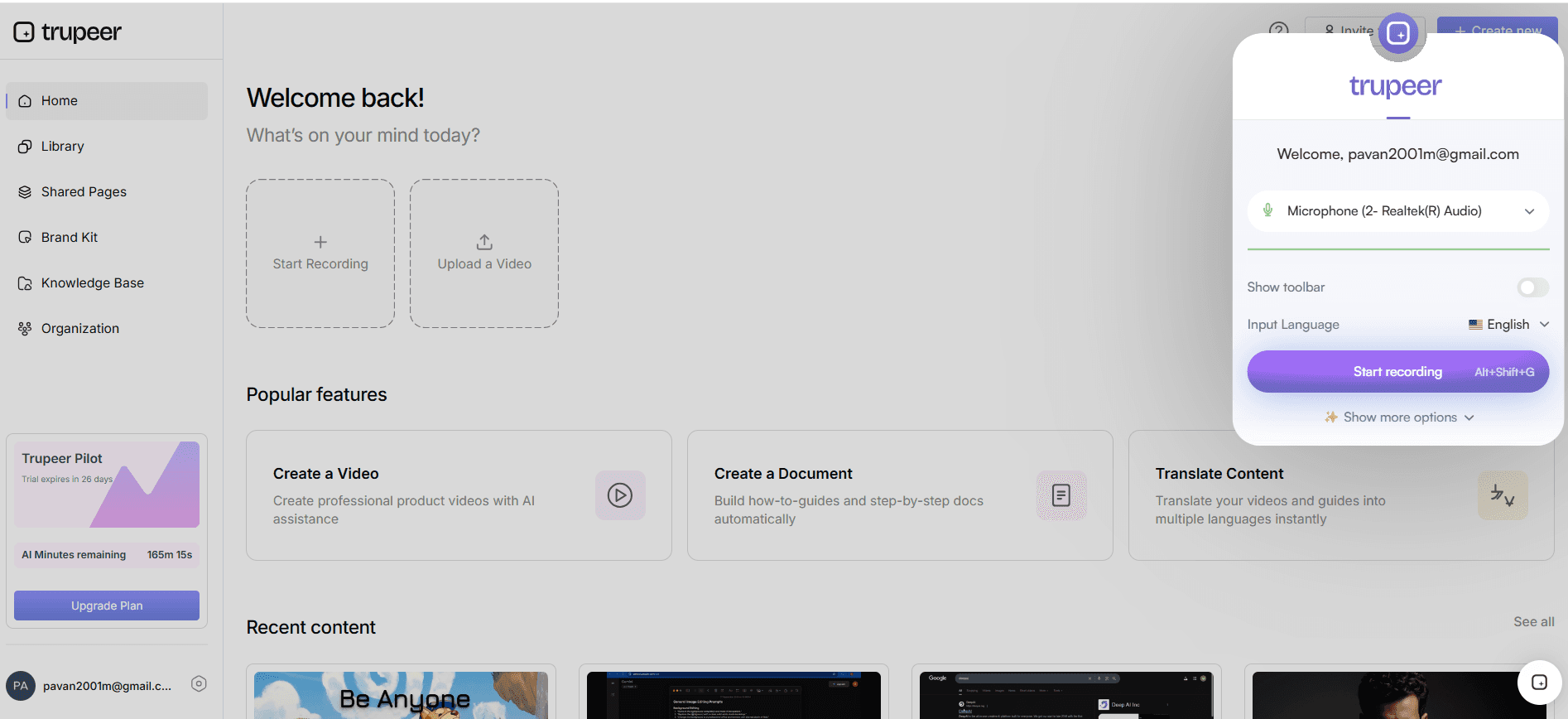
Step 1: Start Screen Recording
Begin by using Trupeer's browser-based recorder, which requires no installation. Open the Trupeer dashboard and select “Start New Recording.” Choose the “AI Screen Recording” option with auto-zoom and click detection. This feature highlights areas of interest automatically, allowing developers to focus on key interactions. As you navigate through the API interface, the tool will zoom in on important sections like API call execution or debugging screens. This recording method saves time and ensures your video is both engaging and informative. Once you've captured the necessary footage, hit “Stop” to save the recording.
Step 2: Add AI Narration
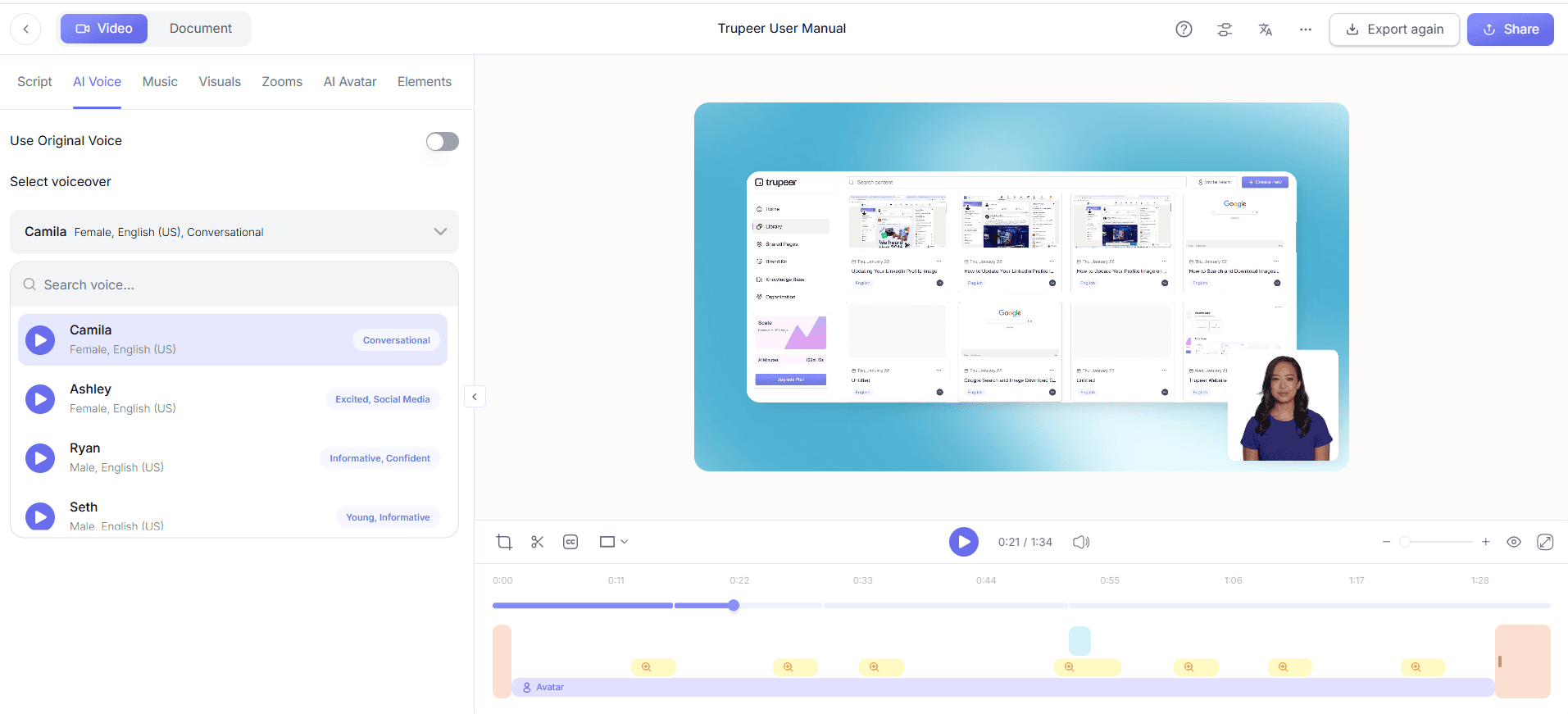
Next, use the silent screen recording feature with AI narration. Go to the recording editor and select “Add Narration.” Trupeer offers over 65+ natural voice options with adjustable pace and tone. Choose a voice that matches your audience's preference, ensuring clarity and engagement. The AI will automatically sync the narration with your recorded video, explaining each step as it happens on screen. This process not only enhances comprehension but also reduces the need for manual voiceover work, allowing you to produce polished tutorials quickly. Teams weighing tools often start with a Loom alternatives comparison before standardizing on a workflow.
Step 3: Incorporate AI Avatars
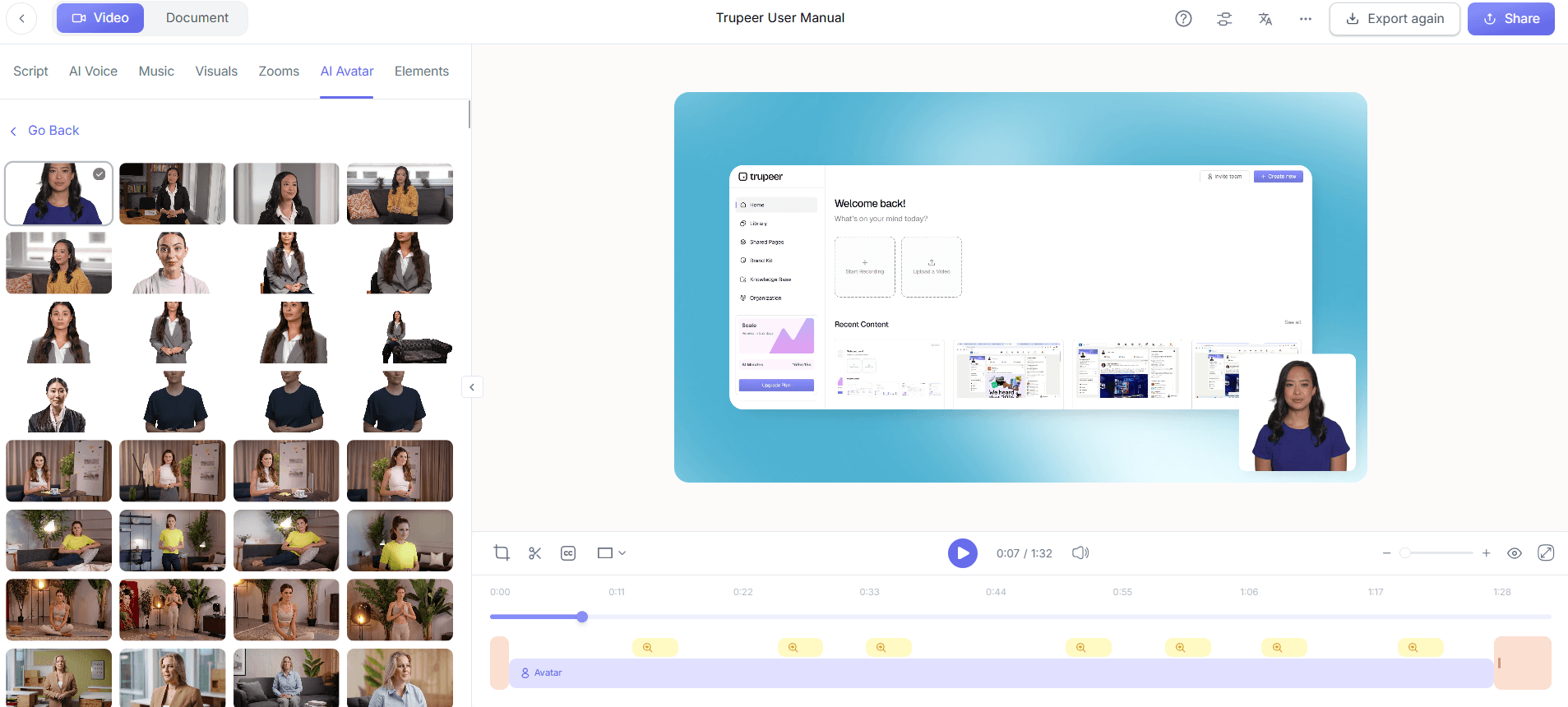
To make your video more engaging, integrate AI avatars. In the video editor, click on “Add Avatar” and select from Trupeer's stock library or create a custom avatar using HeyGen integration. Position the avatar in a corner of the video where it won't obstruct important information. These avatars serve as virtual presenters, adding a personal touch to your tutorial. They can introduce sections, summarize key points, and maintain viewer interest throughout the video. This feature is particularly useful for explaining abstract concepts or when a human presence can enhance understanding.
Step 4: Generate Automatic SOPs
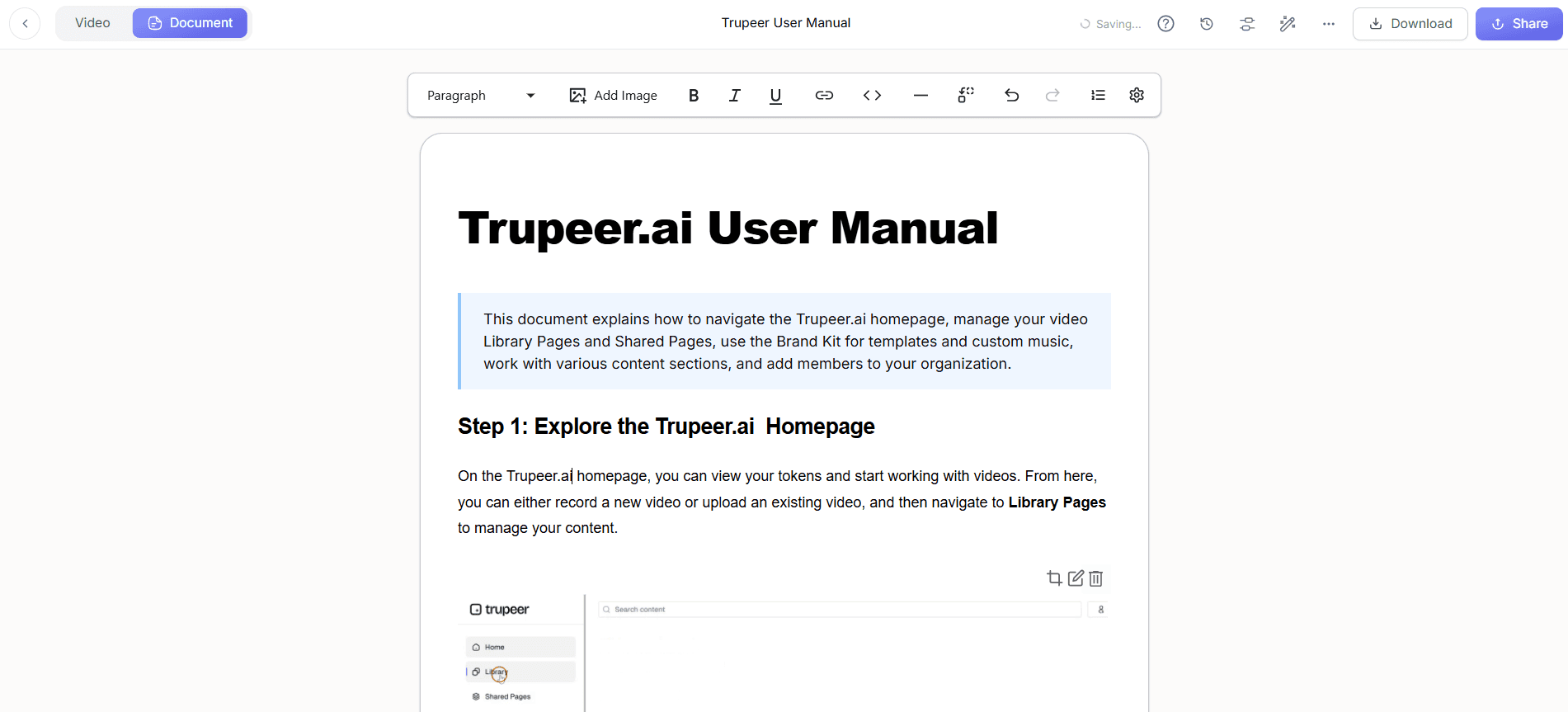
After completing your video edits, use Trupeer’s automatic SOP generation feature. Navigate to the “Export” tab and select “Generate SOP.” This function creates an editable document that outlines the steps shown in your video. Export the SOP in your preferred format, MP4, HTML, PDF, or SCORM. This step provides developers with a text-based guide that complements the video, making it easier to follow along and revisit specific instructions without rewatching the entire tutorial. It’s a powerful way to reinforce learning and ensure consistency in API usage.
Step 5: Translate and Localize
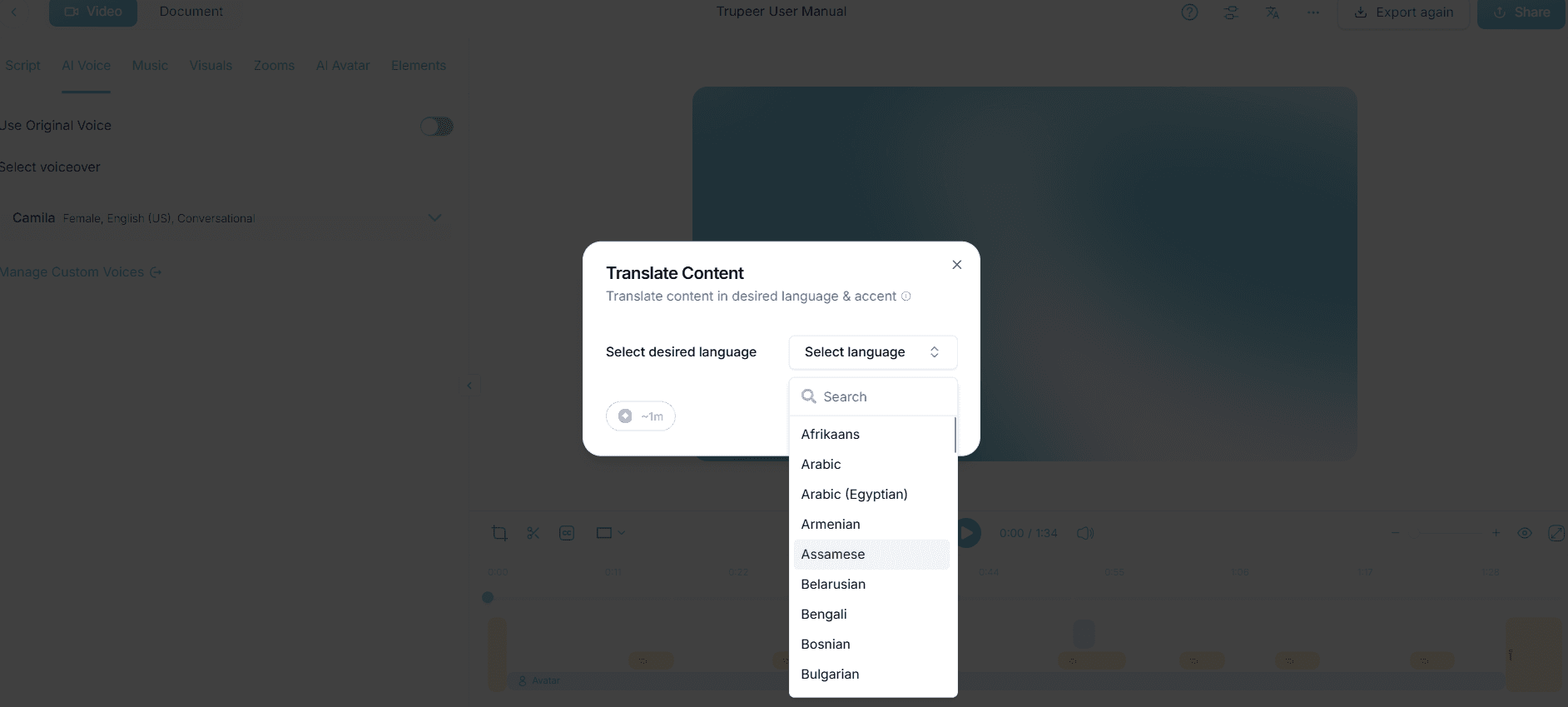
For global reach, use Trupeer’s AI translation and localization capabilities. Go to the “Localization” settings and select the languages you want to translate into. Trupeer supports translation in 40+ languages with lip-sync and AI dubbing for non-English audiences. This feature makes your tutorial accessible to a broader audience, ensuring that language barriers don’t impede the adoption of your API. The lip-sync ensures that the dubbed narration matches the avatars’ mouth movements, providing a smooth viewing experience for international developers.
Step 6: Analyze Viewer Engagement
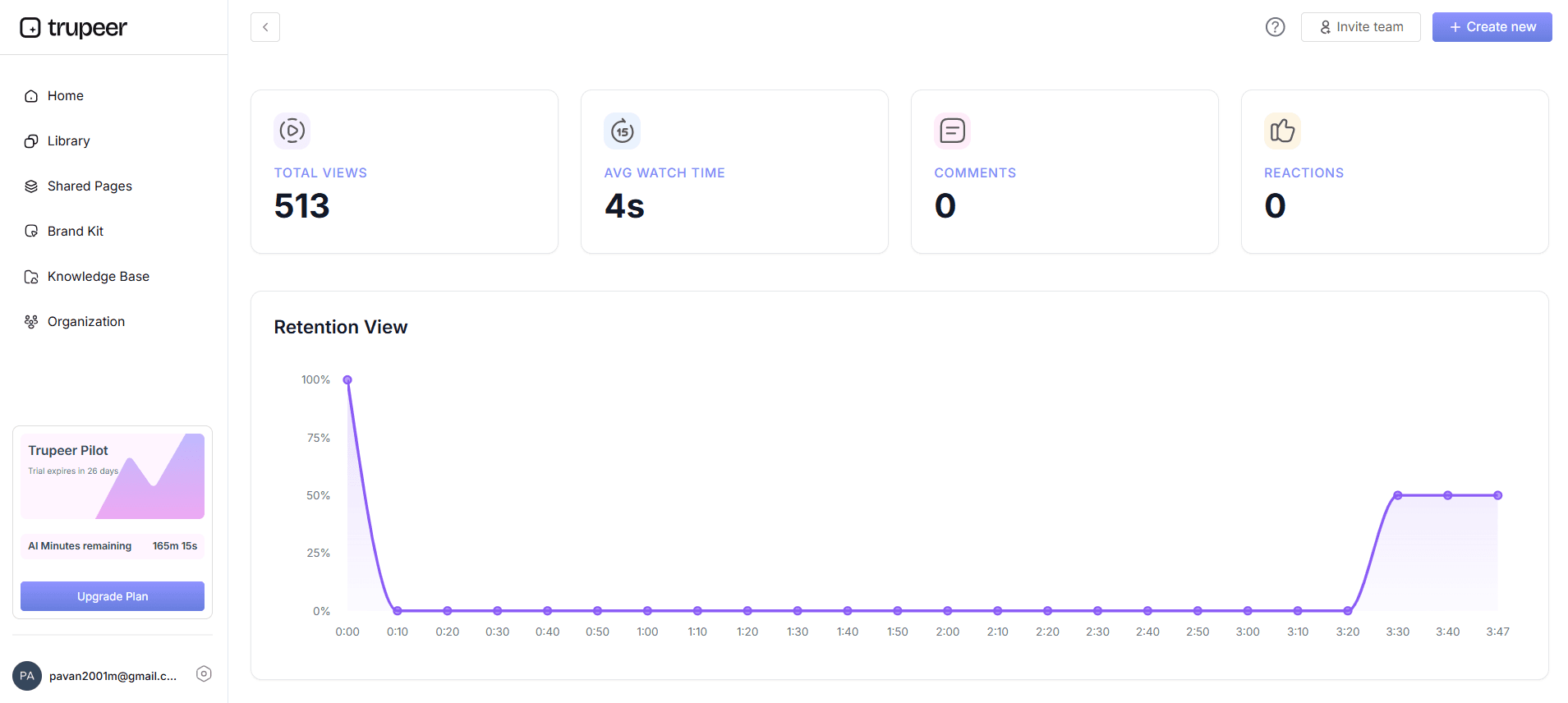
Finally, use Trupeer's viewer engagement analytics to refine your tutorial. Select “Analytics” from the dashboard to view metrics like viewer drop-off rates, engagement heatmaps, and completion percentages. These insights help you understand which parts of your video are most effective and where viewers lose interest. Use this data to make informed adjustments, such as re-editing sections with high drop-off or emphasizing popular points. This iterative process helps you continuously improve your videos, ensuring they meet developer expectations and enhance learning outcomes.
What tips help you create effective API tutorial videos?
Creating an effective API tutorial video requires attention to detail and understanding of developer needs. Here are practical tips to ensure your videos hit the mark and resonate with your audience.
Keep It Concise. Aim for a video length of 5-10 minutes. Developers appreciate brevity, so focus on essential steps.
Use Clear Language. Avoid jargon and explain terms that might be unfamiliar to newcomers. This makes your tutorial more inclusive.
Structure Logically. Follow a logical flow, starting with an introduction, followed by step-by-step instructions, and ending with a summary.
Emphasize Key Actions. Use Trupeer's auto-zoom to highlight important clicks or code sections, ensuring viewers don't miss critical details.
Test Your Tutorial. Run through the entire video before publishing to catch any errors or unclear sections.
Offer Supplemental Materials. Provide links to documentation or code samples, allowing developers to explore further.
Seek Feedback. Encourage viewers to leave comments or questions. Use this feedback to improve future videos.
For a deeper look, our guide on video prospecting covers the adjacent playbook.
Frequently asked questions
How long should an API tutorial video be?
An effective API tutorial video should ideally be between 5 to 10 minutes long. This length is manageable for developers who need to quickly understand how to use your API without spending too much time. Keeping the video concise ensures that it focuses on the most critical steps and avoids unnecessary details that could distract from the primary learning objectives. If your tutorial requires more depth, consider breaking it into a series of shorter videos, each covering specific topics or features comprehensively.
What equipment do I need to make an API tutorial video?
To create an API tutorial video, you'll need a computer with screen recording software, a decent microphone for clear audio, and possibly a webcam if you plan to include a talking-head segment. Tools like Trupeer simplify this process by offering browser-based recording and AI-generated narration, eliminating the need for high-end audio equipment. These features allow you to produce professional-quality videos without the hassle of traditional recording setups, making it accessible even if you’re working with limited resources.
Can Trupeer help with video localization?
Yes, Trupeer offers solid video localization tools, including AI translation and dubbing in over 40 languages. This makes it easy to produce localized versions of your API tutorial, ensuring accessibility for non-English speaking developers. You can customize the translations to maintain context and accuracy, while the lip-sync feature aligns audio with visual elements. This capability is crucial for reaching a global audience, allowing your API to be more widely adopted across different regions. When SOPs come into the same conversation, a Scribe alternatives comparison helps clarify the scope.
Why is AI narration beneficial for API tutorials?
AI narration is beneficial because it provides consistent, high-quality voiceovers without requiring extensive audio recording equipment or expertise. It allows you to focus on the content rather than the production, ensuring your tutorial is clear and professional. With Trupeer, you can select from over 65+ natural voices and adjust pace and tone to match your audience's needs. This flexibility ensures your video aligns with the brand's voice while making the tutorial accessible to a diverse audience.
What is the impact of viewer engagement analytics?
Viewer engagement analytics provide insights into how your audience interacts with your video, revealing which parts are most effective and where viewers lose interest. By analyzing metrics like drop-off rates and heatmaps, you can refine your tutorial to better meet developer needs. These insights help you optimize the video content, ensuring it remains engaging and informative. With Trupeer's analytics, you can continuously improve your tutorials, enhancing their impact and effectiveness for your target audience.
Related Blogs