
Use this template
Hiring is one of the most consequential things a company does - and one of the most often improvised. With Trupeer, you can save hours on recruitment planning by starting with a free recruitment plan template, customizing it with your brand identity, and turning the plan into video updates that align hiring managers, recruiters and interviewers.
What is a free recruitment plan template?
A free recruitment plan template is a reusable structure for setting out which roles you intend to fill, by when, through what process, and with what resources.
The last of those four is where most plans are thin. Resources gets read as budget, so the plan covers advertising spend, agency fees and tooling, and stops. The resource that actually constrains hiring is the time of the people who must screen, interview, debrief and decide, and that time is almost never counted.
The template is not the plan. It gives you the sections, which is the easy part. What determines whether the plan holds is whether the hours it implicitly demands exist in the calendars of the people it demands them from.
Format follows use. A free recruitment plan template Word doc suits the narrative sections, which is where the reasoning lives. A recruitment plan template Excel version suits the role table, the capacity arithmetic and the pipeline tracking, all of which are genuinely numerical. A free recruitment plan template PPT deck suits presenting the plan for approval, and a free recruitment plan template PDF is the approved version.
Why recruitment plans fail on capacity rather than strategy
Read a typical recruitment plan and note what it is confident about. Sourcing channels. Employer brand. Job description quality. Agency contingency. Diversity of pipeline. Advertising budget.
Now look for a number stating how many hours of hiring manager time the plan requires, and where those hours come from.
It is almost never there, and its absence is the most common reason plans that look thorough deliver late. Sourcing is rarely the binding constraint. In most organisations the binding constraint is that the people qualified to interview also have full time jobs, and interviewing is the thing that moves when something else is urgent.
The consequence is not that hiring stops. It is that it slows in a way nobody attributes correctly. Applications arrive and wait. Interviews get scheduled two weeks out and then rescheduled. Candidates who were enthusiastic on day one accept something else on day twelve. The pipeline reports look reasonable because the top of the funnel is full, and the plan reports amber because the roles are still open, and the diagnosis offered is usually that the market is difficult.
Sometimes the market is difficult. More often the process has a queue in it, and the queue is a calendar.
The useful thing about this failure is that it is arithmetically predictable before it happens.
How to customize this template in Trupeer
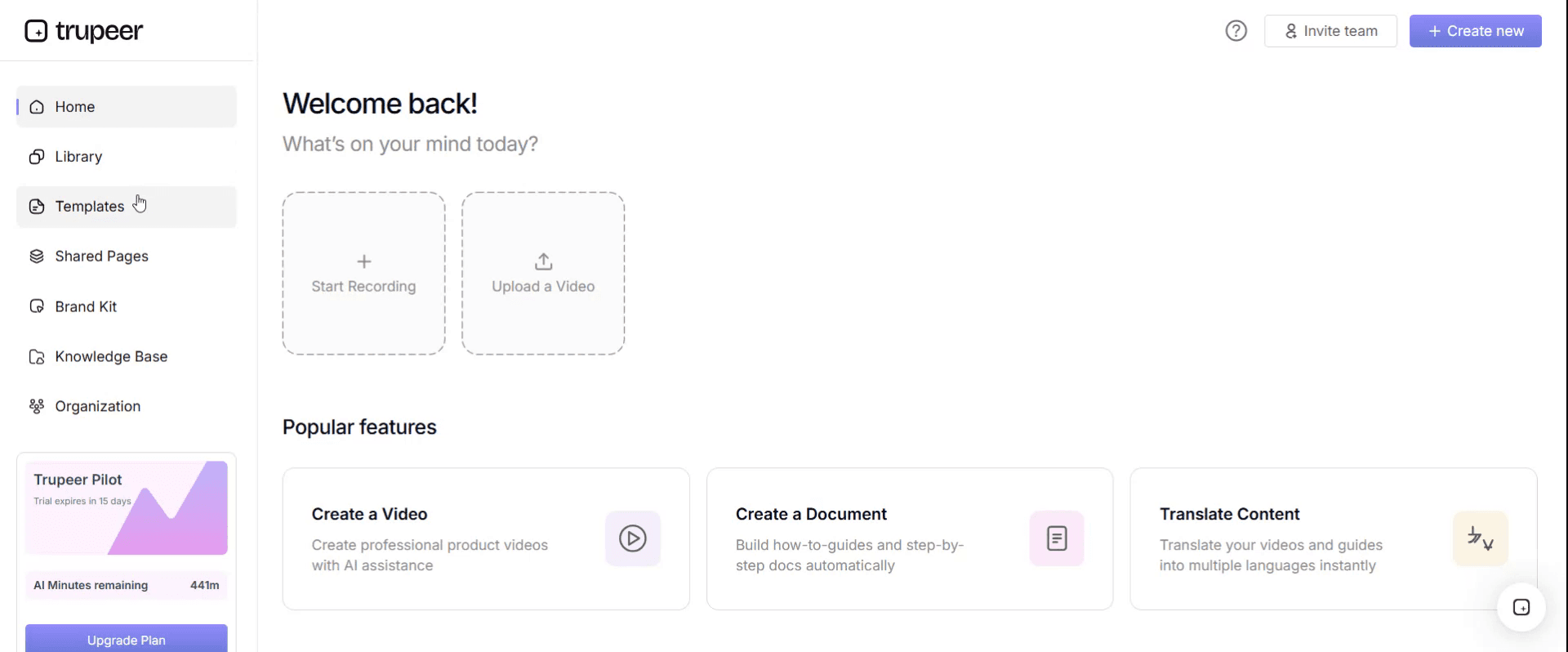
Step 1: Open the Templates Section
Go to the Templates section from the main navigation.
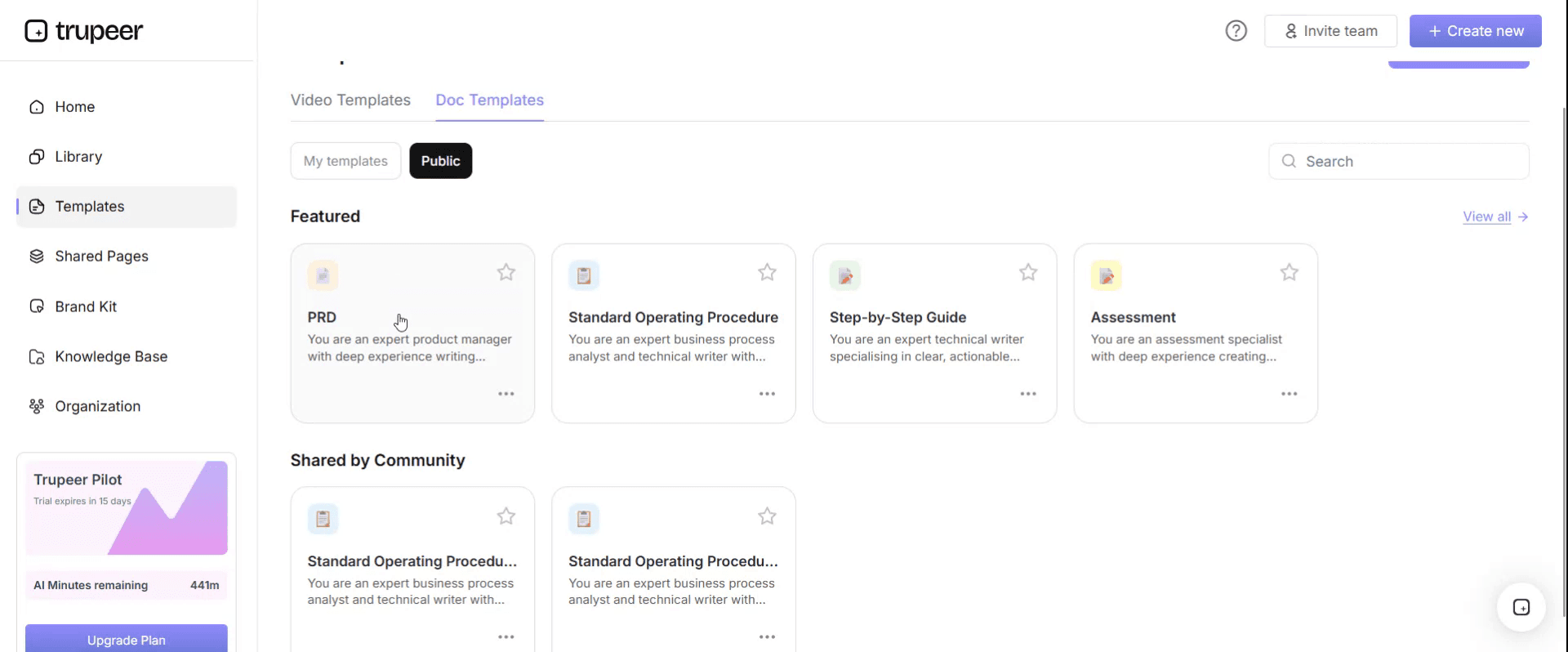
Step 2: Select and Open a Template
Click on any template you want to work with to open it.
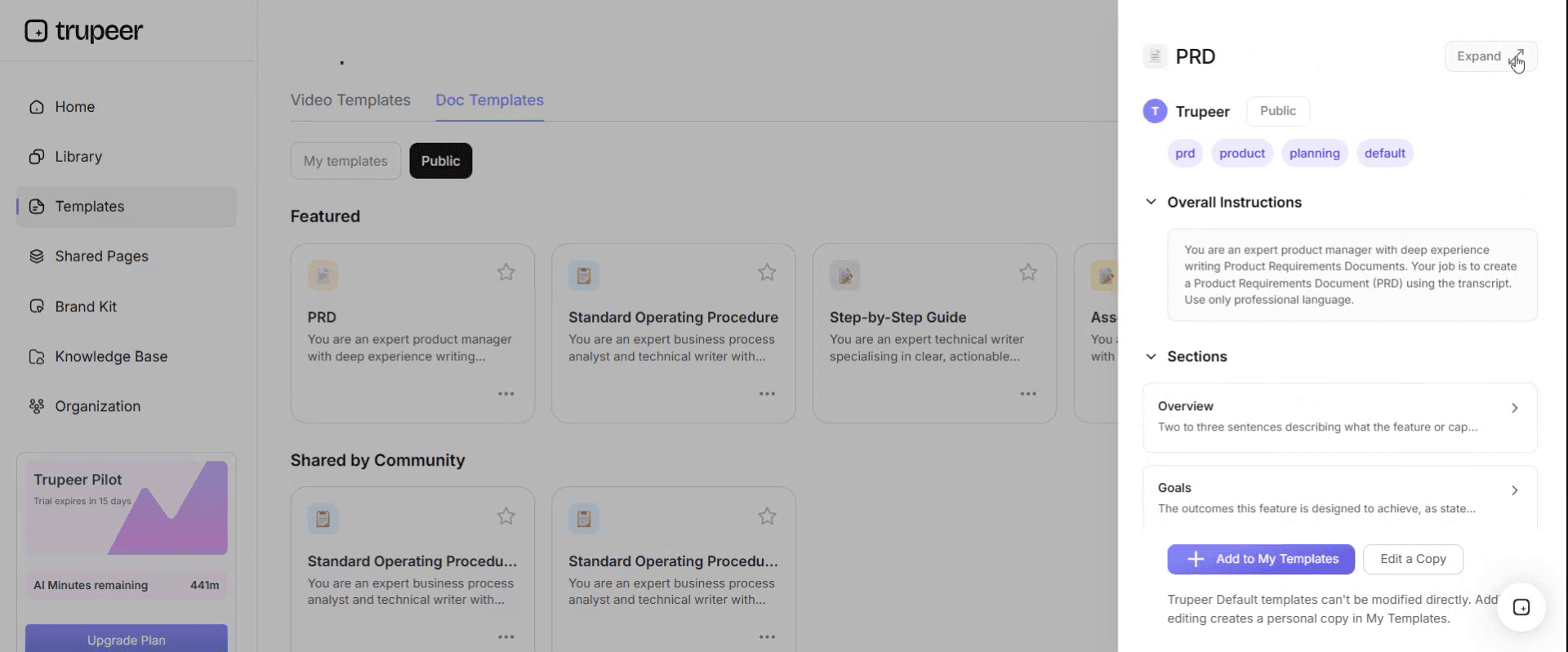
Step 3: Expand the Template View
If needed, expand the template view to see the full layout and details clearly.
Step 4: Edit the Template
Click on Edit to start modifying the selected template.
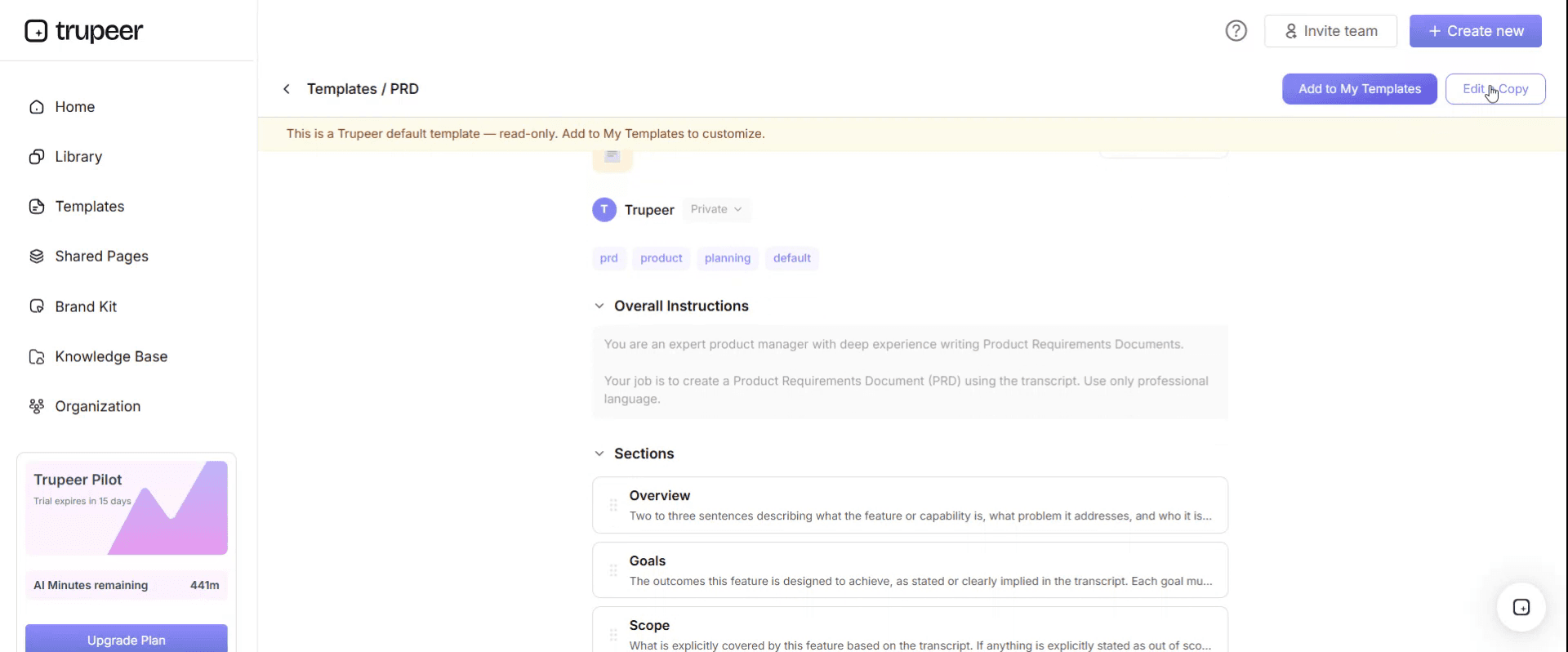
Within the editor, you can:
Add new sections
Define or update formatting rules
Add a logo and adjust its position and related settings
Step 5: Save Your Customized Template
After making all necessary changes, click Save to store the updated template as your own.
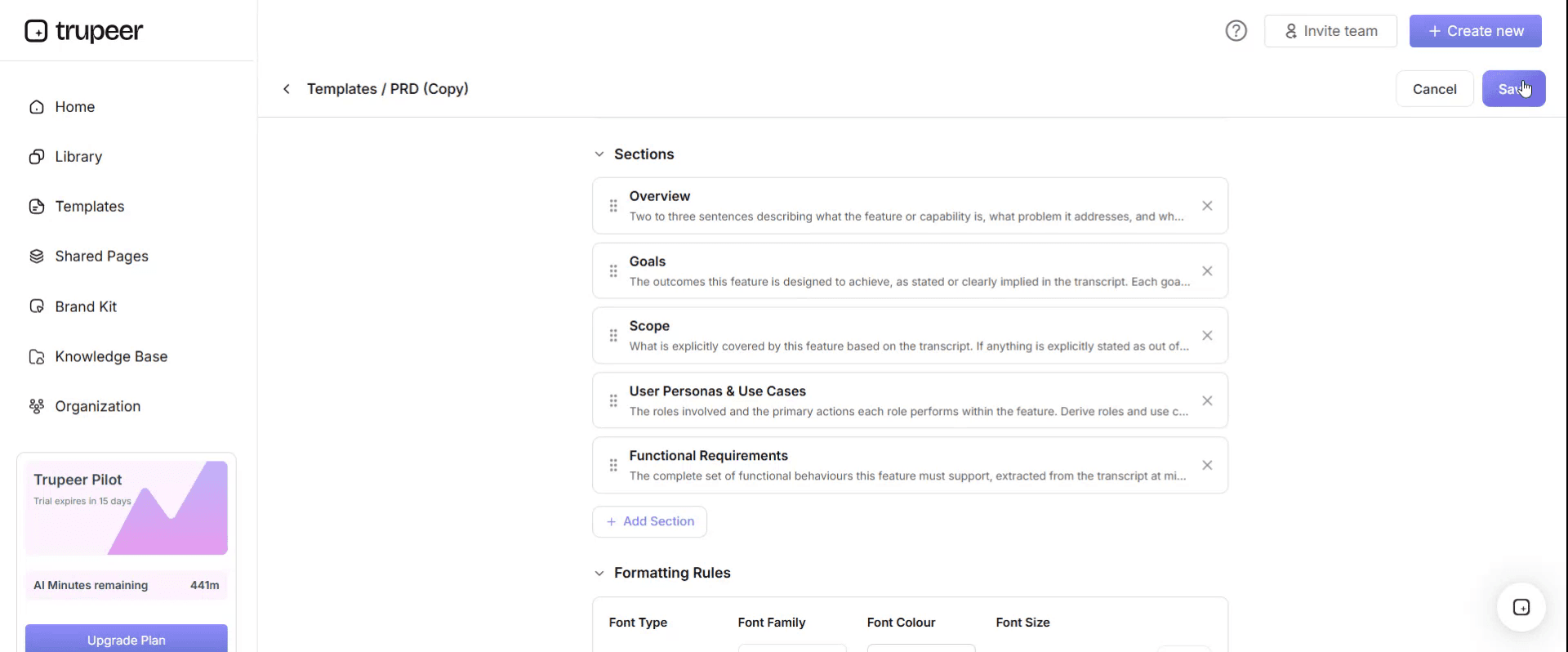
Step 6: Preview and Fine-Tune the Template
When you want to see how your customized template looks, open the Preview.
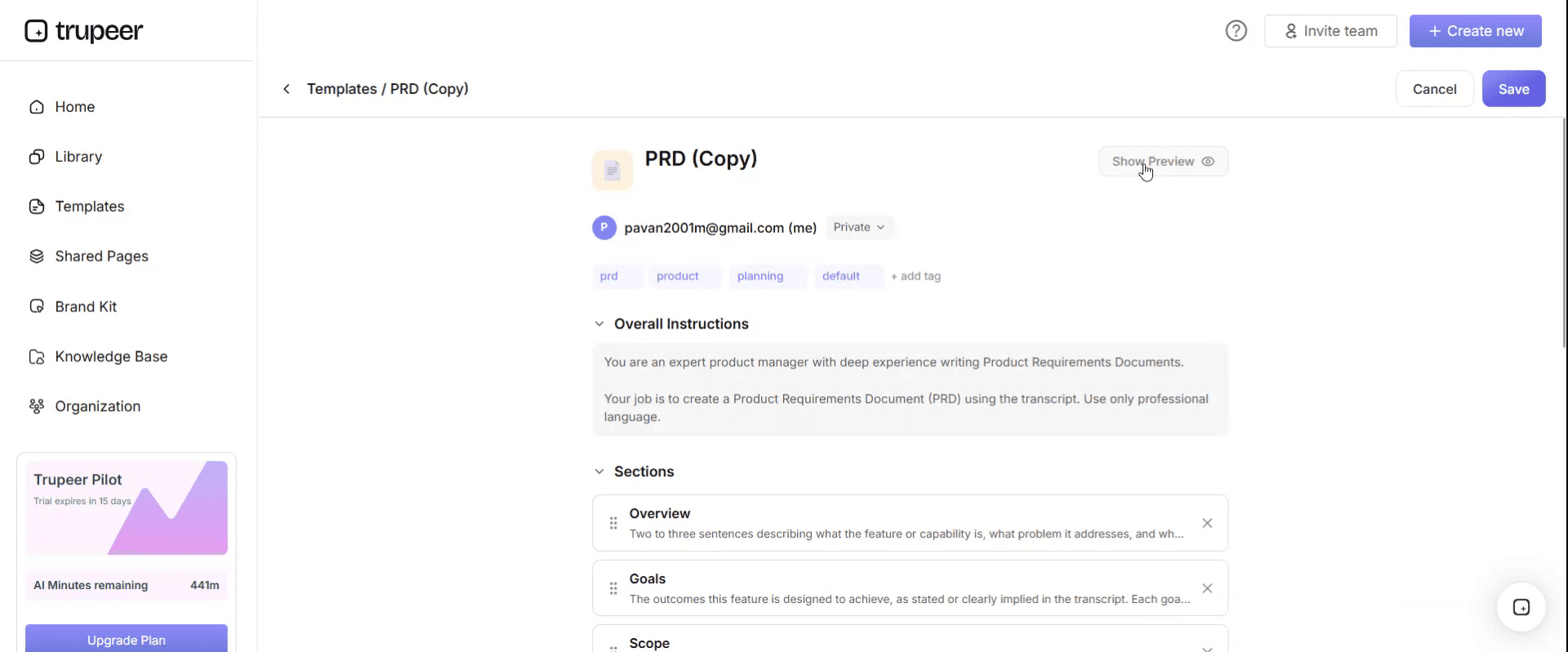
From the preview screen, you can continue to make adjustments directly if needed, ensuring the template appears exactly as you want.
With a recruitment plan template you can:
Save hours on planning: Skip the blank page with a structure built for hiring.
Hire more consistently: Built-in scorecards reduce bias and improve hire quality.
Stay on-brand: Apply your logo, fonts and colors using Trupeer's brand kit.
Move faster: Clear processes cut time-to-hire for every role.
Standardize across teams: Use the same template for every hiring sprint.
Reach global candidates: Translate recruitment materials into 65+ languages with one click.
How to calculate the hiring hours your plan actually needs
Ten minutes of arithmetic, and it changes most plans.
Work out the person hours consumed per hire, then multiply by the number of hires and divide by the months available. The figures below are for a mid skill role with a two stage process, and you should substitute your own.
Stage | Candidates per hire | Time each | People involved | Person hours |
|---|---|---|---|---|
Application screening | 25 | 3 minutes | 1 | 1.25 |
Phone screen | 8 | 20 minutes | 1 | 2.7 |
First interview | 4 | 45 minutes | 1 | 3.0 |
Panel interview | 2 | 60 minutes | 2 | 4.0 |
Debrief and decision | 2 | 20 minutes | 2 | 1.3 |
Offer, negotiation, follow up | 1.3 | 30 minutes | 1 | 0.65 |
That totals roughly thirteen person hours per hire, and it excludes writing the advert, briefing agencies, and everything the recruitment function does rather than the hiring team.
Now scale it. Forty six hires over nine months is about six hundred person hours, which is sixty six hours a month. If six managers share that, each owes eleven hours a month, every month, on top of their existing job. Roughly two and a half hours a week, sustained, which is a meaningful ask and an entirely feasible one if it has been asked for.
The failure is not that the number is large. It is that nobody stated it, so nobody agreed to it, so it competes weekly against work that was agreed to and loses.
Put this table in your plan, and build it as formulas rather than typed totals, which is the one argument for keeping the numerical half in a free recruitment plan template Excel file rather than a document. It is the section most likely to change what actually happens.
What a recruitment plan template must contain
Nine components. The third is the one almost every template omits.
Component | What it does |
|---|---|
Roles and numbers | What you are hiring, how many, and the target start date rather than the target offer date. |
Why each role, and what happens if it is late | Ties hiring to the thing it enables, which is what lets you sequence when you cannot do everything. |
Capacity | Person hours required, who provides them, and confirmation that they know. |
Process per role family | Stages, who is involved at each, and how long each stage is allowed to take. |
Service levels | Maximum days from application to response, and from interview to decision. Covered below. |
Sourcing | Channels per role family, with cost and expected yield rather than a list. |
Budget | Advertising, agency, referral, tooling. Separate from the capacity section deliberately. |
Measures | A small number, defined precisely. Time to hire measured from what to what. |
Compliance and fairness | Right to work, data handling, consistency of assessment, and any sector specific checks. |
Service levels deserve their own row because they are the only part of a recruitment plan that a candidate experiences. A plan can be excellent on every other dimension and still lose people at day twelve.
Free recruitment plan template: the structure to copy
Filled with a real example rather than placeholders. The organisation is a residential care operator opening two new homes.
Copy from here.
Header. Plan name, period covered, owner, approver, version and date.
Recruitment plan, new home openings. Covers March to November. Owner: H Adeyemi, Head of People. Approved: Operations Director. Version 4, 2 March.
Roles and numbers.
Role | Number | Needed in post by | What it gates |
|---|---|---|---|
Care assistant, Home A | 20 | 1 August | Home A cannot open below 18 |
Care assistant, Home B | 20 | 1 October | Home B cannot open below 18 |
Registered nurse | 6 | 1 August and 1 October, three each | Regulatory requirement for opening |
Capacity. The section that changes the plan.
Forty six hires at thirteen person hours each is five hundred and ninety eight hours over nine months, or sixty six hours a month. Provided by six home managers plus two deputies, which is eight people at approximately eight hours each per month. Agreed with each of them individually on 26 February and reflected in their objectives. Interview slots are pre booked into calendars weekly whether or not a candidate is waiting, and released only if unused by the Wednesday.
Process.
Care assistant: application, phone screen, single interview with a values based structure, offer subject to checks. Two stages, maximum eleven days end to end.
Registered nurse: application, phone screen, interview with home manager, meeting with clinical lead, offer subject to checks. Three stages, maximum eighteen days.
Service levels. Not aspirational. These are the plan.
Every applicant receives a response within two working days. Interview offered within five working days of a successful screen. Decision communicated within two working days of interview. Any breach is reported weekly with the reason.
Sourcing.
Channel | Roles | Expected yield | Cost |
|---|---|---|---|
Job boards | Care assistant | 60 percent of applications | Fixed monthly |
Referral scheme | Both | 20 percent, and best retention at twelve months | Per successful hire |
Local community and college outreach | Care assistant | 15 percent | Staff time only |
Specialist agency | Registered nurse only | Contingency from month four | Percentage of salary |
Budget. Advertising, referral payments, agency contingency, and DBS and check costs, stated separately with the agency line marked as contingency rather than assumed.
Measures. Four only. Days from application to first response. Days from application to offer. Percentage of applicants lost before interview. Twelve month retention by source channel.
Compliance and fairness. All interviews use the same structured questions and scoring for a given role. Right to work checks before start, no exceptions. Enhanced disclosure and safer recruitment checks per regulatory requirement, with references verified before start rather than after. Candidate data retained for six months then deleted. Recruitment is subject to employment and equality law and, in this sector, to statutory safer recruitment requirements, so this plan is reviewed by our HR adviser and does not replace legal advice.
Review. Weekly against service levels, monthly against numbers.
Copy to here.
Recruitment plan example: three hundred and forty applications and two hundred and ten that never got a reply
Thornbury Care Group, a residential care operator of about six hundred staff, planned to recruit forty care assistants and six nurses over nine months to open two new homes.
The plan was a good one on every dimension it addressed. Channels were chosen sensibly, the referral scheme was well designed, advertising was budgeted properly, and agency contingency was agreed in advance. It ran to eighteen pages and was approved without difficulty.
It assumed five working days from application to interview.
The actual figure was nineteen. Interviews were conducted by home managers, each already running a home at full occupancy, and in practice each could offer about two interview slots a week. When something clinical or operational came up, which it did most weeks, those slots went first.
In care recruitment at this level, candidates apply to several employers at once and accept whichever moves first, typically within about ten days. Nineteen days was outside the window the market allowed.
Of three hundred and forty applications, two hundred and ten were lost before interview. Most of those never received a reply at all, because responding was also a home manager task.
They filled thirty one of forty six roles by the deadline. Home B opened two months late, and agency cover across both homes cost a hundred and eighty eight thousand pounds.
The review found something worth stating plainly. Nothing in the plan was wrong. The numbers, channels, budget and process were all reasonable. What the plan did not contain was any figure for how many hours of manager time it required, and so nobody had ever been asked whether those hours existed. They did not, and the shortfall showed up as a queue rather than as a refusal.
Three changes followed. The capacity arithmetic went into the plan as a section. Interviewing was pooled across a rota of three managers rather than tied to the home a candidate applied to. And interview slots were pre booked into calendars every week regardless of whether anyone was waiting, on the reasoning that an empty held slot costs nothing and a slot that has to be found costs eleven days.
On the next twenty hires, application to interview came down to four days. Applicants lost before interview fell from sixty two percent to twenty one percent. The advertising spend did not change.
How to write a recruitment plan in six steps
List roles by the date somebody needs to be in post, not by the date you want to make an offer. Work backwards through notice periods and checks, which in regulated sectors can add weeks.
State what each role gates. This is what lets you sequence honestly when the plan turns out to be bigger than the capacity.
Do the capacity arithmetic. Before choosing channels. It frequently changes how many roles you attempt at once.
Get the hours agreed by name. Not by department. A manager who has personally agreed to eight hours a month behaves differently from one whose function was volunteered.
Set service levels and publish them internally. Days to respond, days to decide. These are the commitments candidates experience and the ones that get quietly broken first.
Choose four measures and define them exactly. Time to hire measured from application to accepted offer is a different number from requisition to start, and teams routinely compare the two without noticing.
Step three is the one that changes plans. It is common for the arithmetic to show that the intended number of hires is not achievable with the people available, which is an uncomfortable finding in February and a much more expensive one in August.
Recruitment plan template variants
The structure holds and the pressure point moves.
High volume recruitment plan. Care, hospitality, retail, logistics, contact centres. Speed of response dominates everything else, because candidates hold multiple applications and decide early. Screening capacity and response times matter more than assessment sophistication.
Specialist or niche recruitment plan. Small candidate pools, long lead times, heavy reliance on direct approach and referral. Capacity is consumed by search rather than interviewing, and the plan should say who is doing that searching and for how many hours.
Seasonal or peak recruitment plan. Fixed external deadline, large numbers, compressed window. Assessment days and group processes exist precisely to solve the capacity problem, and they are worth the design effort at this scale.
Startup or first hires plan. Every interview involves a founder, so capacity is severe and invisible. The most common failure is planning eight hires while two people carry the entire process alongside running the company.
Graduate or early careers plan. Fixed academic calendar, so the timeline is not negotiable and everything is planned backwards from it.
Replacement hiring. Triggered rather than planned, and worth including in the plan as an assumed volume based on turnover, since unplanned replacements consume the same capacity as planned growth and are usually left out of the arithmetic entirely.
Recruitment is subject to employment law, equality and discrimination law and data protection obligations in every jurisdiction, and to additional statutory requirements in regulated sectors such as health, care, education and financial services. Nothing on this page is legal advice, and a plan covering any of those sectors should be reviewed by a qualified HR or legal adviser.
Recruitment plan, hiring plan or workforce plan?
Three documents at different altitudes, used loosely and worth separating.
A workforce plan looks eighteen months to three years ahead at capability and shape. What skills the organisation will need, where the gaps are, and whether they are met by hiring, developing or outsourcing. Owned with the business strategy.
A hiring plan is the headcount and budget view. How many people, in which teams, at what cost, approved by finance. It answers how many and how much.
A recruitment plan is operational. How those roles will actually be filled, through what process, by whom, at what speed. It answers how.
The gap that causes trouble is between the second and the third. A hiring plan approved by finance is frequently treated as a recruitment plan, which means the numbers have been agreed but the process and the capacity to run it never were. If somebody hands you an approved headcount and asks for a start date, what they have given you is an input rather than a plan.
The numbers worth tracking
Four measures, defined precisely, beat twelve defined loosely.
Days from application to first response. The single best predictor of how many good candidates you lose, and the easiest to fix.
Days from application to accepted offer. Define the endpoints and never change them. Time to hire is quoted constantly and measured differently by almost everyone.
Percentage lost before interview. The queue measure. If this is high, the problem is capacity or responsiveness, not sourcing, and more advertising will make it worse rather than better by adding to a queue that is already too long.
Twelve month retention by source channel. The measure that tells you which channels are worth the money. Cost per hire ranks channels by what they cost, not by what they produce, and referral schemes usually look expensive on the first measure and excellent on this one.
Treat any measure of time as a stack of queues rather than a duration. Most of the elapsed time in a hiring process is waiting rather than working, and the waiting is where the improvement is.
What a free recruitment plan template cannot fix
Capacity that does not exist. If the hours are not there, the plan will fail regardless of structure. The arithmetic does not create time, it makes the shortfall visible early enough to reduce the number of roles or add interviewers.
A role nobody has defined. Hiring for a job that has not been agreed produces long processes, disagreement at panel and offers that get withdrawn. That is a scoping problem upstream of any recruitment plan.
A market that genuinely lacks the skill. Occasionally true, and worth distinguishing from a slow process, which is what the percentage lost before interview measure is for.
A missing capacity section. No free recruitment plan template Word free download arrives with one, and adding it is the single change worth making to whichever template you adopt.
Inconsistent assessment. No free recruitment plan template free download will make your interviews fair or comparable. Structured questions, consistent scoring and trained interviewers do that, and they carry legal weight as well as practical value.
Show your hiring process rather than describing it
Recruitment processes are run by people who do them occasionally. A home manager, a team lead or a founder might interview four times a year, and each time they have half forgotten where the scorecard lives, what the structured questions are, and how to move a candidate to the next stage in the system.
Written process guides are poorly suited to this, because the reader has to rebuild a sequence of screens from prose, gives up, and asks the recruitment team, which is how a plan with good service levels ends up with a bottleneck in it.
Trupeer AI closes that gap. Somebody runs the process once while recording, and the output is a written walkthrough with screenshots already captured and placed, alongside a video, in your own branding. An occasional interviewer watches four minutes before their first interview of the quarter instead of asking three questions by email.
Record it. Brand it. Translate it. Trupeer it.
Two things follow that matter here. Consistency of process is part of what makes assessment defensible, and a process everyone learned from the same recording is more consistent than one learned by asking a colleague. And where hiring happens across regions, the same recording produces the same guidance in each language, so the process is genuinely the same process.
The walkthroughs sit in your knowledge base and double as training material for new managers. Consistency with your other documents is a matter of setting the brand kit once, and setup is covered in the document template setup guide.
Frequently Asked Questions
Is there a free recruitment plan template Word doc version?
Word suits the narrative half of this document, which is the reasoning about roles, sequencing, capacity and compliance. Build the free recruitment plan template Word doc with the nine components as headings and keep the tables small enough to read across a page.
One structural tip. Put the capacity section immediately after the role numbers rather than near the end. A free recruitment plan template Word file that buries capacity on page fourteen will have it read by nobody, and it is the section most likely to change the decision.
Is there a free recruitment plan template Word free download?
Most of what a free recruitment plan template Word free download gives you is a section list, and the sections are not the hard part. What no download contains is your own funnel ratios, your own stage times and the names of the people whose hours the plan depends on.
Check one thing on any template before adopting it. See whether it has a place to record interviewer hours. Almost none do, and adding that section is the highest return change you can make to a downloaded template.
Is there a recruitment plan template Excel version?
Excel is the right tool for the numerical half. A recruitment plan template Excel file handles the role table, the capacity arithmetic, the funnel ratios and the weekly pipeline, and it lets you change one assumption and see the hours move.
Build the capacity calculation as formulas rather than typed totals. The value of doing it in Excel is being able to ask what happens if the panel takes two people instead of one, or if you attempt fifty hires instead of forty six, and typed numbers cannot answer that.
Is there a free recruitment plan template Excel free download?
A free recruitment plan template Excel download will usually give you a role tracker, which is useful and is not a plan. Trackers record what is happening. Plans state what is intended and what it requires.
If you adopt one, add two columns to the role table: person hours required, and who is providing them. Those two columns turn a tracker into something that can be checked against reality before the year starts.
Is there a free recruitment plan template PPT version?
Slides suit the approval conversation. A free recruitment plan template PPT deck works well for presenting roles, timeline, budget and the capacity ask to an executive team, and the capacity slide is the one worth the most preparation.
Do not use it as the plan. Service levels, process detail and compliance obligations need a document, and a plan that exists only as a deck tends to lose exactly those sections.
Is there a free recruitment plan template PDF?
PDF is the approved and circulated version. Write in a document, then export a free recruitment plan template PDF once the capacity has been agreed, with the version and approval date on the page.
Keep the editable source, because the role table and the numbers will change during the year and the plan should be revised rather than quietly abandoned when they do.
Is there a free recruitment plan template free download that is worth using?
The section list is worth having and takes ten minutes to reproduce. What matters more than which free recruitment plan template free download you pick is whether you complete the capacity arithmetic before you commit to the number of roles.
If you only do one thing from this page, do that calculation. Person hours per hire, times number of hires, divided by months, divided by the number of people who can interview. Then ask those people whether that figure is available.
How long should a recruitment plan be?
Long enough to state the roles, the capacity, the process, the service levels and the measures. For most organisations that is four to eight pages, plus tables.
Length is a poor signal here. The eighteen page plan in the example above failed on a section that would have taken half a page. A four page plan containing the capacity arithmetic is worth more than a thorough one without it.


