
Use this template
A great project proposal turns an idea into a funded initiative. With Trupeer, you can save hours on proposal writing by starting with a free project proposal template, customizing it with your brand identity, and turning the proposal into a video pitch decision-makers can watch in 5 minutes.
What is a project proposal template, and who reads it?
A project proposal sets out work you are asking somebody to approve or fund: what the problem is, what you propose to do about it, how you will do it, who will do it, how long it takes and what it costs.
Its defining feature is that it is written to somebody with the authority to say no. That distinguishes it from a brief, which authorises work already decided on, and from a plan, which describes how approved work will be delivered.
The reader is usually one of three people. A client or prospective client choosing between suppliers. A funder or grant body allocating a limited pot. Or an internal approver deciding between competing calls on the same budget.
All three have something in common that shapes everything else on this page. They are not reading your proposal by itself.
Your proposal is read in a stack, not alone
Almost every proposal is written as though it were the only document on the reader's desk. Introduction, about us, our approach, our team, case studies, timeline, price. A self-contained argument, building to a conclusion.
That is not the reading experience. The reader has three or four proposals open, a set of criteria they are scoring against, and a limited amount of attention per document. They are not evaluating your argument. They are extracting the same handful of answers from each proposal and comparing them.
Which means the proposal's job is not to be persuasive in sequence. It is to be easy to extract from.
The practical consequence is uncomfortable for anybody who takes pride in writing. A well argued forty seven page proposal that buries the answer to a heavily weighted criterion on page forty one will lose to a plainer thirty page proposal that puts it under a heading matching the criterion's name.
That is not a flaw in the evaluators. It is what comparison requires, and it is entirely predictable if you know it is coming.
How to customize this template in Trupeer
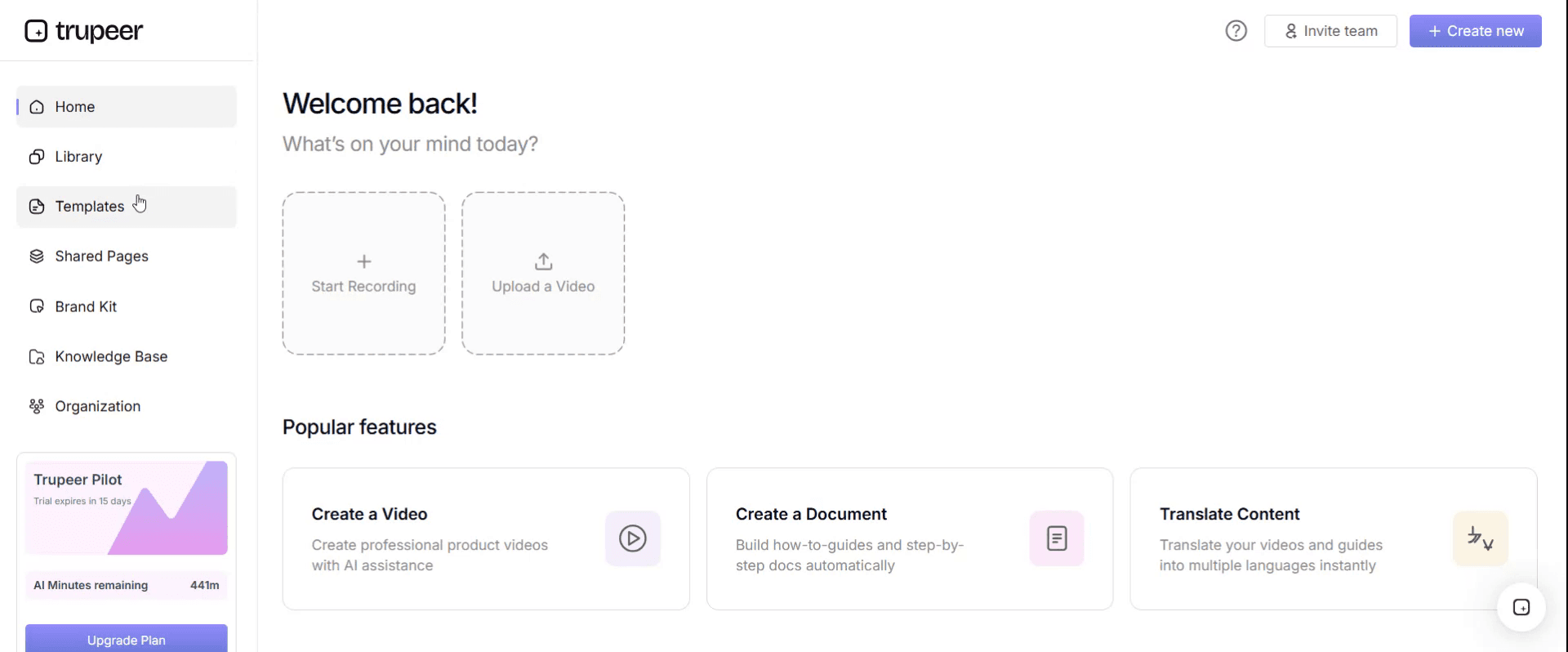
Step 1: Open the Templates Section
Go to the Templates section from the main navigation.
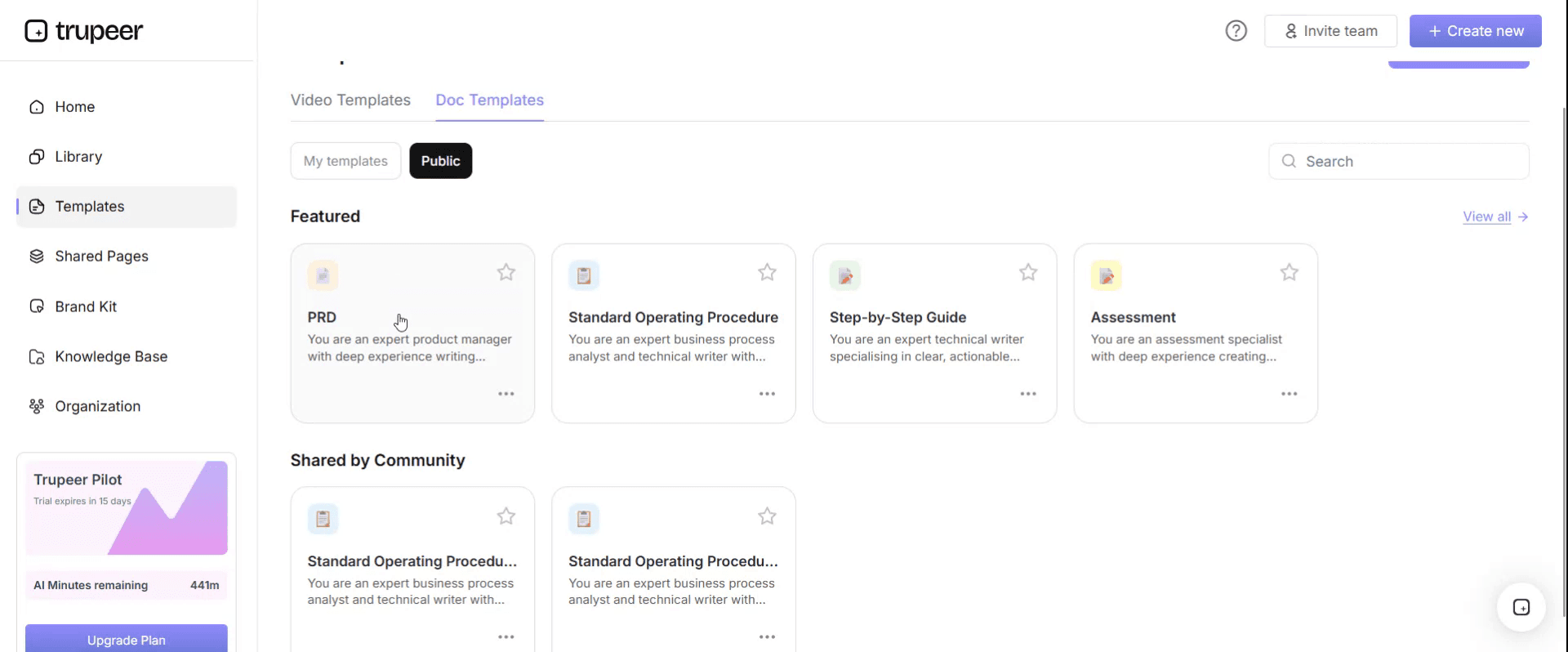
Step 2: Select and Open a Template
Click on any template you want to work with to open it.
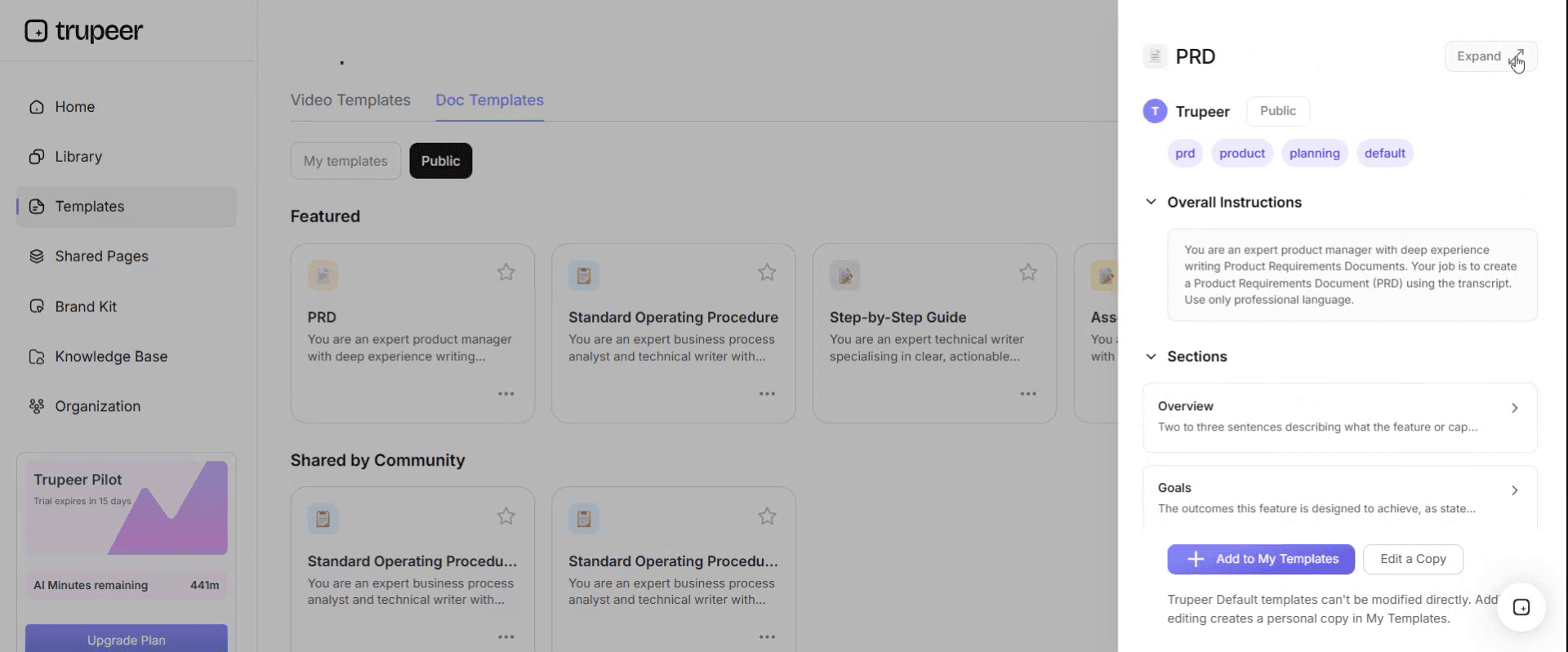
Step 3: Expand the Template View
If needed, expand the template view to see the full layout and details clearly.
Step 4: Edit the Template
Click on Edit to start modifying the selected template.
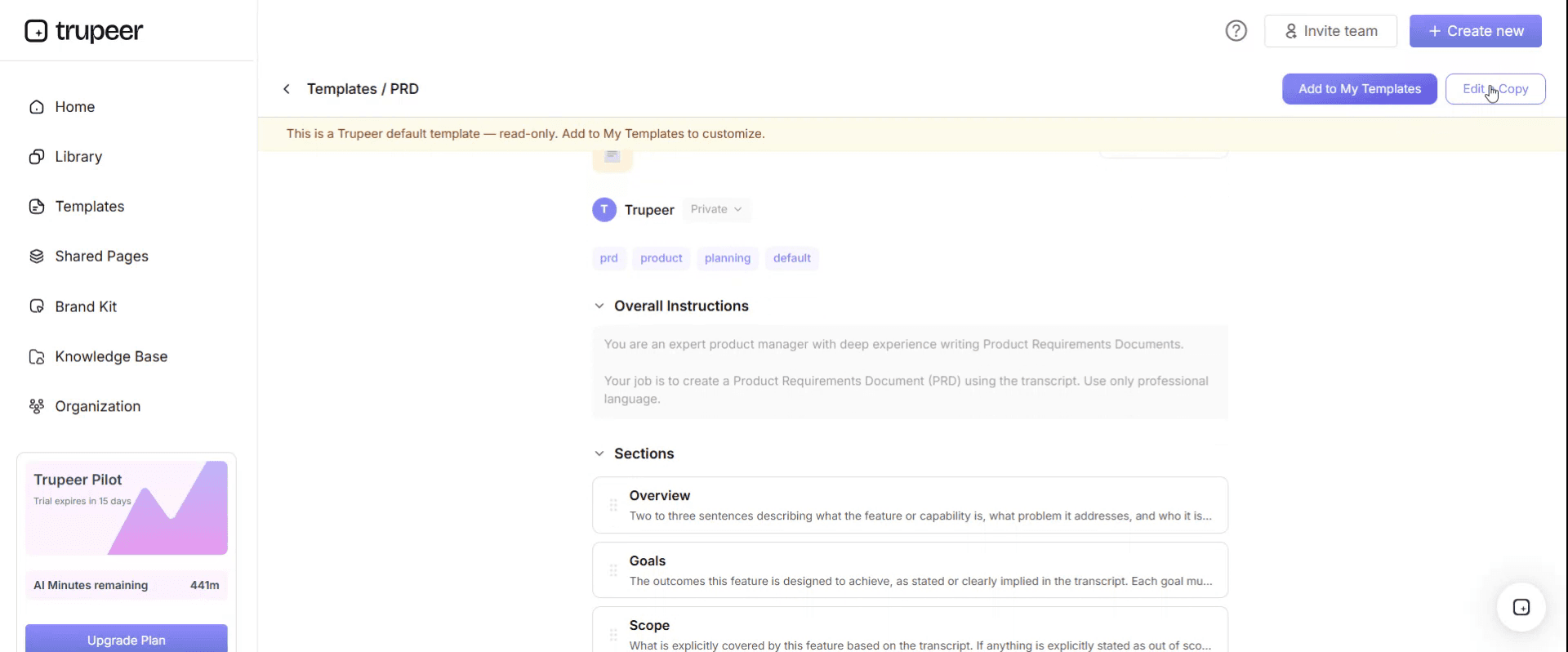
Within the editor, you can:
Add new sections
Define or update formatting rules
Add a logo and adjust its position and related settings
Step 5: Save Your Customized Template
After making all necessary changes, click Save to store the updated template as your own.
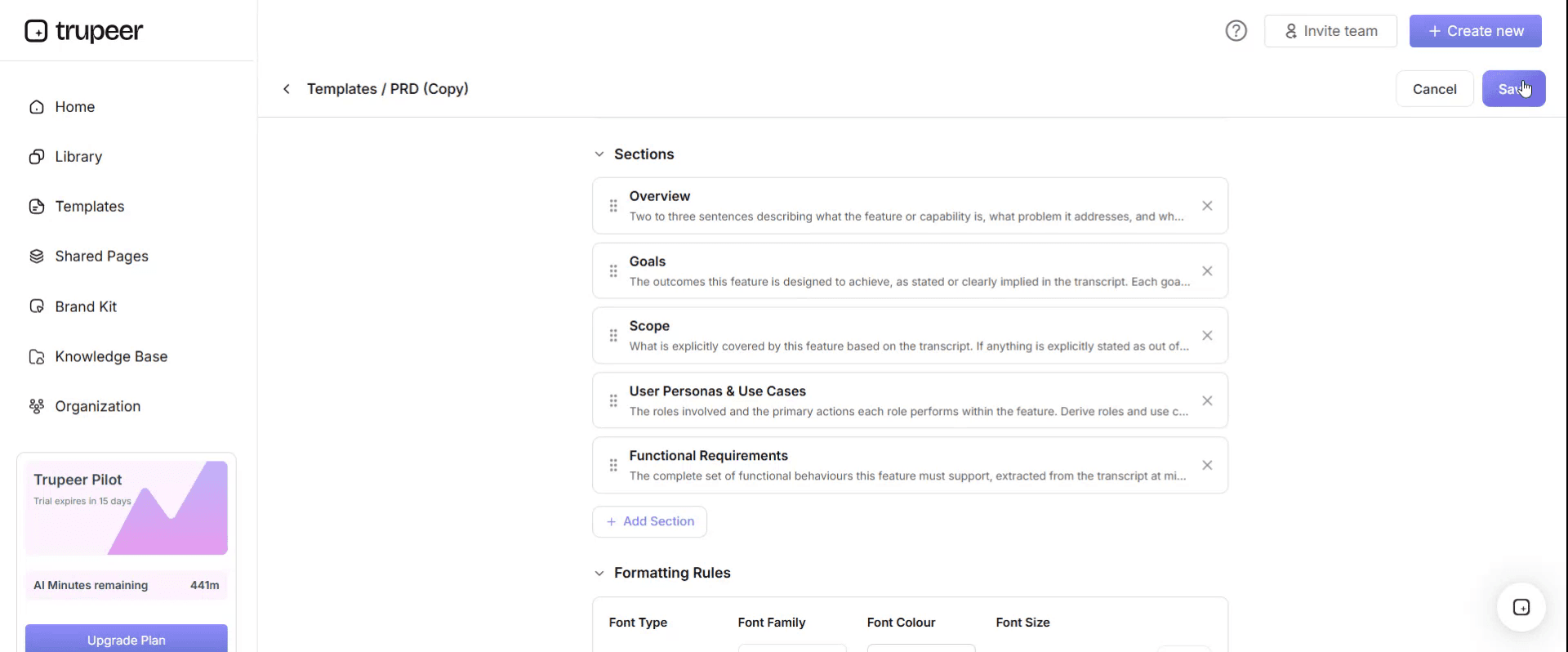
Step 6: Preview and Fine-Tune the Template
When you want to see how your customized template looks, open the Preview.
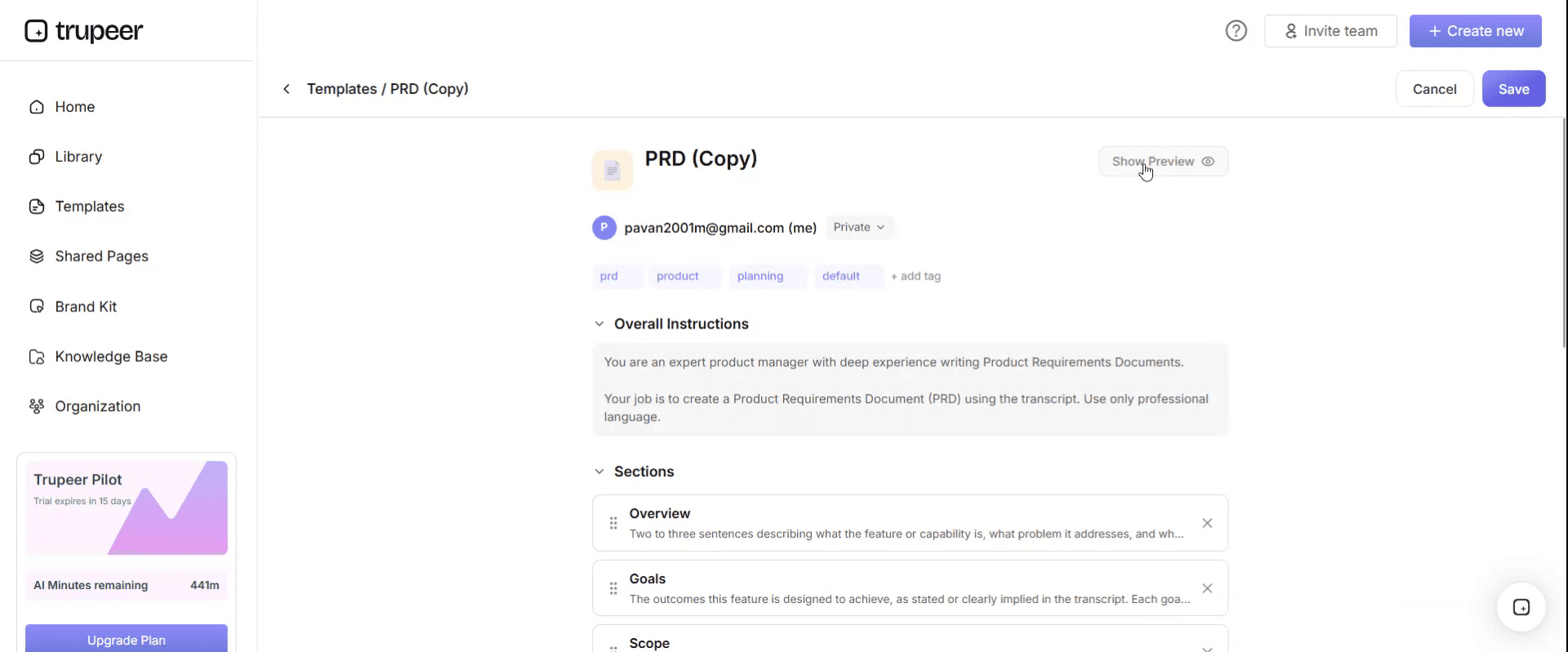
From the preview screen, you can continue to make adjustments directly if needed, ensuring the template appears exactly as you want.
With a project proposal template you can:
Save hours on writing: Skip the blank page with a structure used by experienced PMs.
Win approvals: Built-in sections for problem, ROI and risk make a strong case.
Stay on-brand: Apply your logo, fonts and colors using Trupeer's brand kit.
Pitch with impact: Convert the proposal into a video pitch that decision-makers actually watch.
Standardize across projects: Use the same template for every proposal.
Reach global stakeholders: Translate proposals into 65+ languages with one click.
Mirror the evaluation criteria, in their order
The single highest return change to a proposal is structural and takes no writing at all.
If the criteria are published, use them as your section headings, in the order given, using their words rather than your own. A tender listing six criteria should produce a proposal with six main sections named after them. The evaluator scoring criterion four should find a section called criterion four's name.
If the criteria are not published, ask. Most buyers will tell you, and asking signals that you intend to answer the question rather than talk about yourself.
If you cannot ask, infer them and say so on page one. A short paragraph stating what you understand the decision to turn on gives the reader a chance to correct you and demonstrates you have thought about their problem rather than your capability.
Two things follow from this that people resist. Your favourite content may not map to any criterion, in which case it goes in an appendix or comes out. And your section order may look illogical as a narrative, which does not matter, because it is not being read as a narrative.
How to check coverage against the weightings
A ten minute check before submission that finds most of the damage.
Criterion | Weighting | Where it is answered | Words devoted | Proportional? |
|---|---|---|---|---|
Technical approach | 25% | Section 2, pages 4 to 11 | 3,100 | Yes |
Social value | 20% | Two paragraphs, page 41 | 180 | No, badly under |
Programme management | 15% | Section 4, pages 14 to 17 | 1,600 | Yes |
Team | 15% | Section 5 plus appendix CVs | 1,400 | Yes |
Risk management | 15% | Spread across sections 2 and 4 | 700, unfindable | No, not locatable |
Innovation | 10% | Section 6, page 22 | 900 | Yes |
Two failure modes show up in that table and both are common.
Under-weighted content. A criterion worth a fifth of the marks answered in two paragraphs. Word count need not be exactly proportional to weighting, but an order of magnitude out is a scoring problem rather than a stylistic choice.
Unlocatable content. Material that exists but is distributed across the document rather than answered in one place. An evaluator scoring criterion five does not assemble your answer from four sections. They score what they can find.
Run the table. Fix the rows marked no. That is usually the whole intervention.
The comparison table you should write for them
Every evaluator builds a comparison grid, whether formally or on the back of a page. They choose the dimensions.
You can choose them instead, and almost nobody does.
Put a short table on page one or two showing the dimensions you believe the decision should turn on, with your answer against each. Leave the other columns out entirely; the reader will fill them mentally.
Choose the dimensions carefully. They should be genuinely material to the buyer, they should be things you can substantiate, and at least one should be something where you are confident the alternatives are weaker. A table of dimensions where you are merely adequate is worse than no table.
This is not a trick and it does not need to be adversarial. Naming the dimensions that matter is a service to a reader who is about to do it themselves with less information than you have.
Where the buyer has published criteria, your table should use those. Where they have not, your table is your inference and doubles as the paragraph described in the previous section.
Free project proposal template: the structure to copy
Copy from here. Adapt the section names to the buyer's criteria wherever they exist.
Cover. Project or tender name, your organisation, date, reference number, contact.
One page summary. What you propose in a paragraph. The comparison table. The price. The decision you are asking for and by when.
Understanding of the requirement. The problem restated in your words, showing you have understood it rather than reciting the brief. Include what you believe the decision turns on if criteria are not published.
Sections mirroring the criteria. One per criterion, in their order, named in their words. Each answering that criterion completely, in one place.
Programme. Phases, milestones and dates. The plan itself is not the proposal, and our project plan template covers the working document you build after winning.
Team. The named people who will actually do the work, with their availability. Not a capability statement.
Price. Clearly, in one place, with what is included and what is not. Assumptions the price depends on, numbered.
Risks and how we handle them. Answered as a section rather than distributed, if it is a criterion.
What we are not proposing. Explicit exclusions. This reads as confidence rather than as hedging, and it prevents the most common post-award dispute.
Appendices. Case studies, CVs, certifications, policies. Everything that supports rather than answers.
Copy to here.
The consultancy that wrote 47 pages and came third
Marlow and Deane, an engineering consultancy of about a hundred and forty people, bid for a four year highways design framework with a local authority, worth roughly two point eight million pounds over the term.
Their proposal ran to forty seven pages. It was well written, with strong team CVs, a detailed methodology and three relevant case studies. Its structure was introduction, about us, our approach, our team, case studies, programme, price.
They came third of five on quality.
The debrief was instructive. The tender had published six evaluation criteria with weightings: technical approach twenty five percent, social value twenty percent, programme management fifteen percent, team fifteen percent, risk management fifteen percent and innovation ten percent.
Social value, jointly the second highest weighted criterion at a fifth of the available marks, was addressed in two paragraphs on page forty one.
Risk management, another fifteen percent, was distributed through the methodology rather than answered as a section. The evaluator's note said they had been unable to locate a clear response.
So thirty five percent of the available marks had been scored low on content that either barely existed or could not be found in forty seven pages.
The winning bid was thirty one pages. Its six main sections were the six evaluation criteria, in the tender's order, using the tender's wording.
The bid had cost Marlow and Deane around twenty four thousand pounds in staff time.
They changed the process rather than the writing. Section headings now mirror the published criteria in their order and their words. A coverage check runs before submission, listing each criterion, its weighting, where it is answered and how many words it gets, with anything disproportionate flagged. A comparison table sits on page two. And the delivery team reads the proposal before it goes out.
On the first bid under the new process, the delivery team removed four commitments they said could not be delivered as written.
Over the following eighteen months they submitted eleven bids and won six, against three of eleven over the comparable prior period. Two of the five losses came with feedback that they had been second on quality and lost on price, which is a different problem and a better one to have.
What to include in a project proposal, and where
The structure above, with three placement decisions that matter more than the content.
The price goes at the front, in the summary, and again in its own section. Readers look for it first regardless of where you put it, and a proposal that withholds it reads as evasive. Building up to a reveal works in a pitch and not in a document being compared against two others.
Each criterion is answered in exactly one place. Distributing an answer for narrative flow costs marks, because the evaluator scores what is under the relevant heading.
Assumptions are numbered and attached to the price. Every proposal contains assumptions, and the ones attached to the price are the ones that determine whether the eventual contract matches what you bid. Numbering them means a variation can point at one.
What to leave out: your history, unless it is a criterion. Generic capability statements. Methodology that describes what any competent supplier would do. Anything you would not want quoted back to you in month six, which is the subject of the next section.
Have the delivery team read it before you send it
A proposal is a promise, and every sentence in it becomes an expectation somebody else has to meet.
In most organisations the proposal is written by a bid or business development function under time pressure, and the people who will actually deliver the work read it for the first time after the win. By then the commitments are contractual.
The fix costs an hour. Whoever would lead delivery reads the proposal before submission, with one instruction: mark anything you could not deliver as written, or could not deliver at the stated price.
The list is usually short and specific. A response time that assumes availability nobody has. A deliverable described in a way that implies more than was priced. A named individual who is committed elsewhere. A methodology step that sounds impressive and does not happen.
Each of those is cheaper to remove now than to renegotiate in month three, and removing them rarely weakens the bid, because the commitments that get removed are usually generic rather than distinguishing.
Where the proposal wins, that same review becomes the starting point for the delivery plan, since the delivery lead has already read and challenged the scope.
Project proposal variants: grant, consulting and construction
The structure holds and the emphasis shifts substantially by type.
Grant and funding proposals. The funder's format is mandatory and usually prescriptive, including word limits per section. Answer their questions in their order, and treat the word limits as the weighting signal they are. Outcomes and measurement carry more weight here than method.
Consulting proposals. Team and approach dominate, and the buyer is largely assessing whether these specific people will be good to work with. Named individuals with real availability beat capability statements.
Construction and engineering. Programme, method statement, risk and compliance carry the weight, and the documentation requirements are often specified. Health and safety credentials are frequently a pass or fail gate rather than a scored criterion.
Public sector tenders. Criteria and weightings are published, evaluation is formalised, and clarification questions are usually permitted and under-used. On the other side of the table, our procurement management plan template covers how buyers set contract type against how well they can specify what they want, which is useful context for interpreting a tender.
Internal proposals. Competing for budget rather than against suppliers. The comparison is against other internal initiatives, so the dimensions worth naming are usually payback, risk and what will not get done instead.
Freelance and small project proposals. Two to four pages. Scope, price, timeline, exclusions, and what happens if the scope changes. Length signals nothing useful here.
The disadvantages of using a proposal template
Worth being honest about, since almost nothing written on this subject is.
Templates encourage answering the wrong structure. A template's section order is generic and the buyer's criteria are specific. Following the template rather than the criteria is precisely the failure in the worked example above.
They produce generic content. Boilerplate methodology and capability sections read as boilerplate, and evaluators read a lot of proposals.
They tempt you to fill every section. A section with nothing distinctive to say is dead weight in a document being skimmed, and it dilutes the sections that matter.
They hide the price. Most templates place commercials at the end, which is where readers look first anyway.
They are not the buyer's format. Where a buyer specifies a format, theirs overrides everything on this page.
Use a template for the checklist of things not to forget, and let the buyer's criteria determine the structure.
Project proposal, brief or business case?
Three documents that sit close together and get confused.
A proposal is written to somebody who will decide whether to proceed, usually competitively, and it contains a price. Its job is to win.
A brief is written once the decision to do something has been taken, stating the problem and authorising work. It is internal and it has no price. Our project brief template covers it, including why briefs that state a solution rather than a problem cause so much waste.
A business case justifies an investment with options, costs and benefits, and it is what a finance function or board approves. A proposal that has grown long and full of financial modelling is usually a business case with the wrong name.
For internal work the sequence is brief, business case, plan. For external work it is tender or enquiry, proposal, contract, plan. Proposals only appear in the second, which is why so much proposal advice sits oddly with internal project practice.
Can I get a project proposal template in Word or PDF?
Word or Google Docs for writing, because proposals go through several rounds of review and comment, and because a buyer occasionally requires an editable file.
PDF for submission, always, unless the buyer specifies otherwise. It fixes the layout, it prevents accidental edits, and it prevents your document being reflowed into something you did not design.
Two production details that matter more than they should. Bookmark or link the sections in the PDF, because an evaluator jumping between criteria will thank you. And check the file size against any portal limit before the deadline rather than at it, which is a genuinely common cause of late submissions.
Presentation software suits a pitch that accompanies a proposal, not the proposal itself. Where a buyer asks for a presentation as well, treat it as a separate artefact answering the same criteria in the same order.
Because a proposal is often the first thing a client sees, brand kits keep it consistent with everything that follows, which matters when the buyer is partly assessing whether you look organised.
How to show the method rather than describe it
Every proposal claims a methodology and evaluators read dozens of them. Descriptions of method are close to interchangeable, which is why the criterion is often scored on presentation rather than substance.
Something concrete cuts through it. A short recording of how you actually do the thing, linked from the proposal, is difficult to be sceptical about in a way that three pages of description is not.
Trupeer AI makes producing it straightforward. Somebody on your team records the process once, and the output is a written walkthrough and a video, in your branding, which can be linked from the relevant section of the proposal or supplied as an appendix.
Record it. Brand it. Translate it. Trupeer it.
It has a second use after the win. The material you produced to demonstrate the method becomes the onboarding and delivery documentation, so the effort is not spent purely on the bid. The output lives in your knowledge base, and where the proposal leads to work being handed over later our project handover template covers what the receiving side needs. Setup instructions are in the document template setup guide.
Frequently Asked Questions
Is there a free project proposal template in Word?
The structure above pastes straight into Word or Google Docs. There is no gated download and no form. The change worth making before you write anything is renaming the sections after the buyer's evaluation criteria, in their order, which is worth more than any template.
Is there a free project proposal template in PDF?
Write in a document editor and submit as PDF unless the buyer specifies otherwise. Bookmark the sections so an evaluator can jump between criteria, and check the portal's file size limit before the deadline rather than on it.
Is there a simple project proposal template?
For small projects and freelance work, four sections are enough: what you will do, what it costs, when it will be done, and what is excluded. Two to four pages. Length carries no signal at this scale and exclusions prevent most of the disputes.
Where can I find a free business proposal template in Word?
Business proposal, project proposal and service proposal are largely the same document with different emphases. The structure above works for all three; the difference is which criteria the buyer is scoring. A business proposal to a new client usually needs more on why you rather than how, which is a weighting decision rather than a structural one.
How long should a project proposal be?
As long as the criteria require and no longer. The worked example above lost a two point eight million pound framework with forty seven pages to a winner with thirty one. Length is not the variable; findability against the criteria is.
Who should write the project proposal?
Whoever will lead the delivery should either write it or review it before submission. Proposals written entirely by a bid function contain commitments the delivery team has never seen, and those commitments become contractual on the day you win.
Should the price go at the front or the back?
Front, in the summary, and again in its own section. Readers look for it first regardless, and withholding it reads as evasive in a document being compared against others. Building to a reveal works in a live pitch and not in a document.
What is the difference between a proposal and a quote?
A quote is a price for defined work. A proposal argues for an approach as well as pricing it, and it is used where the buyer has not fully specified what they want. If the requirement is completely specified, you may only need a quote, and submitting a proposal instead adds length without adding marks.


