Trupeer Blog
Opsummer
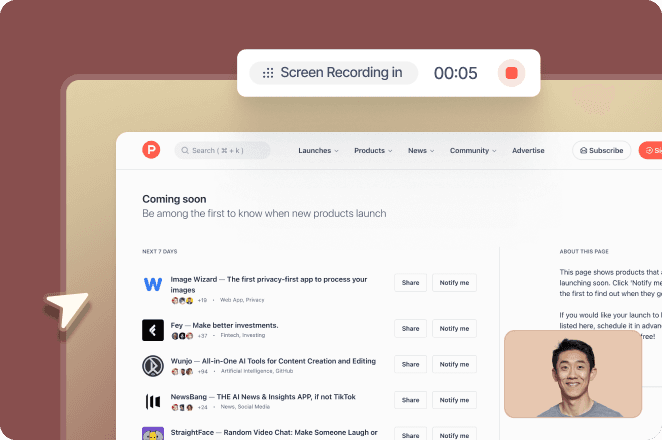
A training management system (TMS) is the operational backbone. It handles instructor scheduling, room and resource allocation, enrollment automation, cost tracking, compliance documentation, and reporting, the logistics of running training, especially instructor-led. A learning management system (LMS) is the delivery layer: it hosts courses, tracks learner progress and completions, and runs assessments and certifications. And then there is the content itself, the videos, guides, and SOPs, which neither a TMS nor an LMS actually creates. That third piece is the one teams most often forget to budget for, and it is usually the slowest part of the whole operation.
Below, we compare 20 platforms teams evaluate most in 2026, what each genuinely does best, and where each falls short, so you can match the tool to the problem you actually have instead of a feature list.
What we looked at
We evaluated each platform on the dimensions that separate an adequate training operation from an excellent one:
Scheduling and operations for instructor-led and blended programs.
Content creation and authoring, how much of the actual material the tool can help you produce.
Compliance and certification tracking, including audit trails for regulated industries.
Analytics and reporting depth, the feature most commonly praised and most commonly criticized.
Integrations with HRIS, CRM, calendar, and SSO.
Pricing transparency and scale, published per-learner rates versus custom quotes, and how cost behaves as you grow.
Why trust this review
We work with L&D and enablement teams producing training content every day, so we evaluate these tools on real fit, not spec sheets. For this guide we assessed each platform against vendor documentation, verified pricing on public pricing pages (July 2026), and cross-referenced aggregated user reviews from G2 and Capterra with hands-on evaluation of the tools we could access. Every listing notes where a tool wins and where it falls short, including our own product. We do not earn affiliate commissions on these picks, and we refresh this guide quarterly as pricing and features change.
Our top picks
If you need... | Choose... |
|---|---|
Best overall | TalentLMS |
Best for training content | Trupeer AI |
Best for training providers (ILT) | TryTami |
Best for enterprise | Docebo |
Best for compliance | Absorb LMS |
Best open-source / budget | Moodle |
Which platform is right for you? A quick decision guide
Use this to self-select the right category before comparing individual tools:
Is your core problem producing the training material itself? Choose a content tool: Trupeer AI (videos, guides, SOPs), paired with whatever delivery platform you run.
Do you run instructor-led sessions for external or paying learners? You need a real TMS: TryTami or Arlo (scheduling, instructor matching, eCommerce).
Do you run instructor-led sessions internally at scale? Choose Training Orchestra for ILT logistics, plus Trupeer AI for the content.
Do you mainly deliver and track online courses? Choose an LMS: TalentLMS (small teams), LearnUpon or 360Learning (mid-sized), Docebo or Cornerstone (enterprise).
Are you training a deskless or frontline team? Choose Connecteam or Disprz (mobile-first), plus Trupeer AI for short multilingual video guides.
Whatever you pick, remember that a TMS or LMS runs the operation but does not create the content, so budget for the content layer too.
Comparison chart
# | Tool | Best for | Starting price | Free option |
|---|---|---|---|---|
1 | Trupeer AI | Creating training videos & guides | From $49/mo | Free trial |
2 | TalentLMS | Simple, scalable all-rounder | From $119/mo | Free plan |
3 | Docebo | Enterprise multi-audience learning | Custom | Demo |
4 | Absorb LMS | Compliance & regulated industries | Custom | Demo |
5 | TryTami | ILT/vILT training providers | Custom | Demo |
6 | Training Orchestra | Enterprise ILT logistics | Custom | Demo |
7 | Arlo | Course-selling providers | From ~$109/mo | Trial |
8 | Trainual | SMB process & role training | From ~$300/mo | Trial |
9 | LearnUpon | Multi-audience rollout | Custom | Demo |
10 | Cornerstone OnDemand | Enterprise talent + learning | Custom | Demo |
11 | 360Learning | Collaborative learning & authoring | From ~$8/user/mo | Trial |
12 | iSpring Learn | Fast onboarding & authoring | From ~$2.29/user/mo | Trial |
13 | SAP Litmos | Enterprise compliance at scale | Custom | Demo |
14 | Adobe Learning Manager | Corporate learning ecosystem | Custom | Demo |
15 | Moodle | Open-source, full control | Open-source | Free |
16 | SkyPrep | Simple SMB training management | Custom | Trial |
17 | Connecteam | Frontline & deskless training | Free up to 10; ~$29/mo | Free plan |
18 | Deel Engage | Global talent development | Custom | Demo |
19 | Disprz | Enterprise frontline & skills | Custom | Demo |
20 | Quickbase | Operational workflows around training | Custom | Trial |
Feature comparison matrix
Tool | Scheduling / TMS | Content creation | Compliance | ILT / vILT | Analytics | Mobile |
|---|---|---|---|---|---|---|
Trupeer AI | – | Yes | – | – | – | Yes |
TalentLMS | Yes | – | Yes | – | Yes | Yes |
Docebo | Yes | – | Yes | Yes | Yes | Yes |
Absorb LMS | Yes | – | Yes | – | Yes | Yes |
TryTami | Yes | – | Yes | Yes | Yes | Yes |
Training Orchestra | Yes | – | Yes | Yes | Yes | – |
Trainual | – | Yes | – | – | – | Yes |
Moodle | Yes | – | Yes | – | – | Yes |
"Content creation" means the tool can actually build the training material for you, not just host it. Almost nothing in the TMS/LMS category does, which is the gap that defines this comparison.
The 20 best training management software platforms
1. Trupeer AI: Best for creating training videos and written guides
Every TMS and LMS on this list assumes you already have the training content. Trupeer AI is where that content comes from. You record a screen walkthrough of a process and it produces a polished training video and a formatted written guide from the same recording. Filler words and background noise are removed automatically, and everything carries your brand kit. Built-in translation makes the same course work across a global workforce without re-recording, and AI avatars let you refresh material without a camera.
Where it fits honestly: Trupeer AI is a content layer, not a TMS or LMS. It will not schedule instructors, track certifications, or run compliance reports. Pair it with the platform that does, and let Trupeer AI produce the courses, SOPs, and knowledge base that fill it.
Best for: Teams that need to produce training content quickly and consistently, for any TMS or LMS.
Key features: AI screen recorder, dual video + document output, auto-editing, brand kit, multi-language translation, AI avatars, knowledge base.
Pricing: From $49/month, with a free trial.
Pros: Produces the content TMS/LMS platforms cannot; video + guide from one recording; multi-language; flat pricing that does not scale per learner.
Cons: Not a scheduling, tracking, or compliance system; AI drafts benefit from a human review pass.
2. TalentLMS: Best simple, scalable all-rounder
One of the easiest platforms to get running, with a clean interface, role-based assignments, Branches for separate team portals, learning paths, and basic reporting. A strong fit for SMBs and mid-sized teams that want structure without heavy administration.
Best for: Teams that want speed, clarity, and published pricing.
Pricing: From $119/month; free plan available.
Pros: Fast setup; scales across teams and audiences; transparent pricing.
Cons: Collaboration tools are basic; large media files may need external hosting.
3. Docebo: Best for enterprise multi-audience learning
A cloud, AI-powered LMS for mid-to-large enterprises training employees, partners, and customers in separate branded portals from one platform. Notable users include Zoom and Booking.com.
Best for: Enterprises with 300+ users and multiple learner audiences.
Pricing: Custom.
Pros: Deep multi-audience support; strong analytics and AI-driven learning.
Cons: Enterprise cost and complexity; overkill for small teams.
4. Absorb LMS: Best for regulated industries
An AI-powered enterprise LMS known for audit-ready reporting and certification tracking, used by 3,500+ organizations and a strong fit for healthcare, financial services, and manufacturing.
Best for: Compliance-driven organizations that value reliability over the newest AI features.
Pricing: Custom.
Pros: Strong compliance and audit trails; reliable and well-supported.
Cons: Less bleeding-edge on AI content; custom pricing.
5. TryTami: Best for ILT/vILT training providers
Purpose-built for commercial training providers running instructor-led programs, with an instructor marketplace, AI-powered matching, scheduling, and a proposal pipeline, rather than an LMS retrofitted for live delivery.
Best for: Providers running 20+ instructor-led sessions a month.
Pricing: Custom; roughly two-week implementation.
Pros: Built for live-delivery logistics; instructor matching and proposals.
Cons: Niche to providers running many sessions; custom pricing.
6. Training Orchestra: Best for enterprise ILT logistics
A dedicated training management system for enterprise L&D teams managing complex instructor-led training operations at scale, scheduling, resources, costs, and reporting.
Best for: Large L&D teams running high-volume ILT and vILT.
Pricing: Custom.
Pros: Deep ILT operational management; strong resource and cost tracking.
Cons: Focused on logistics, not content; enterprise commitment.
7. Arlo: Best for course-selling providers
A training management platform for providers who sell courses, combining scheduling, registration, eCommerce, and CRM in one place.
Best for: Commercial training businesses selling public and private courses.
Pricing: From ~$109/month.
Pros: Strong eCommerce and registration; provider-focused.
Cons: Less suited to internal-only training teams.
8. Trainual: Best for SMB process and role training
Trainual blends onboarding, process documentation, and operational training, assigning role-based playbooks and SOPs so people learn the actual job.
Best for: Growing businesses documenting processes and role-based training.
Pricing: From ~$300/month.
Pros: Fast to stand up; strong SOP and role-based delivery.
Cons: Not a scheduling-heavy TMS; limited enterprise depth.
9. LearnUpon: Best for multi-audience rollout
A cloud LMS supporting employee, partner, and customer training from one platform, known for fast, flexible rollout across audiences.
Best for: Mid-market teams training several distinct groups.
Pricing: Custom.
Pros: Multi-audience flexibility; quick rollout.
Cons: Custom pricing; more than a single-team needs.
10. Cornerstone OnDemand: Best for enterprise talent and learning
An enterprise learning and talent platform focused on workforce development and skills transformation, pairing training with broader talent management.
Best for: Large enterprises with complex workforce development needs.
Pricing: Custom.
Pros: Deep talent-management ecosystem; skills focus.
Cons: Heavy for small businesses; enterprise cost.
11. 360Learning: Best for collaborative learning and authoring
A collaborative learning platform with AI-assisted content authoring, letting subject-matter experts build and share courses across teams.
Best for: Teams that want peer-driven, collaborative course creation.
Pricing: From ~$8/user/month.
Pros: Strong collaborative authoring; AI content help.
Cons: Per-user pricing scales with headcount; less ILT depth.
12. iSpring Learn: Best for fast onboarding and authoring
An easy-to-adopt LMS paired with strong authoring tools, popular for onboarding and quick course creation.
Best for: Teams wanting a simple LMS with solid authoring at a low entry price.
Pricing: From ~$2.29/user/month.
Pros: Affordable; strong PowerPoint-based authoring.
Cons: Fewer advanced TMS/ILT features.
13. SAP Litmos: Best for enterprise compliance at scale
Built for scale and structure, with strong compliance tools, content libraries, automated enrollments, and detailed tracking across teams and locations.
Best for: Large organizations managing compliance-heavy programs.
Pricing: Custom.
Pros: Strong compliance and reporting; integrates with enterprise systems.
Cons: Enterprise complexity; custom pricing.
14. Adobe Learning Manager: Best for a corporate learning ecosystem
A feature-rich enterprise LMS for full corporate learning ecosystems, with personalization, gamification, and broad content support.
Best for: Enterprises wanting a comprehensive learning ecosystem.
Pricing: Custom.
Pros: Rich feature set; strong personalization.
Cons: Can be complex; enterprise investment.
15. Moodle: Best for open-source, full control
The leading open-source LMS, offering deep customization and control at low licensing cost, especially for organizations with internal technical skills.
Best for: Education, public sector, and teams wanting full control.
Pricing: Open-source (hosting and setup costs apply).
Pros: Highly customizable; low licensing cost.
Cons: Requires technical resources; setup and maintenance effort.
16. SkyPrep: Best for simple SMB training management
A cloud-based training platform for HR teams and business leaders who need to deliver, track, and manage skill-building programs without complexity.
Best for: SMBs wanting a straightforward training management tool.
Pricing: Custom.
Pros: Easy to use; clear admin dashboard.
Cons: Fewer enterprise and ILT features.
17. Connecteam: Best for frontline and deskless training
An all-in-one app for deskless workforces that puts training in the same tool people already use for schedules and timesheets, with mobile-first delivery and read tracking.
Best for: Frontline, field, and shift-based teams.
Pricing: Free for up to 10 users; paid from ~$29/month.
Pros: Mobile-first; generous free tier; compliance tracking.
Cons: Not built for complex ILT logistics.
18. Deel Engage: Best for global talent development
Part of Deel's HR suite, Deel Engage combines learning with performance and career development for global and distributed teams.
Best for: HR teams developing distributed or international workforces.
Pricing: Custom.
Pros: Ties learning to performance and careers; global reach.
Cons: Best value inside the broader Deel ecosystem.
19. Disprz: Best for enterprise frontline and skills
An AI-powered training and workforce enablement platform for enterprises with frontline, distributed, and deskless workforces, combining LMS, LXP, and skills intelligence.
Best for: Large frontline workforces in retail, BFSI, manufacturing, and logistics.
Pricing: Custom.
Pros: Strong frontline and skills focus; AI personalization.
Cons: Enterprise-oriented; overkill for basic course hosting.
20. Quickbase: Best for operational workflows around training
A no-code/low-code operational platform that manages the workflows an LMS does not reach: certification renewals, skills matrices, compliance documentation across HRIS/ERP, and contractor training verification. A complement, not a replacement.
Best for: Organizations that already have an LMS but need to manage surrounding operational processes.
Pricing: Custom.
Pros: Flexible custom workflows; strong for compliance operations.
Cons: Not an LMS; no course authoring or delivery.
How to choose the right training management software
Name the problem before you shortlist, because the category splits into lanes and buying the wrong lane is the most expensive mistake:
Producing the material means you need a content tool. Trupeer AI and, for SOP-style content, Trainual live here.
Instructor-led logistics means you need a real TMS. TryTami and Arlo for providers; Training Orchestra for enterprise internal ILT.
Online delivery and tracking means an LMS. TalentLMS for smaller teams; Docebo, Cornerstone, or LearnUpon for scale.
Frontline and deskless means mobile-first delivery. Connecteam or Disprz.
Then weigh three practical factors: your delivery model (ILT, virtual, self-paced, or blended), your compliance requirements, and your growth trajectory. Run a real-data pilot before signing, load an actual course, schedule a real session, and generate a compliance report, because what feels smooth in a demo often reveals friction in practice. And remember that whichever platform you choose still needs content created for it, which is the step most teams underestimate.
Recommendations by team size and industry
By operation size
Size | Best system | Best content layer |
|---|---|---|
Small / first program | TalentLMS or SkyPrep | Trupeer AI |
Mid-sized, multi-group | LearnUpon or 360Learning | Trupeer AI |
Enterprise (300+) | Docebo or Cornerstone | Trupeer AI |
Training provider (ILT) | TryTami or Arlo | Trupeer AI |
By industry
Industry | Top consideration | Strong fit |
|---|---|---|
SaaS / Tech | Fast content updates | TalentLMS + Trupeer AI |
Healthcare | Compliance & renewals | Absorb LMS |
Financial services | Audit-ready reporting | SAP Litmos / Absorb |
Manufacturing | Shift & frontline | Disprz / Connecteam |
Retail / Hospitality | High volume, mobile | Connecteam |
Education / Public sector | Control & cost | Moodle |
Training providers | ILT logistics & sales | TryTami / Arlo |
The 8 biggest training software mistakes
Confusing a TMS with an LMS. Buying a delivery platform when your problem is logistics, or the reverse.
Forgetting the content cost. The platform is only half the spend; someone still has to create every course.
Skimping on reporting depth. Almost every platform is praised for delivery and criticized for reporting. Test it directly.
Tracking vanity metrics. "95% completion" tells a CFO nothing. Only about 8% of organizations measure business impact.
Ignoring per-learner escalation. Per-seat pricing that looks fine at 50 learners can balloon at 500.
No real-data pilot. Demos hide friction; load real content and run a real session first.
Underweighting integrations. Disconnected LMS, HRIS, and CRM data makes ROI impossible to prove.
Discounting post-launch support. The difference at month six is often support quality, not launch-day features.
30+ training and L&D statistics for 2026
Market and spend
US corporate training spend hit $102.8 billion in 2025, up 4.9% (Training Magazine).
The global corporate training market reached $380 billion, heading to $510 billion by 2030 (Skillademia).
Companies spend an average of $1,420 per employee annually on training (Skillademia).
Cost per formal learning hour used rose to $165, up from $123 (LMSPedia).
Small firms pay a 133% per-learner premium versus large enterprises (LMSPedia).
ROI and impact
Corporate training delivers $4.50 for every $1 invested (Deloitte / Skillademia).
Companies with strong L&D see 218% higher revenue per employee (Skillademia).
Strong L&D cultures see 47% lower turnover (Skillademia).
Comprehensive training correlates with 24% higher profit margins (Skillademia).
Sales training often delivers 100–350% ROI (eLearning Industry).
Doubling growth opportunities lifts productivity 14% and profit 18% (Training Magazine).
The measurement gap
Only about 8% of organizations measure training's business impact (eLearning Industry).
67% of L&D leaders struggle to prove training impact to executives (LinkedIn 2026).
Only 11% of organizations feel confident they can build the skills they need (TalentLMS).
50% of organizations say managers lack support to facilitate development (TalentLMS).
AI and delivery
68% of corporate training programs now use AI-based platforms, up from 32% in 2023 (Skillademia).
AI personalized learning paths improve retention by 45% (Skillademia).
Microlearning adoption grew 72% in 2025 (Skillademia).
90% of organizations use an LMS for L&D functions; 96% of large and midsize firms call it the backbone of learning ops (Training Orchestra).
73% of HR managers rank digital skills their top training focus (Training Orchestra).
The skills gap costs the global economy $8.5 trillion annually; 78% of Fortune 500 CEOs rank reskilling their #1 priority (Skillademia).
Frequently asked questions
What is training management software?
A platform for the operational side of training: instructor scheduling, resource and venue management, enrollment automation, cost tracking, compliance documentation, and reporting.
What's the difference between a TMS and an LMS?
A TMS handles the administrative backbone (scheduling, rosters, resources, compliance); an LMS focuses on content delivery and learner progress. Many tools now combine both, but the distinction still drives your decision.
Do I need both a TMS and an LMS?
Sometimes. Providers running lots of instructor-led training often need TMS depth an LMS lacks; teams delivering self-paced online courses may only need an LMS. Many blended-learning teams use both.
Can training management software replace an LMS?
Not usually, they solve different problems. Most modern platforms complement each other, and some combine functions in one system.
How much does training management software cost in 2026?
Entry platforms like TalentLMS start around $119/month; mid-market tools like Trainual around $300/month; enterprise platforms use custom pricing. Content tools like Trupeer AI start around $49/month.
Who creates the actual training content?
You do, and it is the step most teams underestimate. Neither a TMS nor an LMS builds courses. A content tool like Trupeer AI turns recordings into videos and guides you then load into your platform.
How long does implementation take?
Lightweight tools go live in hours or days; mid-market platforms in two to six weeks; enterprise systems in one to three months depending on integrations and content migration.
What features matter most?
Instructor and resource scheduling, compliance and certification tracking, learning analytics, blended-learning support, and integrations. Reporting depth is what separates adequate from excellent.
What's the best training software for a small business?
For the system, TalentLMS or SkyPrep; for the content, Trupeer AI. Start lean and migrate up when volume justifies it.
What's the best platform for training providers?
Providers selling instructor-led courses should evaluate TryTami, Arlo, or Accessplanit for scheduling depth, instructor management, and eCommerce.
How is AI changing training software in 2026?
AI now powers instructor matching, personalized paths, and predictive analytics, and content tools generate the training videos, guides, and translations themselves.
How do I measure training ROI?
Move beyond completion rates to assessment scores, behavior change, and business KPIs like productivity and retention. Only about 8% of organizations reach that level.
Can remote and frontline teams use training software?
Yes. For deskless teams prioritize mobile-first tools like Connecteam or Disprz; for remote knowledge workers, most cloud LMS platforms work well.
Does training software integrate with HR systems?
Most do. Prioritize two-way HRIS and calendar sync so enrollment, records, and availability stay current.
When should I not buy a dedicated TMS?
If you run no instructor-led training, a TMS is overkill, an LMS or content tool will serve you better. And do not buy any platform before you have a plan to fill it with content.
Related Blogs